BIS Certification Cost in India: Understanding Registration Fees, Testing Costs, and the Factors That Influence Overall Certification Expenses
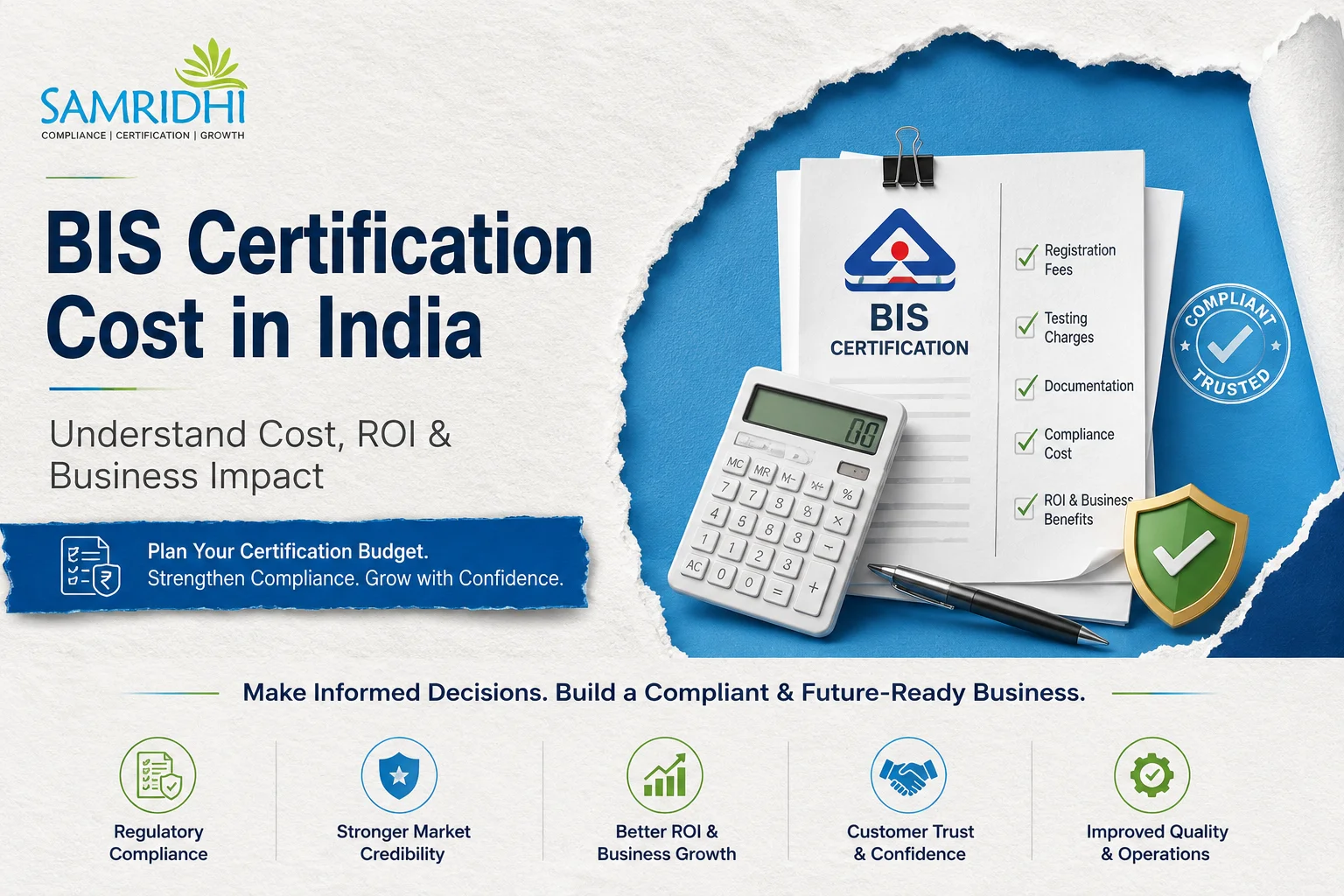
One of the first questions businesses ask before beginning the BIS Certification process is, "How much will it cost?" While this is an important consideration, there is no single price that applies to every product or manufacturer. The overall BIS Certification Cost in India depends on several variables, including the applicable certification scheme, product category, laboratory testing requirements, manufacturing location, factory readiness, documentation complexity, and regulatory obligations. Businesses that understand these cost components early are better positioned to plan their budgets realistically and avoid unexpected compliance expenses later in the certification process.
A common misconception is that BIS Registration Fees represent the total investment required for certification. In practice, official application or licence-related fees are only one part of the overall compliance cost. Depending on the applicable BIS scheme, businesses may also need to account for laboratory testing charges, product sample preparation, technical documentation, quality system development, factory-related activities where applicable, professional consulting support, document translation for foreign manufacturers when required, logistics, and other operational expenses associated with regulatory compliance.
The product category is one of the most significant factors influencing certification costs. Different products fall under different BIS certification schemes, and each scheme follows its own regulatory requirements. For example, BIS Certification for electronic products, industrial equipment, consumer goods, construction materials, and other notified products may involve different testing standards, technical documentation, evaluation procedures, and compliance obligations. As a result, certification expenses naturally vary depending on the complexity of the product and the applicable regulatory framework.
Laboratory testing is another major contributor to the overall certification budget. Many products require testing through BIS-recognized laboratories before certification activities can proceed. Testing costs are influenced by the applicable Indian Standard, the number of technical parameters that require evaluation, the product's complexity, and the scope of testing specified under the relevant certification scheme. Products with advanced technical features or multiple performance requirements may involve broader testing compared to less complex products.
Manufacturing location can also influence the overall BIS Certification Cost. Domestic manufacturers and foreign manufacturers may follow different certification pathways depending on the applicable BIS scheme. International businesses may incur additional expenses related to documentation coordination, communication with overseas production facilities, logistics, authorized representation where applicable, and other compliance activities associated with supplying products to the Indian market.
Factory readiness is another practical factor that businesses often overlook when estimating certification expenses. Manufacturers establishing new production facilities may need to invest in quality management systems, production controls, testing equipment where applicable, inspection procedures, document management systems, and manufacturing infrastructure before certification activities can progress. Although these investments support regulatory compliance, they also improve long-term manufacturing consistency and operational efficiency.
Documentation preparation also contributes to the overall certification effort. Technical specifications, engineering drawings, manufacturing procedures, product labels, user manuals, declarations, quality manuals, inspection records, and supporting compliance documents all require time and coordination across multiple departments. Businesses with organized engineering and quality documentation generally complete this stage more efficiently, while organizations creating documentation for the first time may require additional planning and internal resources.
For manufacturers producing electronic products, certification planning often involves additional technical coordination because electronic devices typically include multiple components, performance requirements, safety considerations, and laboratory evaluations. Engineering documentation, product specifications, software information where applicable, and component management all contribute to the preparation required before certification activities begin. As product complexity increases, the overall compliance effort may also increase.
Professional support is another consideration when estimating certification costs. Many businesses choose to work with experienced BIS Certification Consultants to help identify the applicable certification scheme, review technical documentation, coordinate testing where applicable, organize compliance records, and guide the application process. While consultancy represents an additional investment, it often helps businesses improve documentation quality, strengthen regulatory planning, and reduce avoidable procedural delays that can lead to additional operational costs.
It is also important to distinguish between initial certification costs and ongoing compliance costs. After certification has been granted, manufacturers continue maintaining quality systems, production records, technical documentation, internal inspections, and licence-related compliance throughout the validity period. Depending on the applicable BIS scheme, businesses should also consider future renewal activities, ongoing quality management, documentation updates, and compliance monitoring as part of their long-term regulatory planning rather than focusing only on the initial certification budget.
Rather than asking, "What is the minimum BIS Licence Cost?" businesses often benefit from asking, "What compliance activities apply to my product?" This shift in perspective allows manufacturers to develop more accurate project budgets based on actual regulatory requirements instead of relying on general cost estimates. Every product follows its own certification pathway, and understanding those requirements early helps businesses allocate resources more effectively.
Ultimately, the BIS Certification Cost in India is influenced by multiple technical, operational, and regulatory factors rather than a single fixed fee. Official BIS Registration Fees, laboratory testing, product complexity, factory readiness, documentation preparation, manufacturing location, consultant support, and ongoing compliance responsibilities all contribute to the overall investment. Since every BIS Certification project is case-specific and depends on the applicable certification scheme, product category, testing requirements, manufacturing operations, and independent authority review, businesses should evaluate certification costs as part of a broader compliance strategy that supports sustainable manufacturing, regulatory confidence, and long-term market access.
The total BIS Certification cost depends on the applicable certification scheme, product category, testing requirements, and documentation scope. If your product falls under a mandatory certification scheme, you may also explore our BIS CRS Registration, BIS ISI Domestic Manufacturers, and BIS Consultant Delhi services to better understand the compliance process and associated requirements.
What Affects BIS Certification Cost? A Complete Guide to BIS Registration Fees, Product Testing, and Compliance Expenses
When businesses begin planning for BIS Certification, one of the first objectives is preparing a realistic compliance budget. However, many manufacturers quickly discover that there is no universal cost applicable to every product or certification scheme. The total investment depends on several technical, operational, and regulatory factors that differ from one business to another. Rather than focusing only on BIS Registration Fees, manufacturers should understand the complete certification journey because the overall cost is influenced by product characteristics, testing requirements, factory readiness, documentation, and ongoing compliance responsibilities.
The most important factor influencing BIS Certification Cost is the certification scheme applicable to the product. BIS operates multiple certification schemes for different categories of products, and each scheme follows its own regulatory procedures. Requirements for electronic products, consumer goods, industrial equipment, construction materials, chemicals, or other notified products are not identical. The certification pathway determines the scope of documentation, testing, inspections where applicable, and compliance activities required before certification can be granted.
The product itself also plays a major role in determining certification expenses. A simple product with limited technical specifications generally requires a different level of evaluation than a technologically advanced product with multiple safety, performance, or functional requirements. Manufacturers of electronic products, for example, often prepare more detailed engineering documentation and may require broader laboratory evaluations because of the technical complexity involved. As product complexity increases, the amount of preparation, technical coordination, and compliance effort may also increase.
Laboratory testing is another significant component of the certification budget. Depending on the applicable BIS scheme and relevant Indian Standard, products may require testing through BIS-recognized laboratories before certification activities can proceed. Testing costs vary according to the product category, the number of technical parameters being evaluated, laboratory procedures, and the scope of testing required for compliance. Businesses should therefore understand the applicable testing requirements during the planning stage instead of assuming identical costs for every product.
Documentation preparation also contributes to the overall compliance investment. Every BIS Certification Process relies on accurate technical records that clearly describe the product and manufacturing operations. Businesses commonly prepare product specifications, engineering drawings, manufacturing procedures, quality manuals, product labels, user manuals, declarations, and other supporting technical documents. Companies with well-organized engineering systems often complete this stage more efficiently, whereas businesses preparing documentation for the first time may need additional internal resources and coordination.
Factory readiness is another factor that directly affects certification planning. Depending on the applicable certification scheme, manufacturers may need to establish production facilities, quality control procedures, inspection systems, internal testing capabilities where applicable, document management practices, and manufacturing controls before certification activities progress. These operational investments are not simply regulatory expenses—they also strengthen production consistency and improve long-term manufacturing performance.
Manufacturing location can influence the certification process as well. Indian manufacturers and foreign manufacturers may follow different regulatory pathways depending on the applicable BIS scheme. Foreign manufacturers often need to coordinate documentation across international production facilities, manage communication between multiple stakeholders, and arrange additional compliance activities associated with supplying products to India. These operational requirements can influence the overall certification budget.
The maturity of the manufacturing business also affects compliance costs. New manufacturers may invest more heavily in developing quality management systems, preparing technical documentation, training personnel, and organizing production processes because many compliance systems are being established for the first time. Established manufacturers with existing quality infrastructure and documented production procedures may already have much of this framework in place, allowing them to focus primarily on product-specific certification requirements.
Businesses should also consider the cost of maintaining compliance after certification has been granted. BIS Certification is not limited to the initial approval process. Manufacturers are expected to continue maintaining quality systems, production consistency, documentation, inspection records, and regulatory compliance throughout the validity period of the licence. Renewal activities, ongoing documentation management, internal quality reviews, and manufacturing consistency should therefore be considered part of the overall lifecycle cost rather than separate future expenses.
Professional BIS Certification Consultants also play an important role in certification planning. Consultants help businesses identify the appropriate certification scheme, review technical documentation, coordinate testing where applicable, organize compliance records, and guide manufacturers through the regulatory process. While consultancy services represent an additional business investment, they often help manufacturers improve planning, reduce documentation errors, and avoid procedural issues that may otherwise increase overall compliance costs through repeated submissions or project delays.
Another important consideration is that businesses should avoid comparing certification costs without understanding the scope of work involved. Two manufacturers producing different products may receive significantly different cost estimates because their certification requirements, testing obligations, factory readiness, and documentation needs are completely different. Comparing only the total price without considering the underlying compliance activities rarely provides an accurate picture of the actual investment required.
Instead of focusing exclusively on finding the lowest BIS Licence Fees or BIS Certificate Price, businesses benefit from evaluating the complete compliance process. Certification should be viewed as an investment in product quality, regulatory compliance, market access, and customer confidence rather than only as a regulatory expense. Proper planning allows manufacturers to allocate budgets more accurately while reducing the likelihood of unexpected compliance costs during the project.
Ultimately, BIS Certification Cost is influenced by a combination of BIS Registration Fees, laboratory testing, product complexity, documentation preparation, factory readiness, manufacturing location, quality management systems, consultant support, and ongoing compliance responsibilities. Every certification project remains case-specific and depends on the applicable BIS scheme, product category, testing requirements, manufacturing operations, and independent authority review. Businesses that understand these factors early are generally better prepared to develop realistic budgets, manage compliance efficiently, and support successful product entry into the Indian market.
Product testing and technical documentation often influence the overall certification effort. Depending on your product category, our NABL Testing, LM79 Testing, and Lab Setup and Equipment services can support laboratory coordination, testing infrastructure, and compliance planning before certification begins.
 Get Certified with Confidence – Your One-Stop Compliance Partner
From BIS, WPC, TEC, BEE, EPR, LMPC, CDSCO, FSSAI, ISO, MSME to PESO, NABL testing, Startup India, Make in India, and Lab Setup, we handle all your regulatory approvals, certifications, and documentation needs with precision and speed. Partner with Samridhi Compliance Certification and simplify your journey to full compliance—so you can focus on growing your business.
Is BIS Certification Worth the Cost? Understanding the Return on Investment (ROI) and Long-Term Business Benefits
For many manufacturers and importers, the decision to pursue BIS Certification is often accompanied by an important business question: Is the investment worth it? At first glance, certification involves application fees, product testing, technical documentation, quality management efforts, and compliance planning. These costs can appear significant, particularly for startups or businesses launching a new product. However, viewing BIS Certification purely as a regulatory expense often overlooks its long-term business value. In reality, certification should be evaluated not only by its initial cost but also by the opportunities, operational improvements, and market confidence it can help create over time.
The most immediate benefit of BIS Product Certification is regulatory compliance. For products covered under mandatory BIS schemes, certification is often a necessary requirement before they can be legally manufactured, imported, or supplied in the Indian market. Without meeting the applicable regulatory requirements, businesses may face restrictions on product sales, delayed market entry, or additional compliance challenges. From this perspective, certification supports business continuity by helping organizations align with the applicable regulatory framework before commercial operations begin.
Beyond regulatory compliance, BIS Certification contributes to stronger market credibility. Distributors, retailers, procurement teams, institutional buyers, and large organizations often look for products that comply with recognized standards before making purchasing decisions. Certification demonstrates that a product has been evaluated under the applicable BIS framework and that the manufacturer has established processes to meet the relevant compliance requirements. While certification alone does not guarantee commercial success, it often strengthens business credibility during customer evaluations and procurement discussions.
For manufacturers, one of the less visible returns on investment comes from improved internal processes. Preparing for certification encourages businesses to establish structured documentation systems, strengthen quality management practices, standardize production procedures, improve inspection methods, and organize technical records. These improvements frequently extend beyond regulatory compliance and contribute to more consistent manufacturing operations, reduced production errors, better document control, and stronger communication between engineering, production, and quality teams.
Another important business benefit is improved readiness for growth. Companies planning to expand into new product categories, work with larger distributors, participate in government procurement, or enter organized retail markets often find that well-established compliance systems simplify future expansion. The quality controls, technical documentation, and manufacturing discipline developed during the BIS Certification Process can support additional certifications, new product introductions, and broader business development initiatives over time.
Manufacturers of electronic products may experience additional long-term advantages. Electronic products often evolve through component upgrades, design improvements, and technology updates. Businesses that already maintain structured engineering documentation, quality records, and compliance systems are generally better prepared to manage these changes while maintaining regulatory consistency. Instead of rebuilding compliance systems for every product update, manufacturers can integrate regulatory management into their ongoing product development process.
Certification can also strengthen customer confidence. Business buyers increasingly evaluate suppliers not only on pricing but also on quality assurance, manufacturing capability, and regulatory compliance. Products supported by recognized certification often provide buyers with additional confidence that the manufacturer has implemented structured quality and compliance processes. While purchasing decisions depend on many commercial factors, certification can positively influence supplier evaluations by demonstrating commitment to recognized standards.
Risk reduction is another area where the return on investment becomes apparent. Businesses that begin compliance planning early are generally better prepared to identify documentation gaps, technical inconsistencies, quality issues, or manufacturing challenges before products enter the market. Addressing these issues during product development or manufacturing is often less disruptive than resolving compliance problems after commercial distribution has begun. In this sense, BIS Certification contributes to proactive risk management rather than simply meeting a regulatory obligation.
Importers also benefit from viewing certification as a strategic investment. Coordinating technical documentation, product specifications, manufacturer declarations, testing requirements where applicable, and regulatory planning before importing products helps reduce operational uncertainty. Importers with organized compliance systems are often better positioned to manage supplier relationships, documentation updates, and future product introductions as their business expands.
Another factor influencing the Return on Investment (ROI) is business sustainability. Compliance systems established during certification continue supporting the organization long after the initial approval has been obtained. Quality management, document control, production consistency, supplier management, and internal compliance monitoring become valuable operational assets that contribute to long-term efficiency. These improvements frequently deliver benefits beyond regulatory requirements by strengthening manufacturing performance and organizational discipline.
Professional BIS Certification Consultants further support this return on investment by helping businesses prepare documentation accurately, coordinate testing where applicable, evaluate product applicability, organize compliance records, and establish practical regulatory workflows. Rather than reducing certification to a paperwork exercise, consultants help businesses integrate compliance into everyday manufacturing operations. Their objective is to improve planning, documentation quality, and long-term compliance management rather than promise approvals or specific commercial outcomes.
Of course, the return on investment varies from one business to another. A startup introducing its first product may evaluate certification differently from an established manufacturer supplying products across multiple markets. Likewise, the compliance needs of an electronics manufacturer differ from those of a producer of industrial or consumer goods. The actual business value therefore depends on the product category, applicable BIS scheme, target market, manufacturing scale, business objectives, and ongoing compliance strategy.
Ultimately, asking whether BIS Certification is worth the cost is similar to asking whether investing in quality, compliance, and business credibility is worthwhile. Certification should not be measured only by its initial expenses but by the broader operational and commercial benefits it can support over time. While every certification project remains case-specific and subject to applicable BIS regulations, testing requirements, documentation, manufacturing readiness, and independent authority review, businesses that approach certification as a long-term investment rather than a short-term cost are generally better positioned to strengthen market access, improve operational efficiency, build customer confidence, and support sustainable business growth.
The value of BIS Certification extends beyond regulatory compliance by helping businesses strengthen quality systems and improve market credibility. Manufacturers looking to build long-term operational excellence may also benefit from our ISO Certification, Make in India Certification, and Startup India Certification services.
BIS Certification Cost for Manufacturers and Electronic Products: What Businesses Should Budget Before Applying
For manufacturers preparing to launch a new product in India, understanding the BIS Certification Cost is an important part of project planning. Whether the product is an electrical appliance, consumer electronic device, industrial equipment, or another regulated product, certification should be considered alongside manufacturing, product development, testing, packaging, and distribution costs. One of the biggest mistakes businesses make is treating certification as an unexpected expense near product launch rather than incorporating it into the overall business budget from the beginning. Early financial planning allows manufacturers to manage compliance activities more efficiently while reducing the risk of delays caused by incomplete preparation.
There is no fixed BIS Certification Cost that applies to every manufacturer or product. The overall investment depends on the applicable BIS certification scheme, the technical complexity of the product, testing requirements, documentation scope, manufacturing readiness, and other regulatory obligations. Businesses should therefore avoid relying on general price estimates found online, as the actual certification effort is determined by product-specific compliance requirements rather than a standard fee structure.
For manufacturers, one of the primary cost components is the applicable BIS Registration or certification scheme. Different product categories are regulated under different BIS frameworks, and each scheme has its own procedural requirements. Products covered under one certification scheme may require different documentation, evaluation methods, or compliance activities than products covered under another. Identifying the correct certification pathway at the planning stage helps businesses estimate costs more accurately while avoiding unnecessary work.
Manufacturers should also allocate resources for technical documentation. Product specifications, engineering drawings, manufacturing procedures, quality manuals, inspection plans, user manuals, product labels, declarations, and supporting technical records all require careful preparation before certification activities begin. Although documentation is sometimes overlooked when budgeting, developing accurate technical records often requires collaboration between engineering, production, quality assurance, procurement, and compliance teams. The time and internal resources dedicated to this work should be considered part of the overall certification investment.
For businesses manufacturing electronic products, certification planning often requires additional technical preparation. Electronic products generally involve multiple hardware components, electrical safety requirements, performance parameters, communication modules where applicable, and product-specific technical specifications. As a result, preparing engineering documentation and coordinating compliance activities can require more detailed technical evaluation than many conventional products. Businesses should therefore account for this additional preparation when estimating project costs.
Laboratory testing is another significant budgeting consideration. Depending on the applicable BIS Certification Process, many products require testing through BIS-recognized laboratories before certification can proceed. Testing costs vary according to the relevant Indian Standard, product complexity, and the scope of technical evaluation required. Products with more advanced features or broader performance requirements may involve additional testing compared to simpler products. Businesses should include testing costs in their compliance budget rather than treating them as separate, unexpected expenses.
Factory readiness can also influence certification costs. Manufacturers establishing new production facilities may need to invest in quality management systems, manufacturing controls, inspection procedures, document management systems, production equipment, and internal quality processes before certification activities can begin. While these investments support compliance, they also improve manufacturing consistency, operational efficiency, and long-term production quality. Businesses should view factory readiness as both a compliance requirement and an operational improvement.
Another area that deserves attention is ongoing compliance planning. Many businesses budget only for obtaining the initial BIS Registration Certificate, overlooking the costs associated with maintaining compliance after certification. Depending on the applicable certification scheme, manufacturers may need to maintain production records, quality documentation, technical specifications, inspection records, internal compliance systems, and licence-related obligations throughout the validity period. Considering these long-term responsibilities during initial budgeting provides a more realistic picture of the total compliance investment.
Businesses manufacturing products for multiple markets should also recognize that certification planning may differ depending on production locations and supply chain structures. Domestic manufacturers, foreign manufacturers, contract manufacturers, and importers often have different operational considerations that influence documentation coordination, technical reviews, logistics, and regulatory planning. These factors can affect the overall certification effort and should be evaluated during project budgeting.
Professional BIS Certification Consultants can also play an important role in cost planning. Rather than simply preparing applications, consultants help businesses identify the correct certification scheme, assess product applicability, organize documentation, coordinate testing where applicable, evaluate factory readiness, and develop realistic compliance timelines. Their involvement helps businesses understand where resources are required and reduces the likelihood of avoidable procedural issues that may increase certification costs through repeated documentation revisions or project delays.
It is equally important to recognize that the lowest certification cost does not always represent the best business outcome. A compliance strategy built around incomplete documentation, inadequate preparation, or unrealistic project planning may ultimately require additional time and resources to resolve. Manufacturers that invest in accurate documentation, organized quality systems, and structured compliance planning often achieve greater operational efficiency throughout the certification lifecycle while reducing avoidable disruptions during production and product launch.
When evaluating BIS Certification Cost for electronic products, businesses should also consider whether additional regulatory approvals may apply depending on the product's technical characteristics. Certain wireless, telecom, energy efficiency, or specialized electronic products may require other certifications or approvals alongside BIS compliance. Identifying these regulatory requirements early allows businesses to prepare integrated compliance budgets instead of managing multiple certification projects independently.
Ultimately, budgeting for BIS Certification should be approached as part of the overall product development strategy rather than as an isolated regulatory expense. The total investment includes BIS Registration, technical documentation, laboratory testing, quality management systems, factory readiness, consultant support where applicable, and ongoing compliance responsibilities. Since every certification project is case-specific and depends on the applicable BIS scheme, product category, manufacturing operations, testing requirements, documentation scope, and independent authority review, businesses that plan comprehensively from the outset are generally better positioned to manage certification efficiently, support timely market entry, and build a strong foundation for sustainable manufacturing growth.
Electronic and telecom products often require additional regulatory approvals depending on their technical specifications. Businesses may also explore our TEC MTCTE Approval, WPC ETA Approval, and WPC Consultant Delhi services to understand related compliance requirements that may apply before products are introduced into the Indian market.
Get Certified with Confidence – Your One-Stop Compliance Partner
From BIS, WPC, TEC, BEE, EPR, LMPC, CDSCO, FSSAI, ISO, MSME to PESO, NABL testing, Startup India, Make in India, and Lab Setup, we handle all your regulatory approvals, certifications, and documentation needs with precision and speed. Partner with Samridhi Compliance Certification and simplify your journey to full compliance—so you can focus on growing your business.
Cost vs Business Impact of BIS Certification: How Regulatory Compliance Supports Market Access, Customer Trust, and Sustainable Business Growth
When businesses evaluate BIS Certification, the conversation often begins with one question: How much will it cost? While budgeting is an essential part of planning, focusing only on the initial certification expense can provide an incomplete picture. The real business value of BIS Certification becomes clearer when manufacturers consider what certification enables rather than simply what it costs. Regulatory compliance supports legal market entry, strengthens operational discipline, improves customer confidence, and creates a foundation for long-term business growth. For many manufacturers, the business impact extends well beyond the initial investment required for certification.
One of the most immediate advantages of BIS Certification is access to regulated markets. Many product categories covered under mandatory BIS schemes cannot be legally manufactured, imported, or sold in India without meeting the applicable regulatory requirements. In these cases, certification is not simply a business preference—it is often an essential step toward entering the market. Businesses that understand the applicable compliance requirements early are generally better prepared to align production schedules, documentation, testing, and product launches with regulatory expectations, reducing the likelihood of avoidable market-entry delays.
Another important business impact is increased customer confidence. Today's buyers—whether distributors, retailers, institutional purchasers, government organizations, or end consumers—often pay close attention to product quality and regulatory compliance. BIS Product Certification demonstrates that a product has been assessed under the applicable BIS framework and that the manufacturer follows established compliance procedures. Although purchasing decisions depend on multiple commercial factors, certification frequently contributes to stronger confidence during supplier evaluations and procurement discussions.
Beyond external credibility, the certification process often improves internal business operations. Preparing for BIS Certification encourages manufacturers to organize technical documentation, strengthen quality management systems, standardize manufacturing procedures, improve inspection practices, and establish better document control. These operational improvements frequently continue delivering value long after certification has been obtained. Businesses often experience greater production consistency, improved traceability, clearer communication between departments, and more structured manufacturing processes because compliance planning introduces greater operational discipline.
From a financial perspective, businesses should also consider the cost of delayed compliance. When certification planning begins only after products are ready for commercial launch, manufacturers may encounter documentation gaps, testing delays, quality system deficiencies, or factory preparation issues that postpone product introduction. These delays can affect production schedules, inventory planning, customer commitments, and revenue generation. Integrating BIS Registration planning into the product development lifecycle often helps businesses identify compliance requirements earlier, allowing regulatory activities to progress alongside manufacturing instead of becoming a bottleneck before launch.
For manufacturers of electronic products, the long-term business impact is particularly significant. Electronics manufacturing frequently involves evolving technologies, changing components, software updates where applicable, and continuous product improvements. Businesses that establish structured compliance systems during the initial certification process are generally better equipped to manage future product revisions while maintaining organized technical documentation and quality controls. This reduces operational disruption as new product versions are introduced.
Certification also supports stronger business relationships across the supply chain. Many distributors, retailers, OEM partners, procurement organizations, and corporate buyers prefer working with manufacturers that demonstrate organized quality systems and regulatory compliance. While certification alone does not guarantee new business opportunities, it can strengthen supplier credibility by showing that manufacturing operations are supported by structured compliance processes and recognized standards.
Another area where BIS Certification creates business value is risk management. Manufacturing businesses regularly face operational risks associated with product quality, documentation, supplier changes, production consistency, and regulatory obligations. The certification process encourages businesses to establish systematic quality controls, maintain technical records, monitor manufacturing processes, and document operational changes. These practices help reduce compliance-related risks while improving overall manufacturing governance.
The long-term business impact also extends to organizational scalability. As companies introduce additional product lines, expand manufacturing capacity, or enter new markets, the compliance systems established during the original BIS Certification Process often provide a strong operational foundation. Document control procedures, quality management systems, supplier evaluation processes, production monitoring, and internal compliance reviews can be adapted to support business expansion without rebuilding compliance systems from the beginning for every new project.
Professional BIS Certification Consultants contribute to this broader business impact by helping manufacturers establish practical compliance frameworks rather than focusing solely on regulatory submissions. Consultants assist with product applicability assessments, documentation planning, testing coordination where applicable, factory readiness reviews, quality system alignment, and ongoing compliance management. Their guidance enables businesses to integrate compliance into routine manufacturing operations, helping organizations build sustainable regulatory processes that continue supporting growth after certification has been granted.
It is also important to understand that the return on compliance investment differs for every organization. A startup introducing its first product, an established manufacturer expanding production, a foreign manufacturer entering India, and a company launching advanced electronic products will each experience different operational and commercial benefits from certification. The overall business impact therefore depends on the applicable BIS scheme, product category, manufacturing scale, business objectives, regulatory obligations, and long-term growth strategy.
Ultimately, comparing the cost vs business impact of BIS Certification requires looking beyond application fees or testing expenses. Certification is an investment in regulatory preparedness, operational consistency, product credibility, and sustainable business development. While every BIS Certification project remains case-specific and subject to applicable BIS regulations, documentation review, testing requirements, manufacturing readiness, and independent authority assessment, businesses that integrate compliance into their long-term strategy are generally better positioned to strengthen market access, build customer trust, improve manufacturing performance, and support sustainable growth in an increasingly quality-focused marketplace.
Strong compliance systems create long-term business value beyond certification itself. Organizations seeking structured regulatory planning can also explore our TEC MTCTE Consultant Delhi, BIS Consultant Delhi, and ISO Certification services to strengthen documentation, compliance management, and sustainable business growth.


 Grab Your Certified Now
 +91 8799708673
 WhatsApp