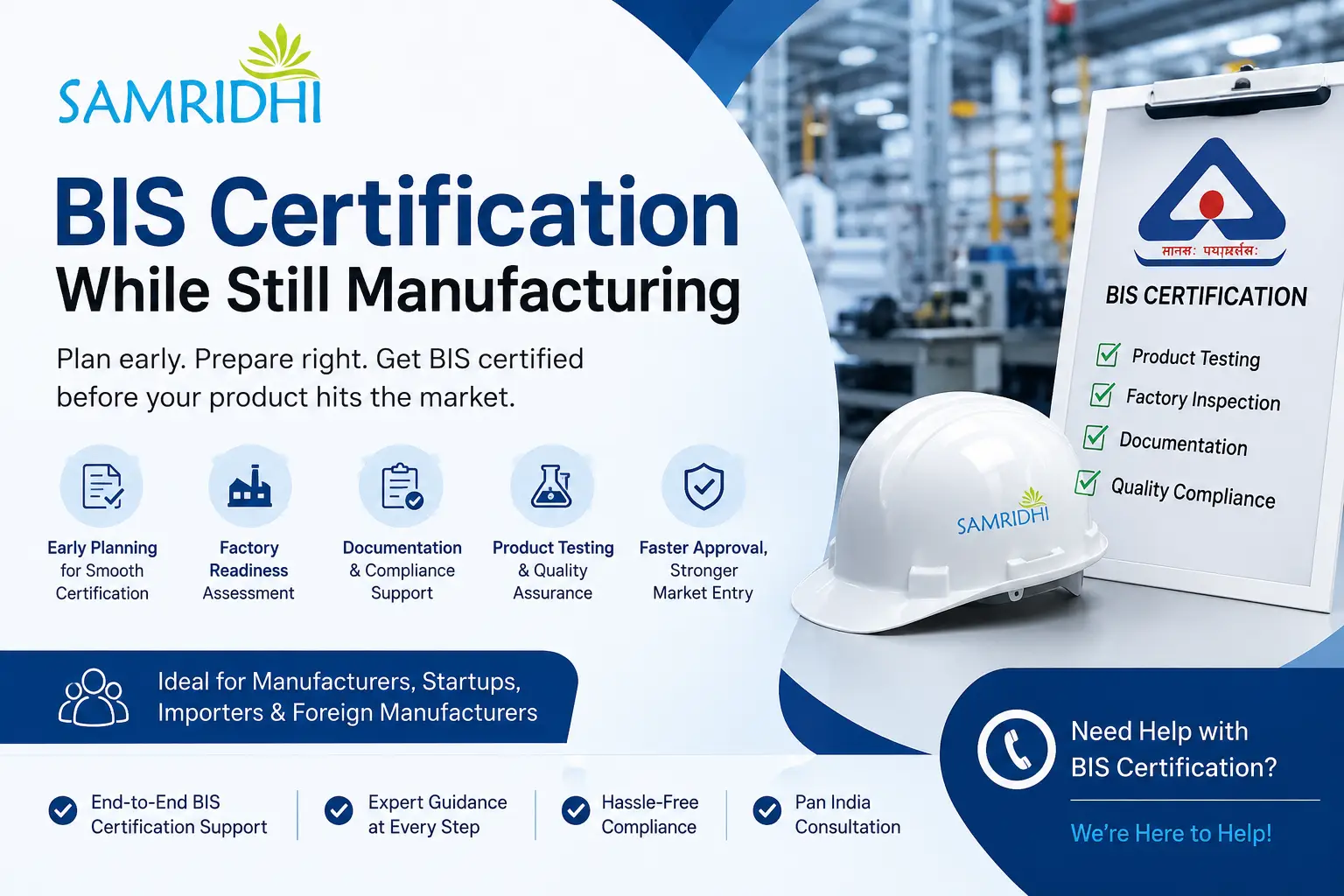
Can I Get BIS Certification While Still Manufacturing? Understanding When Businesses Should Apply for BIS Certification Before Commercial Production
One of the most common questions asked by manufacturers, startups, and importers is whether BIS Certification can be obtained while a product is still being manufactured. The answer is not simply yes or no because it depends on several factors, including the applicable BIS certification scheme, the product category, the stage of manufacturing, factory readiness, testing requirements, and the supporting documentation available at the time of application. Businesses often assume they must wait until mass production begins before starting the certification process, but in many situations, beginning compliance planning earlier can help avoid unnecessary delays before the product reaches the market.
For businesses introducing new products, timing is an important part of the overall BIS Certification Process. Waiting until commercial production has already started may compress project timelines, especially when product testing, documentation preparation, or factory-related activities are still pending. On the other hand, beginning the compliance process too early without a stable product design or manufacturing readiness may also create challenges if technical specifications change before certification activities are completed. The objective is to align regulatory planning with the product development lifecycle rather than treating certification as the final step before product launch.
Before deciding when to apply, businesses should first identify the applicable BIS Registration or certification scheme for their product. Different BIS schemes have different regulatory requirements, and the certification pathway depends on the nature of the product. For example, BIS Certification for electronic products, domestic manufacturing, foreign manufacturing, and other notified product categories may involve different documentation, testing procedures, or factory-related assessments. Understanding the correct scheme at the beginning helps businesses prepare realistic certification plans that match their manufacturing schedule.
Another important consideration is product readiness. Before certification activities begin, the product design should generally be sufficiently finalized so that the samples submitted for testing accurately represent the product intended for commercial production. Frequent design changes after testing has been completed may require businesses to reassess technical documentation or product evaluations depending on the applicable BIS requirements. For this reason, manufacturers often benefit from initiating compliance planning while manufacturing preparations are underway but after core product specifications have been stabilized.
Factory readiness also plays an important role in many BIS Product Certification schemes. Depending on the applicable regulations, businesses may need to demonstrate manufacturing capability, quality management practices, production controls, testing facilities where applicable, or other operational requirements before certification activities can progress. Manufacturers establishing a new production facility should therefore consider regulatory planning alongside factory development rather than waiting until production begins at full commercial scale. Early preparation allows quality systems, documentation, and production processes to develop together.
Documentation preparation is another activity that should begin well before commercial production starts. Technical specifications, product drawings, manufacturing information, quality procedures, test plans, raw material details where applicable, product labels, user manuals, declarations, and other supporting records often require coordination across engineering, production, procurement, and quality departments. Organizing these documents while manufacturing activities are progressing helps reduce last-minute administrative pressure and allows businesses to identify documentation gaps before submission.
Testing is equally important in determining the appropriate time to begin the India BIS Certification process. Depending on the product category and applicable BIS scheme, product samples may need to undergo testing at recognized laboratories. These samples should represent the final product configuration intended for the market. Businesses that submit samples before product specifications are finalized may face additional work if engineering modifications are introduced after testing has been completed. Careful coordination between engineering teams and compliance professionals helps ensure that testing activities align with final production plans.
For new manufacturers, early compliance planning can provide significant operational advantages. Startups and first-time manufacturers often concentrate heavily on product development, machinery installation, supplier selection, and production planning. Regulatory compliance sometimes receives attention only when the product is almost ready for sale. Integrating BIS Certification planning into the manufacturing schedule allows businesses to prepare documentation, coordinate testing, understand factory requirements, and allocate sufficient time for regulatory activities before commercial launch.
Importers working with overseas manufacturers also benefit from beginning documentation preparation during the manufacturing stage. Technical specifications, manufacturer declarations, product descriptions, quality records, authorization documents, and supporting engineering information often need to be collected directly from production facilities. Requesting these records after manufacturing has been completed may delay the certification process if documents require revision or additional clarification. Early communication with manufacturers supports smoother compliance planning and better documentation management.
Professional BIS Registration Consultant services assist businesses throughout this planning stage by helping determine the applicable certification scheme, reviewing product readiness, assessing documentation requirements, coordinating testing activities where applicable, and preparing businesses for the regulatory process. Rather than encouraging businesses to apply either too early or too late, consultants help align certification planning with actual manufacturing progress, ensuring that compliance activities are integrated into the broader product development timeline.
Ultimately, businesses do not necessarily need to wait until full-scale commercial production has started before beginning BIS Certification planning. In many situations, starting preparations during the manufacturing stage provides enough time to organize documentation, prepare product samples, coordinate testing, review factory readiness, and address compliance requirements before market launch. However, the appropriate timing always depends on the applicable BIS scheme, product category, manufacturing readiness, documentation completeness, testing requirements, and independent authority review. A well-planned certification strategy allows manufacturers to approach commercial production with greater confidence while supporting a more organized and efficient regulatory compliance process.
Planning BIS Certification at the right stage can help manufacturers prepare documentation, testing, and factory readiness before product launch. Depending on your product category, you may also find our BIS CRS Registration, BIS ISI Domestic Manufacturers, and BIS Consultant Delhi services helpful for understanding the appropriate certification pathway.
Can You Apply for BIS Certification Before Production Starts? How the BIS Certification Process Works During Manufacturing
Many manufacturers planning to introduce a new product into the Indian market ask whether they can begin the BIS Certification process before production officially starts. This question is especially common among startups establishing their first manufacturing facility, businesses launching new product lines, and foreign manufacturers preparing products for India. While it is possible to begin compliance planning well before commercial production, the actual certification process depends on several practical factors, including the applicable BIS scheme, product category, manufacturing readiness, product stability, documentation, testing requirements, and regulatory procedures. For this reason, businesses should focus on understanding when different certification activities should begin rather than viewing certification as a single event.
The first step is distinguishing between product development and manufacturing readiness. During the early stages of product development, engineering teams may still be refining technical specifications, selecting raw materials, improving performance, or making design modifications. At this stage, products often continue to evolve, making it difficult to prepare final documentation or submit representative product samples for regulatory evaluation. As the product design becomes stable and manufacturing processes are established, businesses are generally in a stronger position to begin planning the BIS Certification Process.
One of the most valuable activities that can begin before production starts is determining the applicable BIS Registration or certification scheme. BIS operates multiple certification schemes, and the applicable pathway depends on the product category, manufacturing location, and regulatory requirements. Understanding the correct certification route early allows businesses to prepare technical documentation, estimate compliance activities, coordinate testing, and organize manufacturing plans without disrupting future production schedules.
Factory preparation also plays an important role before production begins. Depending on the applicable BIS Product Certification scheme, manufacturers may need to establish production infrastructure, quality control procedures, manufacturing processes, testing capabilities where applicable, and operational documentation before certification activities can progress. Businesses constructing new manufacturing facilities often benefit from integrating compliance planning into factory development instead of waiting until production begins. This approach allows production systems and compliance requirements to evolve together.
Documentation preparation is another activity that should begin as early as possible. Product specifications, engineering drawings, manufacturing procedures, bill of materials where applicable, quality manuals, inspection procedures, product labels, user manuals, declarations, and supporting technical records frequently require input from engineering, production, procurement, and quality assurance teams. Preparing these documents during the manufacturing setup stage provides sufficient time to verify accuracy, maintain consistency, and resolve documentation gaps before formal certification activities begin.
Testing preparation is equally important. Depending on the applicable BIS scheme and product category, product samples may require testing through recognized laboratories. These samples should accurately represent the product that will eventually enter commercial production. Businesses therefore benefit from waiting until the product design, components, manufacturing process, and technical specifications have been finalized before preparing samples for evaluation. Coordinating testing activities with production readiness helps reduce the possibility of repeating technical evaluations due to later product modifications.
The manufacturing stage itself provides an opportunity to strengthen compliance systems. As production equipment is installed and manufacturing operations become operational, businesses can simultaneously establish product traceability procedures, quality assurance practices, internal testing systems where applicable, production documentation, inspection records, and document control processes. These operational systems not only support manufacturing efficiency but also contribute to better regulatory preparedness throughout the certification journey.
For manufacturers producing electronic products, early certification planning is particularly valuable because electronic devices often involve complex technical specifications, component management, supplier coordination, and laboratory testing requirements. Delaying compliance planning until products are ready for market can create unnecessary pressure on engineering teams, quality departments, and production schedules. Beginning documentation and compliance activities during manufacturing preparation allows organizations to integrate regulatory planning into normal business operations.
Foreign manufacturers supplying products to India also benefit from starting documentation coordination before production is completed. Indian importers and compliance teams frequently require technical specifications, product descriptions, quality documentation, manufacturer declarations, production information, and supporting engineering records from overseas facilities. Collecting these documents while manufacturing is underway allows businesses to identify missing information early and avoid delays caused by last-minute document requests after production has been completed.
Another advantage of beginning the certification process during manufacturing is improved project planning. Businesses launching new products often coordinate multiple activities simultaneously, including production planning, packaging development, supply chain management, distributor appointments, marketing preparation, and commercial launch activities. Integrating India BIS Certification planning into the overall project schedule allows compliance activities to progress alongside manufacturing rather than becoming a separate task after production has finished.
Professional BIS Registration Consultant services support businesses throughout this stage by helping determine the appropriate certification scheme, reviewing product readiness, evaluating factory preparedness, organizing documentation, coordinating testing where applicable, and aligning compliance activities with manufacturing milestones. Their role is to help businesses establish a practical certification roadmap that reflects the actual stage of product development and production rather than encouraging premature or delayed applications.
Ultimately, the answer to whether businesses can apply for BIS Certification before production starts depends on the specific product, applicable certification scheme, manufacturing readiness, documentation status, and testing requirements. Many compliance activities can and should begin well before commercial production, while certain certification stages require products and manufacturing systems to be sufficiently established. Every application remains case-specific and subject to applicable BIS regulations, product category, factory readiness, testing outcomes where applicable, documentation completeness, and independent authority review. Businesses that integrate compliance planning into their manufacturing timeline are generally better prepared to launch products with stronger regulatory confidence and fewer avoidable delays.
Understanding the applicable certification scheme before production begins allows businesses to organize documentation and regulatory planning more efficiently. You can also explore our BIS Scheme X Certification, ISO Certification, and Startup India Certification services to strengthen manufacturing and compliance readiness.
 Get Certified with Confidence – Your One-Stop Compliance Partner
From BIS, WPC, TEC, BEE, EPR, LMPC, CDSCO, FSSAI, ISO, MSME to PESO, NABL testing, Startup India, Make in India, and Lab Setup, we handle all your regulatory approvals, certifications, and documentation needs with precision and speed. Partner with Samridhi Compliance Certification and simplify your journey to full compliance—so you can focus on growing your business.
BIS Certification During Manufacturing: Product Testing, Factory Readiness, and BIS Registration Requirements Explained
For many manufacturers, the period between product development and commercial production is when most regulatory planning takes place. It is also the stage when questions about BIS Certification become more practical. Businesses often ask whether product testing can begin while manufacturing is being established, whether the factory must be fully operational before applying, and what level of readiness is expected before starting the BIS Registration process. The answer depends on the applicable BIS certification scheme, the product category, and the maturity of the manufacturing process. Understanding how product testing, factory readiness, and documentation work together helps businesses prepare for certification more efficiently while avoiding unnecessary delays before market launch.
One of the most important principles in the BIS Certification Process is that the product submitted for evaluation should accurately represent the product that will eventually be manufactured and supplied to the market. During the early stages of manufacturing, engineering teams often continue refining designs, selecting suppliers, validating components, and optimizing production methods. If significant technical changes are expected, businesses may benefit from completing those changes before moving forward with testing activities. Stable product specifications generally provide a stronger foundation for certification planning because they reduce the possibility of repeating technical evaluations after design modifications.
Product testing is a key component of many BIS Product Certification schemes. Depending on the applicable regulations, product samples may need to be tested at recognized laboratories to evaluate compliance with relevant Indian Standards. The scope of testing varies according to the product category and applicable certification scheme. Businesses should therefore determine the testing requirements for their specific product rather than assuming every product follows the same evaluation process. Preparing representative product samples and supporting technical documentation before laboratory testing helps improve consistency throughout the certification process.
Factory readiness is another critical factor that manufacturers should consider while planning India BIS Certification. Certification is not limited to evaluating the product alone. For many schemes, the manufacturing facility itself also plays an important role. Production infrastructure, manufacturing processes, quality control systems, equipment, product traceability, inspection procedures, and operational controls may all contribute to overall certification readiness depending on the applicable BIS requirements. Manufacturers setting up new facilities should therefore integrate compliance planning into factory development instead of treating certification as a separate activity after production begins.
Quality management systems established during manufacturing also contribute to smoother compliance. As production lines become operational, businesses can develop standardized operating procedures, inspection protocols, quality documentation, calibration records where applicable, raw material controls, and production monitoring systems. These internal processes support manufacturing consistency while also helping businesses maintain organized records that may become relevant during certification activities. Building these systems during the manufacturing stage is generally more efficient than introducing them immediately before regulatory evaluation.
Documentation preparation should progress alongside manufacturing activities. Engineering drawings, product specifications, bills of materials where applicable, production procedures, quality manuals, inspection records, user manuals, product labels, declarations, and supporting technical documentation often require contributions from multiple departments. Waiting until production is complete to prepare these records can place unnecessary pressure on engineering and compliance teams. Organizing documentation during manufacturing allows businesses to review technical consistency, identify missing information, and improve overall documentation quality before submission.
For manufacturers producing electronic products, early testing and documentation planning becomes particularly valuable because electronic devices often involve complex technical requirements, multiple component suppliers, and detailed engineering specifications. Coordinating laboratory testing, technical documentation, and production planning simultaneously helps businesses manage certification activities more efficiently while reducing the risk of inconsistencies between the tested product and commercial production.
Factory preparedness also extends beyond physical infrastructure. Businesses should ensure that production personnel understand quality procedures, documentation controls, internal inspection practices, and record management systems before certification activities progress. Well-trained production and quality teams contribute to more consistent manufacturing operations while supporting ongoing compliance after commercial production begins.
Importers working with overseas manufacturers should also pay close attention to factory readiness at the source of production. Technical documentation, manufacturing information, product specifications, quality procedures, and supporting engineering records are generally obtained directly from the manufacturing facility. Establishing communication with overseas manufacturers during the production stage allows importers to collect accurate documentation while products are still being prepared for export, reducing the possibility of missing records later in the certification process.
Another practical consideration is production planning. Businesses frequently coordinate supplier onboarding, machinery installation, inventory procurement, packaging development, distribution planning, and commercial launch activities during the manufacturing stage. Integrating BIS Registration planning into this broader operational schedule allows certification activities to progress alongside manufacturing instead of becoming an unexpected obstacle immediately before product launch. This integrated approach often provides greater flexibility for addressing documentation, testing, or factory-related requirements without affecting commercial timelines.
Professional BIS Registration Consultant services support businesses by assessing product readiness, reviewing factory preparedness, organizing technical documentation, coordinating laboratory testing where applicable, and aligning certification planning with manufacturing progress. Rather than focusing only on regulatory submissions, consultants help businesses build a structured compliance strategy that reflects the practical realities of production, quality management, and product development.
Ultimately, BIS Certification During Manufacturing is less about obtaining approval before production and more about preparing the business for a successful certification process. Product testing, factory readiness, quality systems, technical documentation, and manufacturing controls all contribute to overall compliance preparedness. The exact requirements always depend on the applicable BIS scheme, product category, manufacturing capability, testing requirements, documentation completeness, and independent authority review. Businesses that begin compliance planning while manufacturing systems are being established are generally better positioned to complete certification activities with fewer avoidable challenges and greater operational confidence before entering the Indian market.
Early compliance planning often helps manufacturers avoid documentation gaps and unnecessary certification delays before product launch. Businesses manufacturing regulated electronic or telecom products may also require TEC MTCTE Approval, WPC ETA Approval, or BIS CRS Registration, depending on the applicable regulatory framework.
BIS Certification for New Manufacturers: How Early Planning, Documentation, and Factory Preparation Support a Smoother Certification Process
For a new manufacturer, setting up a production facility involves far more than installing machinery and beginning commercial production. Product development, supplier selection, quality systems, workforce training, production planning, and regulatory compliance often progress simultaneously. During this stage, many businesses ask when they should begin the BIS Certification process. Some believe certification should only be considered after production starts, while others attempt to begin the process before their factory and products are fully prepared. In reality, the most effective approach usually lies between these two extremes. Early planning allows manufacturers to prepare systematically while ensuring that certification activities are aligned with actual manufacturing readiness.
One of the biggest advantages of starting compliance planning early is that it gives businesses time to understand which BIS Certification scheme applies to their product. Different products fall under different regulatory frameworks, and the applicable certification process depends on the product category, manufacturing location, and relevant Indian Standards. Identifying the correct certification pathway at the beginning helps manufacturers estimate documentation requirements, testing activities, factory preparation, and overall project planning before commercial production begins.
Factory preparation is another area where early planning makes a noticeable difference. A manufacturing facility should not only be capable of producing the product but should also operate through organized production processes, quality control procedures, inspection systems, and documented manufacturing practices. Depending on the applicable BIS Product Certification scheme, manufacturers may need to demonstrate that production systems are capable of consistently producing products that conform to the required standards. Building these systems during factory setup is generally more efficient than introducing them after production has already started.
Documentation often becomes one of the most time-consuming aspects of the BIS Registration process, particularly for businesses applying for certification for the first time. Engineering drawings, technical specifications, product descriptions, manufacturing procedures, quality manuals, inspection plans, product labels, user manuals, declarations, and supporting technical records usually require input from multiple departments. Preparing these documents gradually while the factory is being established gives engineering, production, and quality teams enough time to review technical accuracy and maintain consistency across all records before certification activities begin.
For manufacturers producing electronic products, documentation planning becomes even more important because product designs often involve multiple components, technical parameters, and supplier specifications. Engineering changes are common during product development, and businesses should ensure that technical documentation reflects the final production-ready version of the product before laboratory testing or certification activities proceed. Stable product specifications help reduce the need for repeated documentation updates later in the process.
Quality management systems should also be developed alongside manufacturing operations. New manufacturers benefit from establishing internal quality procedures, incoming material inspections, production monitoring systems, testing practices where applicable, calibration records, document control procedures, and product traceability mechanisms before production reaches commercial scale. These operational controls support consistent manufacturing performance while strengthening overall certification readiness.
Another important aspect is supplier coordination. Most manufacturers depend on multiple suppliers for raw materials, components, packaging materials, electronic assemblies, or specialized parts. Technical information obtained from suppliers often becomes part of the supporting documentation required during certification. Communicating documentation requirements early helps manufacturers collect technical specifications, material information, declarations, and supporting records without delaying later stages of the compliance process.
Businesses should also consider laboratory testing as part of their overall production schedule. Depending on the applicable BIS Certification Process, product samples may require evaluation through recognized laboratories. Since testing should generally be performed on representative production-ready samples, manufacturers benefit from completing product validation before scheduling laboratory activities. Aligning testing with manufacturing milestones helps reduce unnecessary revisions caused by design changes introduced after evaluation.
Startups entering manufacturing for the first time often face additional operational challenges because production planning, regulatory compliance, financing, vendor development, recruitment, and market preparation all occur simultaneously. Integrating India BIS Certification planning into the overall business launch strategy allows management teams to allocate sufficient time for documentation, testing, quality systems, and certification activities without placing unnecessary pressure on commercial launch deadlines.
Professional BIS Registration Consultant services help new manufacturers convert these individual activities into a structured certification roadmap. Consultants assist with identifying the appropriate certification scheme, reviewing factory readiness, organizing documentation, coordinating testing where applicable, evaluating production preparedness, and helping businesses understand the sequence of compliance activities. Their role is not to accelerate regulatory decisions or guarantee approvals, but to help manufacturers avoid common planning mistakes that often result in unnecessary delays.
Perhaps the greatest benefit of early preparation is improved coordination across departments. Engineering teams, production managers, quality professionals, procurement personnel, and senior management all contribute information required during the certification process. Beginning compliance planning while the factory is still being established creates opportunities for better communication, more accurate documentation, and stronger project management throughout the manufacturing lifecycle.
Ultimately, BIS Certification for new manufacturers is most effective when it becomes part of the factory planning process rather than an activity that begins after commercial production is ready. Early documentation, stable product development, organized quality systems, supplier coordination, production planning, and factory preparedness all contribute to a more structured certification journey. While every BIS Certification application remains case-specific and subject to the applicable BIS scheme, product category, manufacturing readiness, testing requirements, documentation completeness, and independent authority review, businesses that integrate compliance planning into their manufacturing strategy are generally better positioned to launch products with greater confidence, stronger operational control, and fewer avoidable regulatory challenges.
New manufacturers benefit from integrating compliance planning into factory setup rather than treating certification as a separate activity. Our BIS ISI Domestic Manufacturers, ISO Certification, and Make in India Certification services can also help businesses build stronger manufacturing systems and prepare for long-term regulatory compliance.
Get Certified with Confidence – Your One-Stop Compliance Partner
From BIS, WPC, TEC, BEE, EPR, LMPC, CDSCO, FSSAI, ISO, MSME to PESO, NABL testing, Startup India, Make in India, and Lab Setup, we handle all your regulatory approvals, certifications, and documentation needs with precision and speed. Partner with Samridhi Compliance Certification and simplify your journey to full compliance—so you can focus on growing your business.
BIS Certification Before Product Launch: When Manufacturers Should Begin the BIS Registration Process and Common Mistakes to Avoid
Launching a new product involves far more than completing manufacturing and starting sales. Businesses must coordinate product development, supplier management, packaging, marketing, distribution, quality control, and regulatory compliance before the product reaches customers. Among these activities, BIS Certification is often left until the final stage, creating unnecessary pressure on manufacturers and delaying commercial launch. A more effective approach is to integrate the BIS Registration process into the product development timeline so that compliance activities progress alongside manufacturing instead of becoming a last-minute requirement.
One of the biggest misconceptions is that businesses should wait until products are fully manufactured before beginning the BIS Certification Process. In practice, many certification activities can begin much earlier. Product classification, identification of the applicable BIS scheme, documentation planning, factory preparation, quality system development, and testing coordination where applicable are all activities that benefit from early planning. Starting these tasks before commercial production helps manufacturers identify potential compliance gaps while there is still sufficient time to address them.
The first step before product launch is confirming whether the product falls under a mandatory BIS Product Certification scheme. Different categories of products are governed by different BIS regulations, and the applicable certification process depends on factors such as product type, manufacturing location, and the relevant Indian Standard. Manufacturers that identify the correct certification pathway early are generally able to prepare more realistic production schedules and avoid unexpected regulatory challenges immediately before launch.
Product readiness is equally important. Before businesses initiate laboratory testing or submit documentation, the product should generally represent the final commercial version intended for the market. Engineering teams often continue refining product designs during early manufacturing, introducing improvements to components, software, materials, or performance. If certification activities begin before the design has stabilized, later modifications may affect technical documentation or testing outcomes depending on the applicable BIS scheme. Aligning certification with finalized product specifications helps reduce unnecessary revisions.
Documentation should also be prepared long before the intended launch date. The BIS Registration process commonly requires technical specifications, manufacturing details, product drawings, quality procedures, user manuals, labels, declarations, company information, and supporting technical records. Collecting and verifying these documents often involves coordination between engineering, production, procurement, quality assurance, and management teams. Businesses that begin documentation only after production is complete frequently experience avoidable delays due to missing or inconsistent information.
Factory readiness should never be overlooked. Depending on the applicable certification scheme, manufacturers may need to demonstrate established production processes, quality management practices, inspection procedures, testing capabilities where applicable, and manufacturing controls. Preparing the factory only after certification activities begin can create operational challenges, especially if additional quality systems or documentation are required. Building these processes into factory operations before product launch supports both certification readiness and long-term manufacturing consistency.
Testing coordination is another area where early planning provides clear benefits. Many product categories require laboratory testing before certification can proceed. Since testing schedules, sample preparation, documentation review, and technical evaluations require time, businesses should avoid scheduling these activities immediately before product launch. Coordinating testing with production planning allows manufacturers to resolve technical observations without affecting commercial release dates.
New manufacturers and startups often face additional challenges because they manage several business priorities simultaneously. Production equipment installation, supplier qualification, workforce recruitment, packaging development, sales planning, and regulatory compliance frequently occur at the same time. Without a structured compliance roadmap, certification activities may be postponed until products are nearly ready for sale. Integrating India BIS Certification planning into the overall business launch strategy helps management allocate sufficient resources for documentation, testing, and regulatory preparation without disrupting production schedules.
One of the most common mistakes businesses make is assuming that every product follows the same certification process. In reality, BIS Certification requirements vary depending on the product category and the applicable certification scheme. Applying incorrect documentation, following the wrong certification pathway, or misunderstanding regulatory applicability can lead to unnecessary delays. Conducting an early product applicability assessment helps manufacturers understand which regulatory requirements are relevant before significant resources are committed.
Another frequent mistake involves inconsistent technical documentation. Product specifications, engineering drawings, labels, user manuals, declarations, and manufacturing records should accurately describe the final product being submitted for certification. Differences between these documents often result in clarification requests during the evaluation process. Establishing a structured internal document review before submission significantly improves documentation quality and overall certification readiness.
Manufacturers also sometimes underestimate the importance of communication between departments. Engineering teams may update product specifications without informing compliance personnel, procurement departments may change suppliers, or production teams may modify manufacturing processes after documentation has already been prepared. These internal communication gaps can create inconsistencies that become difficult to resolve later. A coordinated compliance workflow helps ensure that every department works with the latest approved product information.
Professional BIS Registration Consultant services assist businesses by integrating compliance planning into the broader product launch strategy. Consultants help determine the applicable BIS scheme, review product readiness, organize technical documentation, coordinate testing where applicable, assess factory preparedness, and identify potential compliance gaps before applications are submitted. Their role is to improve certification readiness through better planning and structured documentation rather than promising approvals or accelerated timelines.
Ultimately, successful BIS Certification Before Product Launch depends on preparation rather than speed. Businesses that begin regulatory planning while products are still progressing through manufacturing are generally better positioned to manage documentation, testing, factory readiness, and certification activities without disrupting commercial objectives. Every BIS Certification application remains case-specific and subject to the applicable BIS scheme, product category, manufacturing readiness, testing requirements, documentation completeness, and independent authority review. By integrating compliance into the overall product development lifecycle, manufacturers can reduce avoidable delays, strengthen operational efficiency, and approach market launch with greater confidence.
Product testing and technical documentation play an important role in certification readiness. Depending on the applicable BIS scheme, businesses may also benefit from our NABL Testing, LM79 Testing, and Lab Setup and Equipment services to support testing coordination and quality infrastructure.


 Grab Your Certified Now
 +91 8799708673
 WhatsApp