Understanding Smart Home Device Compliance Requirements in India
The smart home industry in India has evolved rapidly over the past few years. Products that once operated independently are now connected through WiFi networks, Bluetooth communication, mobile applications, cloud platforms, and integrated automation ecosystems. Smart locks can communicate with smartphones, security cameras can stream footage through wireless networks, and smart lighting systems can respond to voice commands from connected home assistants.
While these innovations have transformed consumer convenience, they have also introduced new compliance considerations for manufacturers, importers, startups, and technology brands operating in the connected device ecosystem.
Understanding Smart Home Device Compliance India requirements has become increasingly important because modern smart home products often combine multiple technologies within a single device. A smart product may function as a consumer electronic device, contain wireless communication modules, interact with telecom networks, connect to cloud-based platforms, and communicate with other IoT devices simultaneously.
This convergence of technologies is one of the main reasons compliance requirements have become more complex than they were for traditional electronic products.
Smart Home Devices Are No Longer Standalone Products
Historically, most household devices operated independently.
A light bulb provided illumination.
A lock secured a door.
A camera recorded footage.
Today's smart home products operate very differently.
Many devices now include:
- WiFi connectivity
- Bluetooth communication
- Mobile app integration
- Cloud synchronization
- Device-to-device communication
- Remote monitoring capabilities
As a result, compliance assessments increasingly focus not only on the product itself but also on how the device communicates within a connected environment.
This is where Connected Home Product Compliance becomes particularly relevant.
Wireless Connectivity Creates Additional Compliance Considerations
Most smart home ecosystems depend on wireless communication technologies.
Common examples include:
- WiFi-enabled cameras
- Bluetooth smart locks
- Smart plugs
- Connected thermostats
- Voice-controlled assistants
- Home automation hubs
Because these products communicate using radio frequency technologies, businesses often need to evaluate potential wireless compliance obligations before introducing products into the Indian market.
For many importers, the compliance challenge begins with understanding the wireless architecture embedded within the device.
WPC ETA Considerations in Smart Home Products
Many smart home devices rely on:
- Bluetooth modules
- WiFi modules
- RF communication components
These wireless technologies frequently become an important consideration during product compliance reviews.
Businesses importing connected devices often evaluate WPC ETA Approval for Smart Home Devices as part of their broader compliance planning process.
The exact requirements depend on factors such as:
- Product functionality
- Wireless technology used
- Frequency characteristics
- Product configuration
- Technical specifications
Because every connected product is different, compliance obligations are often assessed on a product-specific basis.
The Growing Overlap Between IoT and Telecom Compliance
One of the biggest shifts occurring within the smart home sector is the increasing overlap between consumer electronics and telecommunications technology.
Many smart devices now:
- Exchange data continuously
- Connect to cloud servers
- Synchronize with mobile applications
- Communicate with multiple devices simultaneously
This has created new areas of consideration related to Telecom Compliance for IoT Devices.
A smart home camera, for example, may function as a consumer security product while simultaneously operating as part of a larger connected communication network.
As device connectivity expands, understanding telecom-related compliance considerations becomes increasingly important.
IoT Ecosystems Have Changed Compliance Expectations
Modern smart homes are rarely built around a single device.
Instead, consumers often create interconnected ecosystems consisting of:
- Smart lighting systems
- Security cameras
- Smart locks
- Home assistants
- Connected appliances
- Environmental sensors
Each device may communicate with:
- Mobile applications
- Home networks
- Cloud platforms
- Other connected devices
This interconnected architecture has significantly increased the importance of IoT Device Compliance India planning.
Businesses must now evaluate how products interact within broader connected environments rather than assessing devices in isolation.
Importers Face New Compliance Challenges
Many smart home products sold in India are sourced from overseas manufacturers.
Importers frequently face challenges such as:
- Identifying embedded wireless modules
- Verifying technical specifications
- Obtaining accurate supplier documentation
- Understanding connectivity architecture
- Assessing wireless communication features
A product may appear to be a simple home appliance while containing multiple wireless communication technologies that influence compliance requirements.
This is one reason compliance reviews are increasingly being conducted earlier in the product sourcing process.
Product Documentation Has Become More Important
Smart home devices typically generate larger and more complex documentation requirements than traditional electronics.
Businesses may need to review:
- Technical specifications
- Wireless module details
- Product architecture information
- Connectivity diagrams
- Communication protocols
- Supplier declarations
Accurate documentation helps businesses understand how the device operates within a connected ecosystem and whether additional compliance considerations may apply.
Incomplete or outdated technical records often become a source of compliance uncertainty.
Smart Home Startups Must Plan Compliance Early
India's growing startup ecosystem has contributed significantly to smart home innovation.
Many startups develop products involving:
- Smart automation
- Connected security
- IoT monitoring
- Consumer electronics
- Wireless home technologies
However, compliance planning is often introduced late in the product development process.
Because smart devices typically involve multiple communication technologies, compliance considerations can become more complex once product architecture has already been finalized.
Early evaluation generally provides greater flexibility for addressing regulatory requirements.
Compliance Requirements Continue to Evolve
The connected home market continues to grow rapidly.
New products are entering the market every year.
Wireless technologies continue evolving.
Connectivity capabilities are expanding.
As a result, compliance expectations are becoming increasingly sophisticated.
Businesses involved in smart home products must remain aware that compliance requirements may evolve alongside technological innovation and regulatory developments.
Why Understanding Requirements Matters
The most successful smart home companies do not treat compliance as a final administrative task.
They view it as part of product planning.
Understanding Smart Home Device Compliance India, WPC Compliance for Connected Devices, WiFi and Bluetooth Smart Device Compliance, IoT Telecom Regulatory Requirements India, and WPC ETA Approval for IoT Products helps businesses evaluate potential obligations before products enter the market. As connected homes become more common across India, manufacturers, importers, startups, and technology brands are discovering that compliance planning increasingly depends on how products communicate, connect, and interact within larger IoT ecosystems. Since every device architecture is unique, compliance requirements remain product-specific and subject to applicable regulatory provisions and authority review.
Many smart home products combine wireless communication, connectivity features, and embedded technologies that may trigger multiple compliance considerations. Businesses evaluating connected devices often review WPC ETA Approval, TEC MTCTE Approval, and BIS CRS Registration requirements together to better understand how smart products interact with India's regulatory framework.
Why Businesses in India Need Smart Home Device Compliance
The smart home industry in India is no longer limited to premium residential automation projects. What began as a niche technology segment has evolved into a rapidly expanding ecosystem of connected products, wireless devices, IoT platforms, home security solutions, smart appliances, and automation systems. As adoption continues to increase across urban and semi-urban markets, businesses operating within this ecosystem are discovering that compliance requirements have become an important part of product planning and market-entry strategy.
Unlike traditional electronics, smart home products often combine wireless communication technologies, cloud connectivity, mobile application integration, and device-to-device communication within a single product. This convergence has created new compliance considerations that affect manufacturers, importers, startups, distributors, and technology companies throughout the connected home value chain.
As a result, understanding Smart Home Device Compliance India requirements is becoming increasingly important for businesses participating in the country's growing IoT and smart home ecosystem.
India's Electronics Manufacturing Ecosystem Is Producing More Connected Products
India's electronics manufacturing sector has expanded significantly over the last decade.
Manufacturers are increasingly producing:
- Smart appliances
- Connected security devices
- Home automation systems
- Smart lighting products
- IoT-enabled electronics
- Consumer technology products
Many of these devices depend on:
- WiFi connectivity
- Bluetooth communication
- Wireless networking
- Cloud-based services
As product connectivity becomes more sophisticated, manufacturers must evaluate not only product functionality but also how wireless communication technologies influence compliance requirements.
This growing overlap between electronics manufacturing and wireless technology is one reason Connected Home Product Compliance is receiving increased attention across the industry.
Importers Are Bringing More Smart Home Products Into India Than Ever Before
A significant portion of India's smart home market relies on imported technology.
Importers regularly source:
- Smart cameras
- Smart locks
- Home automation hubs
- Smart switches
- Smart plugs
- Connected sensors
- Smart speakers
from international manufacturers.
While these products may appear similar to traditional consumer electronics, they often contain embedded communication technologies that introduce additional compliance considerations.
Many importers discover that understanding wireless modules, connectivity architecture, and technical specifications is just as important as evaluating product quality and commercial viability.
This is why WPC ETA Approval for Smart Home Devices has become a major area of focus within the smart home import ecosystem.
India's Startup Ecosystem Is Accelerating Smart Home Innovation
India's startup ecosystem has played a major role in expanding connected home technologies.
Today, startups are developing products involving:
- Smart security solutions
- Home monitoring systems
- IoT automation platforms
- Smart energy management
- Connected appliances
- Voice-enabled technologies
Many founders prioritize innovation, product design, software development, and user experience.
Compliance considerations are sometimes evaluated later in the development cycle.
However, because smart home devices often rely on wireless communication technologies and connected infrastructure, compliance planning is increasingly becoming part of the product development process itself.
Startups that assess compliance requirements early generally gain greater visibility into potential regulatory obligations before commercialization begins.
The IoT Ecosystem Has Created New Compliance Challenges
The modern smart home is no longer built around a single device.
Consumers increasingly purchase interconnected ecosystems that may include:
- Smart lighting systems
- Security cameras
- Smart locks
- Environmental sensors
- Home assistants
- Connected appliances
These devices frequently communicate with:
- Smartphones
- Cloud platforms
- WiFi networks
- Other smart devices
As the number of connected devices within a home increases, the complexity of compliance assessments also grows.
Businesses must often evaluate how products interact within broader IoT ecosystems rather than focusing solely on standalone device functionality.
This shift has significantly increased the importance of IoT Device Compliance India planning.
Telecom and Connectivity Features Are Becoming Standard
One of the most important changes occurring in the smart home sector is the growing overlap between consumer electronics and telecommunications technologies.
Many connected products now support:
- Wireless data transmission
- Network communication
- Remote access
- Mobile connectivity
- Cloud synchronization
Products that previously functioned as standalone electronics now participate in larger communication ecosystems.
This has created growing interest in Telecom Compliance for IoT Devices, particularly for businesses developing products that rely heavily on connected infrastructure.
As connectivity becomes a core product feature, telecom-related compliance considerations are becoming increasingly relevant.
Home Automation Businesses Face New Regulatory Realities
Companies involved in home automation often work with products that integrate multiple technologies simultaneously.
A single smart home deployment may include:
- Wireless communication modules
- Connected sensors
- Networking equipment
- Cloud services
- Mobile applications
Because these systems operate as interconnected environments, businesses frequently encounter compliance questions that extend beyond traditional product certification considerations.
Understanding the broader compliance landscape helps organizations plan more effectively when developing or importing connected solutions.
Product Documentation Has Become More Complex
Connected products typically require significantly more technical documentation than conventional household electronics.
Businesses may need to review:
- Wireless module specifications
- Connectivity architecture
- Communication protocols
- Technical datasheets
- Product integration details
As smart home ecosystems become increasingly sophisticated, documentation quality plays an important role in evaluating compliance obligations.
Many compliance challenges originate not from the product itself but from incomplete or inconsistent technical information.
Consumer Demand Is Driving Faster Product Cycles
The smart home market evolves quickly.
Manufacturers regularly introduce:
- New product generations
- Enhanced wireless features
- Expanded connectivity options
- Improved automation capabilities
While rapid innovation benefits consumers, it also increases the importance of ongoing compliance reviews.
Products that appear similar externally may contain substantially different communication technologies internally.
Businesses that monitor product changes proactively are generally better positioned to manage compliance requirements effectively.
Compliance Is Becoming a Competitive Business Consideration
For many organizations, compliance is no longer viewed solely as a regulatory obligation.
It has become part of:
- Product planning
- Import strategy
- Supplier evaluation
- Market-entry preparation
- Risk management
Businesses that understand connectivity-related compliance requirements early often experience fewer operational surprises during product launches and expansion initiatives.
As the smart home sector continues growing, proactive compliance planning is increasingly becoming part of responsible business operations.
Why Businesses Are Paying More Attention to Compliance
The growth of connected homes, wireless communication technologies, IoT ecosystems, and cloud-enabled devices has fundamentally changed the compliance landscape.
Products that once operated independently now communicate continuously with networks, applications, and other devices.
This shift has made Smart Home Device Compliance India, WPC Compliance for Connected Devices, WiFi and Bluetooth Smart Device Compliance, Smart Home Wireless Device Approval India, and IoT Telecom Regulatory Requirements India important considerations for manufacturers, importers, startups, and technology companies. As smart home ecosystems become more integrated and technologically advanced, businesses are recognizing that compliance planning is no longer limited to the product itself—it increasingly depends on how the device connects, communicates, and functions within broader digital environments. Since every product architecture is different, compliance obligations remain product-specific and subject to applicable regulatory requirements and authority review.
As smart homes, IoT ecosystems, and connected products continue expanding across India, manufacturers, importers, and technology startups frequently assess WPC ETA Approval, Startup India Certification, and Make in India Certification alongside product compliance planning to support innovation, market expansion, and regulatory readiness.
Step-by-Step Process for Smart Home Device Compliance in India
For many businesses, smart home compliance appears straightforward at first glance.
A product is manufactured.
The device is imported.
The product is sold.
In reality, modern smart home devices often involve multiple technologies operating simultaneously. A smart camera may connect through WiFi, a smart lock may communicate through Bluetooth, and a home automation hub may interact with several connected devices while exchanging information through cloud platforms.
Because of this complexity, Smart Home Device Compliance India typically begins long before a product reaches the Indian market.
The most successful compliance projects generally follow a structured process that focuses on understanding connectivity architecture, identifying wireless technologies, evaluating documentation, and assessing applicable regulatory requirements.
While requirements vary by product, the following process provides a practical overview of how businesses typically approach compliance planning for smart home devices.
Step 1: Identify Whether the Product Is Part of a Connected Home Ecosystem
The first step is understanding exactly how the product operates.
Many businesses initially classify products based on their primary function.
For example:
- Smart lock
- Smart camera
- Smart lighting system
- Smart speaker
- Smart thermostat
However, compliance assessments often begin by evaluating how the device communicates.
Key questions usually include:
- Does the product connect to WiFi?
- Does it use Bluetooth?
- Does it communicate with mobile applications?
- Does it connect to cloud services?
- Does it interact with other smart devices?
These answers help determine whether the product falls within a broader connected home ecosystem.
Step 2: Review Wireless Communication Technologies
Once connectivity features have been identified, businesses generally review the wireless technologies embedded within the device.
Common technologies include:
- WiFi modules
- Bluetooth modules
- RF communication systems
- Zigbee technologies
- Wireless networking components
Understanding the communication architecture is important because wireless functionality frequently influences compliance obligations.
Many smart home devices contain multiple communication technologies operating simultaneously.
Each technology may require separate evaluation depending on the product configuration.
Step 3: Evaluate Product Architecture and Connectivity Design
The next step involves understanding how the device interacts with other systems.
Modern smart home products often communicate with:
- Smartphones
- Mobile applications
- Home automation platforms
- Cloud servers
- Other connected devices
A smart home camera, for example, may stream data through WiFi while also connecting to cloud-based storage platforms.
A smart lock may communicate through Bluetooth while integrating with a broader automation ecosystem.
This connectivity architecture plays an important role in determining applicable compliance considerations.
Step 4: Collect Technical Documentation
Documentation is often one of the most important parts of the compliance process.
Businesses typically gather:
- Product specifications
- Technical datasheets
- Wireless module details
- Product architecture information
- Connectivity descriptions
- Supplier declarations
Accurate documentation helps organizations understand the technologies embedded within the device.
Many compliance challenges originate not from the product itself but from incomplete or inconsistent technical records.
Step 5: Verify Embedded Wireless Modules
Modern smart home devices frequently contain pre-installed wireless modules sourced from specialized manufacturers.
Importers and manufacturers often review:
- Module model numbers
- Frequency information
- Wireless specifications
- Technical certifications
- Product integration details
This step is particularly important because products that appear identical externally may contain different wireless modules internally.
Verifying module information early helps reduce compliance uncertainty later in the process.
Step 6: Assess WPC ETA Requirements
After wireless technologies have been identified, businesses typically evaluate whether WPC ETA Approval for Smart Home Devices may be relevant.
This assessment generally focuses on:
- Wireless communication technologies
- Frequency characteristics
- Product functionality
- Technical specifications
The exact applicability depends on the product and its wireless architecture.
Because smart home devices vary significantly, compliance evaluations are often conducted on a case-by-case basis.
Step 7: Review Telecom Connectivity Considerations
Many connected products now function within larger communication ecosystems.
As a result, businesses increasingly evaluate Telecom Compliance for IoT Devices alongside wireless compliance planning.
This review often examines:
- Device communication behavior
- Connectivity infrastructure
- Data transmission functionality
- Interaction with communication networks
The growing overlap between IoT and telecommunications technology has made this stage increasingly important for connected products.
Step 8: Evaluate Product Variants
Smart home products are frequently available in multiple versions.
Examples include:
- WiFi-only variants
- Bluetooth-enabled models
- Dual connectivity versions
- Region-specific products
Each version may contain different technical characteristics.
Businesses therefore benefit from reviewing individual variants rather than assuming all products share identical compliance requirements.
Many compliance complications occur when product variations are overlooked.
Step 9: Coordinate Compliance Planning Before Market Entry
Once technical reviews have been completed, businesses typically align compliance activities with their broader market-entry strategy.
This may involve:
- Product launch planning
- Import scheduling
- Documentation management
- Supplier coordination
- Regulatory assessments
Conducting compliance reviews before commercial launch generally provides greater flexibility than addressing issues after products have entered the supply chain.
Step 10: Maintain Ongoing Compliance Monitoring
Smart home products evolve continuously.
Manufacturers frequently introduce:
- Hardware updates
- New communication modules
- Software enhancements
- Connectivity improvements
Because connected products change over time, compliance should not be viewed as a one-time activity.
Ongoing monitoring helps businesses identify changes that may influence future compliance obligations.
This is particularly important for organizations managing large product portfolios or multiple smart device categories.
Why a Structured Process Matters
Many compliance challenges arise not because products are non-compliant, but because businesses lack visibility into how devices communicate within connected ecosystems.
A structured process helps organizations:
- Understand connectivity architecture
- Verify wireless technologies
- Improve documentation accuracy
- Identify compliance obligations early
- Reduce uncertainty during product launch planning
As smart home ecosystems continue expanding, businesses increasingly recognize that compliance planning begins long before products reach consumers.
Understanding Smart Home Device Compliance India, IoT Device Compliance India, WPC Compliance for Connected Devices, Smart Home Wireless Device Approval India, and IoT Telecom Regulatory Requirements India requires a systematic approach that evaluates both the product and the broader digital environment in which it operates. Because every connected device is unique, compliance requirements ultimately depend on the specific technologies, communication capabilities, and connectivity architecture incorporated into the product, subject to applicable regulatory requirements and authority review.
Importers sourcing smart locks, connected cameras, smart lighting systems, and home automation devices often require support with WPC ETA Approval, BIS CRS Registration, and BIS ISI Foreign Manufacturers compliance activities to evaluate wireless technologies and product-specific regulatory obligations before import.
 Get Certified with Confidence – Your One-Stop Compliance Partner
From BIS, WPC, TEC, BEE, EPR, LMPC, CDSCO, FSSAI, ISO, MSME to PESO, NABL testing, Startup India, Make in India, and Lab Setup, we handle all your regulatory approvals, certifications, and documentation needs with precision and speed. Partner with Samridhi Compliance Certification and simplify your journey to full compliance—so you can focus on growing your business.
Smart Home Device Compliance for Importers in India
India's smart home market is growing at a remarkable pace. Products such as smart cameras, connected door locks, smart lighting systems, home automation hubs, smart speakers, WiFi-enabled appliances, and IoT monitoring devices are increasingly being imported from global manufacturing hubs to meet rising consumer demand.
For importers, however, bringing smart home products into India involves far more than supplier selection, logistics management, and distribution planning. Modern connected devices often combine wireless communication technologies, cloud connectivity, mobile application integration, and network communication features within a single product. These capabilities can introduce compliance considerations that traditional consumer electronics may never have encountered.
As a result, Smart Home Device Compliance India has become an important area of focus for importers operating within the connected home ecosystem.
Why Smart Home Products Create Unique Compliance Challenges
Unlike conventional electronics, smart home devices rarely operate in isolation.
A single product may include:
- WiFi communication
- Bluetooth connectivity
- Mobile application integration
- Cloud synchronization
- Device-to-device communication
For example, a smart security camera may connect to a home network, stream video through cloud infrastructure, communicate with a mobile application, and interact with other connected devices within the same ecosystem.
This multi-layered functionality often creates additional compliance considerations that importers must evaluate before products enter the Indian market.
Importers Often Discover Wireless Technologies Late in the Process
One of the most common challenges importers face is identifying wireless functionality after procurement decisions have already been made.
Many businesses focus on:
- Product pricing
- Supplier capability
- Product quality
- Packaging
- Shipping schedules
Technical compliance reviews sometimes occur only after inventory has been ordered.
At that stage, importers may discover that products contain:
- WiFi modules
- Bluetooth modules
- RF communication systems
- Wireless networking capabilities
This can create unexpected compliance planning requirements, particularly when product documentation has not been reviewed in detail.
WPC ETA Considerations Are Common in Smart Home Products
Most connected home devices depend on wireless communication technologies.
Examples include:
- Smart locks
- Smart plugs
- Home automation controllers
- Smart lighting products
- Security systems
- Connected appliances
Because wireless communication is a core feature of many smart home products, importers frequently assess WPC ETA Approval for Smart Home Devices during product evaluation and sourcing activities.
The applicability of compliance requirements depends on factors such as:
- Product functionality
- Wireless technologies used
- Technical specifications
- Connectivity architecture
Each product must generally be assessed individually because connected devices can differ significantly in design and communication behavior.
Documentation Challenges Are Common for Importers
Many importers rely heavily on overseas manufacturers for technical information.
Commonly requested records may include:
- Product specifications
- Wireless module details
- Technical datasheets
- Connectivity information
- Product architecture documentation
Unfortunately, documentation is not always complete.
Importers frequently encounter challenges such as:
- Missing wireless module information
- Outdated specifications
- Inconsistent technical records
- Unclear connectivity descriptions
One importer sourcing smart home security products discovered that multiple product variants used different WiFi chipsets despite being marketed under the same product family.
The issue only became visible during a detailed technical review.
Situations like this have become increasingly common as product architectures grow more complex.
Connected Home Ecosystems Increase Compliance Complexity
A growing number of smart home products are designed to operate within larger ecosystems.
Devices may communicate with:
- Home automation platforms
- Mobile applications
- Cloud servers
- Smart assistants
- Other connected devices
As a result, compliance evaluations often extend beyond the individual device.
Businesses increasingly review how products interact within broader connected environments.
This trend has significantly increased the importance of Connected Home Product Compliance and IoT Device Compliance India planning for importers.
Product Variants Can Create Unexpected Risks
Many manufacturers produce multiple versions of the same smart home product.
Examples include:
- WiFi-only models
- Bluetooth-enabled versions
- Dual-connectivity products
- Regional product variants
To the importer, these products may appear nearly identical.
Internally, however, the communication architecture may differ significantly.
Compliance obligations often depend on the exact wireless technologies used within the product.
Importers who assume all variants are identical may encounter unexpected documentation or technical review challenges later in the process.
Importers Must Pay Attention to Telecom Interface Considerations
One of the most significant changes affecting smart home products is the growing overlap between consumer electronics and telecommunications technologies.
Many connected devices now:
- Exchange data continuously
- Connect to cloud platforms
- Communicate across wireless networks
- Support remote access functionality
This evolution has increased interest in Telecom Compliance for IoT Devices and broader connectivity-related compliance planning.
Products that once functioned as standalone household electronics are increasingly operating as communication-enabled devices within larger digital ecosystems.
Early Compliance Planning Reduces Operational Risk
Experienced importers increasingly integrate compliance assessments into the sourcing process rather than treating compliance as a final administrative step.
Early evaluation helps businesses:
- Identify wireless communication technologies
- Verify technical documentation
- Understand product architecture
- Assess connectivity features
- Review supplier information
This approach often provides greater visibility into potential compliance considerations before inventory enters the supply chain.
Startups and Private Label Brands Face Additional Challenges
Many startups and private-label brands source ready-made smart home products from overseas manufacturers.
These businesses often focus on:
- Branding
- Product customization
- Market launch
- Distribution strategies
Compliance reviews may occur later.
Because smart home products frequently contain multiple wireless communication technologies, delayed compliance planning can create additional complexity during commercialization.
Early assessment often helps startups better understand the technical and regulatory characteristics of the products they intend to launch.
Why Smart Home Compliance Matters for Importers
The connected home market continues expanding across India.
Wireless technologies are becoming standard.
Cloud-connected products are increasing.
IoT ecosystems are becoming more sophisticated.
As a result, importers can no longer evaluate products solely from a commercial perspective.
They must also understand how connectivity, wireless communication, and device interoperability influence compliance obligations.
This is why Smart Home Device Compliance India, WPC ETA Approval for Smart Home Devices, IoT Device Compliance India, WPC Compliance for Connected Devices, and Smart Home Wireless Device Approval India have become increasingly important considerations for importers. Businesses that assess wireless technologies, verify technical documentation, and understand connectivity architecture early in the sourcing process are generally better positioned to manage compliance risks associated with modern connected products. Since every smart home device is different, compliance obligations remain product-specific and subject to applicable regulatory requirements and authority review.
Importers sourcing smart locks, connected cameras, smart lighting systems, and home automation devices often require support with WPC ETA Approval, BIS CRS Registration, and BIS ISI Foreign Manufacturers compliance activities to evaluate wireless technologies and product-specific regulatory obligations before import.
Testing & Documentation Support for Smart Home Device Compliance in India
For many businesses entering the smart home market, compliance challenges rarely begin with the product itself. More often, they begin with missing technical information, incomplete product specifications, inconsistent supplier records, or uncertainty regarding how a connected device communicates within a larger IoT ecosystem.
As smart home technologies become more sophisticated, testing and documentation have become critical components of Smart Home Device Compliance India planning. Whether a product contains WiFi connectivity, Bluetooth functionality, cloud communication capabilities, or multiple wireless technologies operating simultaneously, businesses must understand the technical characteristics of the product before evaluating potential compliance obligations.
For importers, manufacturers, startups, and technology brands, proper testing coordination and documentation management often provide the foundation for successful compliance planning.
Why Testing Plays an Important Role in Smart Home Compliance
Modern smart home products are fundamentally different from traditional consumer electronics.
Many devices now incorporate:
- Wireless communication modules
- Connectivity interfaces
- Mobile application integration
- Cloud-based functionality
- Device-to-device communication
Examples include:
- Smart locks
- Security cameras
- Home automation hubs
- Smart lighting systems
- Smart sensors
- Connected appliances
Because these products depend on communication technologies to perform their intended functions, technical evaluation becomes an important part of understanding product architecture and compliance requirements.
Testing activities help businesses verify technical characteristics before products enter the market.
Wireless Communication Technologies Require Careful Evaluation
Many smart home devices rely on wireless technologies such as:
- WiFi
- Bluetooth
- RF communication modules
- Connected networking interfaces
When evaluating WPC Compliance for Connected Devices, businesses often begin by identifying and reviewing these wireless technologies.
Understanding the communication method used by the product helps determine which technical specifications require further assessment.
Products that appear similar externally may contain completely different wireless architectures internally.
This is one reason technical verification has become increasingly important within the connected home sector.
Documentation Often Creates More Challenges Than Testing
While businesses frequently focus on testing requirements, documentation issues often create the greatest compliance challenges.
Importers commonly encounter:
- Missing technical datasheets
- Incomplete module information
- Outdated specifications
- Unclear product architecture records
- Inconsistent supplier documentation
One smart home importer discovered that the wireless module listed in the product documentation no longer matched the module being installed during manufacturing.
The discrepancy was only identified during a technical review process.
Situations like this highlight the importance of documentation verification before products are imported or launched commercially.
Supplier Documentation Must Be Reviewed Carefully
Most smart home products imported into India are sourced from international manufacturers.
As a result, businesses often depend on suppliers for:
- Technical specifications
- Wireless module details
- Product architecture information
- Communication protocol descriptions
- Product integration records
However, supplier documentation is not always complete or current.
Manufacturers may:
- Update hardware components
- Change wireless modules
- Modify product architecture
- Introduce new product variants
without making obvious changes to product branding or appearance.
A detailed documentation review helps businesses identify these changes before they create compliance uncertainty.
Understanding Embedded Wireless Modules
Many smart home products contain embedded wireless communication modules that are not visible to end users.
These modules often provide:
- Bluetooth connectivity
- WiFi communication
- Smart device integration
- Cloud synchronization
Because wireless modules frequently influence compliance assessments, businesses often verify:
- Module model numbers
- Frequency characteristics
- Technical specifications
- Integration architecture
This information becomes particularly important when assessing WPC ETA Approval for Smart Home Devices and related wireless compliance considerations.
IoT Ecosystems Increase Documentation Complexity
The modern connected home environment typically involves multiple devices communicating simultaneously.
A single smart home ecosystem may include:
- Smart lighting
- Smart security systems
- Smart locks
- Environmental sensors
- Home automation platforms
Each device may interact with:
- Cloud servers
- Mobile applications
- Home networks
- Other connected products
As these ecosystems become more sophisticated, documentation requirements also expand.
Businesses increasingly need visibility into how devices communicate, exchange data, and operate within connected environments.
This is one reason IoT Device Compliance India projects often involve extensive technical documentation reviews.
Product Variants Must Be Evaluated Separately
A common challenge within smart home compliance involves product variants.
Manufacturers frequently offer:
- WiFi-only versions
- Bluetooth-enabled models
- Dual-connectivity products
- Regional configurations
While these products may share the same product family name, their internal communication architecture may differ significantly.
Businesses should therefore avoid assuming that documentation for one variant automatically applies to all versions of the product.
Product-specific verification helps reduce compliance uncertainty.
Telecom Connectivity Adds Another Layer of Review
The increasing overlap between smart home devices and communication technologies has expanded the importance of technical reviews.
Many products now support:
- Remote monitoring
- Wireless communication
- Network connectivity
- Mobile access
- Cloud integration
These capabilities may influence Telecom Compliance for IoT Devices considerations depending on product functionality and connectivity architecture.
As connected products become more advanced, technical documentation becomes increasingly important for understanding how products operate within larger communication ecosystems.
Early Documentation Reviews Reduce Risk
One of the most effective strategies used by experienced importers and manufacturers is conducting documentation reviews early in the product lifecycle.
This allows businesses to:
- Identify wireless technologies
- Verify technical specifications
- Review connectivity architecture
- Evaluate supplier records
- Understand product functionality
before major sourcing, manufacturing, or commercialization decisions are finalized.
Early visibility generally reduces the likelihood of discovering technical issues later in the project.
Testing and Documentation Are Ongoing Activities
Many businesses view testing and documentation as one-time compliance tasks.
In reality, connected products continue evolving.
Manufacturers regularly introduce:
- Hardware revisions
- Software updates
- New communication modules
- Enhanced connectivity features
Because smart home technologies change frequently, documentation management and technical verification often become ongoing activities rather than single-stage requirements.
Organizations that maintain current technical records generally experience fewer compliance-related surprises when products evolve over time.
Why Strong Documentation Matters More Than Ever
As connected home ecosystems continue expanding across India, compliance planning increasingly depends on technical visibility.
Businesses need to understand:
- How devices communicate
- Which wireless technologies are used
- How products integrate with larger ecosystems
- Whether technical records accurately reflect current product designs
This is why Smart Home Device Compliance India, WPC ETA Approval for Smart Home Devices, IoT Device Compliance India, WPC Compliance for Connected Devices, and IoT Telecom Regulatory Requirements India often begin with detailed testing coordination and documentation review. Accurate technical information helps businesses evaluate compliance obligations more effectively, improve product planning, and reduce uncertainty associated with modern connected technologies. Since every smart home product is unique, testing requirements, documentation expectations, and compliance obligations remain product-specific and subject to applicable regulatory requirements and authority review.
Accurate technical documentation and product testing play an important role in evaluating connected devices. Businesses frequently combine NABL Testing, LM79 Testing, and WPC ETA Approval support to verify technical specifications, wireless communication characteristics, and product performance requirements before commercialization.
Smart Home Device Compliance Renewal & Ongoing Compliance Support in India
Many businesses view compliance as something that happens only once—during product launch, import, or market entry. In reality, smart home technologies evolve continuously. Wireless communication standards change, hardware components are updated, software capabilities expand, and manufacturers regularly introduce new product variants. Because of this, Smart Home Device Compliance India is increasingly becoming an ongoing operational responsibility rather than a one-time project.
For importers, manufacturers, IoT startups, and connected device brands, maintaining compliance throughout a product's lifecycle is often just as important as the initial compliance assessment.
Why Smart Home Compliance Does Not End After Product Launch
Traditional consumer products may remain unchanged for years.
Smart home products rarely do.
Manufacturers frequently introduce:
- Firmware updates
- Hardware revisions
- New wireless modules
- Enhanced connectivity features
- Cloud platform integrations
Even when the product name remains the same, the underlying technology may change significantly.
A smart camera sold today may contain different communication hardware than the same model sold a year later.
These changes can influence compliance considerations and should not be overlooked.
Product Modifications Can Affect Compliance Planning
One of the most common compliance challenges occurs when manufacturers modify products without making major changes to their external appearance.
Examples include:
- Replacing WiFi chipsets
- Updating Bluetooth modules
- Changing communication protocols
- Introducing additional wireless functionality
- Updating device architecture
These changes often happen for reasons such as:
- Supply chain adjustments
- Component shortages
- Performance improvements
- Manufacturing optimization
From a compliance perspective, however, even small technical changes may require businesses to reassess existing documentation and regulatory obligations.
Importers Need Ongoing Visibility Into Product Changes
Many importers work with overseas manufacturers that regularly update products.
Without a structured review process, businesses may not immediately know when:
- Wireless modules have changed
- Technical specifications have been updated
- Product architecture has evolved
- New connectivity features have been introduced
This can create situations where imported products differ from previously reviewed technical documentation.
Ongoing compliance monitoring helps businesses identify these changes before they create operational or regulatory complications.
Connected Home Ecosystems Are Constantly Expanding
Modern smart home products rarely operate independently.
Instead, they function within larger ecosystems that may include:
- Smart locks
- Security cameras
- Home automation hubs
- Smart lighting systems
- Environmental monitoring devices
- Voice-controlled assistants
As these ecosystems expand, device interactions become more complex.
A product update affecting one device may influence how it communicates with other connected products within the ecosystem.
This is one reason Connected Home Product Compliance increasingly requires ongoing review rather than one-time evaluation.
Wireless Communication Technologies Continue to Evolve
The technologies powering smart home devices are changing rapidly.
Manufacturers continually improve:
- WiFi performance
- Bluetooth functionality
- Device connectivity
- Network communication capabilities
- Cloud integration features
Because wireless communication forms the foundation of many connected home products, businesses must remain aware of how technology changes may influence compliance obligations.
This is particularly relevant when assessing WiFi and Bluetooth Smart Device Compliance over the long term.
Ongoing Documentation Management Is Critical
One of the most valuable compliance activities businesses can implement is maintaining accurate technical records throughout the product lifecycle.
Important documents often include:
- Product specifications
- Wireless module information
- Technical datasheets
- Connectivity architecture records
- Supplier declarations
- Product revision histories
Maintaining updated records allows businesses to compare current products against previous versions and identify meaningful technical changes.
Many compliance challenges originate from outdated documentation rather than regulatory issues themselves.
Product Variants Require Continuous Monitoring
Manufacturers frequently release:
- New product generations
- Enhanced variants
- Regional versions
- Connectivity upgrades
A product family that originally contained a Bluetooth-only version may later introduce a WiFi-enabled variant or a dual-connectivity model.
Businesses should avoid assuming that future versions automatically follow the same compliance pathway as earlier products.
Variant-specific reviews help ensure compliance planning remains aligned with the actual product being marketed or imported.
Ongoing Compliance Is Especially Important for IoT Products
The Internet of Things ecosystem evolves far more quickly than traditional electronics sectors.
Smart home devices often depend on:
- Software updates
- Cloud services
- Network communication
- Remote functionality
- Connected applications
As these technologies evolve, businesses may encounter new technical and operational considerations that were not relevant during the original product launch.
This is one reason IoT Device Compliance India increasingly involves lifecycle management rather than a single compliance review.
Supplier Coordination Remains an Ongoing Requirement
Many compliance issues arise because manufacturers fail to communicate product changes promptly.
Importers often discover modifications only when:
- New shipments arrive
- Technical reviews are conducted
- Documentation inconsistencies emerge
Maintaining regular communication with suppliers helps businesses stay informed about:
- Component substitutions
- Hardware revisions
- Communication module updates
- Product architecture changes
Strong supplier coordination often reduces the likelihood of unexpected compliance surprises.
Telecom and Connectivity Requirements Continue to Evolve
As connected products become more sophisticated, the line between consumer electronics and communication technologies continues to blur.
Modern smart home products increasingly support:
- Remote monitoring
- Cloud synchronization
- Device interoperability
- Mobile connectivity
- Data communication
Because of this evolution, businesses involved in connected products often monitor developments related to Telecom Compliance for IoT Devices and broader connectivity-related requirements throughout the product lifecycle.
Compliance Monitoring Supports Long-Term Business Growth
Businesses managing multiple smart home products frequently discover that proactive compliance monitoring provides operational advantages.
It helps organizations:
- Identify product changes early
- Maintain documentation accuracy
- Improve supplier oversight
- Reduce compliance uncertainty
- Support future product launches
Rather than reacting to issues after they occur, businesses gain greater visibility into compliance risks before they affect operations.
Why Lifecycle Compliance Is Becoming More Important
The connected home industry is evolving rapidly.
Products are becoming smarter.
Connectivity is expanding.
Wireless communication technologies are advancing.
As a result, compliance can no longer be viewed solely as a market-entry requirement.
For many organizations, it has become an ongoing part of product management, supplier coordination, and risk planning.
This is why Smart Home Device Compliance India, WPC ETA Approval for Smart Home Devices, IoT Device Compliance India, WPC Compliance for Connected Devices, and IoT Telecom Regulatory Requirements India increasingly require continuous monitoring throughout the product lifecycle. Businesses that maintain accurate documentation, review product changes proactively, and monitor evolving connectivity features are generally better positioned to manage compliance obligations as technologies and connected home ecosystems continue to develop. Since every product evolves differently, ongoing compliance requirements remain case-specific and subject to applicable regulatory provisions and authority review.
Connected products continue evolving through software updates, hardware revisions, and wireless module changes. Businesses often review ISO Certification, EPR Compliance Reporting & Documentation, and EPR Authorization Renewal Services alongside ongoing compliance management activities to maintain stronger operational processes and documentation control.
Get Certified with Confidence – Your One-Stop Compliance Partner
From BIS, WPC, TEC, BEE, EPR, LMPC, CDSCO, FSSAI, ISO, MSME to PESO, NABL testing, Startup India, Make in India, and Lab Setup, we handle all your regulatory approvals, certifications, and documentation needs with precision and speed. Partner with Samridhi Compliance Certification and simplify your journey to full compliance—so you can focus on growing your business.
Documents Required for Smart Home Device Compliance in India
One of the most common reasons compliance projects experience delays is not because of technical issues or regulatory complexity—it is because essential documentation is incomplete, inconsistent, or unavailable when needed.
In the smart home industry, documentation plays a particularly important role because modern connected devices often combine multiple technologies within a single product. A smart lock may contain Bluetooth connectivity, a smart camera may communicate through WiFi networks, and a home automation hub may connect to cloud platforms while interacting with several other devices simultaneously.
As a result, Smart Home Device Compliance India assessments typically rely heavily on accurate technical records to understand how a product functions, communicates, and integrates within a connected ecosystem.
While documentation requirements can vary depending on the product, wireless technologies used, and applicable regulatory requirements, there are several categories of documents that businesses commonly prepare during compliance evaluations.
Product Technical Specifications
Technical specifications are often the starting point of any compliance review.
These documents help establish:
- Product functionality
- Device architecture
- Connectivity features
- Technical capabilities
- Communication technologies
For smart home products, technical specifications frequently provide the first indication that a device contains wireless communication modules or connected functionality.
Accurate specifications allow businesses to better understand whether additional compliance evaluations may be required.
Product Datasheets
Datasheets provide detailed technical information about the product and its operating characteristics.
They often include:
- Product descriptions
- Hardware information
- Communication capabilities
- Electrical characteristics
- Connectivity features
Because smart home devices frequently contain multiple integrated technologies, datasheets help compliance teams understand how various components work together within the product.
Outdated datasheets are a common source of compliance confusion, particularly when manufacturers release updated product versions.
Wireless Module Information
Many smart home products rely on embedded wireless communication modules.
Examples include:
- WiFi modules
- Bluetooth modules
- RF communication components
For connected devices, businesses often collect information such as:
- Module model numbers
- Manufacturer details
- Technical specifications
- Frequency characteristics
- Integration details
Wireless module information becomes particularly important when assessing WPC ETA Approval for Smart Home Devices and broader wireless compliance considerations.
Product Architecture and Connectivity Information
Modern smart home products rarely function independently.
Devices often communicate with:
- Mobile applications
- Home networks
- Cloud platforms
- Smart assistants
- Other connected devices
Understanding this connectivity architecture helps businesses evaluate how the product operates within a larger IoT ecosystem.
Documentation may include:
- System architecture diagrams
- Connectivity flow descriptions
- Communication pathways
- Device interaction details
These records often provide valuable insight into how the product exchanges information and communicates with external systems.
Manufacturer Information
Compliance reviews typically require clear identification of the product manufacturer.
Commonly collected information may include:
- Manufacturer name
- Manufacturing location
- Factory details
- Production information
- Product ownership records
For importers sourcing products from international suppliers, manufacturer information helps establish the origin and production background of the product being evaluated.
Product Photographs
Visual documentation often forms part of the technical review process.
Businesses commonly maintain:
- Product photographs
- Packaging images
- Label photographs
- Device identification images
These records help verify product configurations and support documentation consistency.
Photographs are particularly useful when products exist in multiple variants or when manufacturers update external product markings over time.
User Manuals and Product Guides
User-facing documentation frequently contains important technical information.
Manuals often describe:
- Connectivity features
- Wireless functions
- Network configuration
- Device operation
- Mobile application integration
In some cases, user manuals reveal communication capabilities that are not clearly described in marketing materials.
As a result, they often become useful supporting documents during compliance assessments.
Supplier Declarations and Supporting Records
Importers frequently rely on suppliers to provide supporting technical information.
Depending on the product, businesses may request:
- Technical declarations
- Product information statements
- Connectivity details
- Product configuration records
Supplier-provided information helps verify that the technical documentation accurately reflects the product being manufactured and supplied.
Because smart home devices evolve rapidly, supplier verification remains an important part of documentation management.
Product Variant Information
Many smart home products are available in multiple configurations.
Examples include:
- Bluetooth-only versions
- WiFi-enabled variants
- Dual-connectivity products
- Region-specific models
Businesses often maintain documentation for each product variant separately.
Assuming that one document package applies to every version can create compliance uncertainty if technical differences exist between models.
Variant-specific records generally improve documentation accuracy.
Cloud and Application Integration Information
Many connected devices rely on software ecosystems to deliver their functionality.
Products may connect to:
- Mobile applications
- Cloud platforms
- Remote monitoring systems
- Home automation ecosystems
Documentation explaining these integrations can help businesses understand the broader connectivity architecture of the device.
As smart home ecosystems become more sophisticated, software-related documentation is becoming increasingly important.
Product Revision and Change Records
One often-overlooked area of compliance documentation involves product updates.
Manufacturers regularly introduce:
- Hardware revisions
- Wireless module changes
- Software enhancements
- Connectivity improvements
Maintaining records of these modifications helps businesses identify whether newer product versions differ from previously reviewed configurations.
This becomes especially valuable when managing long-term compliance obligations.
Why Documentation Quality Matters
Many compliance challenges are not caused by the product itself.
Instead, they arise because businesses lack complete visibility into the product's technical characteristics.
Missing module information.
Outdated specifications.
Unverified product variants.
Incomplete supplier records.
These issues frequently create more complications than the technology itself.
Strong documentation helps organizations understand how products communicate, connect, and operate within modern smart home ecosystems.
Building a Strong Documentation Foundation
The most effective compliance projects usually begin with accurate technical records.
Businesses that collect documentation early often find it easier to:
- Verify wireless technologies
- Understand connectivity architecture
- Assess product functionality
- Coordinate supplier communication
- Evaluate compliance obligations
This is particularly important for Smart Home Device Compliance India, where products often combine wireless communication technologies, cloud connectivity, and IoT functionality within a single device.
As connected home technologies continue evolving, documentation remains one of the most valuable tools available to manufacturers, importers, startups, and compliance teams. Whether evaluating WPC Compliance for Connected Devices, WPC ETA Approval for IoT Products, IoT Device Compliance India, Telecom Compliance for IoT Devices, or WiFi and Bluetooth Smart Device Compliance, accurate technical documentation provides the foundation for informed compliance planning. Since documentation requirements vary by product, technology, and regulatory scope, every assessment remains product-specific and subject to applicable authority review.
Maintaining complete technical documentation is essential for connected products. Organizations frequently rely on WPC ETA Approval, TEC MTCTE Approval, and NABL Testing support to organize technical records, product specifications, connectivity architecture information, and testing-related documentation.
Common Compliance Challenges Businesses Face in India
The smart home industry is built on innovation, connectivity, and convenience. However, behind every connected device sits a complex combination of wireless communication technologies, software platforms, cloud integration systems, hardware components, and supplier networks.
While many businesses focus on product development, sourcing, and market growth, compliance challenges often emerge from practical operational issues rather than regulatory requirements themselves.
In many cases, the biggest obstacle is not understanding what needs to be done—it is obtaining accurate information, coordinating multiple stakeholders, and maintaining visibility across a rapidly changing supply chain.
For businesses involved in Smart Home Device Compliance India, understanding these real-world challenges can help reduce delays, improve planning, and strengthen overall compliance readiness.
Incomplete Technical Documentation From Suppliers
One of the most common issues faced by importers and manufacturers is incomplete technical documentation.
Smart home devices often require detailed information relating to:
- Wireless modules
- Connectivity architecture
- Product specifications
- Communication technologies
- Device functionality
Unfortunately, suppliers do not always provide complete records during the early stages of sourcing.
Businesses frequently encounter situations where:
- Technical datasheets are missing
- Product specifications are outdated
- Wireless module details are unavailable
- Connectivity information is incomplete
Without accurate documentation, evaluating compliance requirements becomes significantly more difficult.
Delayed Supplier Responses
Many smart home products are sourced from international manufacturers.
As a result, businesses often depend on overseas suppliers for critical technical information.
A common challenge occurs when suppliers take longer than expected to provide:
- Module specifications
- Product architecture details
- Technical declarations
- Updated documentation
In some cases, suppliers may need to coordinate internally with engineering teams before responding.
These delays can affect project planning and slow compliance assessments.
For importers operating on tight launch schedules, documentation delays frequently become a major operational challenge.
Wireless Module Identification Issues
Modern connected devices often contain multiple communication technologies.
Products may include:
- WiFi modules
- Bluetooth modules
- RF communication systems
- Smart networking components
Businesses sometimes discover that identifying the exact wireless module used in a product is more difficult than expected.
A supplier may provide documentation for one module while manufacturing uses another.
In other cases, module information may not appear in standard product specifications at all.
Because WPC Compliance for Connected Devices frequently depends on understanding wireless technologies, module identification remains one of the most common compliance challenges in the smart home sector.
Product Variants Create Documentation Confusion
Many smart home products are sold in multiple versions.
Examples include:
- Bluetooth-only models
- WiFi-enabled variants
- Dual-connectivity products
- Regional configurations
Although these products may share the same commercial branding, their internal architecture can vary significantly.
Businesses often assume one set of documentation applies to every version.
Later reviews may reveal that different variants use different communication modules or connectivity technologies.
This can create additional documentation and verification work.
Frequent Product Changes by Manufacturers
Connected technologies evolve rapidly.
Manufacturers regularly introduce:
- New wireless chipsets
- Hardware updates
- Software enhancements
- Connectivity improvements
The challenge is that these changes are not always communicated immediately.
An importer may review documentation for one product version while receiving inventory based on a newer hardware configuration.
This disconnect between documentation and actual production remains a recurring challenge across the smart home industry.
Testing Coordination Challenges
Testing-related activities often involve coordination between multiple stakeholders.
Businesses may need to communicate with:
- Product manufacturers
- Engineering teams
- Technical specialists
- Testing facilities
- Compliance consultants
Delays can occur when technical information is incomplete or when stakeholders provide inconsistent data.
A small discrepancy in product specifications can sometimes create additional rounds of clarification and review.
This is particularly common when dealing with highly connected devices containing multiple communication technologies.
Understanding Complex Connectivity Architectures
Smart home products are becoming increasingly sophisticated.
A single device may communicate with:
- Smartphones
- Cloud platforms
- Home automation hubs
- Other connected devices
- Remote management systems
Understanding how these systems interact is not always straightforward.
Many businesses underestimate the complexity of modern connected ecosystems until detailed technical reviews begin.
As a result, mapping connectivity architecture often becomes an important part of the compliance process.
Managing Documentation Across Multiple Product Lines
Large importers and technology brands often manage dozens or even hundreds of connected products simultaneously.
Each product may have:
- Different wireless technologies
- Different suppliers
- Different technical specifications
- Different product revisions
Maintaining organized documentation across a growing product portfolio can become challenging.
Without a structured documentation management system, businesses may struggle to track which records correspond to which product versions.
Startup Resource Constraints
Startups face a unique set of compliance challenges.
Most emerging businesses focus heavily on:
- Product development
- User experience
- Software functionality
- Market launch
Compliance planning often receives attention later.
The challenge is that smart home products frequently involve multiple technologies that require early technical evaluation.
Limited internal resources can make documentation collection, supplier coordination, and technical review more difficult for smaller organizations.
Import Logistics and Product Launch Timing
Many businesses coordinate compliance activities alongside:
- Product procurement
- Manufacturing schedules
- Shipping timelines
- Market launch plans
If documentation delays occur during any stage of the process, overall project schedules may be affected.
Importers often discover that compliance planning becomes much easier when integrated into sourcing activities rather than treated as a final administrative step before launch.
Cloud and Software Integration Challenges
Unlike traditional electronics, smart home products often depend heavily on software ecosystems.
Products may connect to:
- Cloud services
- Mobile applications
- Home automation platforms
- Remote monitoring systems
Businesses sometimes focus on hardware specifications while overlooking software-related architecture.
However, understanding how a product interacts within a broader connected environment is increasingly important when evaluating compliance obligations.
Keeping Up With a Rapidly Evolving Industry
Perhaps the biggest challenge facing businesses today is the speed of technological change.
The smart home market evolves continuously.
New communication technologies emerge.
Product architectures become more sophisticated.
Connectivity expectations expand.
What worked for a product two years ago may no longer reflect current technical realities.
Organizations that regularly review product portfolios and maintain updated documentation generally adapt more effectively to these changes.
Why Practical Compliance Challenges Matter
Many compliance discussions focus only on regulations.
In reality, most project delays originate from operational challenges.
Missing documentation.
Unverified wireless modules.
Supplier communication gaps.
Product revisions.
Testing coordination issues.
Connectivity architecture confusion.
These are the issues businesses encounter every day.
Understanding these realities provides a more accurate picture of what Smart Home Device Compliance India actually involves in practice.
As connected home ecosystems continue expanding, businesses increasingly recognize that successful compliance management depends not only on understanding regulations but also on managing documentation, supplier coordination, technical verification, and ongoing product changes. Whether evaluating WPC ETA Approval for Smart Home Devices, IoT Device Compliance India, Telecom Compliance for IoT Devices, WPC Compliance for Connected Devices, or Smart Home Wireless Device Approval India, addressing these operational challenges early often helps organizations reduce compliance risks and improve overall project efficiency. Since every product and supply chain is different, the exact challenges faced by businesses remain case-specific and dependent on the technologies involved.
Many compliance challenges arise from incomplete supplier documentation, changing wireless modules, testing coordination issues, and evolving product architectures. Businesses facing these challenges often seek support through WPC ETA Approval, BIS CRS Registration, and NABL Testing services to improve technical visibility and compliance planning.
Industries We Support for Smart Home Device Compliance in India
The smart home industry is no longer limited to a small segment of technology enthusiasts. Connected devices have become part of mainstream consumer, commercial, industrial, and infrastructure ecosystems across India. As wireless communication, IoT platforms, cloud connectivity, and automation technologies continue expanding, businesses from a wide range of industries are encountering compliance requirements associated with connected products.
One of the most significant changes in recent years is that organizations that never considered themselves part of the telecommunications or wireless technology sector are now developing, importing, manufacturing, or distributing products containing WiFi, Bluetooth, and other communication technologies.
As a result, Smart Home Device Compliance India is becoming relevant across multiple industries that participate in the connected device ecosystem.
Smart Home Product Importers
Importers represent one of the largest groups affected by smart home compliance requirements.
Many businesses source products from international manufacturers, including:
- Smart cameras
- Smart locks
- Home automation hubs
- Smart lighting systems
- Connected sensors
- Smart speakers
Because these products frequently contain wireless communication technologies, importers often need to assess connectivity architecture, wireless modules, and technical documentation before products are introduced into the Indian market.
The rapid growth of imported connected devices has made compliance planning an increasingly important part of sourcing and product launch activities.
Consumer Electronics Brands
Consumer electronics companies are increasingly integrating smart features into traditional products.
Products that were once standalone devices now support:
- Mobile applications
- Cloud connectivity
- Remote access
- Wireless communication
- Smart automation
Examples include:
- Smart televisions
- Connected appliances
- Smart audio systems
- Home entertainment devices
- Wearable electronics
As connectivity becomes a standard consumer expectation, electronics brands are facing a growing need to evaluate wireless and IoT-related compliance considerations.
IoT Startups and Technology Companies
India's startup ecosystem has played a major role in driving connected device innovation.
Many startups develop solutions involving:
- Home automation
- Smart monitoring
- Energy management
- Security technologies
- Environmental sensing
- Consumer IoT platforms
Unlike traditional hardware products, IoT devices often operate within larger digital ecosystems that combine software, cloud services, wireless communication, and connected infrastructure.
Because of this complexity, IoT Device Compliance India considerations frequently become part of product development and commercialization planning.
Home Automation Solution Providers
Home automation companies increasingly deploy integrated systems that connect multiple devices within a single environment.
These projects often involve:
- Smart lighting
- Smart security systems
- Climate control systems
- Connected sensors
- Automation controllers
Since these solutions depend on communication between multiple connected devices, businesses operating in this sector often evaluate broader Connected Home Product Compliance considerations alongside project implementation activities.
Smart Security and Surveillance Companies
The security industry has undergone significant transformation as connected technologies become more advanced.
Today's security products frequently include:
- WiFi-enabled cameras
- Smart doorbells
- Connected alarm systems
- Remote monitoring solutions
- Cloud-based surveillance platforms
Because these devices rely heavily on wireless communication and network connectivity, smart security companies often encounter compliance requirements related to product communication architecture and connectivity technologies.
Smart Lighting and Energy Management Companies
Energy management and smart lighting have become major segments within the connected home market.
Businesses operating in this space often develop or distribute:
- Smart switches
- Connected lighting systems
- Energy monitoring devices
- Smart controllers
- Automated power management solutions
Many of these products communicate through wireless technologies and integrate with larger automation ecosystems, making compliance evaluation an important aspect of product planning.
Appliance Manufacturers and Brands
Household appliances are becoming increasingly connected.
Modern products may include:
- Smart air conditioners
- Connected refrigerators
- Smart washing machines
- Air purifiers
- Kitchen automation devices
These appliances often communicate with mobile applications and cloud platforms while integrating into broader smart home environments.
As a result, appliance manufacturers are increasingly evaluating compliance considerations related to connectivity and wireless communication features.
Telecommunications and Connectivity Solution Providers
The growing overlap between IoT products and communication technologies has created new opportunities for telecom-focused businesses.
Organizations working with:
- Connectivity infrastructure
- Communication platforms
- Device networking solutions
- IoT communication systems
are increasingly participating in the smart home ecosystem.
This convergence has expanded the importance of Telecom Compliance for IoT Devices across multiple technology sectors.
Electronics Manufacturers
Domestic and international electronics manufacturers continue expanding their connected product portfolios.
Many manufacturers now produce:
- Smart consumer products
- IoT-enabled devices
- Connected accessories
- Wireless electronics
- Automation equipment
As product connectivity becomes more sophisticated, manufacturers increasingly require visibility into how communication technologies influence compliance obligations throughout the product lifecycle.
E-Commerce Sellers and Private Label Brands
Online marketplaces have accelerated the growth of smart home products across India.
Many private-label businesses and e-commerce brands now sell:
- Smart gadgets
- Connected accessories
- Home automation devices
- Security products
- Wireless electronics
Because these businesses often source products from third-party manufacturers, documentation verification and compliance planning have become increasingly important operational responsibilities.
Industrial IoT and Building Automation Companies
Smart technologies are no longer limited to residential environments.
Industrial and commercial facilities increasingly use:
- Connected monitoring systems
- Smart sensors
- Building automation solutions
- Environmental control systems
- Remote management platforms
These technologies often share many of the same communication architectures found in residential smart home ecosystems, creating similar compliance considerations.
Healthcare and Connected Wellness Device Companies
The healthcare sector has also embraced connected technologies.
Examples include:
- Remote monitoring devices
- Connected wellness products
- Smart health sensors
- Home healthcare equipment
Many of these products depend on wireless communication and cloud connectivity to function effectively, making compliance planning an important part of product development and market-entry strategies.
Supporting India's Growing Connected Device Ecosystem
India's connected device market continues expanding across industries.
Manufacturers are developing smarter products.
Importers are sourcing more connected technologies.
Startups are building innovative IoT solutions.
Automation companies are creating integrated ecosystems.
As a result, Smart Home Device Compliance India now affects far more than traditional electronics businesses.
Organizations involved in WPC ETA Approval for Smart Home Devices, IoT Device Compliance India, WPC Compliance for Connected Devices, WiFi and Bluetooth Smart Device Compliance, and IoT Telecom Regulatory Requirements India span a wide range of industries united by a common characteristic: connected technology. As smart devices become increasingly integrated into homes, businesses, infrastructure, healthcare, and industrial environments, compliance planning continues to play an important role in helping organizations understand the technical and regulatory implications of modern connected ecosystems. Since every industry uses connected technologies differently, compliance requirements remain product-specific and dependent on the communication architecture, wireless technologies, and functionality of the devices involved.
Organizations operating across consumer electronics, IoT solutions, smart security systems, home automation, and connected appliances frequently require WPC ETA Approval, TEC MTCTE Approval, and BIS CRS Registration support as products become increasingly dependent on wireless communication and network connectivity.
Why Professional Smart Home Device Compliance Support Helps Businesses in India
Smart home products are becoming more advanced every year. A single device may combine wireless communication modules, cloud connectivity, mobile application integration, software ecosystems, and device-to-device communication capabilities. While this innovation creates exciting business opportunities, it also introduces operational complexities that many organizations do not anticipate during product sourcing, development, or market-entry planning.
For most businesses, the challenge is not understanding that compliance matters. The challenge is understanding how to manage the technical, documentation, supplier, and coordination activities required throughout the compliance lifecycle.
This is where professional support often provides value—not by replacing internal teams, but by helping businesses navigate the practical realities associated with modern connected products.
Better Visibility Into Product Requirements
One of the most common issues businesses face is uncertainty.
Importers may not know which wireless modules are installed.
Manufacturers may not have complete visibility into supplier documentation.
Startups may be unsure how connectivity architecture influences compliance obligations.
Professional compliance support helps businesses review products more systematically, allowing organizations to gain a clearer understanding of:
- Product functionality
- Wireless communication technologies
- Connectivity architecture
- Technical documentation requirements
- Potential compliance considerations
This visibility often helps businesses make more informed decisions during product planning.
Improved Documentation Management
Documentation challenges remain one of the largest causes of compliance delays.
Businesses frequently encounter:
- Missing technical records
- Outdated specifications
- Incomplete supplier information
- Inconsistent product documentation
Managing these records internally can become difficult, particularly when multiple products, suppliers, and product variants are involved.
Professional support often helps establish structured documentation processes that improve organization, reduce confusion, and create greater consistency across compliance-related records.
Stronger Supplier Coordination
Modern smart home products often involve global supply chains.
Manufacturers, importers, and technology brands may rely on suppliers located across multiple countries.
Obtaining technical information from suppliers can sometimes be more challenging than expected.
Professional compliance support often assists businesses with:
- Documentation follow-up
- Technical information requests
- Product clarification activities
- Supplier communication processes
This additional coordination can help reduce misunderstandings and improve the quality of information available for compliance reviews.
Early Identification of Potential Issues
One of the biggest advantages of structured compliance planning is identifying potential concerns before products enter the market.
Many challenges emerge because businesses discover issues too late in the process.
Examples include:
- Unidentified wireless modules
- Missing technical specifications
- Product variant differences
- Connectivity architecture gaps
- Incomplete documentation
When these issues are identified early, organizations generally have more flexibility to address them before they affect sourcing, production, or launch activities.
Support for Growing Product Portfolios
Many companies manage more than a single smart home product.
As businesses expand, they often introduce:
- New product categories
- Additional device variants
- Enhanced connectivity features
- Updated hardware platforms
Managing compliance information across a growing portfolio can become increasingly complex.
Professional support can help businesses create repeatable processes that improve consistency as product lines expand over time.
Better Coordination Across Internal Teams
Smart home products frequently involve multiple departments working together.
Examples include:
- Product development teams
- Engineering departments
- Procurement teams
- Operations staff
- Compliance stakeholders
- Supplier management personnel
Each team may hold different pieces of information about the product.
Professional compliance support often helps centralize communication and improve coordination between stakeholders involved in the product lifecycle.
This reduces the likelihood of important technical details being overlooked.
Assistance With Connectivity and Wireless Technology Reviews
Many businesses entering the connected device market are highly experienced in product development but have limited exposure to wireless communication technologies.
Understanding:
- WiFi functionality
- Bluetooth communication
- Device interoperability
- IoT connectivity architecture
- Wireless module integration
can require detailed technical review.
Professional guidance helps businesses evaluate these technologies within the broader context of Smart Home Device Compliance India and connected product planning.
Ongoing Support as Products Evolve
Frequently Asked Questions
Not every smart home product follows the same compliance pathway, but products containing wireless communication technologies such as WiFi, Bluetooth, RF modules, or other connected features often require careful evaluation. Smart locks, connected cameras, home automation systems, smart lighting products, and IoT-enabled devices may have different compliance considerations depending on their functionality, connectivity architecture, communication technologies, and technical specifications. Applicability is always product-specific and subject to relevant regulatory requirements.
There is no fixed timeline because smart home products vary significantly in complexity. The overall process may depend on factors such as product functionality, availability of technical documentation, supplier responsiveness, wireless technologies involved, testing requirements, and the scope of compliance review required. Products with complete technical records and clearly documented connectivity features generally move more efficiently through the assessment process than products with missing or inconsistent documentation.
Compliance costs can vary depending on the product category, wireless communication technologies used, documentation availability, testing requirements, number of product variants, and the overall complexity of the connected ecosystem. A simple smart device may require a different level of review compared to a product that combines multiple wireless technologies, cloud integration, and device-to-device communication capabilities. Cost expectations therefore depend on the product scope and specific compliance requirements being evaluated.
Testing requirements depend on the product, connectivity architecture, communication technologies, and available technical documentation. Smart home devices that use WiFi, Bluetooth, or other wireless communication systems may require technical evaluation as part of the compliance assessment process. The exact testing scope varies by product and should be determined after reviewing technical specifications, wireless modules, and applicable regulatory considerations. Testing requirements are therefore assessed on a case-by-case basis.
Documentation requirements typically include technical specifications, product datasheets, wireless module information, manufacturer details, connectivity architecture records, user manuals, product photographs, and supporting supplier documentation. Additional records may be needed depending on the product's wireless technologies, communication features, and intended use. Maintaining accurate and updated documentation helps businesses understand compliance obligations more effectively and reduces delays caused by missing technical information during the review process.


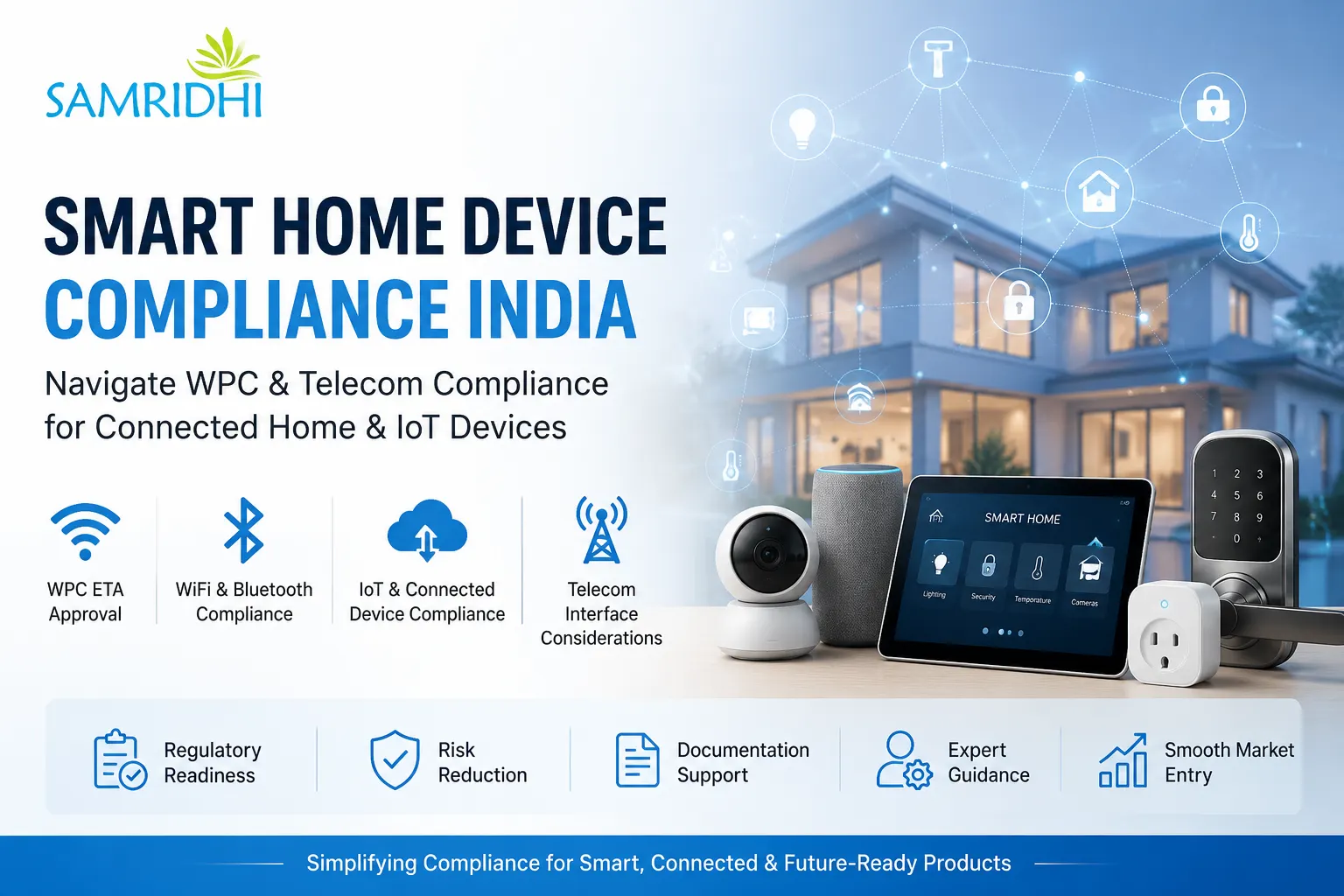
 Grab Your Certified Now
 +91 8799708673
 WhatsApp