What's the Easiest Way to Get BIS Certification? A Step-by-Step Guide to a Smooth and Well-Prepared Certification Process
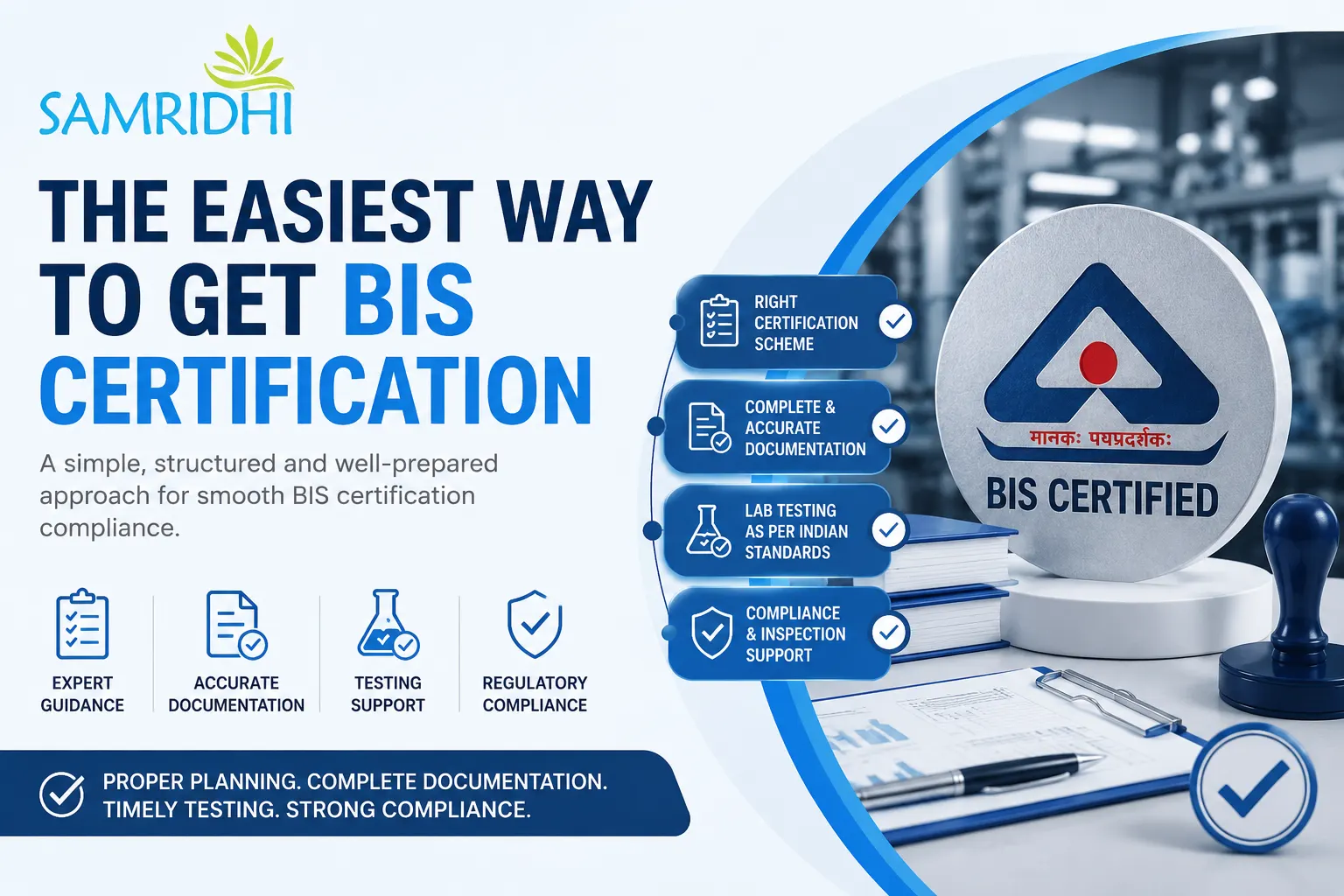
Many manufacturers and importers search for the easiest way to obtain BIS certification, hoping there is a faster or simpler route through the process. In reality, there are no shortcuts to regulatory compliance. The easiest approach is not about bypassing requirements—it is about preparing correctly from the beginning. Businesses that understand the applicable certification scheme, organize accurate documentation, coordinate product testing effectively, and plan each stage carefully are generally able to navigate the certification process more efficiently than those who begin without a structured compliance strategy.
The answer to What's the Easiest Way to Get BIS Certification is therefore straightforward: invest time in preparation before submitting the application. Most certification delays occur because of avoidable issues such as incorrect product classification, incomplete documentation, testing coordination problems, or inconsistent technical records. Addressing these factors early creates a smoother certification journey while ensuring the application remains aligned with applicable BIS requirements.
Step 1: Confirm Whether Your Product Requires BIS Certification
The first step is determining whether your product actually falls under mandatory BIS certification and identifying the applicable certification scheme.
Depending on the product, businesses may require:
-
BIS CRS Registration
-
BIS ISI Certification
-
FMCS (Foreign Manufacturers Certification Scheme)
-
BIS Scheme X Certification
-
Other product-specific BIS schemes
Choosing the correct certification pathway is essential because documentation, testing, inspection requirements, and regulatory procedures differ from one scheme to another. Beginning under the wrong certification framework often results in unnecessary revisions and additional compliance work later in the project.
Step 2: Understand the Applicable Indian Standard
Every regulated product is evaluated against one or more applicable Indian Standards.
Before preparing an application, businesses should understand:
Understanding these requirements early helps engineering, production, and quality teams prepare products that align with the relevant certification criteria.
Step 3: Organize Documentation Before Applying
One of the most common reasons applications become delayed is incomplete documentation.
Rather than collecting documents after beginning the application, businesses should prepare technical records in advance.
These commonly include:
Reviewing documentation internally before submission helps identify inconsistencies that may otherwise generate clarification requests during regulatory evaluation.
Step 4: Plan Product Testing Carefully
Many BIS certification schemes require laboratory testing according to applicable Indian Standards.
Product testing should not be viewed as an isolated activity.
Instead, businesses should ensure:
-
Product samples match submitted documentation.
-
Technical specifications remain consistent.
-
Product models are correctly identified.
-
Supporting records accompany laboratory submissions.
Proper coordination between technical teams and laboratories helps reduce avoidable administrative issues during testing.
Step 5: Prepare for Factory Inspection Where Applicable
Certain BIS certification schemes include factory inspections as part of the evaluation process.
Manufacturers should maintain organized records relating to:
-
Production processes
-
Quality management
-
Internal testing
-
Calibration records
-
Equipment maintenance
-
Product traceability
Preparing these records before inspections are scheduled is generally more effective than assembling documentation at the last minute.
Inspection findings always depend on actual manufacturing practices and remain subject to independent evaluation.
Step 6: Maintain Clear Communication Throughout the Project
Certification projects usually involve several departments.
Engineering develops the product.
Production manufactures it.
Quality teams maintain records.
Procurement coordinates suppliers.
Regulatory teams prepare compliance documentation.
Maintaining clear communication between these teams helps ensure that technical information remains consistent throughout the application.
This significantly reduces the likelihood of documentation revisions later.
Step 7: Respond Promptly to Regulatory Queries
During technical evaluation, BIS may request additional information or clarification.
Businesses should maintain organized technical records so they can respond efficiently if questions arise regarding:
Timely and accurate responses help prevent unnecessary administrative delays.
How Professional BIS Consultants Simplify the Process
Many businesses choose to work with experienced BIS Consultants because they provide structured guidance throughout the certification lifecycle.
Professional consultants typically assist with:
-
Product applicability assessment
-
Certification planning
-
Documentation review
-
Product testing coordination
-
Factory inspection preparation where applicable
-
Regulatory communication
-
Compliance planning
Their role is to improve the quality of preparation and reduce avoidable procedural mistakes.
However, consultants cannot guarantee approval or fixed certification timelines because the final certification decision always depends on product conformity, laboratory testing outcomes, manufacturing compliance, applicable Indian Standards, and the independent evaluation conducted by the Bureau of Indian Standards.
The Easiest Route Is Proper Preparation, Not Shortcuts
Businesses often search for the Simplest BIS Certification Process, but the most effective approach is thorough planning rather than attempting to find faster alternatives. Well-prepared documentation, accurate product classification, organized testing coordination, and proactive compliance management help reduce many of the issues that commonly delay certification projects.
Ultimately, How to Get BIS Certification Easily is not about avoiding regulatory requirements—it is about understanding them early and preparing accordingly. Manufacturers and importers that invest in proper compliance planning are generally better positioned to complete the certification process with fewer avoidable complications. While every project remains case-specific and subject to applicable BIS regulations and authority review, structured preparation remains the most reliable path toward successful BIS certification readiness.
The first step toward a smoother certification process is identifying the correct BIS scheme for your product. You can also explore our BIS CRS Registration, BIS ISI Domestic Manufacturers, and BIS ISI Foreign Manufacturers services to understand the certification requirements applicable to different product categories before starting your application.
How to Get BIS Certification Easily: Documentation, Testing, and Compliance Steps Every Business Should Follow
Businesses often ask how they can make the BIS certification process easier. The answer is not finding a shortcut or a guaranteed approval service—it is preparing correctly before the application is submitted. Most certification challenges arise because businesses underestimate the importance of documentation, product testing, internal coordination, and compliance planning. Companies that invest time in these areas are generally better prepared to complete the certification process with fewer avoidable interruptions. Since every product follows specific regulatory requirements, the exact process depends on the applicable certification scheme, product category, and Indian Standard.
One of the first steps in How to Get BIS Certification Easily is confirming whether the product actually requires BIS certification and identifying the correct certification scheme. Depending on the nature of the product, businesses may require BIS CRS Registration, BIS ISI Certification, FMCS, BIS Scheme X Certification, or another applicable framework. Starting with the correct certification pathway avoids unnecessary documentation revisions, repeated testing, and administrative delays later in the process.
After determining the applicable scheme, businesses should focus on documentation. This stage is often underestimated, yet it has a direct impact on certification readiness. Every application depends on technical records that accurately represent the product being certified. Product specifications, manufacturing details, quality records, product descriptions, declarations, labeling information, and other supporting documents should remain consistent across the entire application. Even minor differences between documents can result in clarification requests during regulatory review.
Preparing documentation should not be treated as the responsibility of a single department. Engineering teams typically maintain product specifications, production departments hold manufacturing records, quality teams manage inspection documentation, and procurement departments coordinate supplier information. Bringing these records together before starting the application helps identify inconsistencies early and creates a stronger foundation for certification.
Product testing is another essential part of the compliance process. Many regulated products require testing through recognized laboratories according to applicable Indian Standards. Businesses should ensure that product samples accurately represent the product described in the technical documentation. Sample identification, model numbers, technical specifications, and supporting records should all remain aligned throughout the testing process. Careful planning at this stage reduces the likelihood of additional testing caused by documentation discrepancies or product changes.
Manufacturers should also avoid making significant design or component changes once testing and certification activities have begun. Engineering improvements are common during product development, but introducing major modifications during certification may require updated technical documentation or additional evaluation depending on the certification scheme. Completing product development before initiating certification generally results in a more organized compliance process.
For certification schemes involving factory inspections, preparation should begin well before inspection dates are scheduled. Businesses should maintain organized records relating to manufacturing processes, quality management systems, calibration activities where applicable, internal testing procedures, equipment maintenance, and product traceability. These records demonstrate operational consistency and help manufacturers prepare for inspection activities more effectively. The inspection itself remains an independent regulatory assessment, and its outcome depends on the actual manufacturing environment.
Importers often face additional documentation responsibilities because many technical records originate from overseas manufacturers. Product specifications, manufacturing information, declarations, authorization documents, and quality records may need to be collected from suppliers located in different countries. Waiting until the application has already been submitted to gather these documents frequently leads to unnecessary delays. Importers benefit from coordinating documentation requirements with overseas manufacturers before certification activities begin.
Internal project management is another area that influences certification readiness. BIS certification typically involves engineering, production, quality assurance, logistics, procurement, regulatory affairs, and senior management. Without clear communication between these teams, conflicting technical information can appear across application documents, laboratory submissions, and manufacturing records. Assigning a dedicated project coordinator or compliance lead often improves communication and keeps certification activities on schedule.
Professional BIS Consultants help businesses organize these activities in a structured manner. Their support generally includes product applicability assessment, documentation review, testing coordination, regulatory communication, factory inspection preparation where applicable, and compliance planning. By identifying documentation gaps early and helping businesses establish an organized certification workflow, consultants reduce many of the procedural issues that commonly delay applications. However, they cannot guarantee approval or fixed certification timelines because the final decision always depends on product conformity, laboratory testing outcomes, manufacturing compliance, applicable Indian Standards, and the independent evaluation carried out by the Bureau of Indian Standards.
Businesses should also recognize that certification does not end once an application is submitted. Maintaining accurate documentation, responding promptly to regulatory queries, coordinating with laboratories, and ensuring internal records remain up to date all contribute to a smoother certification experience. Organizations that treat compliance as an ongoing process rather than a one-time requirement are often better prepared for future regulatory obligations, product updates, and certification renewals.
Ultimately, the BIS Certification Process Explained is much simpler when approached through careful planning rather than reactive problem-solving. Accurate documentation, well-coordinated testing, effective communication, and structured compliance management form the foundation of successful certification readiness. While every application remains case-specific and subject to applicable BIS regulations and authority review, businesses that prepare thoroughly are generally able to reduce avoidable delays and navigate the certification process with greater confidence.
Proper documentation and product testing are essential for successful certification planning. Businesses can also explore our NABL Testing, LM79 Testing, and Lab Setup and Equipment services to better understand laboratory testing requirements and technical support that complement the BIS certification process.
 Get Certified with Confidence – Your One-Stop Compliance Partner
From BIS, WPC, TEC, BEE, EPR, LMPC, CDSCO, FSSAI, ISO, MSME to PESO, NABL testing, Startup India, Make in India, and Lab Setup, we handle all your regulatory approvals, certifications, and documentation needs with precision and speed. Partner with Samridhi Compliance Certification and simplify your journey to full compliance—so you can focus on growing your business.
The Simplest BIS Certification Process Explained: How Manufacturers and Importers Can Avoid Common Mistakes and Delays
When businesses search for the Simplest BIS Certification Process, they are usually looking for a faster, less complicated way to obtain certification. In practice, however, there is no shortcut that bypasses regulatory requirements. The simplest process is the one that is planned properly from the beginning. Manufacturers and importers who understand the applicable certification scheme, prepare complete documentation, coordinate testing efficiently, and maintain clear communication throughout the project are generally able to avoid many of the procedural issues that delay certification. Since every product has its own regulatory requirements, the exact certification process always depends on the applicable Indian Standard, product category, and BIS certification scheme.
One of the most common mistakes businesses make is beginning the application before confirming which certification scheme applies to their product. Depending on the nature of the product, certification may fall under BIS CRS Registration, BIS ISI Certification, FMCS, BIS Scheme X Certification, or another applicable BIS framework. Choosing the wrong scheme often results in unnecessary documentation revisions, additional technical assessments, or repeated application activities. A proper product applicability assessment at the beginning saves considerable time later in the certification process.
Another frequent issue is treating documentation as a formality rather than a critical compliance requirement. Every BIS application is built around technical information that accurately describes the product being certified. Product specifications, manufacturing details, quality records, declarations, labeling information, and supporting technical documents should all remain consistent throughout the application. When different departments prepare documents independently, inconsistencies in model numbers, technical specifications, or product descriptions can easily arise. These discrepancies often lead to clarification requests that extend the overall certification timeline.
Many manufacturers also underestimate the importance of organizing documentation before laboratory testing begins. Testing should always be supported by accurate technical records that match the product samples submitted for evaluation. If laboratory reports, product specifications, and application documents describe different product configurations, additional verification may become necessary. Reviewing documentation before samples are submitted helps reduce the possibility of administrative issues later in the process.
Product testing itself should be approached as part of a broader compliance strategy rather than an isolated activity. Laboratories evaluate products according to applicable Indian Standards, and testing schedules may vary depending on laboratory workload, product complexity, and testing scope. Businesses can improve readiness by confirming product specifications, verifying model information, and ensuring that technical documentation accompanies every laboratory submission. Proper planning at this stage often prevents delays associated with incomplete or inconsistent testing records.
Manufacturers sometimes introduce engineering changes while certification activities are already underway. Component substitutions, software updates, design improvements, or supplier changes may appear minor from a production perspective, but they can affect certification documentation depending on the applicable scheme. Whenever possible, businesses should finalize product design before beginning certification. Maintaining consistency between the manufactured product, technical documentation, and laboratory samples helps avoid additional reviews that may otherwise become necessary.
Importers face a different set of challenges because much of the required documentation comes from overseas manufacturers. Product specifications, declarations, manufacturing records, authorization documents, and quality information often need to be collected from suppliers located in different countries. Waiting until regulatory authorities request additional documentation can create unnecessary delays. Importers who establish documentation requirements with overseas manufacturers at the beginning of the project are generally better prepared to submit complete applications.
For certification schemes involving factory inspections, preparation should begin long before inspection dates are confirmed. Production records, quality management procedures, calibration certificates where applicable, equipment maintenance logs, internal testing records, and traceability documentation should remain organized and readily available. Businesses that maintain these records as part of their routine operations are usually better prepared for inspection activities than those attempting to gather documentation shortly before an inspection takes place.
Another mistake businesses frequently make is assigning certification responsibilities to only one department. Successful BIS certification usually requires cooperation between engineering, production, procurement, quality assurance, logistics, and regulatory teams. Without effective communication, technical information may differ between documents, resulting in inconsistencies that require correction later. Establishing a structured internal workflow helps ensure that every department works with the same approved product information throughout the certification project.
Professional BIS Consultants can simplify this process by providing structured guidance rather than shortcuts. Their support typically includes product applicability assessment, certification planning, documentation review, testing coordination, factory inspection preparation where applicable, and regulatory communication. By helping businesses organize compliance activities before the application is submitted, consultants reduce many of the avoidable mistakes that contribute to certification delays. However, they cannot guarantee approval, bypass regulatory procedures, or influence the independent evaluation carried out by the Bureau of Indian Standards.
The simplest certification process is ultimately the result of preparation rather than speed. Businesses that begin with accurate product classification, complete documentation, coordinated testing, organized manufacturing records, and proactive compliance planning are generally better positioned to navigate the certification process efficiently. While every BIS Registration Process for Manufacturers remains case-specific and subject to applicable BIS requirements and authority review, avoiding common mistakes early allows manufacturers and importers to reduce unnecessary delays and manage the certification journey with greater confidence and clarity.
Many certification delays can be reduced through early compliance planning and selecting the correct regulatory pathway. If your products also require telecom, wireless, or specialized product approvals, explore our TEC MTCTE Approval, WPC ETA Approval, and BIS Scheme X Certification services for additional regulatory guidance.
How Professional BIS Consultants Help Simplify the BIS Certification Process Without Guaranteeing Approval
Many businesses believe that hiring a consultant automatically makes BIS certification faster or guarantees approval. In reality, that is not how the certification system operates. The Bureau of Indian Standards independently evaluates every application based on applicable regulations, product conformity, laboratory testing, technical documentation, manufacturing compliance, and factory inspection findings where applicable. Because of this independent evaluation, no consultant can legally or practically guarantee certification. The real value of a professional BIS consultant lies in simplifying the compliance process, improving documentation quality, and helping businesses avoid many of the procedural mistakes that commonly delay certification.
For manufacturers and importers that are unfamiliar with regulatory procedures, the BIS certification process can involve multiple technical stages. Product applicability, documentation, testing, communication with laboratories, manufacturing records, and regulatory submissions all require careful coordination. Managing these activities without a structured approach often results in avoidable revisions, inconsistent documentation, or delays. Professional consultants help organize these activities into a clear compliance workflow, making the overall process easier to manage without altering the regulatory requirements themselves.
One of the first ways consultants simplify the certification journey is by determining the correct certification scheme. Not every product follows the same approval pathway. Depending on the applicable Indian Standard, businesses may require BIS CRS Registration, BIS ISI Certification, FMCS, BIS Scheme X Certification, or another product-specific certification scheme. Identifying the correct regulatory framework before preparing documentation helps prevent unnecessary changes later in the application process and ensures that businesses begin with the appropriate compliance requirements.
Documentation planning is another area where consultants make a significant difference. Technical specifications, product descriptions, manufacturing information, quality records, declarations, labeling details, and supporting documents must all remain consistent throughout the certification application. In many organizations, these records are prepared by different departments, increasing the possibility of inconsistencies. Consultants review documentation from a compliance perspective, helping businesses identify missing information, conflicting technical details, or documentation gaps before the application is submitted. This preventive approach often reduces the need for repeated clarification during regulatory evaluation.
Testing coordination is equally important because many products require laboratory evaluation according to applicable Indian Standards. Businesses frequently assume that testing begins only after documentation has been completed, but in reality both activities must remain closely aligned. Professional consultants help verify that product samples correspond with technical specifications, laboratory submissions reflect the correct product configuration, and supporting documentation accompanies the testing process. Although consultants do not influence laboratory evaluations or testing outcomes, organized coordination helps reduce administrative issues that could otherwise affect certification timelines.
Manufacturers also benefit from guidance during factory inspection preparation where inspections form part of the applicable certification scheme. Consultants review production records, quality management documentation, calibration certificates where applicable, internal testing procedures, equipment maintenance records, and product traceability systems to help businesses organize supporting evidence before inspection activities begin. This preparation improves operational readiness, while the inspection findings themselves remain entirely dependent on the actual manufacturing environment and the independent observations of the inspecting authority.
Importers often face additional challenges because many technical documents originate from overseas manufacturing facilities. Product specifications, declarations, manufacturing records, authorization letters, quality documentation, and technical drawings may need to be collected from suppliers located in different countries. Professional consultants help coordinate these documents, verify their consistency, and identify missing information before submission. By improving communication between importers and overseas manufacturers, consultants reduce many of the documentation issues that commonly delay international certification projects.
Another important advantage of working with experienced consultants is structured project management. BIS certification frequently involves engineering teams, production departments, quality managers, procurement personnel, laboratories, and regulatory representatives. Without effective coordination, different teams may work from outdated technical information or prepare documents independently, creating inconsistencies throughout the application. Consultants establish organized workflows that help ensure every stakeholder works with the same approved documentation during the certification process.
Professional consultants also assist businesses when BIS requests additional clarification. During technical evaluation, regulatory authorities may seek further information regarding product specifications, manufacturing details, laboratory reports, or supporting documentation. Consultants help review these responses, organize additional records, and ensure that new information remains consistent with the original application. Well-prepared responses help businesses manage regulatory communication more efficiently without compromising documentation accuracy.
Equally important is helping businesses understand realistic expectations. Many organizations begin certification believing there is a guaranteed or accelerated approval route if they hire the right consultant. Experienced professionals explain that certification depends on several independent factors, including product conformity, laboratory testing outcomes, manufacturing compliance, applicable Indian Standards, documentation quality, and regulatory evaluation. This transparency allows businesses to focus their efforts on areas they can control rather than relying on unrealistic promises.
The greatest contribution of professional BIS Consultants is therefore not obtaining approvals through shortcuts but improving compliance readiness through careful planning. They help businesses assess product applicability, organize documentation, coordinate testing, prepare for inspections where applicable, establish internal compliance workflows, and manage regulatory communication throughout the certification lifecycle. These services reduce many of the avoidable procedural errors that interrupt certification projects while helping manufacturers and importers approach regulatory requirements with greater confidence.
Ultimately, the easiest certification experience is built on preparation rather than guarantees. Businesses that work with experienced consultants often benefit from stronger documentation, better testing coordination, improved internal communication, and structured compliance planning. While no consultant can guarantee approval or fixed certification timelines, professional guidance helps organizations navigate the certification process more efficiently by reducing avoidable mistakes and improving overall certification readiness. Every BIS application nevertheless remains case-specific and subject to applicable BIS regulations, laboratory evaluation, manufacturing compliance, and the independent review carried out by the Bureau of Indian Standards.
Professional compliance support focuses on improving documentation, testing coordination, and certification readiness—not guaranteeing approval. Businesses looking for location-specific guidance can also explore our BIS Consultant Delhi, BIS Consultant Mumbai, and BIS Consultant Bangalore services for structured BIS compliance assistance across India.
Get Certified with Confidence – Your One-Stop Compliance Partner
From BIS, WPC, TEC, BEE, EPR, LMPC, CDSCO, FSSAI, ISO, MSME to PESO, NABL testing, Startup India, Make in India, and Lab Setup, we handle all your regulatory approvals, certifications, and documentation needs with precision and speed. Partner with Samridhi Compliance Certification and simplify your journey to full compliance—so you can focus on growing your business.
Best Practices for Faster BIS Certification Readiness: Planning, Documentation, Testing, and Regulatory Compliance Explained
Businesses often look for ways to complete the BIS certification process as efficiently as possible. While there is no guaranteed fast-track route to certification, there are several practical steps that can improve overall certification readiness and reduce avoidable delays. The most successful certification projects usually begin long before the application is submitted. They involve careful planning, complete documentation, coordinated testing, and a clear understanding of applicable regulatory requirements. Since every product follows a different certification pathway depending on its category and the relevant Indian Standard, preparation remains the most effective strategy for navigating the process smoothly.
The first best practice is to begin with a product applicability assessment. Before collecting documents or scheduling laboratory testing, businesses should confirm whether their product requires BIS certification and identify the appropriate certification scheme. Depending on the product, this may involve BIS CRS Registration, BIS ISI Certification, FMCS, BIS Scheme X Certification, or another applicable BIS framework. Selecting the correct certification scheme at the outset helps avoid unnecessary revisions, duplicate work, and delays that may arise from following an incorrect regulatory pathway.
Early project planning is equally important. Many organizations wait until production is complete before thinking about compliance, only to discover that technical documentation or testing requirements have not been fully considered. A more effective approach is to integrate certification planning into product development. Engineering teams, production managers, quality professionals, procurement departments, and compliance personnel should understand their responsibilities before certification activities begin. When each department contributes at the appropriate stage, businesses are less likely to encounter documentation gaps or conflicting technical information later in the process.
Documentation management is one of the strongest indicators of certification readiness. Every BIS application relies on technical specifications, product descriptions, manufacturing details, quality records, declarations, labeling information, and supporting compliance documents. These records should accurately describe the product and remain consistent throughout the application. Even small inconsistencies between technical drawings, product specifications, and laboratory documentation can result in additional clarification requests during regulatory evaluation. Conducting an internal documentation review before submission helps identify and resolve these issues early.
Businesses should also establish a centralized document management system whenever possible. Certification projects often involve multiple departments and, in the case of importers, overseas manufacturers. Maintaining a single set of approved technical documents reduces the risk of outdated specifications or conflicting product information being submitted at different stages of the certification process. Organized document control also makes it easier to respond if additional information is requested during regulatory review.
Testing preparation deserves the same level of attention as documentation. Product testing should be planned well in advance, with businesses confirming that product samples accurately represent the final production model. Laboratory submissions should include the correct technical documentation, model information, and supporting records. Coordinating these activities before testing begins helps avoid situations where additional samples or revised documentation become necessary because of inconsistencies identified during laboratory evaluation.
Another important best practice is minimizing product changes after certification activities have started. Manufacturers frequently improve products as part of normal business operations, but modifications to components, software, design, or manufacturing methods during certification may require updated documentation or additional technical assessment depending on the applicable certification scheme. Completing major engineering changes before initiating certification helps maintain consistency throughout testing and regulatory review.
Where factory inspections form part of the certification process, businesses should prepare operational records continuously rather than waiting until inspection dates are announced. Production records, quality management procedures, calibration certificates where applicable, internal testing reports, equipment maintenance logs, and traceability systems should be maintained as part of routine manufacturing operations. This ongoing preparation improves inspection readiness and reduces the pressure of assembling documentation at short notice.
Internal communication is another area that significantly influences certification readiness. Engineering, production, procurement, logistics, quality assurance, regulatory affairs, and senior management all contribute different aspects of the certification process. Without effective coordination, inconsistencies can develop across technical records, laboratory documentation, and manufacturing information. Establishing regular project reviews and assigning a dedicated compliance coordinator helps ensure that every department works with the same approved information throughout the certification lifecycle.
Importers should pay particular attention to supplier coordination. Many technical documents originate from overseas manufacturers, including product specifications, manufacturing records, declarations, authorization letters, and quality documentation. Requesting these records only after the application has started often creates unnecessary delays. Businesses that communicate documentation requirements to overseas suppliers early are generally able to prepare more complete applications and respond more efficiently to regulatory queries.
Professional BIS Consultants also contribute to certification readiness by helping businesses implement these best practices in a structured manner. Their support typically includes product applicability assessment, documentation review, testing coordination, factory inspection preparation where applicable, regulatory communication, and compliance planning. Rather than offering shortcuts, consultants help businesses reduce procedural errors by strengthening preparation at every stage of the certification process. Although consultants cannot guarantee approval or fixed timelines, they help organizations build stronger compliance systems that support more efficient project execution.
Finally, businesses should approach BIS certification as an ongoing compliance responsibility rather than a one-time administrative task. Maintaining accurate documentation, updating technical records when appropriate, monitoring manufacturing consistency, and preparing for post-certification obligations all contribute to long-term regulatory compliance. Organizations that establish these practices from the beginning are generally better equipped to manage future product changes, certification renewals, and additional regulatory requirements.
Ultimately, the best way to achieve faster BIS Certification Readiness is through disciplined planning rather than accelerated promises. Accurate documentation, effective testing coordination, organized project management, proactive communication, and a clear understanding of regulatory obligations form the foundation of a successful certification strategy. While every application remains case-specific and subject to applicable BIS requirements, laboratory evaluation, and authority review, businesses that consistently follow these best practices are better prepared to navigate the certification process with greater efficiency, confidence, and long-term compliance.
Strong compliance begins with organized documentation, quality systems, and regulatory planning. Our ISO Certification and Make in India Certification services help businesses strengthen operational compliance, manufacturing readiness, and quality management, supporting long-term regulatory preparedness alongside applicable BIS requirements.


 Grab Your Certified Now
 +91 8799708673
 WhatsApp