Can a BIS Consultant Guarantee Your Certification? Understanding the Real Role of Compliance Consultants in the BIS Approval Process
One of the most common questions manufacturers and importers ask before starting the BIS certification process is whether hiring a consultant guarantees approval. The simple answer is no. A professional BIS consultant cannot guarantee certification because the final decision is made solely by the Bureau of Indian Standards (BIS) after evaluating the application, technical documentation, product testing results, factory inspection findings where applicable, and compliance with the relevant Indian Standard. Any individual or organization claiming to offer "guaranteed BIS certification" should be approached with caution, as certification always remains subject to regulatory evaluation and applicable legal requirements.
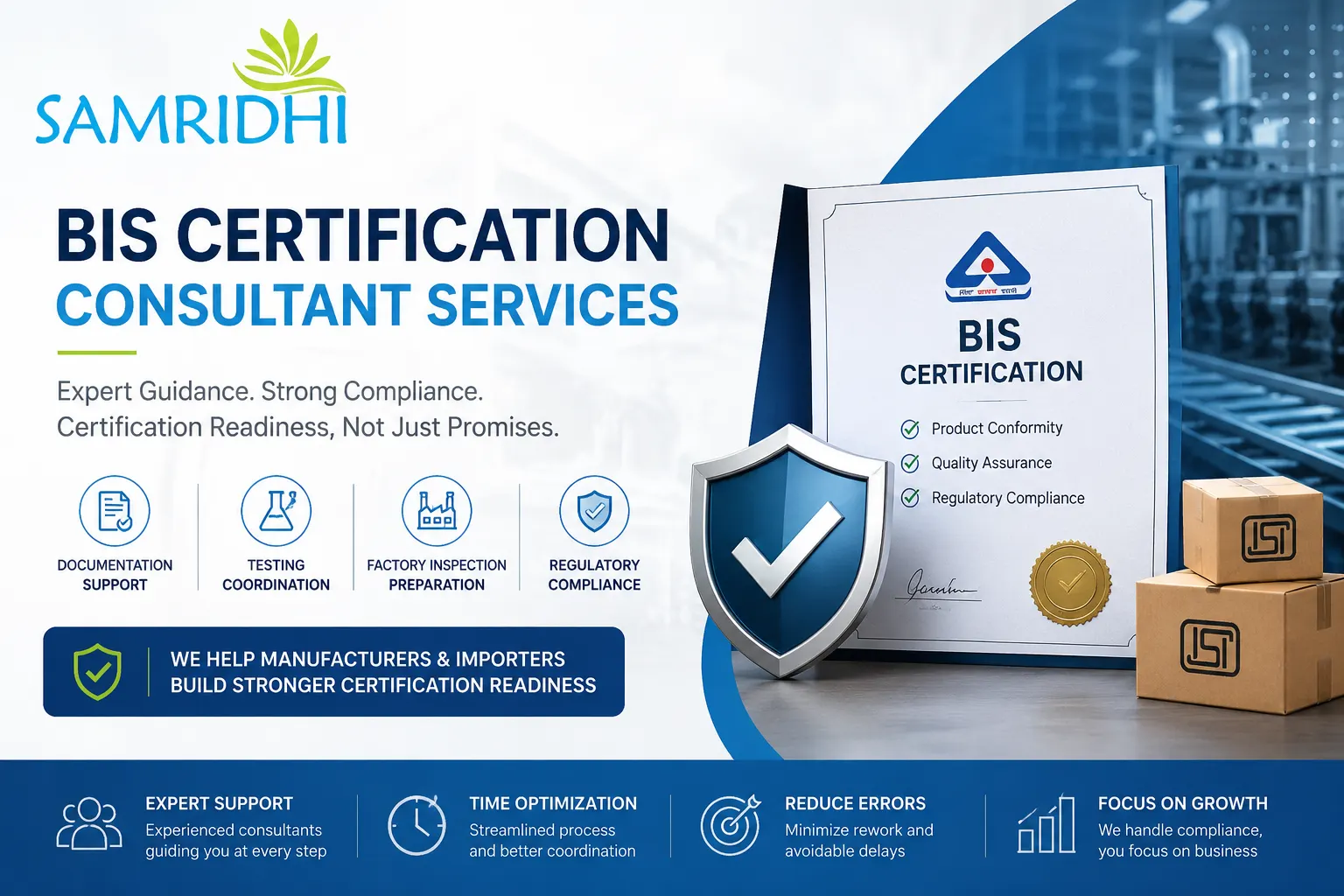
Understanding this distinction is important because it helps businesses choose the right compliance partner for the right reasons. The role of a consultant is not to influence regulatory decisions but to help businesses prepare accurate documentation, coordinate testing, assess product applicability, organize compliance activities, and reduce avoidable procedural mistakes. In many cases, these services improve overall certification readiness, but they do not replace the independent review carried out by BIS.
Professional Can a BIS Consultant Guarantee My Certification guidance begins with determining whether a product actually requires BIS certification and identifying the correct certification scheme. Depending on the product category, businesses may require BIS CRS Registration, BIS ISI Certification, FMCS, BIS Scheme X Certification, or another applicable regulatory framework. Selecting the wrong certification pathway at the beginning can create unnecessary documentation work, additional testing requirements, and delays that could have been avoided through proper planning.
Another important responsibility of a consultant is reviewing technical documentation before an application is submitted. Product specifications, manufacturing information, technical drawings where applicable, quality records, declarations, product descriptions, and supporting documents should remain accurate and consistent throughout the certification process. Even small inconsistencies between laboratory reports, application forms, and technical documentation may result in clarification requests during regulatory review. Professional consultants help identify these issues early so businesses can address them before submission.
Testing coordination is another area where experienced consultants provide practical support. Many BIS certification schemes require products to be tested through recognized laboratories according to applicable Indian Standards. Consultants help businesses understand the required testing scope, coordinate documentation with laboratories, review product information, and ensure that submitted samples correspond with the technical details included in the certification application. The laboratory testing itself remains independent, and the resulting reports become part of the overall BIS evaluation process.
Where factory inspections are applicable, consultants also help manufacturers prepare supporting documentation and review operational records before inspections take place. Production records, quality management procedures, calibration certificates, internal testing records, and traceability documentation are commonly reviewed during inspection preparation. Consultants may identify documentation gaps or organizational improvements, but they cannot influence inspection findings or inspection outcomes, which remain dependent on the actual manufacturing environment and the observations of the inspecting authority.
Many businesses assume that hiring a consultant automatically shortens certification timelines. In reality, certification duration depends on several factors, including product complexity, documentation quality, testing schedules, laboratory availability, factory inspection requirements where applicable, and the time required for BIS to evaluate the application. Professional consultants help reduce avoidable administrative delays by improving documentation quality and project coordination, but they cannot guarantee fixed timelines because much of the process remains outside their control.
The Role of a BIS Certification Consultant extends beyond the initial application. Consultants often assist businesses with documentation updates, product change assessments, renewal planning, surveillance preparation where applicable, and ongoing compliance support after certification has been granted. Their objective is to help businesses maintain organized compliance systems throughout the product lifecycle while ensuring that manufacturers and importers understand their continuing regulatory responsibilities.
Choosing a consultant based solely on promises of guaranteed approval can expose businesses to unnecessary risk. A reliable compliance consultant is transparent about the certification process, clearly explains the applicable regulatory requirements, identifies potential compliance challenges, and sets realistic expectations from the beginning. They focus on improving preparation, not making promises they cannot legally or practically fulfill.
When evaluating Choosing a Reliable BIS Registration Consultant, businesses should look for experience with documentation management, certification planning, testing coordination, regulatory procedures, and post-certification compliance rather than marketing claims about guaranteed approvals. A knowledgeable consultant will explain what they can do, what remains the responsibility of the manufacturer, and which decisions ultimately rest with the Bureau of Indian Standards.
The greatest value of professional compliance support lies in reducing avoidable mistakes rather than guaranteeing outcomes. Consultants help businesses prepare stronger documentation, organize technical records, coordinate laboratory testing, prepare for inspections where required, and manage regulatory communication more effectively. These activities contribute to a more organized certification process, but final certification always depends on product conformity, applicable Indian Standards, testing results, manufacturing compliance, supporting documentation, and the independent evaluation conducted by BIS. Understanding these responsibilities allows businesses to approach certification with realistic expectations and build a stronger long-term compliance strategy.
Every BIS certification scheme has its own technical and documentation requirements. If your product falls under a specific BIS scheme, you can also explore our BIS CRS Registration, BIS ISI Domestic Manufacturers, and BIS ISI Foreign Manufacturers services to understand the applicable certification process and compliance obligations before submitting your application.
Does a BIS Consultant Guarantee BIS Approval? What Consultants Can and Cannot Do During the Certification Process
When businesses begin exploring BIS certification, they often encounter advertisements claiming "100% guaranteed approval" or "assured BIS certification." While these statements may sound reassuring, they do not accurately reflect how the BIS certification process works. The Bureau of Indian Standards evaluates every application independently based on applicable regulations, technical documentation, product testing results, manufacturing compliance, and, where required, factory inspection findings. Because the final decision always rests with BIS, a BIS consultant cannot legally or practically guarantee approval.
Understanding the difference between professional compliance support and regulatory decision-making helps businesses make informed choices when selecting a consultant. A consultant's role is to prepare businesses for the certification process—not to influence the outcome. Organizations that understand this distinction generally approach certification with more realistic expectations and focus on building strong compliance systems rather than relying on promises of guaranteed approval.
What BIS Consultants Can Do
Professional consultants play an important role in helping manufacturers and importers navigate a process that often involves multiple technical and administrative requirements. One of their first responsibilities is assessing whether a product requires BIS certification and identifying the correct certification scheme. Since different products may fall under BIS CRS, BIS ISI Certification, FMCS, BIS Scheme X, or other applicable frameworks, determining the appropriate compliance pathway at the beginning helps businesses avoid unnecessary mistakes later in the project.
Consultants also assist with documentation planning. They review technical specifications, manufacturing details, product descriptions, declarations, quality records, labeling information, and other supporting documents before the application is submitted. This review helps identify inconsistencies, missing information, or documentation gaps that could otherwise result in additional clarification requests during regulatory evaluation.
Another important area of support involves coordinating product testing. Professional How BIS Consultants Help with Certification services include helping businesses understand applicable testing requirements, organizing laboratory documentation, coordinating product samples, and ensuring that the technical information submitted with the application matches the product being tested. Consultants help manage the process, but they do not control laboratory testing or influence test results.
Where factory inspections are required, consultants assist manufacturers by reviewing operational records, production documentation, quality management procedures, calibration records, and internal testing systems before inspections occur. Their role is to improve inspection readiness by ensuring that documentation is complete and well organized. Inspection observations and conclusions, however, remain entirely independent.
Throughout the certification process, consultants may also help businesses respond to regulatory queries, organize additional documentation, review technical clarifications, and coordinate communication between manufacturers, laboratories, and regulatory authorities. These services contribute to a more structured certification process by reducing administrative errors and improving overall compliance preparation.
What BIS Consultants Cannot Do
Although consultants provide valuable technical and administrative support, there are clear limits to their responsibilities.
A consultant cannot approve an application on behalf of BIS. They cannot bypass regulatory procedures, influence testing outcomes, alter factory inspection findings, or obtain certification without the product meeting applicable regulatory requirements. They also cannot guarantee approval, promise fixed certification timelines, or ensure that every application will be successful.
Certification depends on many factors beyond a consultant's control. Product conformity, laboratory testing results, documentation quality, manufacturing practices, applicable Indian Standards, and regulatory evaluation all contribute to the final decision. Even a well-prepared application remains subject to review by the Bureau of Indian Standards.
Businesses should therefore be cautious if they encounter marketing claims such as "guaranteed BIS approval," "100% approval assurance," or "instant certification." Professional compliance consultants typically explain the certification process transparently, including the responsibilities of both the applicant and the regulatory authority, rather than making promises that cannot be guaranteed.
Why Preparation Matters More Than Guarantees
One of the biggest advantages of working with an experienced consultant is not faster approval or guaranteed certification—it is better preparation. Many certification delays occur because of incomplete documentation, incorrect product classification, inconsistent technical records, testing coordination issues, or delayed responses to regulatory queries. These are areas where professional guidance can make a meaningful difference.
By identifying documentation gaps early, reviewing technical records before submission, coordinating laboratory activities, and helping businesses prepare for inspections where applicable, consultants reduce the likelihood of avoidable procedural mistakes. While this does not guarantee approval, it helps create a more organized and efficient certification process.
Choosing a Consultant Based on Expertise Rather Than Promises
When selecting a compliance partner, businesses should focus on experience, technical knowledge, transparency, and structured project management rather than claims of guaranteed certification. A reliable consultant clearly explains the certification process, outlines applicable compliance requirements, identifies potential challenges, and communicates realistic expectations from the beginning.
The Benefits of Hiring a BIS Consultant come from improved documentation quality, stronger compliance planning, effective testing coordination, and better project management throughout the certification lifecycle. These services help manufacturers and importers navigate regulatory requirements with greater confidence while recognizing that final certification decisions always remain with BIS.
Ultimately, the answer to Does a BIS Consultant Guarantee BIS Approval is straightforward: No. Consultants improve compliance readiness, reduce avoidable procedural errors, and support businesses throughout the certification process, but they cannot guarantee regulatory approval. BIS certification is awarded only after the product, documentation, testing results, manufacturing practices, and all applicable regulatory requirements have been independently evaluated by the Bureau of Indian Standards.
A consultant's role is to improve documentation quality, testing coordination, and regulatory preparedness—not to guarantee approval. Businesses can also explore our BIS Scheme X Certification, TEC MTCTE Approval, and WPC ETA Approval services to understand certification requirements for different regulated product categories.
 Get Certified with Confidence – Your One-Stop Compliance Partner
From BIS, WPC, TEC, BEE, EPR, LMPC, CDSCO, FSSAI, ISO, MSME to PESO, NABL testing, Startup India, Make in India, and Lab Setup, we handle all your regulatory approvals, certifications, and documentation needs with precision and speed. Partner with Samridhi Compliance Certification and simplify your journey to full compliance—so you can focus on growing your business.
How BIS Consultants Help Manufacturers and Importers Improve Certification Readiness Without Guaranteeing Approval
Preparing for BIS certification involves much more than completing an application form. Manufacturers and importers must identify the correct certification scheme, organize technical documentation, coordinate product testing, maintain manufacturing records, and ensure that every stage of the process aligns with applicable BIS requirements. While experienced consultants can make this process more organized and efficient, they cannot guarantee approval because the final certification decision always rests with the Bureau of Indian Standards (BIS). Their value lies in improving certification readiness rather than influencing regulatory outcomes.
Professional How BIS Consultants Help with Certification services begin with understanding the product itself. Before any documentation is prepared, consultants assess whether the product falls under BIS CRS, BIS ISI Certification, FMCS, BIS Scheme X, or another applicable certification framework. This early evaluation helps businesses avoid one of the most common compliance mistakes—following the wrong certification pathway. Since BIS requirements vary by product category and applicable Indian Standard, accurate planning at the outset supports a smoother certification process.
Documentation preparation is another area where consultants provide significant operational support. Manufacturers and importers often need to compile technical specifications, product descriptions, manufacturing details, quality records, declarations, labeling information, and supporting technical documents. Rather than simply collecting paperwork, consultants review these documents to ensure that the information remains consistent across the application. This reduces the likelihood of avoidable clarification requests caused by conflicting technical details or incomplete documentation.
Product testing also requires careful coordination. Many BIS certification schemes require testing through recognized laboratories before or during the application process. Consultants help businesses understand applicable testing requirements, coordinate laboratory submissions, verify product models, and review technical information before samples are submitted. Their role is to improve testing readiness by ensuring that laboratory documentation corresponds with the product being certified. The laboratory conducts independent testing, and the resulting reports form part of the overall BIS evaluation.
Manufacturers benefit from professional guidance because certification often requires coordination between engineering, production, quality assurance, procurement, and regulatory teams. Each department may be responsible for different parts of the compliance process, and inconsistent communication can create documentation gaps or technical discrepancies. Consultants help establish structured workflows so that information remains aligned throughout the certification project, reducing administrative confusion and improving overall project management.
Importers face additional challenges because many technical documents originate from overseas manufacturers. Product specifications, manufacturing records, declarations, quality documents, and technical drawings may need to be collected from factories located in different countries. Differences in language, documentation formats, and communication timelines can slow the certification process if these records are not reviewed carefully. Professional consultants assist importers by coordinating documentation with foreign manufacturers and ensuring that the information submitted for certification remains complete and internally consistent.
Where factory inspections are applicable, consultants help businesses prepare operational records before inspections take place. Production logs, quality management procedures, calibration certificates, internal testing records, and traceability documentation are reviewed to confirm that supporting records are available and properly organized. Consultants can identify documentation gaps and recommend improvements in record management, but they cannot influence inspection findings or inspection outcomes, which remain entirely independent.
Another important contribution consultants make is helping businesses respond to regulatory queries during the certification process. If additional information is requested, consultants assist in organizing technical documentation, reviewing clarification responses, and ensuring that supporting records correspond with the original application. Responding accurately and consistently helps businesses manage regulatory communication more effectively while reducing avoidable administrative delays.
Professional consultants also help businesses prepare for long-term compliance after certification. Product modifications, documentation updates, surveillance activities where applicable, and renewal planning all become part of the ongoing compliance lifecycle. By helping manufacturers and importers establish organized compliance systems from the beginning, consultants support smoother post-certification management and improve readiness for future regulatory obligations.
It is equally important to understand what consultants cannot do. They cannot approve applications, bypass regulatory procedures, influence laboratory testing, alter inspection findings, or guarantee certification. Any consultant claiming to provide guaranteed BIS approval is making a promise that falls outside the certification process itself. Final certification always depends on product conformity, applicable Indian Standards, documentation quality, testing outcomes, manufacturing compliance, and the independent evaluation carried out by BIS.
The greatest benefit of working with an experienced compliance consultant is the reduction of avoidable errors rather than the assurance of approval. Strong documentation, accurate product classification, effective testing coordination, structured communication, and well-organized compliance planning all contribute to better certification readiness. While these factors improve the overall quality of an application, every BIS certification project remains case-specific and subject to the applicable regulatory framework and authority review.
Common Misconceptions About Guaranteed BIS Certification and How to Choose a Reliable BIS Registration Consultant
Businesses applying for BIS certification often come across advertisements that promise "100% guaranteed approval," "fast-track certification," or "assured BIS registration." These claims can create unrealistic expectations, particularly for manufacturers and importers who are unfamiliar with the regulatory process. In reality, BIS certification is a regulatory evaluation conducted by the Bureau of Indian Standards, and no consultant has the authority to guarantee approval. Understanding the difference between genuine compliance support and misleading marketing claims helps businesses make informed decisions when selecting a compliance partner.
One of the biggest misconceptions is that hiring a consultant automatically guarantees certification. Professional consultants certainly improve the quality of preparation by reviewing documentation, coordinating testing, and organizing compliance activities, but they do not issue certificates or influence regulatory decisions. Every application is independently assessed by BIS based on product conformity, applicable Indian Standards, technical documentation, testing results, and factory inspection findings where required. Regardless of who prepares the application, the final decision always remains with the regulatory authority.
Another common misunderstanding is that experienced consultants can bypass mandatory procedures. Some businesses believe that using a consultant means product testing, technical reviews, or factory inspections can be avoided. This is not how the certification process works. Testing, inspections, and documentation requirements are determined by the applicable certification scheme and product category. Consultants help businesses prepare for these activities, but they cannot eliminate regulatory requirements or replace official evaluations.
Many companies also assume that a consultant can guarantee a fixed certification timeline. In practice, certification duration depends on several factors that remain outside a consultant's control. Laboratory schedules, documentation readiness, product complexity, factory inspection requirements, responses to regulatory queries, and BIS review timelines all influence the overall process. Professional consultants help reduce avoidable delays by improving planning and coordination, but they cannot promise approval within a specific number of days because every project is different.
Some organizations believe consultants are only responsible for completing application forms. In reality, the Role of a BIS Certification Consultant extends far beyond paperwork. Experienced consultants assist with product applicability assessments, certification planning, documentation alignment, laboratory coordination, regulatory communication, factory inspection preparation where applicable, and post-certification compliance planning. Their work focuses on improving the quality and consistency of the certification process rather than simply submitting an application.
There is also a misconception that once certification is granted, consultant support is no longer necessary. Manufacturers and importers continue to have compliance responsibilities after approval, including documentation updates, product change assessments, renewal planning, and surveillance readiness where applicable. Many businesses continue working with consultants because ongoing compliance management is just as important as obtaining the initial certification.
Choosing the right consultant therefore requires evaluating professional capability rather than marketing promises. A reliable BIS Registration Consultant is transparent about the certification process and explains both the opportunities and limitations of compliance support. They clearly describe the applicable certification scheme, documentation requirements, testing obligations, and expected compliance activities without making unrealistic commitments regarding approval or timelines.
Businesses should also look for consultants who invest time in understanding the product before recommending a certification pathway. Every product has unique regulatory requirements, and experienced consultants begin by reviewing technical specifications, intended applications, manufacturing information, and applicable Indian Standards. This initial assessment helps identify the correct certification route and reduces the likelihood of unnecessary revisions later in the project.
Technical expertise is another important consideration. Reliable consultants understand how documentation, testing, manufacturing records, quality management systems, and regulatory requirements interact throughout the certification lifecycle. Rather than offering generic advice, they provide product-specific guidance that reflects the applicable certification scheme and compliance obligations.
Good communication is equally valuable. Certification projects often involve engineering teams, production departments, quality managers, laboratories, overseas manufacturers, and regulatory authorities. An experienced consultant helps coordinate communication between these stakeholders, ensuring that technical information remains consistent throughout the project. This organized approach frequently reduces administrative errors and improves overall project management.
Businesses should also be cautious of consultants who avoid discussing potential challenges. Every certification project has variables that may affect documentation, testing, inspections, or timelines. A trustworthy consultant openly discusses these factors and helps businesses prepare for them instead of suggesting that certification is guaranteed regardless of product readiness. Transparency is often a stronger indicator of professional expertise than bold marketing claims.
Ultimately, the value of a consultant lies in improving compliance readiness rather than guaranteeing certification. The Benefits of Hiring a BIS Consultant include better documentation management, accurate product classification, effective testing coordination, structured regulatory communication, and practical compliance planning. These services help manufacturers and importers submit stronger applications while reducing avoidable procedural mistakes. However, final certification always depends on product conformity, applicable Indian Standards, testing outcomes, manufacturing compliance, supporting documentation, and the independent evaluation conducted by the Bureau of Indian Standards. Businesses that choose consultants based on experience, technical competence, and transparency are generally better positioned to manage both the certification process and their long-term compliance responsibilities.
Certification readiness depends on accurate documentation, product testing, and technical compliance. Our NABL Testing, LM79 Testing, and Lab Setup and Equipment services help businesses understand the testing ecosystem that supports various BIS certification schemes.
Get Certified with Confidence – Your One-Stop Compliance Partner
From BIS, WPC, TEC, BEE, EPR, LMPC, CDSCO, FSSAI, ISO, MSME to PESO, NABL testing, Startup India, Make in India, and Lab Setup, we handle all your regulatory approvals, certifications, and documentation needs with precision and speed. Partner with Samridhi Compliance Certification and simplify your journey to full compliance—so you can focus on growing your business.
Why Documentation, Testing, and Regulatory Compliance Matter More Than Promises of Guaranteed BIS Certification
Businesses looking for BIS certification are naturally interested in completing the process efficiently, but the desire for a quick approval sometimes leads them toward misleading claims of "guaranteed certification." In reality, no consultant can guarantee that a product will receive BIS certification because the final decision is made by the Bureau of Indian Standards after independently evaluating the product, technical documentation, laboratory testing results, manufacturing compliance, and other applicable regulatory requirements. What truly influences the success of a certification project is not a promise—it is the quality of preparation behind the application.
Among all aspects of the certification process, documentation is one of the most critical. Every application relies on technical specifications, product descriptions, manufacturing information, declarations, labeling details, quality records, and supporting documents that accurately represent the product being certified. Even when a product meets technical requirements, inconsistent or incomplete documentation can generate clarification requests, additional reviews, or delays during evaluation. Professional consultants focus considerable effort on reviewing these records because documentation consistency is often the foundation of a well-prepared application.
Product testing is equally important. Many BIS certification schemes require products to undergo testing at recognized laboratories in accordance with applicable Indian Standards. The purpose of testing is to verify whether the product complies with the relevant technical requirements—not to satisfy an administrative formality. Manufacturers and importers must ensure that the product submitted for testing matches the specifications, model details, and technical information included in the application. Any mismatch between the tested product and the supporting documentation may require further clarification or corrective action.
Testing also highlights why guaranteed approval is not possible. Laboratory evaluations are conducted independently, and their findings become part of the overall regulatory assessment. Neither the applicant nor the consultant controls the technical outcome of laboratory testing. If testing identifies issues that require corrective action, those findings must be addressed before the certification process can move forward. This independence protects the integrity of the certification system and ensures that certified products meet the applicable standards.
Regulatory compliance extends beyond documentation and testing. Depending on the certification scheme, manufacturers may also need to demonstrate consistent production practices, maintain quality management records, prepare for factory inspections where applicable, and preserve traceability throughout the manufacturing process. These requirements help ensure that certified products continue meeting the same standards after certification has been granted. Professional consultants assist businesses in understanding these obligations, but they cannot replace the manufacturer's responsibility for maintaining compliant production systems.
Manufacturers often underestimate the importance of accurate product classification during the early planning stage. Selecting the wrong certification scheme or applying the wrong Indian Standard can lead to unnecessary testing, revised documentation, and additional compliance work. Experienced consultants begin by evaluating the product carefully before recommending the appropriate certification pathway. This planning process reduces avoidable procedural errors and helps businesses allocate resources more efficiently.
Importers face additional compliance responsibilities because much of the required documentation originates from overseas manufacturers. Technical specifications, manufacturing records, declarations, product drawings, and quality documentation must often be collected from multiple international suppliers. Professional consultants help coordinate these records and review them for consistency before submission. This support improves documentation quality, but it does not remove the need for the documents to accurately reflect the product being certified.
Another reason preparation matters more than promises is that many certification delays occur before the application reaches the regulatory authority. Missing documents, incomplete technical information, delayed laboratory coordination, product modifications, or inconsistent declarations frequently require additional work that could have been avoided through proper planning. Consultants reduce these operational risks by organizing compliance activities in a structured manner, allowing businesses to address issues before they become larger regulatory challenges.
Businesses should also recognize that a transparent consultant is usually a more reliable partner than one offering unrealistic assurances. An experienced compliance professional explains the certification process clearly, discusses possible challenges, identifies documentation requirements, and outlines the responsibilities of both the applicant and the regulatory authority. Rather than promising approval, they focus on improving the quality of the application and strengthening compliance readiness.
The Role of a BIS Certification Consultant is therefore centered on preparation rather than guarantees. Consultants assist with product applicability assessments, documentation reviews, laboratory coordination, regulatory communication, factory inspection preparation where applicable, and post-certification compliance planning. These services improve the overall quality of the certification process, but they do not influence independent technical evaluations or regulatory decisions.
Ultimately, businesses benefit most when they invest in accurate documentation, proper product testing, and ongoing regulatory compliance instead of searching for guaranteed certification. A well-prepared application supported by complete technical records, organized testing activities, and consistent compliance practices is far more valuable than marketing promises that cannot be fulfilled. While professional consultants help manufacturers and importers improve certification readiness and reduce avoidable procedural errors, the final BIS certification decision will always depend on product conformity, applicable Indian Standards, laboratory testing outcomes, manufacturing compliance, supporting documentation, and the independent review carried out by the Bureau of Indian Standards.
Choosing the right consultant involves evaluating technical expertise, regulatory knowledge, and project experience rather than relying on unrealistic approval promises. If you're looking for regional compliance assistance, explore our BIS Consultant Delhi, BIS Consultant Mumbai, and BIS Consultant Bangalore services for location-specific BIS consulting support.


 Grab Your Certified Now
 +91 8799708673
 WhatsApp