What Is Plastic Waste EPR Compliance in India and Who Needs It
Plastic waste compliance in India has changed significantly over the last few years.
Earlier, many businesses viewed plastic packaging as a simple operational or supply-chain issue.
Today, it has become a regulated environmental responsibility.
That shift is the reason plastic waste EPR compliance India is now important for manufacturers, importers, and brand owners across multiple industries.
The idea behind EPR—Extended Producer Responsibility—is straightforward:
If a business introduces plastic packaging into the market, it is also expected to take responsibility for managing the waste generated from that packaging.
What EPR Means in Plastic Waste Management
Under the plastic waste management rules India EPR framework, businesses are expected to ensure that plastic packaging introduced into the market is eventually collected, recycled, processed, or managed through authorized systems.
The focus is not only on registration.
Authorities increasingly expect businesses to:
- Track packaging quantities
- Maintain compliance records
- Meet recycling obligations
- Coordinate with authorized recyclers
This makes EPR an ongoing compliance responsibility rather than a one-time approval process.
Who Needs Plastic Waste EPR Compliance
Applicability mainly covers PIBOs:
- Producers
- Importers
- Brand Owners
These entities commonly introduce plastic packaging into the Indian market through products, imports, or branded packaging operations.
This is central to plastic waste EPR registration India requirements.
Producers Under EPR Compliance
Producers generally include businesses involved in manufacturing:
- Plastic packaging materials
- Carry bags
- Plastic sheets
- Packaging components
Their compliance obligations may depend on packaging type and operational scope.
Importers and Packaging Responsibility
Importers are also covered when products entering India contain plastic packaging.
This often applies to:
- Consumer goods
- Electronics packaging
- FMCG products
- Industrial packaged products
Imported packaging quantities may become part of EPR target calculations.
This is closely connected with EPR authorization for plastic waste India.
Brand Owners Face Significant Responsibility
Brand owners are one of the most heavily impacted categories.
Even when packaging is outsourced, the responsibility may still apply if the business introduces packaged products into the market under its brand name.
This commonly affects:
- Food brands
- Cosmetics companies
- Consumer goods businesses
- E-commerce packaging operations
Plastic Packaging Categories Matter
Compliance obligations often depend on the type of plastic packaging used.
Authorities generally classify packaging into different categories, including:
- Rigid plastic packaging
- Flexible plastic packaging
- Multi-layered plastic packaging
- Compostable plastic categories
These classifications directly affect EPR targets for plastic waste management India.
CPCB Registration and Compliance Structure
Businesses covered under EPR obligations are generally required to register through the CPCB system.
This is part of the broader:
- cpcb epr registration
- epr registration cpcb
- CPCB compliance framework
The registration process is linked with reporting, target tracking, and recycler coordination.
Why Businesses Commonly Face Confusion
One of the biggest challenges is understanding applicability correctly.
Businesses often assume:
- Small packaging quantities are exempt automatically
- Third-party packaging removes compliance responsibility
- Import packaging is outside EPR scope
In practice, applicability depends on business activities, packaging introduction, and operational structure.
EPR Is Becoming More Data-Driven
Authorities are increasingly focusing on:
- Packaging quantity declarations
- Recycling evidence
- Annual reporting
- Traceability of compliance activities
This is changing how businesses approach plastic waste recycling compliance India.
The Practical Takeaway
Plastic waste EPR compliance in India is now a long-term operational responsibility.
- Producers, importers, and brand owners may all fall under EPR scope
- Plastic packaging categories affect compliance obligations
- CPCB registration is only one part of the process
- Recycling and reporting responsibilities continue after registration
And since:
- Requirements depend on packaging type
- Compliance scope varies by operational structure
- Obligations remain subject to authority review
businesses should evaluate plastic packaging compliance early—not after products are already in the market.
Because under India’s EPR framework…
plastic packaging is no longer treated as just packaging.
It is treated as a measurable environmental responsibility.
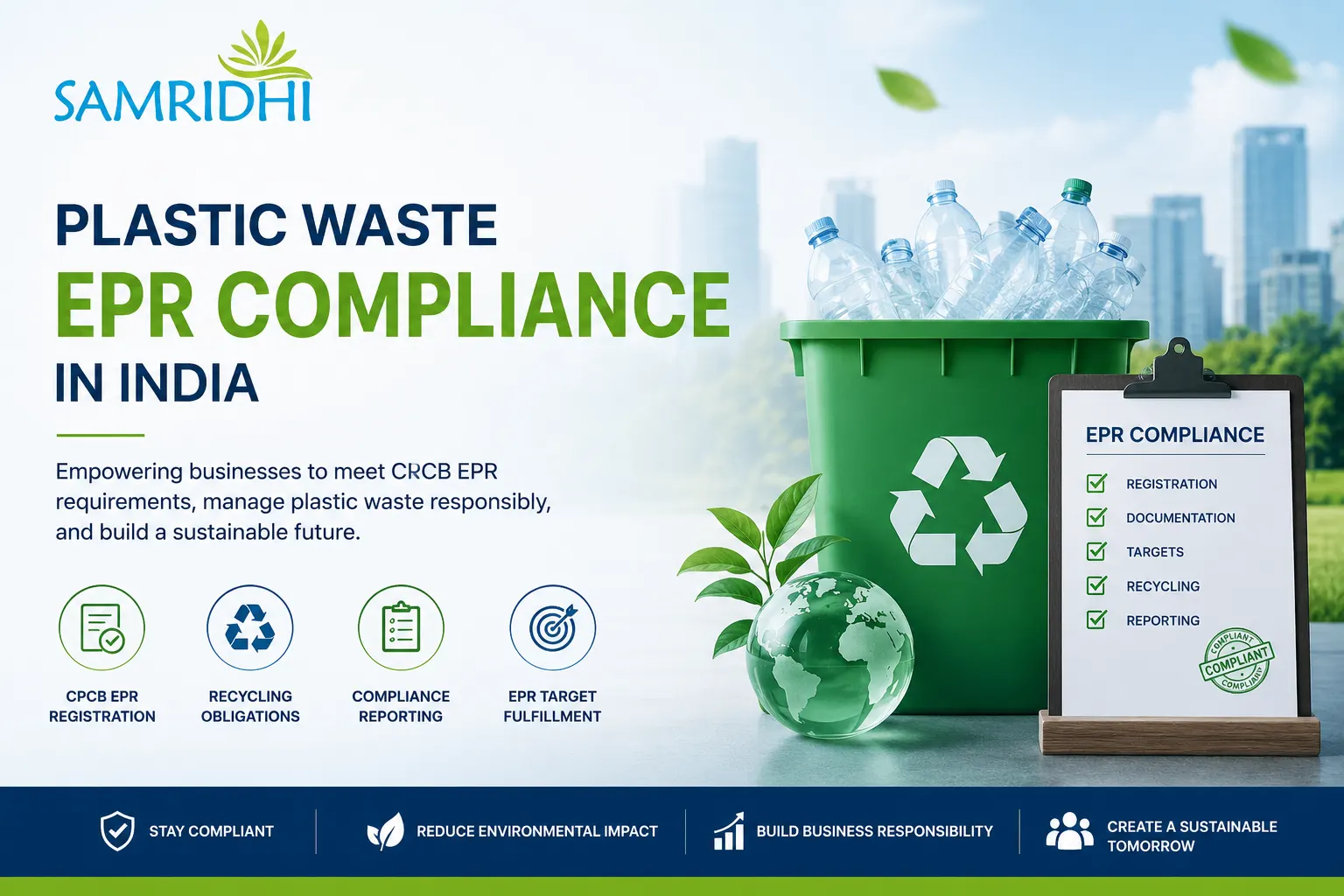
EPR Registration for Plastic Waste supports CPCB compliance for producers, importers, and brand owners managing plastic packaging obligations.
Step-by-Step Plastic Waste EPR Registration Process With CPCB
Many businesses assume EPR registration is simply an online form submission.
In reality, the process is much more structured.
Packaging classification, quantity calculations, recycler planning, and documentation alignment all play a role in the overall compliance workflow.
That’s why understanding the CPCB plastic waste EPR registration process early helps businesses avoid reporting issues and compliance gaps later.
Step 1: Identify Applicability Under Plastic Waste Rules
The first step is determining whether the business falls under EPR obligations.
Authorities generally evaluate whether the entity qualifies as:
- Producer
- Importer
- Brand Owner (PIBO)
This is a key part of plastic waste EPR registration India.
Applicability depends on how the business introduces plastic packaging into the Indian market.
Step 2: Assess Plastic Packaging Categories
Before registration begins, businesses usually need to identify the types of plastic packaging used.
Packaging is commonly categorized into:
- Rigid plastic packaging
- Flexible plastic packaging
- Multi-layered plastic packaging
- Compostable plastic packaging
This classification becomes important for future compliance obligations and target calculations under EPR compliance for plastic packaging India.
Step 3: Collect Packaging Quantity Data
One of the most important stages is data preparation.
Businesses are generally expected to compile:
- Packaging consumption details
- Import quantities
- Sales-related packaging data
- Product-wise packaging information
This data later influences reporting and recycling target obligations.
Incorrect quantity declarations are one of the most common compliance issues businesses face.
Step 4: Prepare Documentation
Documentation alignment is critical during the registration process.
Typical documents may include:
- Company registration documents
- GST details
- IEC certificate (for importers)
- PAN details
- Packaging information
- Authorized signatory documents
This forms a central part of documents required for plastic waste EPR compliance.
Incomplete or inconsistent documentation often leads to clarification requests.
Step 5: CPCB Portal Registration
Once applicability and documentation are ready, businesses proceed with:
- cpcb epr registration
- epr registration cpcb
through the official CPCB portal system.
The portal generally requires businesses to:
- Select applicable business category
- Upload packaging details
- Submit documentation
- Declare operational information
Step 6: Application Review and Clarifications
After submission, authorities may review:
- Packaging data accuracy
- Category declarations
- Document consistency
- Compliance applicability
Additional clarification requests may arise if:
- Packaging quantities appear inconsistent
- Product classifications are unclear
- Supporting documents do not align properly
This stage is often case-specific and subject to authority review.
Step 7: Recycler Planning and EPR Obligations
Registration is only part of the broader compliance framework.
Businesses are also expected to plan for:
- Waste collection obligations
- Recycler coordination
- Recycling target fulfillment
- Compliance reporting systems
This is directly connected with plastic waste recycling compliance India.
Step 8: Ongoing Reporting and Compliance Tracking
After registration, businesses may need to maintain ongoing compliance activities such as:
- Annual reporting
- Packaging quantity updates
- EPR target tracking
- Recycler documentation alignment
This reflects the operational side of EPR authorization for plastic waste India.
Why Businesses Commonly Face Delays
Most registration delays happen because of preparation gaps rather than portal issues alone.
Common problems include:
- Incorrect packaging category selection
- Incomplete packaging quantity calculations
- Mismatch between documents and declarations
- Unclear importer or brand owner classification
These issues frequently affect plastic packaging EPR certificate India workflows.
The Practical Takeaway
Plastic waste EPR registration is primarily a data and compliance management process.
- Applicability should be reviewed carefully
- Packaging categories must be classified accurately
- Documentation consistency is essential
- Recycler planning matters beyond registration
And since:
- Requirements depend on packaging type and business structure
- Target obligations vary by declared quantities
- Compliance remains subject to CPCB review
businesses should prepare operational and packaging data before beginning registration activities.
Because under India’s EPR system…
the biggest compliance problems usually start long before the application is submitted.
EPR Compliance Reporting & Documentation helps businesses manage packaging declarations, reporting records, and CPCB compliance workflows.
Documents Required for Plastic Waste EPR Compliance in India
In plastic waste EPR compliance, documentation is not treated as a basic formality.
It is the foundation of the entire compliance process.
Because under the CPCB framework, authorities rely heavily on declared packaging data, operational records, and supporting documents to evaluate whether a business falls under EPR obligations and how those obligations should be calculated.
That’s why understanding the documents required for plastic waste EPR compliance is important before starting registration or reporting activities.
Why Documentation Matters So Much in EPR Compliance
Plastic waste compliance is data-driven.
Authorities generally review documents to verify:
- Business applicability
- Packaging quantities
- Operational activities
- Import or sales details
- Recycling responsibility calculations
This forms a major part of plastic waste EPR registration India.
Even small inconsistencies between uploaded documents and declared packaging information can trigger clarification requests.
Basic Business Registration Documents
Most applications require core company identification records.
These may include:
- PAN card
- GST certificate
- Company incorporation documents
- CIN details (if applicable)
- Address proof
- Authorized signatory details
These documents help establish business identity within the cpcb epr registration system.
Import-Related Documents for Importers
Importers generally need additional records to support packaging declarations.
Commonly required documents may include:
- IEC certificate
- Import data
- Bill of entry details
- Product import information
This becomes important under EPR authorization for plastic waste India for businesses introducing packaged products into the Indian market through imports.
Packaging Details and Category Information
One of the most critical parts of the documentation process is packaging classification.
Businesses may need to provide details regarding:
- Type of plastic packaging used
- Packaging category classification
- Product-wise packaging information
- Quantity declarations
This directly affects EPR compliance for plastic packaging India obligations.
Incorrect packaging categorization is one of the most common reasons for compliance issues later.
Sales and Operational Data
Authorities may also review operational records to assess packaging introduction into the market.
This may include:
- Sales quantity data
- Product distribution information
- Packaging consumption records
- Annual packaging usage calculations
This data often influences EPR targets for plastic waste management India.
Recycler and Waste Management Planning Documents
EPR compliance is not limited to registration alone.
Businesses may also need documents related to:
- Authorized recyclers
- Waste management arrangements
- Recycling agreements
- Compliance planning strategies
This supports broader plastic waste recycling compliance India requirements.
Declarations and Undertakings
The CPCB system may additionally require:
- Self-declarations
- Undertakings regarding compliance accuracy
- Packaging responsibility confirmations
These documents help authorities assess accountability within the EPR framework.
Why Documentation Problems Commonly Happen
Many businesses face delays because their internal records are not prepared for compliance review.
Common issues include:
- Incorrect packaging quantity calculations
- Mismatch between sales and packaging data
- Unclear importer or brand owner categorization
- Missing supporting records
- Inconsistent packaging classifications
These problems frequently affect the overall CPCB plastic waste EPR registration process.
Documentation Requirements Continue After Registration
A common misunderstanding is that documentation is only needed during registration.
In reality, businesses may also need to maintain records for:
- Annual reporting
- Recycling target tracking
- Packaging updates
- Compliance audits
This reflects the operational side of plastic packaging EPR certificate India obligations.
The Practical Takeaway
Plastic waste EPR compliance depends heavily on accurate documentation and packaging traceability.
- Business registration records establish applicability
- Packaging data affects EPR targets
- Import and sales records support declarations
- Recycler documentation supports compliance execution
And since:
- Requirements depend on packaging categories
- Documentation scope varies by business activity
- Compliance remains subject to CPCB review
businesses should organize packaging and operational records before beginning EPR registration activities.
Because under India’s plastic waste framework…
compliance decisions are often driven more by data accuracy than by the application form itself.
EPR Compliance Reporting & Documentation supports structured record management for packaging data, recycler coordination, and compliance tracking.
EPR Targets and Recycling Obligations Under Plastic Waste Rules
For many businesses, EPR compliance becomes more serious once they realize registration is only the beginning.
The real responsibility starts after that.
Because under India’s plastic waste framework, businesses are not only expected to declare packaging quantities—they are also expected to ensure that an equivalent amount of plastic waste is managed through authorized recycling systems.
That’s where EPR targets for plastic waste management India become important.
What EPR Targets Actually Mean
EPR targets are essentially waste management obligations linked to the quantity of plastic packaging introduced into the market.
Authorities generally expect businesses to:
- Track packaging introduced into the market
- Calculate applicable waste obligations
- Ensure equivalent recycling or processing
- Maintain records of compliance fulfillment
This forms a major part of plastic waste recycling compliance India.
Why Packaging Categories Matter
Targets are not calculated randomly.
They are usually linked to the type and quantity of packaging used.
Authorities commonly classify packaging into categories such as:
- Rigid plastic packaging
- Flexible plastic packaging
- Multi-layered plastic packaging
- Compostable plastic packaging
This directly affects EPR compliance for plastic packaging India.
Different packaging categories may involve different compliance calculations and recycling expectations.
Packaging Quantity Declarations Drive Target Calculations
One of the most important factors in EPR compliance is packaging quantity declaration.
Businesses generally need to report:
- Quantity of packaging introduced into the market
- Packaging category breakdown
- Product-wise packaging usage
- Import-related packaging quantities
These declarations later influence recycling obligations under the plastic waste management rules India EPR framework.
Recycling Responsibilities Under EPR
Businesses covered under EPR obligations are generally expected to ensure that plastic waste is:
- Collected
- Recycled
- Processed
- Managed through authorized channels
This often involves coordination with:
- Authorized recyclers
- Waste processors
- Compliance partners
This is central to EPR authorization for plastic waste India.
CPCB Monitoring and Compliance Tracking
The CPCB framework increasingly focuses on traceability and data-based compliance monitoring.
Authorities may review:
- Packaging declarations
- Recycling records
- Target fulfillment evidence
- Annual compliance reports
This is closely connected with:
- cpcb epr registration
- epr registration cpcb
- compliance tracking systems
Annual Compliance Responsibilities Continue After Registration
A common misconception is that once registration is complete, compliance is finished.
In reality, businesses may continue to manage:
- Annual target obligations
- Packaging updates
- Recycler coordination
- Reporting requirements
This makes EPR an ongoing operational responsibility.
Why Businesses Commonly Struggle With EPR Targets
Most challenges arise from data management issues rather than recycling itself.
Common problems include:
- Incorrect packaging calculations
- Misclassification of packaging categories
- Lack of recycler coordination
- Inconsistent reporting records
- Unclear packaging quantity tracking
These issues frequently affect the broader CPCB plastic waste EPR registration process.
EPR Compliance Is Becoming More Structured
Authorities are increasingly emphasizing:
- Traceable recycling systems
- Accurate packaging declarations
- Measurable waste recovery
- Long-term compliance tracking
This is changing how businesses approach packaging operations and sustainability planning.
The Practical Takeaway
EPR targets are directly tied to the amount and type of plastic packaging introduced into the market.
- Packaging categories influence obligations
- Quantity declarations affect target calculations
- Recycler coordination supports fulfillment
- Reporting and documentation remain important after registration
And since:
- Targets depend on packaging volumes
- Compliance scope varies by business activity
- Obligations remain subject to CPCB review
businesses should establish packaging tracking and recycling coordination systems early.
Because under India’s EPR framework…
registration creates the obligation.
But ongoing waste management is what actually fulfills it.
EPR Target Fulfillment Support helps businesses manage recycling targets, recycler coordination, and compliance fulfillment activities.
Common Plastic Waste EPR Compliance Problems Businesses Face
Most plastic waste EPR problems in India do not begin with rejection notices or penalties.
They usually begin much earlier…
with incorrect packaging data, incomplete documentation, or confusion about how EPR obligations are actually calculated.
Because once businesses enter the CPCB compliance system, even small reporting gaps can create larger operational problems later.
That’s why understanding common issues in plastic waste recycling compliance India is important before registration and reporting activities begin.
Incorrect Packaging Category Classification
One of the most common issues is selecting the wrong packaging category.
Businesses sometimes:
- Misclassify flexible packaging as rigid packaging
- Overlook multi-layered plastic components
- Ignore secondary or tertiary packaging
This directly affects EPR compliance for plastic packaging India.
Because EPR targets are linked to packaging type, incorrect classification can impact future compliance obligations.
Packaging Quantity Calculation Errors
Another major challenge is packaging quantity estimation.
Many businesses struggle with:
- Product-wise packaging calculations
- Import packaging data
- Multi-state distribution quantities
- Packaging weight estimation
These errors frequently affect EPR targets for plastic waste management India.
And once incorrect data is submitted, correcting it later can become difficult.
Documentation Mismatches
The CPCB system relies heavily on documentation consistency.
Authorities may compare:
- Packaging declarations
- GST records
- Import data
- Sales figures
- Recycler documentation
Even small mismatches can trigger clarification requests during the CPCB plastic waste EPR registration process.
Confusion Around PIBO Applicability
Many businesses are still unclear about whether they qualify as:
- Producer
- Importer
- Brand Owner
Some assume outsourced packaging removes their responsibility entirely.
Others incorrectly believe EPR applies only to manufacturers.
This creates problems during plastic waste EPR registration India evaluation stages.
Recycler Coordination Problems
Registration alone does not fulfill EPR obligations.
Businesses are also expected to manage recycling responsibilities through authorized channels.
Common issues include:
- Lack of recycler coordination
- Incomplete recycling records
- Delayed documentation from recyclers
- Poor tracking of waste management activities
These gaps affect broader EPR authorization for plastic waste India obligations.
CPCB Portal and Data Management Challenges
Many businesses underestimate the operational side of EPR compliance.
The CPCB system requires ongoing:
- Data updates
- Packaging declarations
- Compliance tracking
- Reporting management
This is why:
- cpcb epr registration
- epr registration cpcb
have become continuous compliance activities rather than one-time registration tasks.
Annual Reporting Becomes Difficult Without Internal Tracking
Businesses often face reporting stress because packaging data is not tracked properly throughout the year.
Common operational problems include:
- Missing packaging records
- Inconsistent quantity tracking
- Lack of internal compliance coordination
- Poor packaging inventory visibility
These issues usually appear during annual reporting stages.
Importers Commonly Face Additional Complexity
Importers frequently deal with extra complications because packaging data may not always be available in a structured format from overseas suppliers.
This often creates:
- Packaging declaration gaps
- Classification uncertainty
- Incomplete import-related records
Especially where multiple packaging layers are involved.
Why Compliance Is Becoming More Detailed
Authorities are increasingly emphasizing:
- Traceable recycling systems
- Data-backed compliance reporting
- Accurate packaging declarations
- Measurable target fulfillment
This is changing how businesses manage packaging operations internally.
The Practical Takeaway
Most plastic waste EPR delays are preventable with stronger packaging data management and early planning.
- Classify packaging carefully
- Maintain accurate quantity records
- Align documentation consistently
- Coordinate recyclers early
- Track compliance data continuously
And since:
- Requirements depend on packaging category
- Obligations vary by operational structure
- Compliance remains subject to CPCB review
businesses should treat EPR as an operational compliance system—not just a registration requirement.
Because under India’s plastic waste framework…
the biggest compliance risks usually come from the smallest data inconsistencies.
EPR Authorization Renewal Services support ongoing CPCB compliance continuity, reporting updates, and renewal management activities.


 Get Certified with Confidence – Your One-Stop Compliance Partner
 Grab Your Certified Now
 +91 8799708673
 WhatsApp