What Is Regulatory Compliance for Petroleum and Gas Equipment in India
Petroleum and gas equipment operate in environments where safety cannot be treated casually.
A small technical failure in a hazardous location can lead to:
- Fire risks
- Explosions
- Gas leakage incidents
- Operational shutdowns
That’s why regulatory compliance for petroleum and gas equipment India is heavily controlled through technical standards, inspections, and approval systems.
The objective is not just product approval.
It’s risk prevention.
Why Petroleum and Gas Equipment Are Regulated
Equipment used in petroleum, gas, and hazardous industrial environments must operate safely under demanding conditions.
Regulations are designed to ensure:
- Equipment can safely function in hazardous zones
- Explosion risks are minimized
- Storage and handling systems meet safety norms
- Industrial gas systems comply with operational standards
This forms the core of petroleum equipment compliance regulations India.
Role of PESO in Petroleum and Gas Compliance
One of the main regulatory authorities involved is PESO (Petroleum and Explosives Safety Organisation).
PESO oversees safety-related approvals for:
- Petroleum storage equipment
- Gas handling systems
- Hazardous-area equipment
- Explosion-proof devices
- Industrial gas systems
This is central to PESO certification for petroleum equipment India.
The authority focuses heavily on safety, technical conformity, and hazardous-environment suitability.
Which Equipment Commonly Requires Compliance
Applicability depends on equipment usage, environment, and risk category.
Common examples include:
- Petroleum storage tanks
- LPG systems
- Gas cylinders and fittings
- Fuel dispensing equipment
- Explosion-proof electrical devices
- Hazardous-area electrical equipment
This often falls under gas equipment approval requirements India and hazardous-area safety regulations.
Hazardous Area and Explosion-Proof Compliance
Many petroleum and gas operations involve explosive atmospheres.
In such environments, equipment must be specially designed to reduce ignition risks.
This is where:
- Ex-certified equipment
- Explosion-proof systems
- Hazardous-area safety devices
become important.
These requirements are closely linked with explosion proof equipment certification India and hazardous area equipment PESO compliance India.
Compliance Is Not Limited to Manufacturing
Regulatory obligations may apply across multiple stages:
- Manufacturing
- Import
- Installation
- Storage
- Operation
- Inspection
This is particularly important for imported industrial products entering hazardous operational environments in India.
Documentation and Technical Evaluation Are Critical
Petroleum and gas approvals generally involve detailed technical review.
Authorities may examine:
- Equipment specifications
- Safety design details
- Hazardous-area classifications
- Testing reports
- Installation-related documentation
This supports the overall oil and gas equipment compliance India framework.
Why Businesses Commonly Face Compliance Challenges
The complexity usually comes from technical applicability.
Businesses often struggle with:
- Understanding hazardous-zone classifications
- Selecting correct Ex protection standards
- Aligning imported equipment with Indian requirements
- Managing documentation consistency
These issues frequently affect petroleum storage and handling equipment approval India processes.
Safety Expectations Are Increasing
Industrial safety expectations are becoming stricter across oil, gas, and hazardous sectors.
Authorities now place greater emphasis on:
- Technical reliability
- Explosion prevention
- Equipment traceability
- Certified testing and inspections
This is especially relevant for industrial gas equipment certification India.
The Practical Takeaway
Petroleum and gas compliance in India is primarily safety-driven.
- Hazardous environments require specialized approvals
- PESO plays a central regulatory role
- Technical documentation and testing are essential
- Applicability depends on equipment type and operational risk
And since:
- Requirements depend on hazardous-area classification
- Approval scope varies by equipment usage
- Compliance remains subject to authority review
businesses should evaluate compliance requirements early during equipment planning or import stages.
Because in petroleum and gas operations…
compliance is not just about regulation.
It is directly connected to operational safety and risk control.
PESO Certification supports compliance for petroleum, gas, and hazardous-area equipment used in industrial environments.
Which Petroleum and Gas Equipment Requires PESO Approval in India
A common assumption in industrial compliance is that PESO approval applies only to fuel storage tanks or petroleum depots.
In reality, the scope is much broader.
Many products used in hazardous environments—especially where flammable gases, vapors, or petroleum products are present—may require regulatory review.
That’s why understanding PESO certification for petroleum equipment India is important before manufacturing, importing, installing, or operating industrial equipment.
Why Certain Equipment Falls Under PESO Scope
PESO focuses heavily on safety in environments involving:
- Petroleum products
- Industrial gases
- Explosive atmospheres
- Hazardous chemicals
- Flammable materials
The objective is to reduce ignition risks and ensure equipment can safely operate under hazardous conditions.
This forms the basis of regulatory compliance for petroleum and gas equipment India.
Petroleum Storage and Handling Equipment
Storage infrastructure is one of the most common areas where PESO applicability arises.
Examples may include:
- Petroleum storage tanks
- LPG storage systems
- Fuel dispensing systems
- Pressure vessels
- Storage and transfer pipelines
These products often fall under petroleum storage and handling equipment approval India requirements.
Applicability depends on operational use, storage capacity, and hazardous classification.
Gas Handling and Industrial Gas Equipment
Industrial gas systems also commonly require compliance review.
This may include:
- Gas regulators
- Industrial gas manifolds
- Gas dispensing systems
- Cylinder handling equipment
- Pressure-control systems
These products are closely connected with industrial gas equipment certification India.
Safety performance becomes critical where pressurized or combustible gases are involved.
Hazardous-Area Electrical Equipment
Electrical devices used in explosive or hazardous locations are another major category.
Examples include:
- Explosion-proof lighting
- Hazardous-area control panels
- Ex motors
- Flameproof junction boxes
- Hazardous-area sensors
This falls under hazardous area equipment PESO compliance India.
These products are evaluated based on how they minimize ignition risks in explosive atmospheres.
Explosion-Proof and Ex Equipment
Ex-certified equipment is particularly important in oil, gas, refinery, and chemical environments.
Common examples include:
- Flameproof electrical systems
- Explosion-proof switches
- Ex communication devices
- Hazardous-area instrumentation
This aligns closely with explosion proof equipment certification India.
Applicability often depends on zone classification and operational environment.
Imported Petroleum and Gas Equipment
Imported equipment may also require compliance evaluation before use in India.
Businesses importing industrial systems should review whether products require:
- PESO approval
- Hazardous-area certification
- Technical safety evaluation
- Indian-standard alignment
This becomes important under broader oil and gas equipment compliance India obligations.
Applicability Is Often More Technical Than Expected
One of the biggest challenges is that PESO applicability is not always obvious from the product name alone.
Authorities often consider:
- Operating environment
- Hazardous-zone classification
- Gas exposure risks
- Ignition potential
- Equipment design and protection type
That’s why products with similar functions may fall under different compliance pathways.
Why Businesses Commonly Face Confusion
Many businesses encounter delays because they:
- Assume international approvals automatically apply in India
- Misclassify hazardous-area equipment
- Overlook Ex protection requirements
- Start imports before reviewing PESO applicability
These gaps frequently affect gas equipment approval requirements India processes.
The Practical Takeaway
PESO applicability extends across a wide range of petroleum, gas, and hazardous-area products.
- Storage systems often require approval
- Industrial gas equipment may fall under PESO scope
- Hazardous-area electrical devices need careful evaluation
- Explosion-proof equipment requires technical compliance review
And since:
- Requirements depend on operational environment
- Applicability varies by hazardous classification
- Compliance remains subject to authority review
businesses should assess PESO requirements early in equipment planning or procurement stages.
Because in hazardous industrial sectors…
the compliance requirement is often defined more by the environment than the equipment itself.
NABL Testing supports technical validation and safety testing for petroleum and hazardous-area equipment.
Step-by-Step Approval Process for Petroleum and Gas Equipment in India
Petroleum and gas equipment approvals in India are rarely simple paperwork exercises.
Most products used in hazardous or explosive environments go through technical evaluation, safety review, documentation checks, and in some cases inspections before approvals are considered.
That’s why understanding the gas equipment approval requirements India process early is important—especially for manufacturers, importers, and industrial project teams.
Step 1: Identify Product Applicability and Hazardous Environment
The process usually begins with determining whether the equipment falls under regulated petroleum or hazardous-area usage.
Authorities typically review:
- Type of equipment
- Intended industrial application
- Hazardous-zone classification
- Presence of flammable gases or vapors
- Operational environment
This is a critical starting point under regulatory compliance for petroleum and gas equipment India.
Because applicability is often linked more to usage conditions than the product category itself.
Step 2: Review Applicable Standards and Protection Type
Once applicability is identified, the next step is understanding which technical standards apply.
For hazardous-area and Ex equipment, this may involve:
- Flameproof protection standards
- Explosion-proof design requirements
- Gas group classifications
- Temperature class suitability
This is especially important for explosion proof equipment certification India.
The protection method used by the equipment directly affects the approval pathway.
Step 3: Technical Testing and Evaluation
Testing plays a major role in petroleum and gas compliance.
Depending on the equipment, testing may evaluate:
- Explosion protection capability
- Pressure resistance
- Electrical safety
- Operational reliability
- Hazardous-area performance
This supports broader PESO approval for hazardous gas equipment India requirements.
Testing expectations depend on equipment type and operational risk level.
Step 4: Prepare Technical Documentation
Technical documentation is one of the most important stages in the process.
Typical documents may include:
- Product specifications
- Technical drawings
- Hazardous-area classifications
- Test reports
- Material details
- Installation or operation manuals
This forms a major part of petroleum equipment compliance regulations India.
Small mismatches between documents and tested configurations often create delays.
Step 5: Submission to Regulatory Authorities
After testing and documentation preparation, applications are submitted for regulatory review.
Authorities may evaluate:
- Technical conformity
- Safety suitability
- Hazardous-environment compatibility
- Compliance with applicable standards
This is central to PESO certification for petroleum equipment India.
Approval outcomes depend on product scope and authority review findings.
Step 6: Inspection or Verification (If Applicable)
Certain products or projects may require:
- Factory inspections
- Installation verification
- Additional technical clarification
- Site-related evaluation
This often applies to storage systems, hazardous installations, or industrial gas infrastructure.
Step 7: Import and Operational Compliance
Imported petroleum and gas equipment may require alignment between:
- Imported product specifications
- Approved configurations
- Technical documentation
- Hazardous-area certifications
This is particularly relevant for oil and gas equipment compliance India.
Products entering India without properly aligned documentation may face additional scrutiny.
Why Businesses Commonly Face Delays
Most approval delays happen because of technical inconsistencies.
Common problems include:
- Incorrect hazardous-area classification
- Incomplete testing reports
- Documentation mismatch
- Product modifications after testing
- Missing safety details
These issues frequently affect industrial gas equipment certification India workflows.
The Practical Takeaway
Petroleum and gas approvals are heavily dependent on technical clarity and safety validation.
- Hazardous-area applicability must be reviewed early
- Testing requirements should align with actual operational conditions
- Documentation consistency is essential
- Safety standards play a central role in evaluation
And since:
- Requirements depend on equipment usage
- Testing scope varies by hazardous classification
- Approval remains subject to authority review
businesses should integrate compliance planning into procurement and engineering stages—not after equipment deployment begins.
Because in petroleum and gas approvals…
technical gaps are usually discovered long before operational risks appear.
ISO Certification helps improve compliance management, process control, and operational consistency in industrial sectors.
Compliance Requirements for Explosion-Proof and Hazardous Gas Equipment
In hazardous industrial environments, ordinary equipment is often not enough.
A standard electrical component that works safely in a normal environment may become a serious ignition risk inside a refinery, fuel station, chemical plant, or gas handling facility.
That’s why explosion proof equipment certification India and hazardous area equipment PESO compliance India are treated with high technical scrutiny.
The focus is not just product functionality.
It’s about preventing ignition in environments where flammable gases, vapors, or combustible materials may already be present.
What Makes Equipment “Explosion-Proof”
Explosion-proof or Ex equipment is specially designed to operate safely in hazardous locations.
The equipment is generally built to:
- Prevent sparks from escaping
- Control surface temperatures
- Contain internal explosions if they occur
- Reduce ignition risks in explosive atmospheres
This forms a major part of PESO approval for hazardous gas equipment India.
The protection approach depends on the type of hazardous environment involved.
Hazardous Areas Are Classified by Risk
Compliance requirements are closely linked to hazardous-zone classification.
Authorities usually assess:
- Presence of flammable gases or vapors
- Frequency of hazardous exposure
- Operating environment conditions
- Type of combustible substance involved
This directly affects hazardous area equipment PESO compliance India requirements.
Different hazardous zones may require different protection methods and equipment standards.
Common Types of Hazardous-Area Equipment
A wide range of industrial products may require Ex or hazardous-area compliance evaluation.
Examples include:
- Explosion-proof lighting systems
- Flameproof motors
- Hazardous-area control panels
- Ex sensors and detectors
- Industrial communication systems
- Junction boxes and switches
These products are commonly used across:
- Oil and gas facilities
- Refineries
- LPG systems
- Chemical processing plants
- Fuel handling environments
Technical Testing Is a Major Requirement
Testing plays a critical role in hazardous-area approvals.
Depending on the equipment, testing may evaluate:
- Explosion containment capability
- Flameproof integrity
- Temperature rise limits
- Pressure resistance
- Electrical safety performance
This supports broader industrial gas equipment certification India requirements.
Testing expectations vary depending on the protection method and hazardous classification.
Documentation and Design Review Matter Significantly
Authorities generally review detailed technical documentation before approval consideration.
This may include:
- Technical drawings
- Hazardous-zone suitability
- Ex marking details
- Protection type specifications
- Test reports and certifications
This forms part of broader petroleum equipment compliance regulations India.
Even small inconsistencies between test reports and product specifications may lead to clarification requests.
Imported Ex Equipment Requires Careful Evaluation
Imported hazardous-area equipment often creates additional compliance complexity.
Businesses sometimes assume international Ex certifications automatically apply in India.
But regulatory evaluation may still require:
- PESO review
- Technical document alignment
- Hazardous-area suitability verification
This is especially relevant under oil and gas equipment compliance India.
Why Businesses Commonly Face Compliance Problems
Most issues arise from technical interpretation gaps.
Common problems include:
- Incorrect hazardous-zone classification
- Wrong protection type selection
- Incomplete technical documentation
- Product modifications after testing
- Mismatch between imported and approved configurations
These issues frequently affect gas equipment approval requirements India workflows.
Industrial Safety Expectations Are Increasing
Safety expectations across hazardous industries are becoming more detailed and structured.
Authorities increasingly focus on:
- Equipment traceability
- Technical reliability
- Hazardous-area suitability
- Long-term operational safety
This is changing how businesses approach compliance planning.
The Practical Takeaway
Explosion-proof and hazardous-area compliance in India is highly technical and safety-driven.
- Hazardous zones determine equipment requirements
- Ex protection methods must match operational risks
- Testing and documentation are central to approvals
- Imported equipment requires careful regulatory evaluation
And since:
- Requirements depend on hazardous classification
- Approval scope varies by equipment design
- Compliance remains subject to authority review
businesses should assess hazardous-area obligations early during engineering, procurement, and installation planning.
Because in hazardous industrial environments…
the smallest technical detail can become the most important safety factor.
Lab Setup and Equipment services support industrial testing infrastructure for hazardous-area and safety-related products.
Common Compliance Problems Businesses Face With Petroleum and Gas Equipment
Most compliance problems in the petroleum and gas sector don’t happen because regulations are hidden.
They happen because industrial equipment is technically complex… and hazardous environments leave very little room for error.
A missing hazardous-zone detail.
An incomplete testing report.
A mismatch between imported equipment and approved specifications.
Small gaps like these can slow approvals, delay installations, or create operational compliance risks later.
That’s why businesses working under oil and gas equipment compliance India requirements need to understand where problems usually begin.
Incorrect Hazardous-Area Classification
One of the most common issues is incorrect zone classification.
Businesses sometimes:
- Misidentify hazardous operating areas
- Apply the wrong protection standard
- Select unsuitable Ex equipment
This directly affects hazardous area equipment PESO compliance India.
Because equipment suitability depends heavily on the actual environmental risk level.
Testing Gaps and Incomplete Technical Evaluation
Testing requirements in hazardous industries are highly specific.
Problems often occur when:
- Test reports are incomplete
- Required protection parameters are missing
- Equipment configurations differ from tested samples
- Safety performance data is unclear
These gaps frequently impact explosion proof equipment certification India workflows.
And once technical clarifications begin, timelines often become difficult to predict.
Documentation Mismatches
Petroleum and gas approvals rely heavily on documentation consistency.
Authorities may compare:
- Technical drawings
- Product specifications
- Hazardous-area markings
- Test reports
- Import documents
Even minor inconsistencies can trigger additional review.
This is especially common under petroleum equipment compliance regulations India.
Import Delays Due to Compliance Misalignment
Imported industrial equipment often faces additional scrutiny.
Common issues include:
- Imported product configurations not matching approved documents
- Missing hazardous-area certifications
- Incomplete technical paperwork at customs stage
- Incorrect product descriptions in import records
This directly affects petroleum storage and handling equipment approval India processes.
In many cases, businesses begin compliance evaluation too late—after shipment movement has already started.
Product Changes After Testing
This issue is more common than many businesses expect.
Manufacturers sometimes:
- Modify components after testing
- Change protection systems
- Update designs without reviewing compliance impact
Even small changes may affect hazardous-area suitability.
This becomes critical under PESO approval for hazardous gas equipment India.
Confusion Around International Certifications
Many imported products already carry international certifications.
But businesses sometimes assume those approvals automatically satisfy Indian regulatory requirements.
In practice, Indian authorities may still evaluate:
- Applicability under PESO scope
- Alignment with Indian standards
- Hazardous-environment suitability
- Technical documentation consistency
This is a recurring issue in industrial gas equipment certification India.
Lack of Early Compliance Planning
A major operational problem is treating compliance as the final step instead of part of engineering planning.
Businesses often start approval activities:
- After procurement
- During shipment movement
- Near installation deadlines
At that stage, correcting technical gaps becomes much harder.
Why Compliance Is Becoming More Detailed
Industrial safety expectations in petroleum and gas sectors are increasing steadily.
Authorities now place greater emphasis on:
- Technical traceability
- Equipment reliability
- Hazardous-area suitability
- Testing accuracy
- Operational safety documentation
This is changing how approvals are reviewed across hazardous industries.
The Practical Takeaway
Most petroleum and gas compliance delays are preventable with early technical planning.
- Review hazardous-area applicability carefully
- Align testing with actual operating conditions
- Maintain documentation consistency
- Verify imported equipment configurations early
- Avoid product modifications after approval stages begin
And since:
- Requirements depend on hazardous classification
- Approval scope varies by equipment usage
- Compliance remains subject to authority review
businesses should integrate compliance into engineering, procurement, and import planning from the beginning.
Because in hazardous industrial environments…
the biggest delays usually come from the smallest technical inconsistencies.
BIS Scheme X Certification supports compliance for selected industrial and safety-focused equipment categories in India.


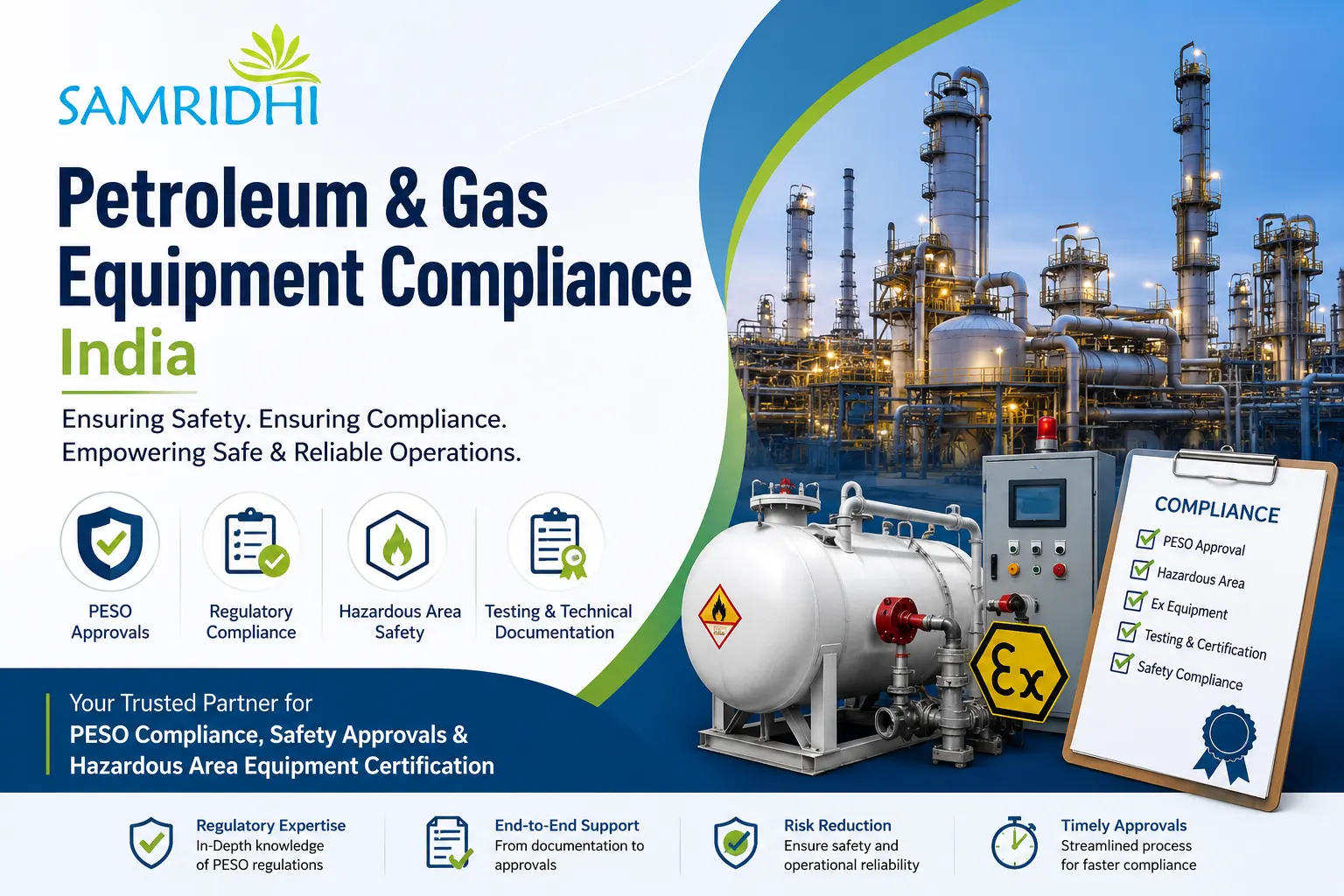
 Get Certified with Confidence – Your One-Stop Compliance Partner
 Grab Your Certified Now
 +91 8799708673
 WhatsApp