What Support Do BIS Consultants Provide After Certification? Understanding Post-Certification Compliance Responsibilities
For many businesses, obtaining BIS certification feels like the finish line. In reality, it marks the beginning of an ongoing compliance journey. Once certification has been granted, manufacturers and importers are expected to continue maintaining product conformity, manufacturing consistency, quality records, and regulatory documentation in accordance with the applicable BIS certification scheme. These responsibilities continue throughout the validity of the certification and may evolve if products, manufacturing processes, or regulatory requirements change over time.
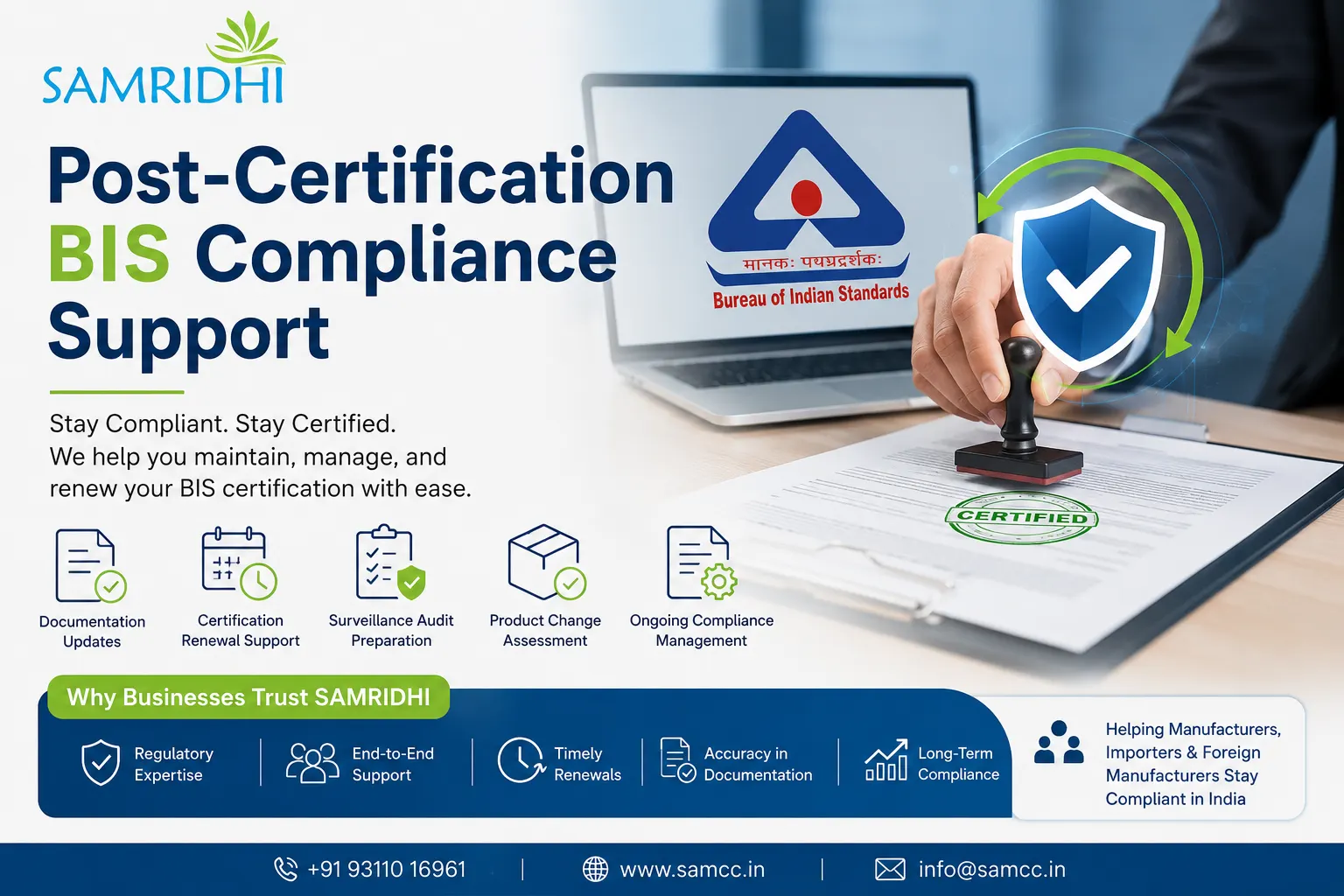
This is where Post Certification Support by BIS Consultants becomes valuable. Rather than focusing only on the initial application, professional consultants assist businesses with maintaining compliance after certification has been issued. Their role is to help organizations understand continuing obligations, organize documentation, monitor regulatory developments, and prepare for future compliance activities while ensuring that internal processes remain aligned with applicable BIS requirements.
One of the primary responsibilities after certification is maintaining accurate compliance documentation. Businesses should continue preserving manufacturing records, quality control documents, calibration certificates where applicable, product specifications, internal testing reports, and production traceability records. These documents demonstrate that certified products continue to meet the requirements under which certification was originally granted. Professional BIS Consultant After Certification services help businesses review and organize these records so they remain complete and readily available whenever required.
Another important aspect of post-certification compliance involves managing product changes. Manufacturers frequently introduce design improvements, update components, change raw material suppliers, modify production methods, or launch new product variants. While these operational improvements are common, some changes may affect certification requirements depending on their technical impact. Before implementing significant modifications, businesses should assess whether additional compliance actions, documentation updates, or regulatory communication may be necessary. Experienced consultants assist with evaluating these changes and determining the appropriate compliance approach based on the applicable certification scheme.
Many businesses also require support during BIS Surveillance Audit Support activities where ongoing regulatory monitoring forms part of the certification framework. Surveillance activities may involve reviewing manufacturing processes, quality systems, production records, testing documentation, or other operational controls. Consultants help businesses prepare by reviewing documentation, identifying compliance gaps, and ensuring that supporting records remain organized. The outcome of any surveillance activity, however, always depends on the actual manufacturing conditions and the assessment conducted by the relevant authority.
Maintaining consistency between manufacturing operations and certified product specifications is another ongoing responsibility. As production volumes increase or manufacturing processes evolve, businesses should ensure that certified products continue to match the technical specifications submitted during certification. Regular internal reviews help identify inconsistencies before they become larger compliance concerns. Professional BIS Compliance Maintenance Services often include periodic documentation assessments, internal compliance reviews, and guidance on maintaining regulatory consistency throughout the product lifecycle.
Documentation updates are another area where businesses frequently seek assistance. Company information, manufacturing addresses, authorized personnel, product labeling, technical specifications, or quality management records may change over time. Keeping certification-related documentation current helps reduce administrative challenges during future regulatory interactions. Professional BIS Documentation Update Services support businesses by reviewing revised records and helping ensure that updated information remains consistent across compliance documents.
Renewal planning is equally important for certification schemes that require continued regulatory validity. Waiting until the final stages of a certification's validity period may create unnecessary pressure if documentation updates, testing activities, or regulatory submissions are required. Professional BIS Certification Renewal Support helps businesses prepare well in advance by reviewing existing documentation, evaluating ongoing compliance status, and identifying any updates that may be necessary before renewal activities begin. Renewal requirements vary depending on the applicable certification scheme and remain subject to authority review.
Manufacturers and importers operating across multiple product categories often manage several certifications simultaneously. Coordinating documentation, surveillance activities, renewals, and product updates across different product lines can become increasingly complex as businesses grow. Professional Ongoing BIS Compliance Support helps establish structured compliance systems that improve record management, regulatory planning, and internal coordination across departments responsible for engineering, production, quality assurance, procurement, and regulatory affairs.
It is important to recognize that post-certification support is not intended to influence regulatory decisions or guarantee continued certification. Consultants cannot assure successful renewals, surveillance outcomes, or uninterrupted certification validity. Their role is to help businesses remain organized, maintain accurate documentation, prepare for compliance activities, and respond effectively to changing regulatory requirements. Certification status always depends on continued product conformity, manufacturing practices, documentation quality, applicable BIS requirements, and the outcome of regulatory evaluations.
Businesses that treat certification as an ongoing compliance program rather than a one-time approval are often better prepared for future regulatory obligations. Professional BIS Consultant for Post Certification Compliance services support this long-term approach by helping manufacturers and importers maintain documentation, monitor compliance requirements, coordinate renewal activities, and strengthen operational readiness throughout the certification lifecycle. Since every product, certification scheme, and manufacturing environment is different, the scope of post-certification support remains case-specific and subject to applicable BIS regulations and authority review.
Post-certification compliance often continues throughout the product lifecycle. Businesses managing BIS-certified products may also benefit from our BIS CRS Registration, BIS ISI Domestic Manufacturers, and BIS ISI Foreign Manufacturers services to understand scheme-specific compliance responsibilities and ongoing regulatory requirements.
BIS Post-Certification Compliance Support: How Consultants Help with Documentation, Surveillance, and Ongoing Regulatory Requirements
Receiving a BIS certificate is an important achievement, but maintaining compliance after certification requires continuous attention. Products must continue meeting the technical and quality requirements under which certification was granted, while manufacturers and importers remain responsible for maintaining accurate records, consistent production practices, and regulatory documentation throughout the certification lifecycle. As businesses grow, launch new product variants, modify manufacturing processes, or expand into new markets, post-certification compliance becomes an ongoing operational responsibility rather than a one-time administrative task.
This is why many organizations continue working with Post Certification Support by BIS Consultants even after their certificates have been issued. Instead of focusing solely on the application process, consultants help businesses manage the day-to-day compliance activities that support long-term regulatory readiness. Their objective is to help organizations maintain accurate documentation, prepare for surveillance activities, assess product changes, and respond effectively to evolving regulatory requirements while recognizing that all compliance outcomes remain subject to BIS regulations and authority review.
Maintaining Documentation Throughout the Product Lifecycle
One of the most important aspects of ongoing compliance is documentation management. Manufacturing records, technical specifications, quality procedures, calibration certificates where applicable, production logs, internal testing reports, and traceability records should remain accurate and consistent throughout the certification period. As businesses update products or manufacturing processes, supporting documents often require corresponding revisions.
Professional BIS Documentation Update Services help businesses review existing records, identify outdated information, and maintain consistency across technical documents, declarations, quality systems, and certification-related records. Organized documentation simplifies future compliance activities and helps businesses respond more efficiently when additional information is requested.
Preparing for BIS Surveillance Activities
Depending on the applicable certification scheme, manufacturers may be subject to surveillance activities intended to verify continued compliance with certification requirements. These reviews may involve evaluating production systems, manufacturing controls, quality procedures, testing capabilities, product consistency, and supporting documentation.
Professional BIS Surveillance Audit Support focuses on helping businesses prepare for these activities by reviewing compliance records, identifying documentation gaps, and ensuring operational records remain organized. Consultants may also assist manufacturers in evaluating internal quality procedures before surveillance activities occur. The outcome of surveillance assessments always depends on the actual manufacturing environment, product conformity, and observations made during the official review.
Managing Product Modifications After Certification
Product improvements are a normal part of manufacturing. Businesses may introduce new components, improve product performance, update raw materials, modify packaging, or revise manufacturing methods over time. While these changes often support product development, some modifications may also affect existing certification depending on their technical significance.
Professional BIS Consultant After Certification services help businesses evaluate proposed changes before implementation. By reviewing technical specifications, engineering modifications, and manufacturing updates, consultants help determine whether additional documentation, testing, or regulatory communication may become necessary under the applicable certification framework.
Supporting Ongoing Manufacturing Compliance
Consistent manufacturing practices play an important role in maintaining certification. Production processes, quality control systems, inspection procedures, and internal testing activities should continue supporting product conformity throughout the certification period.
Businesses often conduct periodic internal reviews to verify that certified products continue matching approved technical specifications. Professional BIS Compliance Maintenance Services assist organizations by reviewing quality documentation, manufacturing records, process controls, and operational procedures to support long-term compliance planning. This proactive approach helps identify potential issues before they affect future regulatory activities.
Regulatory Updates and Compliance Planning
Technical regulations and certification requirements may change as new Indian Standards are introduced or existing regulatory frameworks are revised. Manufacturers and importers should remain aware of any changes that could affect certified products, testing requirements, documentation expectations, or compliance obligations.
Professional consultants help businesses monitor relevant regulatory developments and evaluate how updates may apply to existing certifications. Rather than reacting after new requirements are implemented, organizations can prepare their documentation and operational processes in advance where appropriate.
Renewal Preparation Is Part of Ongoing Compliance
Many businesses begin preparing for certification renewal only when expiration dates approach. However, effective renewal planning usually starts much earlier. Documentation reviews, quality record verification, product assessments, and compliance evaluations often require time before renewal applications can be prepared.
Professional BIS Certification Renewal Support assists businesses by reviewing current compliance status, verifying documentation, assessing operational changes, and identifying any updates that may require attention before renewal activities begin. Renewal requirements vary depending on the applicable certification scheme and remain subject to BIS evaluation.
Coordinating Compliance Across Multiple Products
Large manufacturers and importers frequently manage numerous certified products simultaneously. Different product categories may follow different certification schemes, testing requirements, documentation obligations, and surveillance schedules. Coordinating these activities manually becomes increasingly challenging as product portfolios expand.
Professional Ongoing BIS Compliance Support helps businesses establish structured compliance management systems that organize documentation, monitor certification status, track regulatory obligations, and improve communication between engineering, production, quality assurance, procurement, and compliance teams.
Consultants Strengthen Compliance Systems, Not Regulatory Decisions
It is important to understand the practical role of a compliance consultant after certification. Consultants cannot guarantee successful surveillance outcomes, renewal approvals, or uninterrupted certification validity. They also cannot influence regulatory evaluations or bypass compliance obligations.
Instead, they support businesses by improving documentation management, reviewing manufacturing changes, organizing regulatory records, preparing for surveillance activities, coordinating renewal planning, and strengthening internal compliance processes. These activities help reduce avoidable compliance risks while supporting more efficient long-term regulatory management.
Post-Certification Support Helps Businesses Maintain Long-Term Compliance
Successful compliance does not end once a BIS certificate has been issued. Manufacturers and importers that continue monitoring documentation, manufacturing consistency, quality systems, regulatory updates, and product changes are generally better prepared to meet future compliance responsibilities. Professional BIS Consultant for Post Certification Compliance services provide ongoing operational guidance that supports this continuous approach while recognizing that certification status, surveillance outcomes, renewals, and regulatory obligations always remain dependent on the applicable BIS certification scheme, product category, manufacturing practices, documentation quality, and authority review.
Maintaining accurate documentation and preparing for surveillance activities are essential parts of long-term compliance. Businesses can also explore our NABL Testing, LM79 Testing, and Lab Setup and Equipment services to understand how testing and technical documentation support continued BIS compliance.
 Get Certified with Confidence – Your One-Stop Compliance Partner
From BIS, WPC, TEC, BEE, EPR, LMPC, CDSCO, FSSAI, ISO, MSME to PESO, NABL testing, Startup India, Make in India, and Lab Setup, we handle all your regulatory approvals, certifications, and documentation needs with precision and speed. Partner with Samridhi Compliance Certification and simplify your journey to full compliance—so you can focus on growing your business.
BIS Certification Renewal and License Maintenance: What Businesses Need to Know After Approval
Many businesses view BIS certification as a one-time regulatory requirement that ends once the certificate or license has been issued. In practice, certification is an ongoing responsibility that continues throughout the product's lifecycle. Manufacturers and importers are expected to maintain product conformity, preserve technical documentation, comply with applicable regulatory requirements, and ensure that certified products continue meeting the conditions under which certification was granted. Depending on the certification scheme, businesses may also need to manage license renewals, surveillance activities, documentation updates, or manufacturing changes over time.
For this reason, BIS Certification Renewal Support is often considered an important part of long-term compliance management. Rather than waiting until a license approaches its validity period, experienced businesses typically monitor compliance continuously, making renewal a planned operational activity instead of a last-minute administrative exercise. Professional consultants help organizations remain organized throughout this process while recognizing that renewal decisions always depend on applicable regulations and authority review.
License Maintenance Begins Immediately After Certification
One of the most common misconceptions is that businesses only need to think about renewal when the certificate is close to expiration. In reality, license maintenance starts as soon as certification is granted.
Manufacturers should continue maintaining:
- Product consistency
- Manufacturing controls
- Quality management records
- Production documentation
- Internal testing records
- Calibration records where applicable
- Traceability documentation
These operational records often become important when preparing for future compliance reviews, surveillance activities, or license renewal.
Documentation Should Remain Current
Businesses rarely operate without change. Manufacturing facilities expand, products evolve, suppliers change, authorized personnel are updated, and technical documentation is revised over time.
Whenever such changes occur, organizations should evaluate whether they affect existing certification records.
Professional BIS Documentation Update Services assist businesses by reviewing:
- Technical specifications
- Product descriptions
- Manufacturing information
- Company details
- Authorized signatory records
- Quality documentation
Maintaining accurate documentation throughout the certification period often makes future renewal activities more straightforward.
Product Changes May Affect Certification
Manufacturers frequently improve products after certification.
Examples include:
- Component substitutions
- Design improvements
- Software updates
- Packaging revisions
- Manufacturing process improvements
- Supplier changes
Although many modifications are routine, some changes may require additional compliance evaluation depending on their effect on certified product characteristics.
Professional BIS Consultant After Certification services help businesses assess proposed modifications before implementation, allowing organizations to understand whether additional regulatory actions may become necessary.
Internal Compliance Reviews Help Businesses Stay Prepared
Many experienced manufacturers perform periodic internal compliance reviews rather than waiting for external regulatory activities.
These reviews often include:
- Verification of production records
- Review of technical documentation
- Quality system assessments
- Product specification verification
- Traceability checks
- Internal testing documentation
Professional BIS Compliance Maintenance Services support these reviews by helping businesses identify documentation inconsistencies, outdated records, or operational gaps before they become larger compliance concerns.
Preparing Early Makes Renewal Easier
One of the most practical ways to manage certification renewal is to begin preparation well before renewal activities become necessary.
Early preparation allows businesses to:
- Verify existing documentation
- Review manufacturing changes
- Assess product conformity
- Update quality records
- Organize supporting documentation
- Resolve administrative inconsistencies
This structured approach often reduces unnecessary pressure during renewal planning while allowing sufficient time to address documentation or operational updates where required.
Regulatory Requirements May Change Over Time
Certification requirements are not always static.
Indian Standards, testing procedures, technical specifications, or regulatory guidelines may change as products and industries evolve.
Businesses should periodically review applicable regulatory updates to determine whether any changes affect their certified products.
Professional consultants assist organizations by monitoring relevant compliance developments and evaluating how regulatory updates may influence existing certifications or future renewal activities.
Managing Multiple Licenses Requires Structured Compliance
Larger organizations often maintain certifications across several product categories.
Different products may:
- Follow different certification schemes
- Have different renewal schedules
- Require separate documentation
- Involve different manufacturing facilities
- Require different testing activities
Professional Ongoing BIS Compliance Support helps businesses organize certification records, monitor important compliance milestones, and coordinate renewal planning across multiple product portfolios.
Consultants Help Businesses Prepare—Not Guarantee Renewal
It is important to distinguish between renewal preparation and renewal approval.
Professional consultants cannot:
- Guarantee license renewal
- Influence regulatory decisions
- Waive compliance requirements
- Shorten mandatory review procedures
Instead, they assist businesses by improving documentation quality, organizing compliance records, reviewing manufacturing changes, coordinating renewal planning, and preparing businesses for ongoing regulatory obligations.
Final renewal decisions remain dependent on continued product conformity, manufacturing compliance, applicable BIS requirements, supporting documentation, and authority evaluation.
Long-Term Compliance Protects Certification Value
Businesses that maintain organized documentation, monitor operational changes, conduct regular compliance reviews, and prepare for renewal well in advance are generally better positioned to manage long-term regulatory responsibilities. Certification should be viewed as an ongoing compliance program rather than a single approval event. Professional BIS License Renewal Consultant services support manufacturers, importers, and foreign manufacturers throughout this lifecycle by helping them maintain documentation, organize compliance activities, prepare for renewal, and strengthen internal compliance systems. The exact renewal process, required documentation, and ongoing obligations vary by certification scheme, product category, and regulatory requirements, making every project case-specific and subject to BIS review.
Certification maintenance extends beyond renewal planning. Organizations managing multiple compliance obligations may also find our ISO Certification and BIS Scheme X Certification services helpful for strengthening quality management and understanding additional regulatory requirements.
Get Certified with Confidence – Your One-Stop Compliance Partner
From BIS, WPC, TEC, BEE, EPR, LMPC, CDSCO, FSSAI, ISO, MSME to PESO, NABL testing, Startup India, Make in India, and Lab Setup, we handle all your regulatory approvals, certifications, and documentation needs with precision and speed. Partner with Samridhi Compliance Certification and simplify your journey to full compliance—so you can focus on growing your business.
Common Post-Certification Compliance Challenges and How BIS Consultants Help Businesses Stay Compliant
Achieving BIS certification is a significant milestone, but maintaining compliance after approval often presents a new set of operational challenges. As businesses continue manufacturing, importing, or supplying certified products, they must ensure that product specifications, manufacturing processes, quality systems, and documentation remain consistent with the conditions under which certification was granted. Many compliance issues that arise after certification are not caused by regulatory changes alone—they often result from day-to-day operational changes that gradually affect product conformity and documentation accuracy.
Professional Post Certification Support by BIS Consultants helps businesses identify these challenges early and establish practical compliance systems that support long-term regulatory readiness. While consultants cannot guarantee continued certification or influence regulatory decisions, they help organizations reduce avoidable compliance risks by improving documentation management, monitoring operational changes, and strengthening internal compliance processes.
Product Changes Without Compliance Assessment
One of the most common post-certification challenges occurs when manufacturers introduce changes without first evaluating their regulatory impact.
Businesses frequently:
- Replace components
- Change raw material suppliers
- Upgrade product designs
- Modify packaging
- Revise manufacturing methods
- Improve product functionality
Although these changes may appear minor from a production perspective, they can sometimes affect the certified product configuration depending on the applicable certification scheme.
Professional BIS Consultant After Certification services help businesses review proposed modifications before implementation, allowing manufacturers to determine whether additional documentation, testing, or regulatory communication may become necessary.
Documentation Gradually Becomes Outdated
Documentation is rarely static.
As businesses grow, changes may occur in:
- Company information
- Manufacturing locations
- Authorized personnel
- Product specifications
- Quality procedures
- Technical records
Without periodic review, certification-related documentation may no longer accurately reflect current operations.
Professional BIS Documentation Update Services assist businesses by reviewing existing records, identifying outdated information, and helping maintain consistency across technical documents, quality records, and certification files.
Inconsistent Manufacturing Records
Maintaining organized manufacturing records becomes increasingly important after certification.
Production logs, inspection records, calibration certificates, quality control documentation, traceability records, and internal testing reports should remain complete throughout the certification period.
Many businesses focus heavily on documentation during the initial application but gradually reduce record maintenance once certification has been obtained.
Professional BIS Compliance Maintenance Services help establish structured documentation practices that support continuous compliance rather than one-time certification preparation.
Lack of Preparation for Surveillance Activities
Certain BIS certification schemes involve surveillance activities designed to verify ongoing compliance.
Businesses sometimes assume that because certification has already been granted, little preparation is required.
In reality, maintaining organized records and consistent manufacturing controls remains essential.
Professional BIS Surveillance Audit Support helps businesses review production documentation, quality procedures, internal testing records, and manufacturing controls before surveillance activities occur. This preparation supports operational readiness while recognizing that surveillance findings always depend on actual manufacturing conditions and official regulatory assessment.
Delayed Renewal Planning
Another common challenge is postponing renewal preparation until certification validity is close to expiration.
By that stage, businesses may still need to:
- Review documentation
- Verify manufacturing records
- Assess product changes
- Update technical information
- Organize supporting documents
Professional BIS Certification Renewal Support encourages businesses to begin renewal planning well in advance, reducing administrative pressure and allowing sufficient time to address compliance updates before renewal activities become necessary.
Multiple Product Lines Increase Compliance Complexity
As organizations expand, they often manage several certified products simultaneously.
Different product lines may involve:
- Separate certification schemes
- Different documentation requirements
- Independent renewal schedules
- Product-specific testing obligations
- Individual manufacturing records
Managing these activities through spreadsheets or manual tracking frequently becomes difficult as certification portfolios grow.
Professional consultants help businesses organize compliance systems that improve document management, certification tracking, and coordination across engineering, production, procurement, quality assurance, and regulatory teams.
Communication Gaps Between Departments
Post-certification compliance often involves multiple departments rather than a single compliance team.
Engineering teams may introduce design changes.
Production departments may update manufacturing methods.
Procurement teams may approve new suppliers.
Quality teams may revise testing procedures.
If these changes are not communicated effectively, certification documentation may no longer reflect actual manufacturing practices.
Professional Ongoing BIS Compliance Support helps establish structured communication processes that improve coordination between departments responsible for certified products.
Regulatory Changes Can Affect Existing Certifications
Indian Standards, testing procedures, and certification requirements may evolve over time.
Businesses that do not monitor regulatory developments risk overlooking updates that could affect existing certifications or future renewal activities.
Professional consultants regularly review relevant compliance updates and help businesses evaluate whether regulatory changes require documentation revisions, operational adjustments, or additional compliance planning.
Compliance Should Become Part of Daily Operations
One of the biggest post-certification challenges is treating compliance as an occasional regulatory requirement rather than an ongoing operational function.
Organizations that integrate documentation management, internal compliance reviews, quality record maintenance, and regulatory monitoring into their routine business processes are generally better prepared to manage future compliance responsibilities.
Professional BIS Consultant for Post Certification Compliance services support this long-term approach by helping businesses strengthen internal systems instead of reacting only when regulatory deadlines arise.
Strong Compliance Systems Reduce Long-Term Risk
Most post-certification compliance issues develop gradually rather than appearing suddenly. Product modifications, documentation inconsistencies, manufacturing updates, delayed renewals, and communication gaps can accumulate over time if they are not reviewed regularly. Professional consultants help businesses build structured compliance systems that support documentation accuracy, surveillance readiness, renewal planning, and ongoing regulatory management. While these services improve operational preparedness, continued certification always depends on product conformity, manufacturing consistency, applicable BIS requirements, supporting documentation, and authority review. Every compliance project remains case-specific and subject to the relevant regulatory framework.
Documentation updates, manufacturing changes, and product modifications are common compliance challenges after certification. Businesses requiring support for regulated electronics and telecom products may also benefit from our TEC MTCTE Approval and WPC ETA Approval consulting services.
Why Ongoing BIS Compliance Support Is Important for Manufacturers, Importers, and Foreign Manufacturers
For many businesses, the focus on BIS certification is strongest before the certificate is issued. Teams work to prepare technical documents, coordinate product testing, complete regulatory formalities, and respond to application requirements. Once certification is granted, however, many organizations shift their attention back to production and sales. This is often where long-term compliance challenges begin. BIS certification is not simply an approval that can be filed away—it requires manufacturers, importers, and foreign manufacturers to continue maintaining product conformity, documentation accuracy, and operational consistency throughout the certification lifecycle.
Professional Post Certification Support by BIS Consultants helps businesses manage these ongoing responsibilities through structured compliance planning rather than reactive problem-solving. The objective is not to influence regulatory decisions or guarantee future approvals, but to help organizations maintain organized compliance systems that support continued conformity with applicable BIS requirements.
Manufacturers Must Maintain Consistent Production Standards
Manufacturing environments rarely remain unchanged for long. Production capacity increases, machinery is upgraded, raw material suppliers change, quality procedures evolve, and engineering teams introduce product improvements to remain competitive.
While these operational developments are part of normal business growth, they can also affect certified products if changes influence technical specifications or manufacturing consistency.
Professional Ongoing BIS Compliance Support helps manufacturers establish internal review processes that evaluate production changes before they affect certification. This proactive approach allows businesses to identify potential compliance implications early rather than discovering them during future regulatory activities.
Importers Depend on Overseas Manufacturers for Compliance Information
Importers face a different set of challenges because they rely on foreign manufacturers for technical documentation, manufacturing records, product specifications, declarations, and quality information.
As overseas factories revise products, relocate manufacturing facilities, update components, or change production methods, importers may not always receive immediate notification of these modifications.
Professional BIS Consultant After Certification services help importers maintain communication with overseas manufacturers, review updated documentation, and assess whether changes require additional compliance evaluation under the applicable BIS certification scheme.
Foreign Manufacturers Must Coordinate Across Multiple Stakeholders
Foreign manufacturers supplying products to India often coordinate with Authorized Indian Representatives, distributors, testing laboratories, production facilities, logistics providers, and regulatory teams located in different countries.
Managing certification across multiple organizations creates practical challenges, particularly when technical documents, manufacturing updates, and compliance records must remain consistent throughout the certification period.
Professional consultants help coordinate these activities by supporting documentation management, regulatory communication, and ongoing compliance planning while ensuring stakeholders work from accurate and updated information.
Documentation Maintenance Is an Ongoing Responsibility
Many businesses prepare documentation carefully during the initial certification process but gradually reduce document management once certification has been obtained.
Over time, records may become outdated because of:
- Company information changes
- Manufacturing updates
- Product revisions
- Personnel changes
- Technical specification updates
- Quality management improvements
Professional BIS Documentation Update Services help businesses periodically review documentation so that certification records continue reflecting current manufacturing operations.
Surveillance Readiness Requires Continuous Preparation
Certain certification schemes include surveillance activities intended to verify continued compliance.
Businesses that maintain organized documentation, production records, internal testing reports, quality procedures, and traceability systems throughout the year are generally better prepared than organizations that begin gathering information only after receiving notice of a surveillance activity.
Professional BIS Surveillance Audit Support focuses on improving operational readiness by reviewing documentation and compliance records before regulatory assessments take place.
Renewal Should Be Planned, Not Rushed
Certification renewal often becomes stressful when businesses postpone preparation until renewal deadlines approach.
During renewal planning, organizations may need to review:
- Technical documentation
- Manufacturing records
- Product conformity
- Internal quality systems
- Supporting declarations
- Operational changes
Professional BIS Certification Renewal Support helps businesses prepare these activities systematically, allowing sufficient time to evaluate documentation and resolve compliance issues before renewal submissions become necessary.
Internal Coordination Is Just as Important as External Compliance
Successful post-certification compliance depends on cooperation between multiple departments.
Engineering teams may approve design changes.
Procurement departments may introduce new suppliers.
Production teams may modify manufacturing processes.
Quality managers may revise inspection procedures.
Regulatory teams may maintain certification documentation.
Without effective communication between these functions, small operational changes can unintentionally create inconsistencies between certified products and certification records.
Professional consultants help businesses develop structured compliance workflows that improve communication across departments while maintaining documentation consistency throughout the product lifecycle.
Long-Term Compliance Supports Business Continuity
Businesses introducing regulated products into the Indian market often depend on uninterrupted compliance to support manufacturing schedules, distribution plans, customer commitments, and future product launches.
Treating compliance as an ongoing management process instead of a one-time certification project helps organizations respond more effectively to product changes, regulatory updates, surveillance activities, and renewal requirements.
Professional BIS Compliance Maintenance Services assist businesses by strengthening documentation systems, reviewing operational changes, organizing compliance records, and supporting long-term regulatory planning without replacing the responsibilities of the manufacturer or importer.
Compliance Is a Continuous Business Process
Whether a company manufactures products in India, imports finished goods from overseas, or operates manufacturing facilities abroad, maintaining BIS certification requires continuous attention to documentation, production consistency, quality management, and regulatory obligations. Professional BIS Consultant for Post Certification Compliance services help manufacturers, importers, and foreign manufacturers build practical compliance systems that support long-term certification management while reducing avoidable administrative and operational risks. Although consultants improve compliance readiness and organizational efficiency, certification validity, surveillance outcomes, renewal decisions, and ongoing regulatory obligations always remain dependent on product conformity, applicable BIS requirements, manufacturing practices, supporting documentation, and authority review.
Businesses managing multiple certified products often require ongoing documentation reviews, testing coordination, and regulatory planning. You can also explore our BIS Consultant Delhi, BIS Consultant Mumbai, and BIS Consultant Bangalore pages for region-specific BIS compliance support across India.


 Grab Your Certified Now
 +91 8799708673
 WhatsApp