Why Product Traceability Has Become Essential for Maintaining BIS Certification in Modern Manufacturing
For many manufacturers, obtaining BIS certification is viewed as the final milestone in the compliance journey. Once the certificate is issued and production begins, the focus naturally shifts toward meeting customer demand, managing suppliers, and maintaining production efficiency. However, this is also the stage where many businesses unknowingly create compliance risks.
Modern manufacturing environments are constantly evolving. Suppliers change, raw materials become unavailable, electronic components reach end-of-life, production lines are upgraded, and engineering teams introduce product improvements. While these operational changes are often necessary, they can also affect whether a product continues to meet the specifications under which it was originally evaluated for BIS compliance.
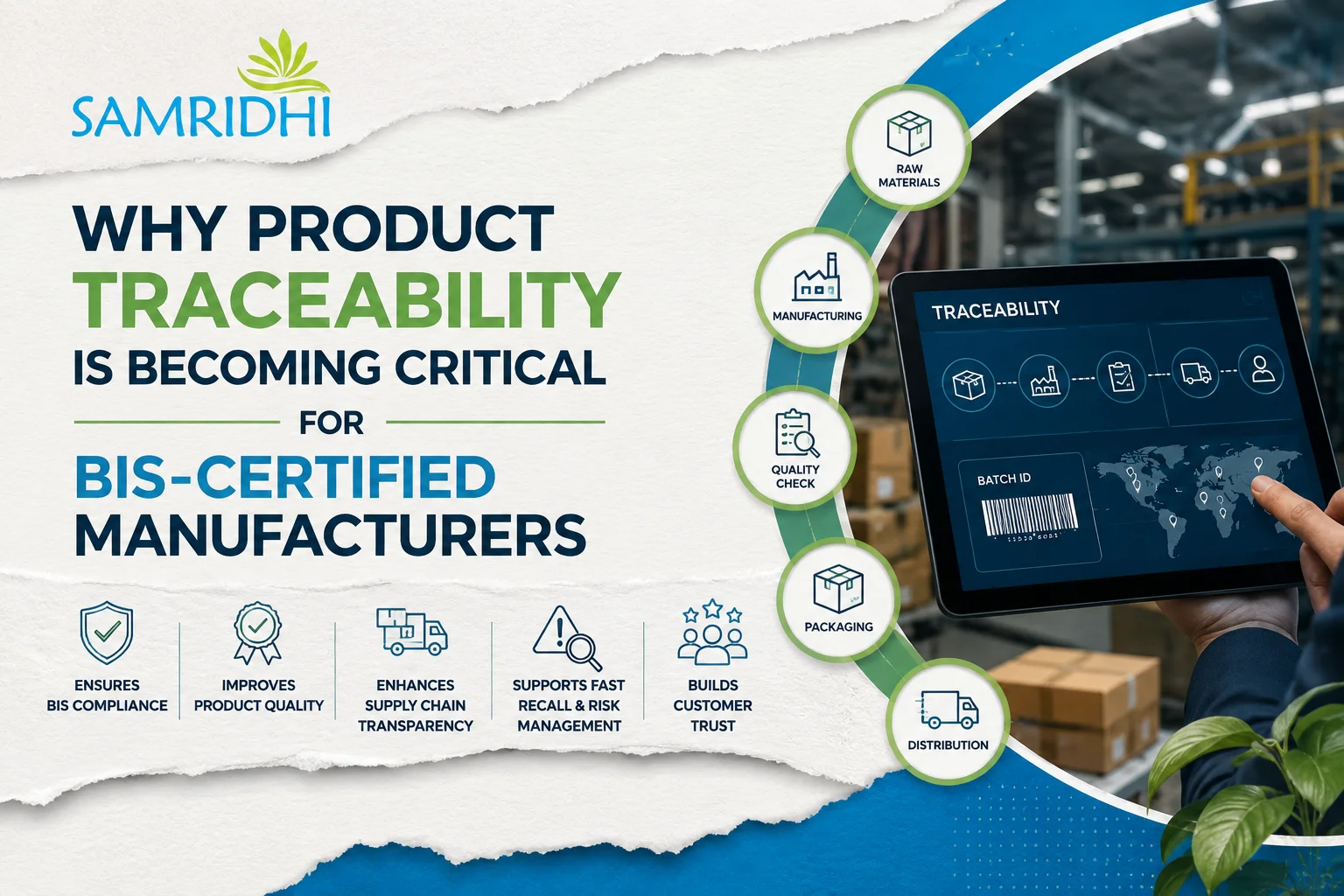
This is where product traceability becomes critical. Rather than being just another quality control requirement, traceability provides manufacturers with a structured way to identify where materials came from, how products were manufactured, which components were used, and whether every stage of production remains aligned with approved specifications.
For BIS certified manufacturers, traceability is no longer simply a good manufacturing practice. It has become an important part of maintaining product consistency, supporting conformity assessments, managing operational changes, and demonstrating compliance whenever required.
Product traceability is one of the key practices that supports consistent manufacturing and long-term compliance. If your products fall under the mandatory certification scheme, our BIS ISI Domestic Manufacturers consulting services help businesses understand documentation, factory readiness, quality processes, and ongoing compliance requirements throughout the certification lifecycle.
What Is Product Traceability?
In simple terms, product traceability is the ability to track a product throughout its entire lifecycle.
A manufacturer should be able to identify:
- Where raw materials originated.
- Which supplier provided each component.
- Which production batch was used.
- When the product was manufactured.
- Which quality inspections were completed.
- Which finished products contain specific materials or components.
Instead of relying on assumptions or manual memory, traceability creates documented evidence that links every stage of manufacturing together.
This becomes particularly valuable whenever questions arise about product quality, supplier performance, regulatory compliance, or customer complaints.
BIS Certification Does Not End After Approval
One misconception among manufacturers is that compliance responsibilities end once BIS certification has been granted.
In practice, certification represents the beginning of ongoing compliance management.
Manufacturing environments rarely remain unchanged.
Over time, businesses may experience:
- New suppliers.
- Material shortages.
- Component substitutions.
- Equipment upgrades.
- Process improvements.
- Product design revisions.
- Production expansion.
Each change may affect whether the product continues to conform to the applicable Indian Standard.
Depending on the nature of the change, additional evaluation, testing, or documentation may be necessary. The exact requirements are case-specific, depend on the product, and remain subject to authority review.
Traceability helps manufacturers understand exactly what has changed and how those changes affect compliance.
Why Traceability Has Become More Important in Modern Manufacturing
Today's manufacturing supply chains are significantly more complex than they were even a decade ago.
Many products now include components sourced from:
- Multiple domestic suppliers.
- International vendors.
- Contract manufacturers.
- Specialized component producers.
As supply chains become more interconnected, identifying the source of every component becomes increasingly important.
Without effective traceability in manufacturing, businesses may struggle to answer questions such as:
- Which supplier provided this component?
- Which production batches were affected?
- Which finished products used this material?
- Were approved specifications followed consistently?
When these questions cannot be answered quickly, compliance investigations often become more complicated.
Product Consistency Depends on Controlled Manufacturing
One objective of BIS compliance is ensuring that certified products continue to meet the same technical requirements over time.
Customers expect consistency.
Regulators expect consistency.
Manufacturers also benefit from consistency because it reduces production risks.
Traceability supports this by creating clear records of:
- Raw material batches.
- Approved suppliers.
- Production parameters.
- Inspection results.
- Quality control activities.
- Finished product identification.
When every stage is documented, it becomes much easier to demonstrate that products have been manufactured according to established procedures.
Traceability Supports Ongoing Conformity Management
Conformity is not simply confirmed during initial testing.
It must be maintained throughout production.
For example:
A manufacturer changes a plastic housing supplier because the original supplier is no longer available.
Although the replacement material appears identical, it may have different characteristics that influence product performance.
Without proper traceability:
- the supplier change may not be documented,
- affected production batches may not be identified,
- future investigations become difficult.
With an effective traceability system, manufacturers can identify:
- when the supplier changed,
- which production lots were affected,
- which products require review,
- what supporting documentation exists.
This improves overall conformity management while reducing uncertainty during compliance reviews.
Customer Confidence Is Built Through Transparency
Traceability also supports customer trust.
Increasingly, customers want confidence that products are:
- manufactured consistently,
- produced under controlled conditions,
- sourced responsibly,
- supported by documented quality systems.
When manufacturers maintain reliable traceability records, they can respond more effectively to customer questions regarding:
- product origin,
- manufacturing dates,
- production batches,
- material sources,
- quality inspections.
Transparent information often strengthens confidence throughout the supply chain.
Product Recalls Become More Manageable
Although every manufacturer aims to avoid recalls, preparing for unexpected situations remains part of responsible manufacturing.
Without traceability:
A business may need to review every product manufactured over several months because it cannot identify which batches contain the affected component.
With effective traceability:
The investigation can often be limited to:
- specific production batches,
- defined manufacturing dates,
- identified suppliers,
- particular components.
This allows businesses to respond more efficiently while reducing unnecessary operational disruption.
The exact regulatory actions required will always depend on the product, the nature of the issue, and applicable authority requirements.
Traceability Supports Quality Management Systems
Manufacturers operating under an ISO 9001 quality management system are already familiar with the importance of documented processes.
Product traceability naturally complements these quality management principles by supporting:
- document control,
- supplier management,
- change management,
- inspection records,
- corrective actions,
- continual improvement.
Rather than functioning as a separate activity, traceability often becomes an integrated part of the overall quality management framework.
Digital Manufacturing Has Increased Expectations
Many manufacturers now use:
- ERP systems,
- barcode tracking,
- QR codes,
- digital production records,
- automated inventory systems,
- electronic quality records.
These technologies make it easier to maintain accurate traceability while reducing manual record-keeping errors.
Digital traceability also allows manufacturers to retrieve information more efficiently during:
- internal quality reviews,
- customer enquiries,
- supplier investigations,
- compliance assessments.
The level of digitalization adopted varies according to business size, production complexity, and operational requirements.
Practical Benefits of Product Traceability
Beyond regulatory considerations, traceability supports day-to-day manufacturing operations.
| Benefit |
Operational Impact |
| Better supplier control |
Easier identification of material sources |
| Faster investigations |
Reduced time during quality reviews |
| Improved product consistency |
Better control of manufacturing processes |
| Stronger documentation |
Supports conformity management |
| Efficient recall management |
Identifies affected production batches more accurately |
| Enhanced customer confidence |
Demonstrates controlled manufacturing practices |
| Better change management |
Tracks supplier and component revisions |
| Improved audit readiness |
Makes production records easier to verify |
These operational advantages often extend well beyond certification requirements.
Is Product Traceability Mandatory?
Manufacturers often ask whether product traceability is mandatory for every BIS certified manufacturer.
The answer is not always identical across all products.
Specific documentation, traceability expectations, and compliance obligations depend on the applicable Indian Standard, product category, certification scheme, manufacturing process, and regulatory requirements.
However, maintaining reliable traceability records is widely recognised as an important element of effective quality management and ongoing compliance because it enables manufacturers to demonstrate product consistency, investigate quality concerns, manage production changes, and support conformity whenever required.
Product Traceability Is No Longer Just a Quality Tool
As manufacturing becomes more complex, product traceability has evolved from a quality control practice into a strategic compliance requirement. For BIS certified manufacturers, maintaining traceability helps connect suppliers, raw materials, production batches, inspections, and finished products into a single, verifiable record. This supports BIS compliance, strengthens conformity management, improves product consistency, and enables businesses to respond more effectively to supplier changes, customer enquiries, and quality investigations.
While the specific traceability requirements vary by scope, depend on the product, and remain subject to authority review, manufacturers that establish structured traceability systems are generally better prepared to manage operational changes without losing visibility into their production processes. Rather than viewing traceability as additional documentation, businesses can treat it as a practical tool that supports quality management, regulatory readiness, and long-term manufacturing reliability.
How Supplier Changes and Component Revisions Can Affect BIS Compliance and Conformity Assessment
Manufacturing is rarely static. Supply chain disruptions, changing customer requirements, rising material costs, discontinued components, and production improvements often require manufacturers to make adjustments throughout a product's lifecycle. These changes are a normal part of running a business, but they also introduce one of the most overlooked compliance risks for BIS certified manufacturers.
Many organizations assume that if the finished product continues to look the same or perform similarly, replacing a supplier or updating a component is unlikely to affect certification. In practice, that assumption can create significant challenges. Even relatively small modifications may influence whether a product continues to meet the specifications under which it was originally evaluated.
This is why supplier traceability and component traceability have become essential elements of ongoing BIS compliance. They provide manufacturers with documented evidence of what changed, when the change occurred, why it was implemented, and which products were affected. Without these records, demonstrating continued conformity can become considerably more difficult during audits, investigations, or regulatory reviews.
Rather than viewing supplier management as a procurement activity alone, manufacturers should recognise that every material and component entering the production process can influence product consistency and long-term compliance.
Effective supplier management, document control, and change management are also important elements of a structured quality system. Learn how our ISO Certification services help organizations strengthen operational processes, improve traceability, and support continual improvement through internationally recognized quality management practices.
Manufacturing Changes Are Often Necessary—but They Must Be Controlled
No manufacturer can completely avoid operational changes.
Businesses regularly experience situations such as:
- Raw material shortages.
- Supplier capacity issues.
- Increased material costs.
- Product redesigns.
- New customer requirements.
- Technological improvements.
- Production process optimisation.
These changes are often commercially justified and sometimes unavoidable.
However, each modification should be evaluated to determine whether it affects product characteristics, applicable standards, testing requirements, or existing compliance documentation.
The level of assessment required depends on the product, applicable Indian Standards, certification scheme, and the nature of the change, making every situation case-specific.
Why Supplier Traceability Matters Beyond Procurement
Supplier selection is often based on pricing, availability, quality, or delivery performance.
From a compliance perspective, however, suppliers represent much more than a purchasing decision.
Every supplier contributes materials or components that directly influence the finished product.
Supplier traceability allows manufacturers to maintain records of:
- Approved suppliers.
- Material sources.
- Supplier qualifications.
- Batch information.
- Delivery records.
- Material certifications.
- Inspection reports.
If questions arise later regarding product quality or conformity, these records help establish exactly where each material originated.
Without supplier traceability, identifying affected products may become significantly more complex.
Changing Raw Material Suppliers Can Affect Product Consistency
One of the most common manufacturing changes involves replacing a raw material supplier.
For example:
A manufacturer sources a polymer from Supplier A for several years.
Due to supply chain disruptions, the business begins purchasing the same grade of material from Supplier B.
Although both suppliers describe the material using similar specifications, differences may still exist in areas such as:
- Chemical composition.
- Manufacturing process.
- Material tolerances.
- Additive formulations.
- Performance characteristics.
Depending on the product, these differences could influence compliance with applicable standards.
Before introducing new suppliers into production, manufacturers should evaluate whether additional verification, documentation, or testing may be appropriate.
The exact requirements remain subject to authority review and vary by product category.
Component Substitutions Require Careful Evaluation
Component availability changes frequently.
Electronic manufacturers, for example, often experience discontinued components that require alternative parts.
Mechanical manufacturers may replace:
- Switches.
- Connectors.
- Fasteners.
- Motors.
- Packaging materials.
- Safety components.
While replacement components may appear equivalent, differences in design, materials, dimensions, or performance could affect overall product conformity.
Effective component traceability helps manufacturers identify:
- Which component was replaced.
- Why the change occurred.
- Which production batches contain the new component.
- Supporting technical documentation.
- Internal approval records.
Maintaining these records simplifies future investigations and demonstrates controlled change management.
Engineering Changes Should Never Bypass Documentation
Continuous improvement is an important part of manufacturing.
Engineering teams regularly recommend improvements to:
- Product design.
- Assembly methods.
- Material selection.
- Manufacturing efficiency.
- Product durability.
Although many engineering changes improve production, undocumented modifications create unnecessary compliance risks.
Every significant revision should be supported by documented records describing:
- The reason for the change.
- Technical evaluation.
- Risk assessment.
- Approval process.
- Implementation date.
- Products affected.
Controlled documentation helps ensure that future conformity assessments are based on accurate manufacturing information.
Undocumented Revisions Create Hidden Compliance Risks
Some of the most challenging compliance issues arise not from major product redesigns but from small undocumented changes accumulated over time.
Examples include:
- Informal supplier substitutions.
- Unrecorded process adjustments.
- Production line modifications.
- Material substitutions.
- Packaging changes affecting product identification.
- Updated work instructions that were never formally approved.
Individually, these changes may appear insignificant.
Collectively, however, they can make it difficult to demonstrate that the product being manufactured today matches the product originally evaluated.
Strong traceability systems help prevent these gaps from developing.
Material Specification Updates Require Proper Review
Material specifications are not always permanent.
Suppliers occasionally revise:
- Material grades.
- Manufacturing methods.
- Chemical formulations.
- Technical datasheets.
- Performance specifications.
Manufacturers should have procedures for reviewing these updates before introducing revised materials into production.
This review may include:
- Technical evaluation.
- Quality assessment.
- Internal approval.
- Supplier communication.
- Updated documentation.
Whether further testing or regulatory action is necessary will always depend on the product, scope of the revision, and applicable compliance requirements.
Production Deviations Should Be Recorded and Investigated
No manufacturing process operates without occasional deviations.
Examples include:
- Equipment calibration issues.
- Process interruptions.
- Temperature variations.
- Assembly errors.
- Inspection failures.
- Material mix-ups.
While many deviations are corrected quickly, maintaining records remains important.
Documented deviation management allows manufacturers to determine:
- Which batches were affected.
- Which products require review.
- Whether corrective actions were implemented.
- Whether recurring problems exist.
This strengthens both operational control and overall quality management.
Traceability Supports Effective Conformity Assessment
A conformity assessment evaluates whether products continue to meet applicable regulatory or technical requirements.
Reliable traceability records make this process considerably more straightforward because manufacturers can demonstrate:
- Approved material sources.
- Supplier history.
- Production batches.
- Inspection results.
- Change records.
- Quality control activities.
- Product identification.
Instead of relying on memory or incomplete documentation, businesses can present structured evidence showing how products have been manufactured and controlled over time.
This improves confidence during internal reviews as well as external assessments.
Practical Example of Change Management
Consider a manufacturer producing electrical equipment under BIS certification.
A key electronic component becomes unavailable.
The procurement team identifies an alternative supplier.
Before introducing the replacement component, a structured traceability process may include:
| Change Management Step |
Purpose |
| Identify affected component |
Understand the scope of the change |
| Review technical specifications |
Compare performance characteristics |
| Assess compliance impact |
Determine whether conformity may be affected |
| Record supplier details |
Maintain supplier traceability |
| Update engineering documentation |
Keep manufacturing records accurate |
| Document implementation date |
Identify affected production batches |
| Monitor production |
Verify consistent manufacturing after the change |
The exact process depends on the product and applicable regulatory requirements, but documenting changes provides valuable evidence throughout the product lifecycle.
How Supplier and Component Traceability Strengthen Manufacturing Control
| Traceability Area |
Operational Benefit |
| Supplier Traceability |
Tracks approved material sources and supplier history |
| Component Traceability |
Identifies components used in each production batch |
| Change Documentation |
Supports controlled engineering revisions |
| Batch Identification |
Improves production visibility |
| Material Records |
Strengthens quality investigations |
| Production History |
Demonstrates manufacturing consistency |
| Conformity Documentation |
Supports compliance reviews |
| Recall Readiness |
Helps identify affected products more efficiently |
Each area contributes to better operational control while reducing uncertainty during compliance activities.
Common Mistakes Manufacturers Should Avoid
Many compliance challenges arise because change management processes are informal rather than structured.
Common examples include:
- Changing suppliers without documenting the decision.
- Using alternate components without technical evaluation.
- Failing to update production records.
- Missing revision histories.
- Weak document control.
- Inconsistent supplier approval procedures.
- Limited communication between procurement, engineering, and quality teams.
- Poor retention of historical manufacturing records.
Addressing these issues early can improve both quality management and regulatory preparedness.
Controlled Change Management Supports Long-Term BIS Compliance
Supplier changes and component revisions are a normal part of modern manufacturing, but they should never be treated as routine administrative updates. Effective supplier traceability and component traceability enable manufacturers to understand exactly how production evolves over time while supporting consistent BIS compliance and reliable conformity assessment processes. By documenting supplier approvals, engineering revisions, material specification updates, production deviations, and batch histories, businesses create a clear record that demonstrates controlled manufacturing practices.
The exact compliance implications of any change depend on the product, applicable Indian Standards, certification scheme, and the scope of the modification, and they remain subject to authority review. Manufacturers that establish disciplined traceability and change management processes are generally better prepared to evaluate operational changes, maintain product consistency, and respond efficiently to future quality or compliance enquiries.
Building an Effective Product Traceability System: From Raw Materials to Finished Goods
Many manufacturers understand the importance of traceability in manufacturing, but far fewer have a structured system that consistently captures the information needed throughout the production lifecycle. In many factories, traceability still depends on spreadsheets, handwritten records, disconnected software, or the experience of individual employees. While these methods may work for small operations, they often become difficult to manage as production volumes increase, suppliers expand, and regulatory requirements become more demanding.
An effective product traceability system is much more than assigning batch numbers or storing production records. It is a connected process that allows manufacturers to identify where materials originated, how products were manufactured, who approved production activities, which inspections were completed, and where finished goods were delivered.
For manufacturers working under BIS certification or implementing an ISO 9001 quality management system, traceability supports both operational control and compliance by creating reliable records that can be reviewed whenever product quality, supplier performance, or conformity needs to be verified.
Rather than viewing traceability as additional paperwork, businesses should see it as a practical management tool that improves visibility across the entire manufacturing process.
Building a reliable traceability system often goes hand in hand with strong testing and quality infrastructure. Our Lab Setup and Equipment consulting services assist manufacturers in planning compliant laboratory facilities, selecting appropriate testing equipment, and developing processes that support accurate quality verification and manufacturing control.
Product Traceability Begins Before Production Starts
A common misconception is that traceability starts on the production line.
In reality, it begins much earlier.
Every finished product is influenced by:
- Raw material sourcing.
- Supplier selection.
- Material inspection.
- Storage conditions.
- Production planning.
- Process controls.
- Final inspection.
If information from these stages cannot be connected, identifying the root cause of future quality issues becomes significantly more difficult.
A well-designed traceability system links each stage together instead of treating them as isolated activities.
Step 1: Establish Supplier Documentation Procedures
The first building block of supply chain traceability is maintaining complete supplier information.
Every approved supplier should have documented records that may include:
- Supplier identification.
- Material specifications.
- Purchase orders.
- Certificates where applicable.
- Delivery documentation.
- Material inspection reports.
- Approval status.
- Revision history.
Maintaining these records allows manufacturers to identify exactly which supplier provided each material used in production.
If supplier-related issues arise later, affected materials can be investigated more efficiently.
Step 2: Use Batch Numbers and Lot Control
One of the simplest but most effective traceability practices is assigning unique batch numbers and implementing lot control.
Instead of treating production as one continuous process, manufacturers divide production into identifiable batches.
Each batch can then be linked to:
- Raw materials.
- Production date.
- Manufacturing line.
- Equipment used.
- Operators involved.
- Inspection records.
- Finished products.
For example:
A batch number may allow a manufacturer to determine:
- Which supplier provided the raw material.
- Which production shift completed manufacturing.
- Which inspection records apply.
- Which customers received products from that batch.
Without batch identification, investigating production issues often becomes much broader and more time-consuming.
Step 3: Maintain Accurate Production Records
Production records provide the operational history of every manufactured product.
These records typically document:
- Production dates.
- Equipment used.
- Machine settings.
- Process parameters.
- Operator information.
- Production quantities.
- Material consumption.
- Deviations recorded during production.
Accurate production records help manufacturers understand exactly how products were manufactured rather than relying on assumptions.
For businesses operating under a quality management system, these records also support consistency across multiple production runs.
Step 4: Record Inspection and Quality Control Activities
Inspection records play a critical role in demonstrating that products have been evaluated according to established procedures.
Depending on the manufacturing process, records may include:
- Incoming material inspections.
- In-process quality checks.
- Final product inspections.
- Test reports.
- Measurement results.
- Calibration records.
- Non-conformance reports.
- Corrective actions.
Maintaining complete inspection records allows manufacturers to verify product quality while supporting future investigations if questions arise.
The exact inspection requirements depend on the product, applicable standards, and manufacturing process.
Step 5: Strengthen Document Control
Many traceability problems are not caused by missing production records but by poor document management.
Outdated work instructions, uncontrolled drawings, multiple specification versions, or missing approvals can create confusion across production teams.
Effective document control helps ensure employees always use current information.
Good document control generally includes:
- Version control.
- Approval workflows.
- Revision history.
- Controlled distribution.
- Archived documents.
- Access permissions.
- Document review schedules.
These practices reduce the risk of manufacturing products using outdated specifications.
Step 6: Introduce Digital Traceability Where Appropriate
As production grows, manual record keeping becomes increasingly difficult to manage.
Many manufacturers now implement digital traceability systems that reduce manual errors while improving information accessibility.
Examples include:
- Barcode systems.
- QR code identification.
- RFID tracking.
- Digital production records.
- Electronic inspection forms.
- Cloud-based document management.
Digital systems also make historical records easier to retrieve during:
- Internal audits.
- Customer enquiries.
- Quality investigations.
- Compliance reviews.
The level of digitalisation depends on business size, production complexity, and operational requirements.
Step 7: Integrate ERP Systems With Traceability
For medium and large manufacturers, ERP integration can significantly improve traceability.
Instead of maintaining separate records across departments, ERP systems connect information from:
- Purchasing.
- Inventory.
- Production.
- Quality.
- Warehousing.
- Dispatch.
This creates a continuous record linking raw materials to finished products.
For example:
An ERP system may allow manufacturers to trace:
Raw material supplier → Inventory receipt → Production batch → Inspection record → Finished product → Customer shipment
This connected information improves visibility throughout the manufacturing process while reducing duplicate record keeping.
Step 8: Link Finished Goods Back to Raw Materials
The ultimate goal of traceability in manufacturing is complete visibility.
Every finished product should ideally be traceable back through:
- Production batch.
- Manufacturing date.
- Machine used.
- Operator.
- Inspection records.
- Material batches.
- Supplier documentation.
Likewise, manufacturers should also be able to identify which finished goods contain materials from a particular supplier or production batch.
This two-way traceability supports more effective investigations whenever quality concerns arise.
How a Complete Traceability System Works
The following workflow illustrates how information flows through an effective traceability system.
| Manufacturing Stage |
Traceability Record |
| Supplier Approval |
Supplier documentation and approval records |
| Raw Material Receipt |
Material batch numbers and inspection reports |
| Inventory |
Lot identification and storage records |
| Production |
Production batch records and process parameters |
| Quality Inspection |
Inspection reports and test results |
| Finished Goods |
Product identification and batch allocation |
| Dispatch |
Shipment records and customer information |
| Document Archive |
Revision history and supporting documentation |
Each stage contributes to a continuous record that supports operational control and compliance.
Traceability and ISO 9001 Quality Management
Businesses implementing an ISO 9001 quality management system often find that traceability strengthens several key quality management principles.
These include:
- Process consistency.
- Risk-based thinking.
- Evidence-based decision making.
- Supplier management.
- Corrective action.
- Continual improvement.
- Customer satisfaction.
Rather than existing as a separate process, traceability becomes integrated into the overall quality management framework.
This helps organisations maintain better operational discipline while improving information accuracy.
Common Challenges When Implementing Traceability
Even well-managed factories can face obstacles while building a traceability system.
Common challenges include:
- Inconsistent record keeping.
- Manual data entry errors.
- Multiple software platforms.
- Limited employee training.
- Poor supplier documentation.
- Incomplete batch identification.
- Weak document control.
- Difficulty retrieving historical records.
Recognising these challenges early allows businesses to improve procedures before gaps become larger operational issues.
Practical Tips for Building a Strong Traceability System
Manufacturers introducing or improving traceability can often benefit from a phased approach.
A practical checklist includes:
✔ Standardise supplier approval procedures.
✔ Assign unique batch and lot numbers.
✔ Record production activities consistently.
✔ Maintain detailed inspection records.
✔ Implement document version control.
✔ Review engineering changes formally.
✔ Consider digital traceability tools where appropriate.
✔ Integrate ERP systems when operationally beneficial.
✔ Train employees on traceability procedures.
✔ Periodically review records for completeness and accuracy.
Continuous improvement generally produces more sustainable results than attempting to redesign every process at once.
Why Traceability Supports Long-Term Manufacturing Excellence
An effective traceability in manufacturing system connects every stage of production, from supplier approval and raw material receipt to inspection, dispatch, and customer delivery. By combining batch numbers, lot control, production records, supplier documentation, inspection records, document control, digital traceability, and ERP integration, manufacturers gain greater visibility into how products are made and how changes affect quality and compliance.
For businesses operating under BIS certification or an ISO 9001 quality management system, a structured traceability process supports consistent manufacturing, stronger supply chain traceability, and more reliable conformity management. The exact level of documentation and system complexity depends on the product, manufacturing process, operational scale, and applicable regulatory requirements, but manufacturers that invest in well-organised traceability systems are generally better prepared to manage quality, support compliance activities, and respond efficiently to future operational or regulatory enquiries.
Common Traceability Mistakes That Put BIS-Certified Manufacturers at Compliance Risk
Achieving BIS certification is an important milestone, but maintaining compliance requires consistent control over manufacturing processes, documentation, and product traceability. In practice, many compliance issues do not arise because manufacturers intentionally ignore regulations. Instead, they develop gradually through small operational gaps that go unnoticed over time.
A supplier changes without updating records. A revised component specification is shared informally. Production staff continue using an outdated work instruction. Inspection reports are stored in different locations. Individually, these situations may appear minor. Collectively, however, they can weaken a manufacturer's ability to demonstrate that products continue to meet approved specifications.
For BIS certified manufacturers, product traceability is not simply about tracking products—it is about maintaining confidence that every stage of manufacturing remains controlled, documented, and consistent. A strong quality management system helps prevent these problems by ensuring information is accurate, accessible, and connected across departments.
Understanding the most common traceability mistakes allows manufacturers to strengthen their internal processes before those issues affect product quality, customer confidence, or regulatory compliance.
Accurate testing and well-maintained records play an important role in identifying quality issues before they become larger compliance concerns. Explore our NABL Testing services to understand how accredited testing supports product evaluation, documentation, and technical confidence during manufacturing and certification processes.
Incomplete Documentation Creates Gaps in Product History
One of the most frequent traceability problems is incomplete documentation.
Manufacturers often maintain production records, but important supporting information may be missing.
Examples include:
- Supplier approval records.
- Material certificates.
- Engineering change approvals.
- Inspection reports.
- Batch identification.
- Process deviation records.
- Corrective action documentation.
When information is incomplete, reconstructing the history of a product becomes difficult.
If a quality issue occurs months later, missing documents may prevent manufacturers from identifying:
- What changed.
- When it changed.
- Which products were affected.
- Whether approved procedures were followed.
Comprehensive documentation creates continuity throughout the manufacturing lifecycle.
Missing Supplier Records Reduce Supply Chain Visibility
Suppliers form the foundation of every manufacturing process.
Without complete supplier records, businesses may struggle to demonstrate where materials originated or whether approved procurement procedures were followed.
Important supplier records often include:
- Supplier approval status.
- Material specifications.
- Delivery records.
- Batch information.
- Incoming inspection reports.
- Supplier change history.
- Technical documentation.
Strong supplier records support effective product traceability while making future investigations more efficient.
Manual Record Errors Can Become Long-Term Problems
Many manufacturers still rely on handwritten logs, spreadsheets, or manually entered production records.
Although these methods may work for smaller operations, they also increase the possibility of:
- Incorrect batch numbers.
- Duplicate entries.
- Missing dates.
- Illegible handwriting.
- Data transcription errors.
- Inconsistent formats.
Even small mistakes can create confusion when reviewing historical production information.
For example, an incorrect batch number may make it impossible to identify which finished products contain a particular raw material.
Where practical, standardised documentation procedures or digital record-keeping can help reduce these risks.
Inconsistent Revision Control Causes Manufacturing Confusion
Manufacturing documentation changes regularly.
Drawings, specifications, work instructions, inspection procedures, and material requirements are often revised to reflect product improvements or operational changes.
Problems arise when employees unknowingly use different document versions.
Examples include:
- Production using outdated drawings.
- Inspection teams following previous specifications.
- Purchasing ordering obsolete materials.
- Operators referencing old work instructions.
Effective revision control ensures every department works from the same approved information.
A structured document approval process also provides evidence that manufacturing changes were reviewed before implementation.
Poor Document Retention Makes Historical Reviews Difficult
Traceability depends not only on creating records but also on retaining them appropriately.
Some manufacturers maintain excellent documentation during production but struggle to retrieve records later because files are:
- Stored in multiple locations.
- Archived inconsistently.
- Lost during system upgrades.
- Mislabelled.
- Retained for insufficient periods.
When historical information cannot be located, demonstrating manufacturing consistency becomes considerably more difficult.
Document retention policies should clearly define:
- What records are retained.
- Where they are stored.
- Who is responsible.
- How long they remain available.
The specific retention period depends on applicable regulatory requirements, product category, and internal quality procedures.
Lack of Employee Training Weakens Traceability Systems
Even the best procedures are only effective if employees understand how to follow them.
Traceability responsibilities often involve multiple departments, including:
- Procurement.
- Production.
- Quality.
- Warehousing.
- Engineering.
- Logistics.
Without regular training, employees may:
- Skip documentation steps.
- Use outdated forms.
- Record incomplete information.
- Misunderstand batch identification procedures.
- Bypass approval workflows.
Training should explain not only how records are maintained but also why accurate traceability supports product quality and ongoing BIS compliance.
When employees understand the purpose behind documentation, consistency generally improves.
Disconnected Quality Systems Create Information Silos
Many manufacturers maintain separate systems for:
- Purchasing.
- Inventory.
- Production.
- Quality inspections.
- Customer complaints.
- Engineering documentation.
When these systems operate independently, information becomes fragmented.
For example:
The purchasing department may know which supplier delivered a material.
The production department knows where it was used.
The quality department stores inspection results separately.
If these records cannot be connected efficiently, investigating product issues becomes slower and more complex.
An integrated quality management system helps bring these records together, creating a clearer view of the manufacturing process.
Weak Change Management Can Undermine Product Consistency
Operational changes occur regularly.
These may include:
- New suppliers.
- Material substitutions.
- Equipment upgrades.
- Engineering revisions.
- Process improvements.
Problems arise when these changes are introduced informally without structured evaluation or documentation.
Every significant change should ideally be reviewed for its potential impact on:
- Product performance.
- Manufacturing consistency.
- Applicable specifications.
- Existing compliance documentation.
The exact review process is case-specific and depends on the product and applicable standards, but controlled change management generally reduces future compliance uncertainty.
Poor Batch Identification Limits Investigation Capability
Batch numbers provide the link between raw materials, production activities, inspections, and finished products.
When batch identification is inconsistent or incomplete, manufacturers may struggle to determine:
- Which materials were used.
- Which production runs were affected.
- Which customers received specific products.
- Which inspection records apply.
Reliable batch control allows businesses to narrow investigations to specific production lots instead of reviewing every product manufactured over an extended period.
Limited Internal Audits Allow Small Problems to Grow
Traceability systems should not only be implemented—they should also be reviewed periodically.
Without internal reviews, documentation weaknesses often remain unnoticed until:
- Customer complaints arise.
- External audits occur.
- Product investigations begin.
- Supplier issues emerge.
Periodic internal audits help verify whether:
- Records are complete.
- Procedures are followed consistently.
- Documents remain current.
- Employees understand traceability requirements.
Early identification allows businesses to address gaps before they become larger operational issues.
Practical Checklist to Strengthen Product Traceability
Manufacturers looking to improve traceability may benefit from regularly reviewing the following areas.
| Traceability Area |
Questions to Consider |
| Documentation |
Are all production records complete and easily retrievable? |
| Supplier Management |
Are approved supplier records maintained and updated? |
| Batch Control |
Can every finished product be linked to its production batch? |
| Revision Control |
Are employees using only current approved documents? |
| Inspection Records |
Are quality inspections documented consistently? |
| Employee Training |
Do employees understand traceability procedures? |
| Document Retention |
Are records stored securely and retained appropriately? |
| Quality Systems |
Can information be connected across departments? |
| Change Management |
Are engineering and supplier changes formally documented? |
| Internal Audits |
Are traceability processes reviewed regularly? |
Using a structured checklist encourages continuous improvement rather than reactive problem-solving.
How Strong Traceability Supports Long-Term Compliance
| Good Practice |
Compliance Benefit |
| Complete documentation |
Creates a reliable product history |
| Supplier traceability |
Improves material visibility |
| Controlled revisions |
Maintains manufacturing consistency |
| Accurate batch records |
Supports efficient investigations |
| Employee training |
Reduces documentation errors |
| Integrated quality systems |
Connects information across departments |
| Internal audits |
Identifies gaps before external reviews |
| Effective document control |
Strengthens operational consistency |
Each practice contributes to stronger manufacturing discipline and better preparedness for future quality or compliance activities.
Small Documentation Gaps Can Lead to Larger Compliance Challenges
Most traceability failures do not result from a single major mistake. They usually develop through a series of small gaps such as incomplete documentation, missing supplier records, manual record errors, inconsistent revision control, weak document retention, limited employee training, or disconnected quality systems. Over time, these issues can reduce a manufacturer's ability to demonstrate consistent production practices and maintain reliable product traceability.
For BIS certified manufacturers, maintaining an effective quality management system means treating traceability as an ongoing operational process rather than an administrative task. Regular reviews, controlled documentation, structured change management, and well-trained employees help create reliable manufacturing records that support BIS compliance throughout the product lifecycle. The specific documentation requirements and traceability expectations depend on the product, applicable Indian Standards, and certification scope, and remain subject to authority review, making continuous process improvement an important part of long-term compliance management.
How to Choose the Right BIS Certification Consultant for Product Traceability and Long-Term Compliance
Obtaining BIS certification is often seen as the primary objective for manufacturers entering regulated markets. However, experienced manufacturers know that certification is only one part of a much larger compliance journey. Maintaining product consistency, managing supplier changes, updating documentation, coordinating testing, and responding to evolving regulatory expectations require continuous attention long after a certificate is issued.
This is why choosing the right BIS certification consultant should not be based solely on who offers the fastest process or the lowest quotation. A consultant becomes an important compliance partner, helping manufacturers understand regulatory requirements, prepare documentation, coordinate with testing laboratories, manage certification activities, and strengthen internal systems that support ongoing BIS compliance.
Businesses that evaluate consultants carefully are generally better positioned to build sustainable compliance processes rather than solving problems only when audits or certification renewals arise.
Start by Looking Beyond the Certification Process
Many businesses begin their search with one question:
"Can this consultant help us obtain BIS certification?"
A more valuable question is:
"Can this consultant help us maintain compliance after certification?"
Modern manufacturing rarely remains unchanged.
Over time, manufacturers may encounter:
- Supplier changes.
- New raw materials.
- Product revisions.
- Production expansion.
- Engineering improvements.
- Quality system upgrades.
- Regulatory updates.
A knowledgeable consultant should understand how these operational changes may influence compliance requirements and help businesses establish processes that support long-term conformity.
Experience in Your Product Category Matters
BIS certification requirements vary across product categories.
Documentation, testing requirements, factory evaluations, and applicable Indian Standards are not identical for every manufacturer.
When evaluating a BIS registration consultant, ask whether they have practical experience with products similar to yours.
Areas worth discussing include:
- Applicable Indian Standards.
- Product testing requirements.
- Manufacturing processes.
- Factory documentation.
- Product traceability.
- Change management.
- Ongoing compliance obligations.
Industry-specific experience often helps consultants identify practical issues before they become larger compliance challenges.
Evaluate Their Understanding of Product Traceability
One area frequently overlooked during consultant selection is product traceability.
Many consultants focus primarily on preparing application documents.
However, manufacturers also benefit from guidance on building traceability processes that support compliance throughout the product lifecycle.
Discuss topics such as:
- Supplier traceability.
- Component traceability.
- Batch identification.
- Lot control.
- Production records.
- Document control.
- Engineering change management.
- Quality documentation.
A consultant who understands traceability can often provide more practical guidance than one focused only on certification paperwork.
Ask About Their Approach to Documentation
Documentation is one of the most important parts of any compliance programme.
Rather than asking whether documentation will be prepared, ask how it will be developed.
A professional BIS certification consultant should explain:
- Which documents are required.
- Why each document is important.
- How records should be maintained.
- How document revisions are controlled.
- How manufacturing changes should be documented.
The objective should be creating documentation that supports day-to-day operations rather than simply completing an application.
Choosing the right compliance partner is about more than completing an application. Our BIS CRS Registration consulting services help manufacturers with certification planning, documentation alignment, testing coordination, and regulatory guidance while supporting structured compliance processes tailored to product-specific requirements.
Look for a Structured Compliance Process
Reliable consultants generally follow a structured methodology instead of approaching every project differently.
Although the exact process varies depending on the product and certification scheme, it often includes:
| Stage |
Typical Focus |
| Initial Assessment |
Understanding product scope and applicable requirements |
| Documentation Review |
Evaluating existing manufacturing and quality records |
| Gap Analysis |
Identifying areas requiring improvement |
| Planning |
Defining certification and documentation activities |
| Testing Coordination |
Supporting product testing where applicable |
| Application Support |
Assisting with submission requirements |
| Ongoing Guidance |
Supporting continued compliance and documentation management |
The sequence and scope depend on the product, certification scheme, and applicable regulatory requirements.
Transparency Is More Valuable Than Promises
Manufacturers should be cautious of consultants who advertise:
- Guaranteed approvals.
- Fixed certification timelines.
- Guaranteed acceptance.
- "No documentation required."
- "100% success" claims.
Regulatory approvals involve multiple stages, including documentation review, testing, and authority evaluation.
The outcome always depends on the product, submitted documentation, testing results, applicable standards, and authority review.
Consultants who explain these realities openly generally demonstrate greater professionalism than those relying on unrealistic promises.
Understand Their Knowledge of Quality Management Systems
Many manufacturers already operate under an ISO 9001 quality management system or similar quality frameworks.
An experienced consultant should understand how existing quality processes can support compliance activities.
Topics worth discussing include:
- Document control.
- Corrective actions.
- Internal audits.
- Supplier management.
- Change management.
- Traceability.
- Inspection records.
Integrating compliance activities with existing quality systems often reduces duplication while improving operational efficiency.
Ask How They Support Manufacturing Changes
Manufacturing environments change continuously.
Ask prospective consultants how they would approach situations such as:
- Supplier replacements.
- Component substitutions.
- Product design revisions.
- Material specification updates.
- Process improvements.
- Production expansion.
Rather than providing generic answers, they should explain how changes are evaluated, documented, and assessed from a compliance perspective.
This demonstrates practical manufacturing knowledge rather than purely administrative expertise.
Communication Should Be Clear and Practical
Compliance terminology can become highly technical.
A good consultant should simplify complex regulatory requirements without oversimplifying them.
Throughout the project, manufacturers should understand:
- Current progress.
- Outstanding actions.
- Documentation requirements.
- Responsibilities.
- Potential risks.
- Next steps.
Clear communication helps compliance become a structured business process instead of an unpredictable administrative exercise.
Questions to Ask Before Hiring a BIS Consultant
Before selecting a consultant, consider asking practical questions such as:
✔ What experience do you have with products similar to ours?
✔ How do you determine applicable BIS requirements?
✔ How do you support product traceability?
✔ What documentation will we need to maintain internally?
✔ How do you approach supplier or component changes?
✔ How do you coordinate testing activities?
✔ How do you help maintain compliance after certification?
✔ How do you manage document revisions?
✔ How do you communicate project progress?
✔ What responsibilities remain with the manufacturer?
These discussions often provide greater insight than comparing quotations alone.
Characteristics of a Reliable BIS Certification Consultant
| Evaluation Area |
Why It Matters |
| Product-specific knowledge |
Supports accurate interpretation of applicable requirements |
| Documentation expertise |
Helps build organised compliance records |
| Traceability understanding |
Strengthens long-term manufacturing control |
| Quality management knowledge |
Integrates compliance with existing systems |
| Transparent communication |
Improves project clarity |
| Structured methodology |
Supports consistent implementation |
| Regulatory awareness |
Helps manufacturers understand evolving requirements |
| Post-certification support |
Encourages ongoing compliance management |
These characteristics generally contribute to stronger long-term compliance outcomes.
Warning Signs Manufacturers Should Consider Carefully
Not every consultant offers the same level of support.
Warning signs may include:
- Guaranteed certification claims.
- Unrealistically short timelines.
- Limited discussion about manufacturing processes.
- No interest in supplier management.
- Minimal focus on documentation.
- Lack of traceability planning.
- Generic recommendations for every manufacturer.
- Poor communication during initial discussions.
While these factors do not automatically indicate poor service, they deserve careful consideration before entering a long-term engagement.
A Long-Term Compliance Partner Adds More Value Than a Documentation Provider
Manufacturers often benefit most from consultants who understand both regulatory requirements and day-to-day manufacturing realities.
Beyond certification activities, experienced consultants may help businesses strengthen:
- Product traceability.
- Supplier management.
- Document control.
- Internal procedures.
- Change management.
- Quality systems.
- Compliance planning.
This broader perspective often supports more sustainable compliance than focusing exclusively on certification documentation.
Choose a Consultant Who Supports Compliance Beyond Certification
Selecting the right BIS registration consultant or BIS certification consultant involves more than comparing costs or certification timelines. Manufacturers should look for a compliance partner who understands BIS certification, product traceability, manufacturing processes, supplier management, documentation control, and long-term BIS compliance. A consultant with practical industry knowledge can help businesses build structured systems that support consistent manufacturing and ongoing conformity rather than treating certification as a one-time project.
Because every product, manufacturing process, and certification scope is different, the guidance required is often case-specific, depends on the product, and remains subject to authority review. Choosing a consultant based on transparency, technical understanding, communication, and long-term compliance expertise can help manufacturers establish stronger internal processes that remain effective as products, suppliers, and regulatory expectations evolve.


 Get Certified with Confidence – Your One-Stop Compliance Partner
 Grab Your Certified Now
 +91 8799708673
 WhatsApp