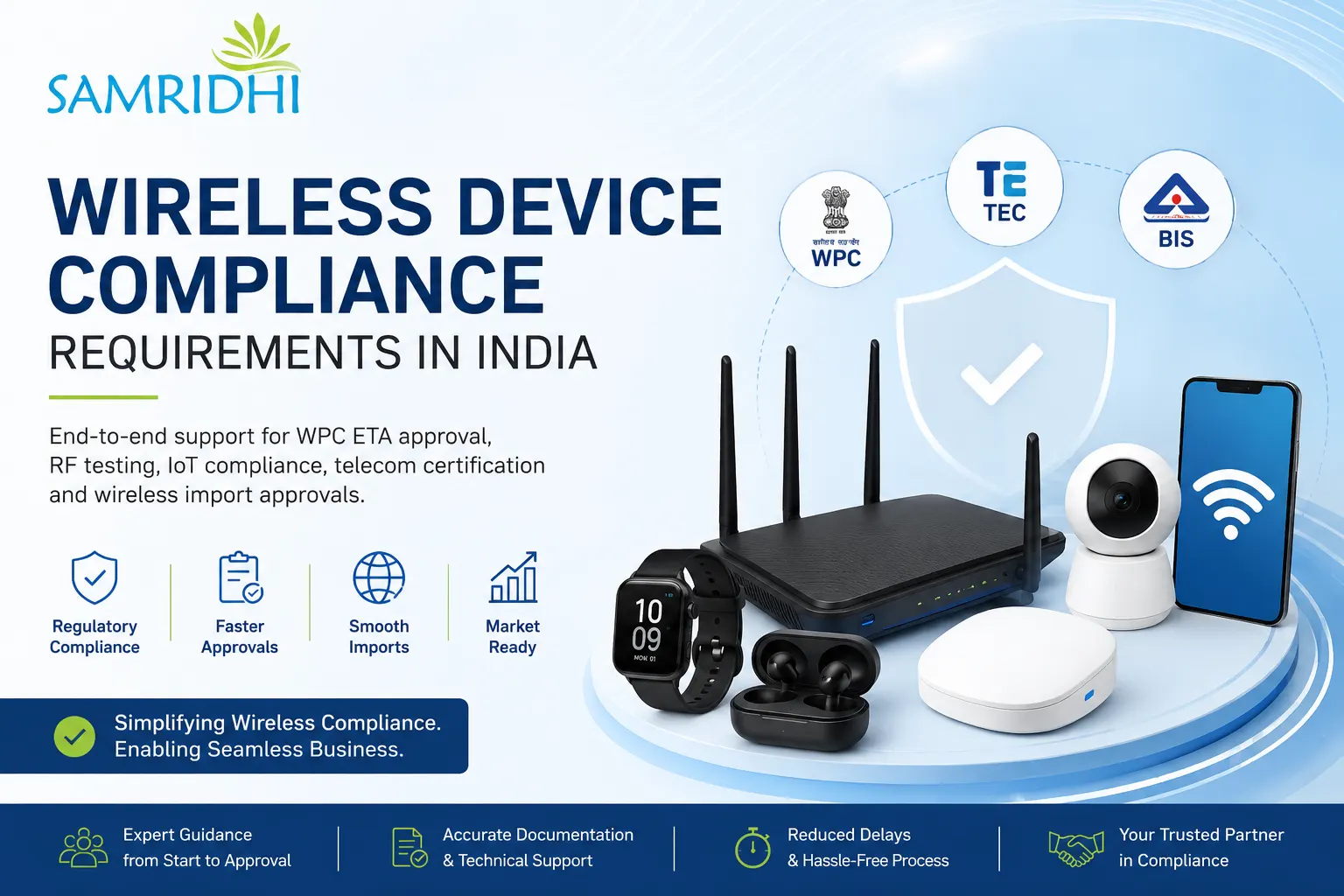
What Are the Wireless Device Compliance Requirements in India
Wireless products entering the Indian market are no longer evaluated only on functionality or performance.
They are also assessed on how they use radio frequency spectrum, communicate with networks, and comply with national wireless regulations.
That’s where the wireless device compliance requirements in India become important.
Because in India, wireless communication is regulated carefully—and products using RF technologies generally need approval before import, sale, or distribution.
Why Wireless Compliance Is Required
Wireless devices use radio frequencies that are regulated by the government.
The purpose of compliance is to ensure:
- Wireless products operate within permitted frequency bands
- Devices do not interfere with licensed communication networks
- RF equipment meets Indian technical requirements
- Imported wireless products are traceable and compliant
This forms the foundation of wireless communication device regulations India.
Regulatory Authorities Involved
Wireless compliance in India is usually managed through multiple authorities depending on the product type and functionality.
Common authorities include:
- WPC (Wireless Planning & Coordination Wing)
- TEC (Telecommunication Engineering Centre)
- BIS (for certain electronics categories)
Each authority handles different aspects of compliance.
For example:
- WPC mainly focuses on RF spectrum usage
- TEC focuses on telecom network and technical requirements
- BIS may apply for electrical or electronic product safety compliance
This is why some products fall under combined TEC and WPC certification requirements India.
Which Devices Typically Require Compliance
Applicability depends on wireless functionality rather than product appearance.
Products commonly requiring approval include:
- Bluetooth devices
- WiFi-enabled products
- IoT devices
- Wireless routers
- RF communication equipment
- Smart home devices
- Telecom and networking equipment
This is central to WPC ETA approval for wireless devices India.
WPC ETA Approval and RF Compliance
Many low-power wireless devices operating in de-licensed frequency bands require ETA approval from WPC.
This usually applies to products using technologies such as:
- Bluetooth
- WiFi
- RFID
- Zigbee
Under RF device compliance India, authorities generally review:
- Frequency range
- RF test reports
- Technical specifications
- Product details
Compliance for Imported Wireless Products
Wireless imports are receiving increased scrutiny.
Products imported into India may require:
- WPC ETA approval
- RF testing documentation
- Import-related compliance verification
This is part of the broader wireless equipment import approval India framework.
Without proper compliance preparation, imported shipments may face delays or additional verification.
IoT and Smart Devices Face Additional Complexity
Modern IoT devices often combine:
- Wireless communication
- Telecom functionality
- Smart connectivity
- Cloud integration
As a result, IoT wireless device compliance India may involve multiple regulatory layers depending on product features.
A single device may require more than one approval pathway.
Why Businesses Face Compliance Challenges
The challenge is not always the approval itself.
It’s understanding which approvals actually apply.
Common issues include:
- Incorrect frequency declarations
- Assuming global certifications apply automatically in India
- Missing RF test documentation
- Overlooking telecom-related requirements
These gaps often affect the overall wireless device approval process India.
The Practical Takeaway
Wireless compliance in India is becoming more structured and technically detailed.
- RF usage is regulated carefully
- Product functionality determines applicability
- Multiple authorities may be involved
- Import compliance and technical documentation matter significantly
And since:
- Requirements depend on wireless technology used
- Approval scope varies by product category
- Compliance remains subject to authority review
businesses should evaluate wireless obligations early in product planning.
Because in India…
wireless functionality is not treated as a minor feature.
It is treated as a regulated communication capability.
WPC ETA Approval supports regulatory compliance for Bluetooth, WiFi, RF, and wireless communication devices in India.
Which Wireless Devices Require WPC ETA Approval in India
A common misunderstanding in wireless compliance is that only telecom equipment requires approval.
In reality, many everyday electronic products now include wireless functions.
And once a device starts transmitting or receiving radio frequency signals, compliance requirements may apply.
That’s where WPC ETA approval for wireless devices India becomes relevant.
The approval is generally required for wireless products operating on de-licensed frequency bands in India.
What WPC ETA Approval Actually Covers
ETA (Equipment Type Approval) is issued by the Wireless Planning & Coordination Wing (WPC).
Its purpose is to verify that wireless devices operate within permitted radio frequency limits in India.
The review usually focuses on:
- Frequency bands used
- RF output characteristics
- Wireless technology specifications
- Compliance with Indian wireless regulations
This forms a major part of RF device compliance India.
Bluetooth Devices Commonly Requiring ETA Approval
Bluetooth-enabled products are among the most common devices requiring WPC approval.
Examples include:
- Wireless headphones
- Bluetooth speakers
- Smart wearables
- Wireless keyboards and mice
- Fitness devices
This is central to WPC certification for Bluetooth and WiFi devices India.
Even products with very low transmission power may still require compliance evaluation.
WiFi Products and Networking Equipment
WiFi-enabled products also commonly fall under ETA requirements.
Examples include:
- Routers
- Access points
- Smart TVs
- Security cameras
- WiFi-enabled appliances
The approval process usually evaluates whether the device operates within approved de-licensed frequency ranges.
IoT Devices and Smart Products
Modern IoT products often combine multiple wireless technologies in one device.
Examples include:
- Smart home devices
- Smart sensors
- Industrial IoT equipment
- Connected automation systems
This makes IoT wireless device compliance India more complex than traditional wireless approvals.
A single product may contain:
- Bluetooth
- WiFi
- Zigbee
- RFID
- Cellular communication modules
Each function may affect compliance applicability.
RF Equipment Beyond Consumer Electronics
ETA approval is not limited to consumer gadgets.
Industrial and commercial RF devices may also require approval depending on functionality.
This may include:
- Wireless industrial controllers
- RF communication modules
- Monitoring systems
- Data transmission equipment
Applicability depends on the technology and frequency usage involved.
Imported Wireless Products Face Additional Verification
Imported wireless devices often receive additional scrutiny during customs review.
Businesses importing RF-enabled products may need:
- RF test reports
- Frequency details
- Product technical specifications
- WPC ETA approval documentation
This aligns with wireless equipment import approval India requirements.
Products lacking proper approval documentation may face shipment delays or clearance issues.
Some Devices May Need Multiple Approvals
Wireless compliance in India is not always limited to WPC.
Depending on the product, businesses may also require:
- TEC approval
- BIS certification
- Additional telecom or safety compliance
This is especially relevant under TEC and WPC certification requirements India.
For example:
- Telecom equipment may require MTCTE approval
- Wireless electronics may also fall under BIS CRS
Why Businesses Commonly Face Applicability Confusion
The biggest challenge is often understanding whether ETA is actually required.
Common mistakes include:
- Assuming international RF certifications are automatically accepted in India
- Ignoring embedded wireless modules
- Declaring incorrect frequency ranges
- Missing wireless functionality during compliance planning
These issues frequently affect the broader wireless device approval process India.
The Practical Takeaway
Wireless functionality—not product category—is what usually determines ETA applicability.
- Bluetooth products commonly require approval
- WiFi-enabled devices often fall under WPC scope
- IoT devices may involve multiple compliance layers
- Imported RF products require careful documentation alignment
And since:
- Applicability depends on wireless technology used
- Frequency bands affect approval requirements
- Compliance remains subject to authority review
businesses should evaluate wireless obligations before import or product launch planning.
Because in wireless compliance…
even a small embedded RF module can change the entire approval requirement.
TEC MTCTE Approval helps telecom and communication products align with Indian network and technical compliance requirements.
Step-by-Step Wireless Device Approval Process in India
Wireless compliance in India is often misunderstood as a single approval step.
In reality, the process is layered.
Testing, technical verification, frequency review, documentation, and import compliance all connect together.
That’s why understanding the wireless device approval process India early helps businesses avoid delays later—especially during imports or product launch planning.
Step 1: Identify Wireless Features and Applicability
The process begins with evaluating the product’s wireless functionality.
Businesses need to identify:
- Whether the product uses RF communication
- Which wireless technologies are involved
- Operating frequency bands
- Whether the device works on de-licensed spectrum
This is the first step in determining wireless device compliance requirements in India.
Even products with embedded wireless modules may require approval.
Step 2: Review Applicable Regulatory Requirements
After identifying wireless functionality, the next step is determining which approvals apply.
Depending on the product, this may involve:
- WPC ETA approval
- TEC approval
- BIS certification
- Additional import compliance requirements
This is especially important under TEC and WPC certification requirements India.
Some products require only WPC approval, while others may fall under multiple regulatory frameworks.
Step 3: Conduct RF Testing
RF testing is one of the most important stages.
The purpose is to verify:
- Frequency range
- Output power
- RF operating parameters
- Technical compliance with approved bands
This forms the core of RF device compliance India.
Testing reports are generally required before ETA filing.
Step 4: Prepare Technical Documentation
Documentation accuracy plays a major role in approval review.
Typical documents may include:
- RF test reports
- Product technical specifications
- Circuit diagrams or block diagrams
- Product photographs
- User manuals
- Authorization documents
This supports the broader wireless product certification India process.
Small inconsistencies between reports and product specifications can create delays.
Step 5: ETA Filing With WPC
Once testing and documentation are ready, the ETA application is submitted to WPC.
Authorities review:
- RF test data
- Frequency usage
- Technical details
- Product declarations
This is the central stage of WPC ETA approval for wireless devices India.
Approval applicability depends on product functionality and frequency usage.
Step 6: Import Compliance and Customs Preparation
For imported wireless products, approval documentation must align with shipment details.
Businesses may need:
- ETA approval copies
- Product descriptions matching customs records
- Technical documentation for verification
This becomes important under wireless equipment import approval India.
Products entering India without proper wireless compliance documentation may face customs-related delays.
Step 7: Additional Compliance (If Applicable)
Some wireless products may also require:
- TEC MTCTE approval
- BIS CRS registration
- Safety or telecom-related certifications
This commonly affects:
- Smart communication products
- IoT devices
- Networking equipment
- Telecom-enabled devices
This overlap is increasingly common in IoT wireless device compliance India.
Why Businesses Commonly Face Delays
Most problems arise before filing—not after.
Common issues include:
- Incorrect frequency declarations
- Using incomplete RF reports
- Missing wireless functions during applicability review
- Mismatch between tested sample and imported product
These gaps often slow the overall approval process.
The Practical Takeaway
Wireless approval in India is mostly about technical clarity and documentation alignment.
- Identify wireless functionality early
- Verify applicable approvals carefully
- Ensure RF testing accuracy
- Align product documentation consistently
- Prepare import records before shipment movement
And since:
- Requirements depend on wireless technology used
- Approval scope varies by product functionality
- Compliance remains subject to authority review
businesses should treat wireless approval as part of product planning—not just import paperwork.
Because in India…
wireless compliance problems usually begin long before the shipment reaches customs.
BIS CRS Registration supports mandatory safety compliance for regulated electronic and smart devices in India.
Wireless Product Certification Requirements for Imported and IoT Devices
Wireless products today are rarely simple.
A smart device may contain:
- Bluetooth
- WiFi
- Cellular communication
- Cloud connectivity
- GPS modules
- Telecom functions
And once multiple wireless technologies are combined into one product, compliance becomes much more layered.
That’s why understanding wireless product certification India is especially important for imported electronics and IoT devices.
Why Imported Wireless Devices Face More Compliance Scrutiny
India regulates wireless communication carefully because RF spectrum is controlled nationally.
Imported wireless products are therefore expected to comply with:
- Frequency regulations
- RF operating limits
- Telecom-related requirements
- Import approval procedures
This is a major part of wireless equipment import approval India.
Authorities increasingly verify compliance before products are allowed into the market.
IoT Devices Usually Involve Multiple Compliance Layers
IoT products are different from traditional electronics because they often combine several communication technologies together.
Examples include:
- Smart home products
- Connected industrial systems
- Smart wearables
- Wireless automation devices
- GPS-enabled trackers
Under IoT wireless device compliance India, applicability may extend across multiple authorities depending on the product’s capabilities.
WPC ETA Approval for RF Functionality
If the product uses wireless communication on de-licensed bands, ETA approval may apply.
This commonly affects devices using:
- Bluetooth
- WiFi
- RFID
- Zigbee
This is part of WPC ETA approval for wireless devices India.
Approval is generally linked to RF operating characteristics and technical specifications.
Telecom Features May Trigger TEC Requirements
Some smart and connected products interact directly with telecom infrastructure or communication networks.
In such cases, additional telecom compliance may apply under:
This becomes important under TEC and WPC certification requirements India.
Examples may include:
- Network equipment
- Telecom gateways
- Communication modules
- Certain smart communication devices
Imported Electronics May Also Require BIS Compliance
Wireless approval is not always enough on its own.
Certain imported electronics may additionally fall under:
- BIS CRS
- Product safety requirements
- Electrical compliance regulations
This overlap is becoming increasingly common in modern smart electronics.
Documentation Requirements Are Becoming More Detailed
Imported and IoT products generally require stronger documentation alignment because of their technical complexity.
Authorities may review:
- RF test reports
- Product specifications
- Wireless module details
- Frequency declarations
- User manuals and labeling
This forms a critical part of the overall wireless device approval process India.
Why Businesses Commonly Face Problems With IoT Compliance
The challenge is often not the approval itself—it’s understanding all the applicable layers.
Common issues include:
- Assuming one approval covers all wireless functions
- Missing embedded RF modules
- Incorrect telecom applicability assumptions
- Incomplete import documentation
- Product changes after testing
These gaps frequently affect RF device compliance India processes.
The Practical Takeaway
Wireless and IoT compliance in India is becoming more interconnected.
- Imported devices face closer technical scrutiny
- IoT products often require multiple approvals
- Wireless functionality determines regulatory scope
- Documentation consistency matters significantly
And since:
- Requirements depend on product functionality
- Approval scope varies by communication technology
- Compliance remains subject to authority review
businesses should evaluate all wireless and telecom features before import or launch planning.
Because for modern connected products…
compliance is no longer tied to a single device category.
It’s tied to every communication function inside the product.
NABL Testing supports RF testing accuracy and technical documentation alignment for wireless compliance.
Common Compliance Problems Businesses Face With Wireless Devices in India
Wireless compliance problems in India rarely begin at the final approval stage.
Most of them start much earlier—during product planning, testing, documentation preparation, or import coordination.
A missing RF detail.
An incorrect frequency declaration.
A wireless module that nobody realized needed approval.
Small issues like these often create larger delays later.
That’s why businesses dealing with wireless communication device regulations India need to understand where compliance problems usually happen.
Incorrect Frequency Declarations
This is one of the most common issues.
Many businesses submit:
- Incorrect operating frequency ranges
- Incomplete RF specifications
- Wrong wireless technology details
Even minor inaccuracies can create problems during review under RF device compliance India.
Because wireless approvals are closely tied to spectrum usage, frequency accuracy matters significantly.
Missing Embedded Wireless Modules
Modern devices frequently include pre-installed wireless components.
Sometimes businesses focus only on the main product and overlook:
- Bluetooth modules
- WiFi chips
- RFID components
- Zigbee functionality
This often affects IoT wireless device compliance India.
A product may appear non-wireless externally but still require WPC approval because of an embedded communication module.
RF Testing and Technical Report Problems
RF testing is one of the most sensitive parts of the compliance process.
Common issues include:
- Using incomplete test reports
- Mismatch between tested sample and imported product
- Reports lacking required RF parameters
- Incorrect technical specifications
These problems frequently delay the overall wireless device approval process India.
Import Delays Due to Compliance Gaps
Many businesses begin wireless compliance after shipment planning has already started.
That timing creates risk.
Imported wireless products may face:
- Customs verification
- Requests for ETA approval
- Product document review
- Shipment holds
This is directly connected to wireless equipment import approval India requirements.
The closer compliance starts to shipment arrival, the harder delays become to manage.
Confusion Between WPC, TEC, and BIS Requirements
Another common problem is assuming one approval covers everything.
In reality:
- WPC handles RF spectrum usage
- TEC focuses on telecom-related requirements
- BIS may apply for electronics safety compliance
This overlap becomes important under TEC and WPC certification requirements India.
Many connected products require multiple approvals depending on functionality.
Product Changes After Testing
This issue is becoming more common with smart and IoT devices.
Businesses sometimes:
- Change firmware after RF testing
- Replace communication modules
- Modify hardware specifications
Even small changes may affect compliance alignment.
This is especially relevant for wireless product certification India involving imported smart devices.
Documentation Mismatches
Wireless approvals rely heavily on technical consistency.
Authorities may compare:
- RF reports
- Product labels
- Import documents
- Technical specifications
- User manuals
If details don’t align, clarification requests often follow.
Why Compliance Is Becoming More Complex
Wireless products today are no longer single-function devices.
A single product may include:
- Multiple communication technologies
- Telecom connectivity
- Smart automation features
- Cloud integration
This makes applicability assessment more technical than before.
The Practical Takeaway
Most wireless compliance delays are preventable with early technical review.
- Verify frequency details carefully
- Review embedded wireless modules
- Align RF reports with final products
- Plan approvals before import movement
- Understand overlapping regulatory requirements
And since:
- Applicability depends on wireless functionality
- Approval scope varies by technology used
- Compliance remains subject to authority review
businesses should approach wireless compliance as a technical planning exercise—not just an approval formality.
Because in wireless regulation…
small technical gaps often create the biggest operational delays.
LM79 Testing supports performance validation for LED and smart lighting products used in regulated markets.


 Get Certified with Confidence – Your One-Stop Compliance Partner
 Grab Your Certified Now
 +91 8799708673
 WhatsApp