What Is EPR E-Waste Registration in India and Who Needs It
E-waste compliance in India has shifted from being a general responsibility to a clearly defined regulatory obligation.
If your business places electrical or electronic products in the market…
you are no longer just selling a product.
You are also responsible for what happens to that product at the end of its life.
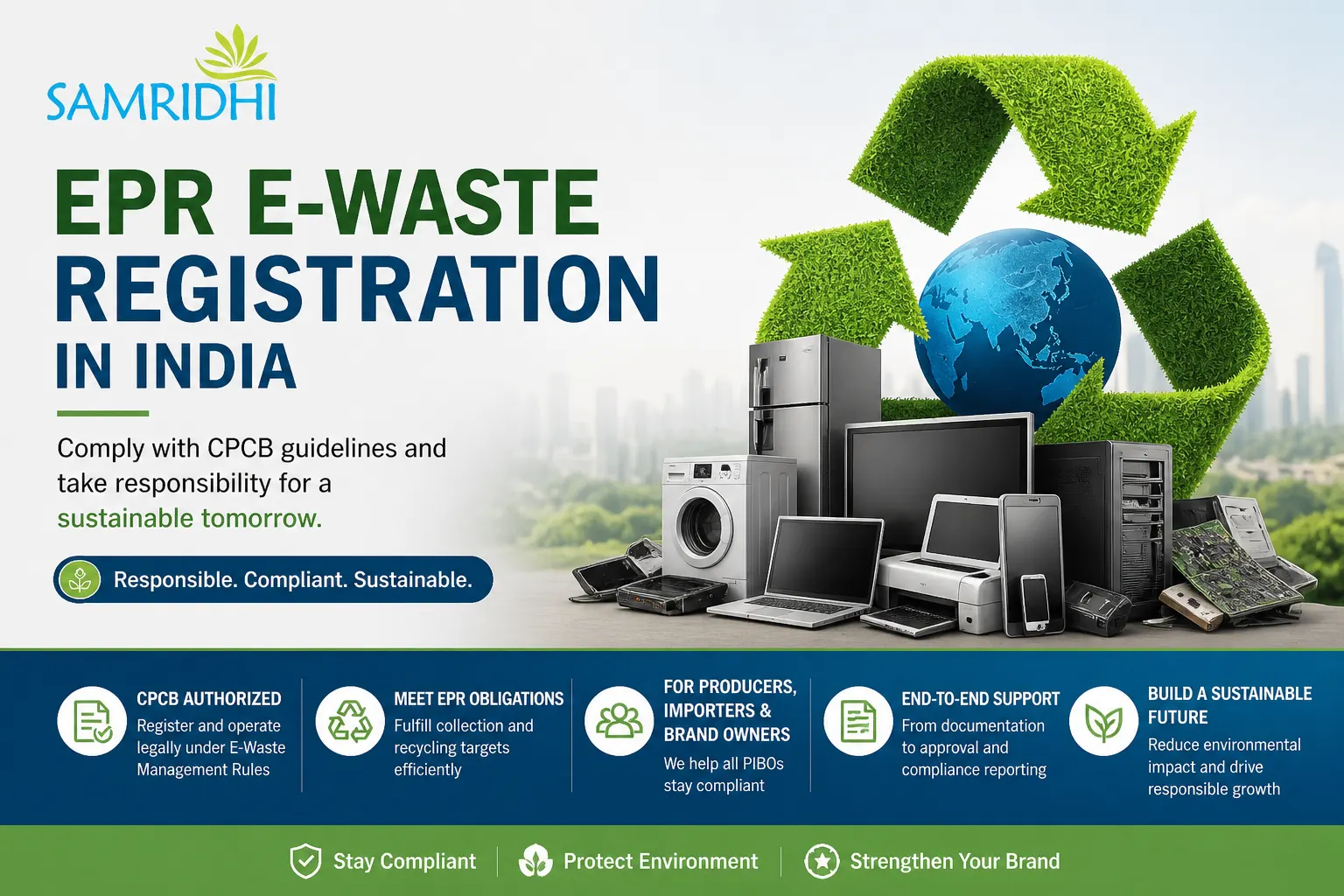
That responsibility is managed through EPR e-waste registration in India.
What EPR Means in the Indian Context
EPR (Extended Producer Responsibility) is a regulatory framework under the e-waste management rules where producers are required to manage the collection and recycling of the waste generated from their products.
In practical terms, epr authorization india means:
- You must ensure proper e-waste disposal
- You must meet recycling targets
- You must maintain records and compliance reports
- You must coordinate with authorized recyclers
It shifts the responsibility of waste management from municipalities to the businesses introducing products into the market.
Who Needs EPR E-Waste Registration
EPR is not limited to manufacturers alone.
Under e-waste management rules India EPR, the following entities are typically covered:
- Manufacturers of electrical and electronic equipment
- Importers bringing electronic products into India
- Brand owners selling products under their own name
- Online sellers placing products in the Indian market
These entities are often referred to as PIBOs (Producers, Importers, Brand Owners).
Applicability depends on the type of product and how it is introduced into the market.
Why EPR Registration Is Mandatory
EPR is not a voluntary compliance step for applicable businesses.
It is a regulatory requirement under Indian environmental laws.
Without proper EPR authorization for e-waste India, businesses may face:
- Restrictions on selling products
- Compliance notices
- Operational disruptions
However, enforcement and applicability are case-specific and subject to regulatory review.
Role of CPCB in EPR Registration
The Central Pollution Control Board (CPCB) is the primary authority responsible for managing EPR registration and compliance.
Businesses are required to:
- Register on the CPCB portal
- Submit product and company details
- Define their EPR plan
- Track recycling targets and compliance
This forms the core of the e-waste EPR registration process India.
Products Typically Covered Under EPR
EPR applicability is linked to the type of electrical and electronic equipment.
Common categories include:
- IT and telecom equipment
- Consumer electronics
- Electrical appliances
- Lighting equipment
- Electronic accessories
Coverage may evolve based on regulatory updates.
The Practical Takeaway
EPR registration is not just about getting an authorization.
It is about managing long-term environmental responsibility tied to your products.
- It applies to manufacturers, importers, and brand owners
- It connects product sales with waste management obligations
- It requires ongoing compliance, not just one-time registration
And since:
- Applicability depends on product category
- Compliance scope varies by business model
- Authorization is subject to CPCB review
understanding your responsibility early is critical.
Because under EPR…
the product lifecycle doesn’t end at the point of sale.
It continues until the product is responsibly recycled.
EPR Registration for Plastic Waste supports compliance for packaging materials used with electronic products.
Step-by-Step Process for EPR E-Waste Registration with CPCB in India
If you’re planning to apply for EPR, the process is not complicated—but it is structured.
Most delays don’t happen because the steps are unclear.
They happen because businesses approach the steps in isolation.
Portal first… documents later… recycler tie-up somewhere in between.
That approach usually creates friction.
The e-waste EPR registration process India works better when everything is aligned from the start.
Step 1: Check Applicability and Product Scope
Before opening the CPCB portal, confirm whether your products fall under EPR.
This involves identifying:
- Product categories (as per e-waste rules)
- Whether you are a manufacturer, importer, or brand owner
- The quantity and type of products placed in the market
This is the foundation of EPR e-waste registration in India.
Because if applicability is unclear, everything that follows becomes uncertain.
Step 2: Create Account on CPCB EPR Portal
Once applicability is confirmed, the next step is portal registration.
Businesses need to:
- Register on the CPCB EPR portal
- Select the correct applicant category (PIBO)
- Enter basic company details
This is where the formal process of epr authorization india begins.
Accuracy at this stage matters more than it seems.
Step 3: Prepare Documentation and Product Details
Documentation is where most applications slow down.
Typical requirements include:
- Company incorporation details
- PAN, GST, and authorized signatory information
- Product specifications and categories
- Sales or import data
- EPR plan outlining collection and recycling strategy
This aligns with documents required for EPR e-waste registration India.
Incomplete or inconsistent data often leads to queries later.
Step 4: Define EPR Plan and Recycling Strategy
EPR is not just registration—it’s a responsibility plan.
Businesses must define:
- How e-waste will be collected
- How recycling targets will be met
- Which authorized recyclers will be engaged
This is a core part of EPR compliance for e-waste producers India.
The plan should be realistic and aligned with business operations.
Step 5: Upload Documents and Submit Application
Once all information is ready:
- Documents are uploaded on the CPCB portal
- Product details and EPR plan are submitted
- Application is formally filed for review
This completes the primary stage of how to apply for EPR e-waste registration India.
But submission is not the final step—it begins the evaluation phase.
Step 6: CPCB Review and Clarifications
After submission, CPCB reviews the application.
They may:
- Verify documentation
- Check product applicability
- Assess EPR plan feasibility
- Raise queries or request additional details
This is where most delays occur if preparation was incomplete.
Approval timelines vary and are subject to authority review.
Step 7: Grant of EPR Authorization
Once the application meets compliance expectations, EPR authorization may be granted.
This allows businesses to:
- Legally place products in the market
- Begin fulfilling EPR obligations
- Track and report recycling targets
This is the outcome of e-waste recycling registration CPCB India processes.
The Practical Takeaway
The EPR process is not difficult—but it is detail-sensitive.
- Start with clear applicability
- Prepare documentation before submission
- Align your EPR plan with actual operations
- Coordinate with recyclers early
- Review everything before filing
Because in EPR registration…
most delays don’t come from CPCB.
They come from gaps between planning, documentation, and execution.
EPR Battery Waste Registration supports compliance for battery components within electronic products.
Documents Required for EPR E-Waste Registration in India
If there’s one area where most EPR applications slow down, it’s documentation.
Not because the requirements are hidden…
but because everything needs to match.
Your product details.
Your sales data.
Your recycler plan.
Even small inconsistencies can trigger questions.
That’s why understanding the documents required for EPR e-waste registration India is less about making a list… and more about making sure everything connects.
Basic Company Information
The process starts with standard business details.
These help establish the legal identity of the applicant.
Typically includes:
- Certificate of incorporation or business registration
- PAN and GST details
- Address proof of the company
- Authorized signatory details
This forms the base of your epr authorization india application.
Accuracy here is essential because these details carry forward into all compliance records.
Product and Category Details
Next comes product-related information.
Authorities need clarity on:
- Type of electrical or electronic equipment
- Product category as per e-waste rules
- Brand details (if applicable)
- Product specifications
This is a core part of EPR e-waste registration in India.
Incorrect categorization is a common issue, especially when products fall between multiple categories.
Sales or Import Data
EPR obligations are directly linked to how much product you place in the market.
So businesses are typically required to provide:
- Sales data (for manufacturers/brand owners)
- Import data (for importers)
- Quantity-wise product distribution
This data is used to determine EPR targets under EPR compliance for e-waste producers India.
Consistency between declared data and actual business activity is important.
EPR Plan and Waste Management Strategy
This is where documentation becomes more operational.
Businesses need to outline:
- Collection mechanism for e-waste
- Recycling strategy
- Agreements or tie-ups with authorized recyclers
This forms a critical part of EPR authorization for e-waste India.
The plan should reflect how the business intends to meet its environmental responsibility—not just a theoretical model.
Recycler Agreements and Supporting Documents
In most cases, businesses need to demonstrate how e-waste will actually be processed.
This may include:
- Agreements with authorized recyclers
- Recycler authorization details
- Supporting compliance documentation
This aligns with e-waste recycling registration CPCB India requirements.
Authorities often review whether the recycling plan is practical and implementable.
Additional Declarations and Compliance Documents
Depending on the case, additional documents may be required, such as:
- Self-declarations
- Undertakings
- Compliance statements
- Previous authorization details (if renewal or update)
Requirements may vary depending on the business model and product category.
Where Most Businesses Face Issues
The challenge is rarely missing documents.
It’s mismatch.
Common problems include:
- Product details not matching sales data
- Recycler plans not aligned with declared quantities
- Inconsistent company information across documents
These gaps often slow down the e-waste EPR registration process India.
The Practical Takeaway
EPR documentation is not just about submitting files.
It’s about building a consistent compliance narrative.
- Company details must match across records
- Product classification must be accurate
- Sales or import data must be realistic
- EPR plans must be practical
And since:
- Requirements depend on product scope
- Documentation depth varies by application
- Approval is subject to CPCB review
preparing documentation carefully from the start makes a real difference.
Because in EPR registration…
documents don’t just support the application.
They define how your compliance will be evaluated.
ISO Certification helps businesses maintain structured compliance documentation and operational processes.
EPR Compliance Responsibilities for E-Waste Producers in India
Getting EPR authorization is only the starting point.
The real work begins after that.
Because under EPR compliance for e-waste producers India, registration is not a one-time requirement—it is an ongoing responsibility tied to how your products are handled after sale.
Responsibility Doesn’t End at Product Sale
Under the e-waste framework, producers are expected to take responsibility for the entire lifecycle of their products.
This includes:
- Collection of end-of-life products
- Channelizing e-waste to authorized recyclers
- Ensuring proper disposal and recovery
This is the practical side of epr authorization india—it connects business operations with environmental responsibility.
Collection Targets Are a Key Requirement
One of the most important obligations is meeting collection targets.
These targets are generally linked to:
- Quantity of products sold or imported
- Category of electronic equipment
- Defined timelines under e-waste rules
Businesses are expected to ensure that a certain percentage of their products eventually return into the recycling ecosystem.
This is central to EPR e-waste registration in India compliance.
Recycling and Channelization Obligations
Collection alone is not enough.
E-waste must be:
- Sent to authorized recyclers
- Processed through approved recycling channels
- Handled according to environmental standards
This is where coordination with recyclers becomes essential under e-waste recycling registration CPCB India systems.
The focus is on traceability—knowing where the waste goes and how it is processed.
Record-Keeping and Documentation
Compliance also involves maintaining proper records.
Producers are typically expected to track:
- Quantity of products placed in the market
- Quantity of e-waste collected
- Quantity recycled through authorized channels
This data forms the basis of compliance reporting.
Accuracy here is important because records may be reviewed during audits or inspections.
Periodic Reporting Requirements
EPR compliance includes regular reporting to authorities.
Businesses may need to submit:
- Periodic returns
- Compliance reports
- Recycling data summaries
This supports ongoing monitoring under e-waste management rules India EPR.
Delays or inaccuracies in reporting can lead to follow-up queries.
Role of Recycler Partnerships
Meeting EPR targets often depends on effective collaboration with authorized recyclers.
Businesses typically:
- Enter into agreements with recyclers
- Align collection and recycling plans
- Monitor recycling output
This operational coordination is a key part of maintaining EPR authorization for e-waste India.
Why Many Businesses Struggle With EPR Compliance
The challenge is not understanding responsibility—it’s execution.
Common issues include:
- Overestimating collection capability
- Weak coordination with recyclers
- Inconsistent tracking of quantities
- Delayed reporting
These gaps affect long-term compliance.
The Practical Takeaway
EPR compliance is an ongoing operational commitment.
- Collection targets must be planned realistically
- Recycling must be traceable and compliant
- Records must be accurate and consistent
- Reporting must be timely
And since:
- Targets depend on product category
- Compliance scope varies by business size
- Monitoring is subject to regulatory review
businesses need a structured approach.
Because under EPR…
compliance is not just about registration.
It’s about managing responsibility across the entire product lifecycle.
NABL Testing supports accurate product classification and technical validation for compliance processes.
Common Challenges in EPR E-Waste Registration and How to Avoid Delays
Most EPR applications don’t get delayed because the process is unclear.
They get delayed because small gaps appear across different parts of the application.
A mismatch in product data.
An incomplete recycler plan.
A document that doesn’t align with what’s declared on the portal.
Individually, these seem minor.
But together, they slow things down.
That’s why understanding the common issues in EPR authorization for e-waste India helps avoid unnecessary back-and-forth during review.
Incomplete or Inconsistent Documentation
This is one of the most frequent issues.
Typical problems include:
- Product details not matching declared categories
- Sales or import data that is unclear or inconsistent
- Missing supporting documents
- Different information across uploaded files
These gaps often trigger queries during the e-waste EPR registration process India.
And once queries begin, timelines become harder to predict.
Weak or Unrealistic EPR Plans
Many businesses submit EPR plans that look correct on paper but are not practical.
Common issues include:
- Overestimating collection capacity
- No clear recycler tie-up
- Lack of defined waste channelization process
Authorities usually review whether the plan is workable under EPR compliance for e-waste producers India.
If it feels theoretical, clarification is likely.
Delays Due to CPCB Queries
After submission, CPCB may raise queries related to:
- Product classification
- Data inconsistencies
- Missing documents
- Recycling strategy details
These queries are a normal part of the review process.
However, response delays or incomplete replies often extend the overall timeline of EPR e-waste registration in India.
Incorrect Product Categorization
Some products fall into overlapping categories under e-waste rules.
Businesses sometimes:
- Choose the wrong category
- Misinterpret product scope
- Apply under incorrect classification
This affects both documentation and EPR target calculations.
And correcting it later usually requires reworking parts of the application.
Poor Coordination Between Teams
EPR registration often involves multiple stakeholders:
- Compliance teams
- Product teams
- Import/export teams
- External recyclers
When coordination is weak, it leads to:
- Data mismatches
- Delayed document collection
- Confusion in responsibility
This impacts the overall how to apply for EPR e-waste registration India workflow.
Late Compliance Planning
A common pattern is starting EPR registration only when it becomes urgent.
For example:
- During product launch
- After import planning
- When compliance is requested by authorities
At that stage, gathering documents and aligning plans becomes more difficult.
The Practical Takeaway
Most EPR delays are avoidable with better preparation.
- Align product data before starting
- Build a realistic EPR plan
- Ensure documentation consistency
- Coordinate early with recyclers
- Respond to queries clearly and quickly
Because in EPR registration…
delays don’t usually come from complex rules.
They come from small gaps that were easy to fix—but only if they were noticed early.
MSME Registration supports small businesses in building structured compliance and operational readiness.


 Get Certified with Confidence – Your One-Stop Compliance Partner
 Grab Your Certified Now
 +91 8799708673
 WhatsApp