BIS and ISI Mark Registration for Domestic Manufacturers – Samridhi Compliance Certification
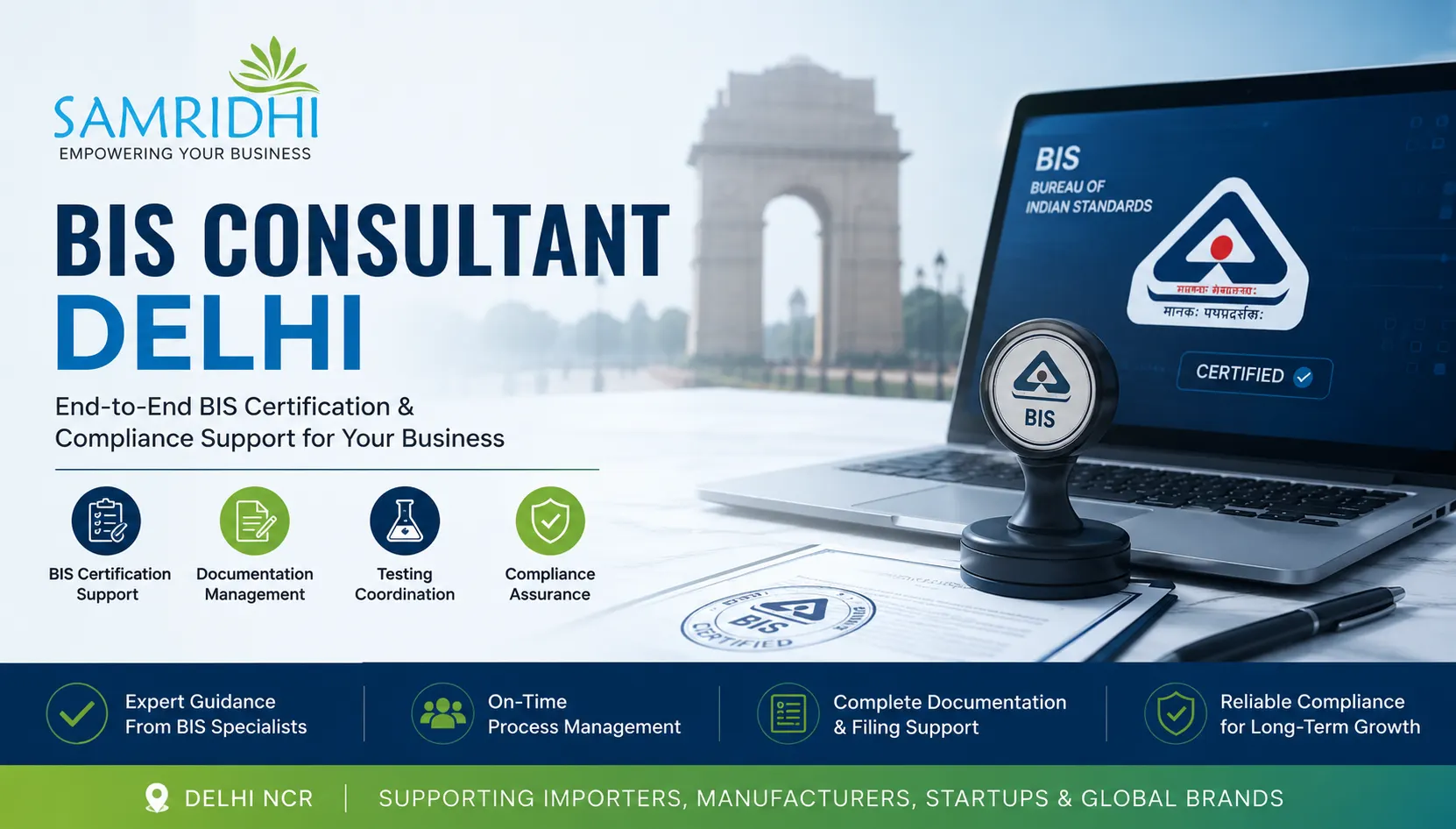
This page explains ISI mark registration for domestic manufacturers in India, covering eligibility under BIS, the BIS ISI registration process, products that require ISI marking, indicative costs and factors that influence them, documentation and inspection checkpoints, and how accurate execution helps manufacturers avoid delays, penalties, and market disruption.
 Get Certified with Confidence – Your One-Stop Compliance Partner
From BIS, WPC, TEC, BEE, EPR, LMPC, CDSCO, FSSAI, ISO, MSME to PESO, NABL testing, Startup India, Make in India, and Lab Setup, we handle all your regulatory approvals, certifications, and documentation needs with precision and speed. Partner with Samridhi Compliance Certification and simplify your journey to full compliance—so you can focus on growing your business.
ISI Mark Registration for Domestic Manufacturers – Why Launch Readiness Is No Longer Enough
Factories are ready. Machinery is installed. Raw materials are lined up.
And still, production doesn’t move.
For domestic manufacturers, that pause almost always traces back to ISI mark registration not being in place when regulators step in. The fear isn’t abstract. It’s operational—launch delays that ripple into distributor contracts, penalties that weren’t planned for, and in some cases, stock that simply can’t be sold legally.
Over the years, India’s regulatory environment has tightened in ways many manufacturers didn’t anticipate. Audits are more frequent. Market surveillance has expanded beyond factories to warehouses, dealers, and even post-sale checks. Under bis registration, the assumption that certification can “follow later” no longer holds. If a product requires ISI marking and it’s missing, manufacturing itself becomes non-compliant.
That’s why certification today is unavoidable, not optional.
What complicates matters is perception. Many manufacturers believe how to get ISI mark for manufacturing unit is a one-time paperwork exercise. In reality, BIS ISI certification for manufacturers is a system built around consistency—of raw materials, processes, testing results, and quality controls. One weak link invites scrutiny across the entire setup.
Recently, this has become more visible. Products that were sold quietly for years are now questioned during routine audits. Standards are being enforced more strictly. Documentation that once passed without comment now triggers clarifications. This shift isn’t about punishment; it’s about traceability and safety. But for manufacturers, the impact feels the same—uncertainty at exactly the wrong time.
This is where early clarity builds trust.
Understanding the BIS ISI registration process upfront—what inspectors look for, how testing aligns with factory controls, where documentation gaps usually appear—changes the experience entirely. Instead of reacting to notices, manufacturers start planning compliance alongside production. That mindset reduces friction before it shows up.
At Samridhi Compliance Certification, most conversations begin with context, not forms. What product is being manufactured? Which Indian Standard applies? Are current controls strong enough to withstand inspection? Those answers shape everything that follows, including whether parallel requirements like BEE Star Rating Certification, WPC ETA Certification, or TEC / MTCTE Certification may apply depending on product type.
Nothing here is instant. Timelines depend on preparedness. Outcomes vary by product and manufacturing setup. But when ISI compliance is approached as part of the production system—not a last-minute approval—the fear of delays and penalties starts to ease.
Manufacturing readiness today isn’t just about output.
It’s about whether your product is legally allowed to exist in the market.
Understanding Why ISI Mark Registration Becomes a Roadblock for Domestic Manufacturers
Most manufacturers don’t struggle with ISI mark registration because they ignore compliance. They struggle because the process is often misunderstood—simplified on the surface, unforgiving underneath. What looks like a certification task is actually a system-level evaluation of how a product is designed, produced, tested, and controlled inside the factory.
This gap between expectation and reality is where problems begin.
For many domestic units, BIS ISI certification for manufacturers is treated as a post-production step. The product is finalized first. Tooling is locked. Raw material suppliers are fixed. Only then does certification enter the conversation. By that stage, even small mismatches become expensive to correct.
Common Mistakes That Quietly Derail the Process
These issues appear repeatedly across manufacturing sectors—not because teams are careless, but because the risks aren’t obvious early on.
-
Wrong product category selection
Products are often classified based on market similarity instead of applicable Indian Standards. A slight mismatch here invalidates testing and restarts the BIS ISI registration process.
-
Incomplete or misaligned test reports
Test results may exist, but they don’t always reflect the exact standard or manufacturing configuration. Missing parameters or outdated clauses lead to re-testing.
-
Wrong laboratory selection
Not all labs are approved for all standards. Choosing a lab without verifying BIS recognition for that product category wastes time and cost.
-
Timeline misjudgment
Manufacturers frequently plan production launches assuming linear approvals. In reality, ISI certification cost and validity India are indicative, and timelines depend on inspection readiness, test outcomes, and clarification cycles.
Each mistake alone seems manageable. Together, they create operational disruption.
The Practical Impact Manufacturers Feel Too Late
When certification friction surfaces after production planning, consequences spread fast:
-
Finished goods cannot move legally without ISI mark registration India
-
Penalties may apply during inspections under bis registration
-
Products require re-labeling or re-testing, increasing relaunch costs
-
Distributors lose confidence when promised supply timelines slip
In one recent case, a manufacturing unit had to pause dispatch not because the product failed, but because documentation didn’t align with test results. The delay wasn’t dramatic—but it was long enough for distributors to source alternatives.
This is the uncomfortable reality: certification failures rarely announce themselves early. They appear when inventory exists, commitments are made, and pressure is high.
Understanding documents required for BIS ISI registration and aligning them with production realities is not a formality. It’s a risk-control decision. One that separates manufacturers who scale smoothly from those forced into correction cycles they never planned for.
The process isn’t broken.
It’s just more demanding than it looks.
Get Certified with Confidence – Your One-Stop Compliance Partner
From BIS, WPC, TEC, BEE, EPR, LMPC, CDSCO, FSSAI, ISO, MSME to PESO, NABL testing, Startup India, Make in India, and Lab Setup, we handle all your regulatory approvals, certifications, and documentation needs with precision and speed. Partner with Samridhi Compliance Certification and simplify your journey to full compliance—so you can focus on growing your business.
Industry Reality Behind ISI Mark Registration in Today’s Manufacturing Environment
The regulatory climate in India has shifted—quietly, steadily, and with intent. ISI mark registration is no longer a procedural formality that manufacturers can schedule at convenience. It now sits at the center of quality enforcement, market surveillance, and legal accountability.
What changed isn’t just enforcement. It’s expectation.
Under bis registration, authorities increasingly look beyond paperwork. Factory audits are deeper. Sample verification is stricter. Surveillance doesn’t stop after approval. Products are checked in warehouses, at distributor points, and sometimes even after reaching the market. This is why manufacturers feel the pressure more today than they did a few years ago—even when they’re producing the same product.
Rules also don’t stay still.
Regulatory Updates Are Frequent—and Interconnected
Standards under BIS are revised. Product scopes expand. Testing parameters are updated. At the same time, parallel authorities like WPC and TEC continue to tighten their own frameworks. A product that earlier required only BIS ISI certification for manufacturers may now also touch WPC ETA Certification or TEC / MTCTE Certification, depending on components or functionality.
These updates rarely arrive with loud announcements. Manufacturers often discover them during inspections or application reviews—when changes are already expensive to absorb.
Earlier this worked smoothly. Recently, it doesn’t.
How Most Consultants Actually Operate
This is where market practice creates friction.
Many bis consultants still operate on:
-
Checklist-based execution – collect documents, file forms, wait
-
Authority-specific silos – BIS handled separately, WPC separately, TEC separately
This approach looks efficient on paper. In reality, it ignores how certifications overlap at the product and factory level. One authority’s requirement often influences another’s review, especially when testing data or labeling is shared.
Speed becomes the priority. Alignment gets sidelined.
What Clients Are Rarely Told Upfront
There are a few truths manufacturers usually encounter only after facing resistance:
-
Not all products qualify for ISI marking, even if similar items exist in the market
-
Testing failures are common, especially when manufacturing controls aren’t aligned with the standard
-
Approvals are iterative, not linear—queries, clarifications, and repeat inspections are normal
No one likes hearing this early. It feels inconvenient. But avoiding it creates bigger disruption later.
Even ISI certification cost and validity India are indicative. Outcomes depend on product category, inspection readiness, and how consistently the factory operates—not just on documents submitted.
The industry hasn’t become hostile.
It has become precise.
Manufacturers who accept this reality plan compliance as part of production—not as a separate task. Those who don’t often find themselves correcting assumptions after inventory is already built.
That difference is now visible across the market.
Practical Solutions and Use Cases That Work for ISI Mark Registration
Most problems around ISI mark registration don’t come from lack of effort. They come from applying the wrong approach at the wrong stage. Manufacturers often move fast where they should pause, and slow down where early decisions matter most. Practical solutions focus less on speed and more on structural alignment—between the product, the factory, and the applicable standard.
Before getting into methods, one uncomfortable truth needs space: there is no universal shortcut. What works for one manufacturing unit may fail completely for another, even within the same product category. This is why solution design has to be situational, not templated.
Practical Certification Approaches That Reduce Friction
A few approaches consistently reduce resistance during BIS ISI certification for manufacturers, not because they guarantee outcomes, but because they remove avoidable errors early.
-
Product-first analysis
Instead of starting with forms, experienced teams begin by examining the product itself—raw materials, construction, safety parameters, and end use. This determines whether ISI mark registration India is applicable at all and avoids filing under the wrong scope.
-
Correct standard identification
Each product aligns to a specific Indian Standard. Choosing based on assumptions or competitor products often leads to rework. Correct identification stabilizes the entire BIS ISI registration process.
-
Testing and documentation alignment
Test reports must reflect real manufacturing conditions. When factory controls, test samples, and documents tell different stories, inspections stall. Alignment here quietly reduces objections.
-
Authority coordination
Some products intersect with WPC ETA Certification, TEC / MTCTE Certification, or BEE Star Rating Certification. Coordinating authority requirements prevents contradictions that surface during audits.
None of these steps promise speed. They reduce reversal.
Who Each Approach Works Best For
Different manufacturing realities need different execution styles.
For Indian manufacturers, especially small and mid-sized units, early gap assessment between current practices and standard requirements prevents inspection shocks. Importers, though not ISI applicants themselves, often influence outcomes through component sourcing and documentation quality. OEMs benefit from variant mapping—understanding when multiple models can share testing and when they cannot.
Startups usually struggle with overambition. Too many variants, too early. Established brands face a different issue—legacy processes that no longer match updated standards. Both need restraint, not acceleration.
Real-World Use Cases That Reflect Reality
In one case, a domestic product failed to progress because it was classified under the wrong Indian Standard. Testing wasn’t invalid—just misdirected. A careful reclassification corrected the path without requiring a redesign. Cost increased slightly. Delay was manageable. The alternative would have been a failed inspection.
In another situation, an importer supplying components to a domestic unit flagged a mismatch early. Correcting documentation before inspection avoided a compliance notice that could have paused production. The ISI certification cost and validity India shifted marginally, but the launch remained intact.
These aren’t dramatic rescues.
They’re controlled corrections.
And that’s often what effective bis registration solutions look like—less noise, fewer surprises, and decisions made early enough to matter.
ISI Mark Registration Process for Domestic Manufacturers in India – What Actually Happens
This part exists for one reason: fear of the unknown.
Manufacturers don’t usually worry about the effort involved in ISI mark registration. They worry about where things get stuck, who raises objections, and how long uncertainty lingers once production is already planned. A clear view of the process doesn’t eliminate complexity—but it does remove blind spots.
The BIS ISI registration process is structured, yet not linear. Each stage introduces decision points where outcomes depend on technical readiness, factory discipline, and how well information aligns across teams and authorities.
Product Applicability Assessment Comes Before Anything Else
The first checkpoint isn’t paperwork. It’s scope.
Not every product manufactured in India requires ISI marking. Applicability depends on whether the product falls under a notified Indian Standard. Many delays happen because manufacturers assume coverage based on market similarity rather than confirmed notification.
This step determines whether ISI mark registration India is even required—and if it is, under which standard. Getting this wrong invalidates every step that follows.
Correct Standard Identification Sets the Direction
Once applicability is clear, the exact Indian Standard must be identified. This decision shapes testing parameters, factory control expectations, and inspection focus.
Manufacturers often underestimate this stage. Selecting a standard that is “close enough” usually results in test report rejection or inspection objections later. Accurate standard mapping stabilizes the entire bis registration journey.
Testing and Lab Coordination Is a Technical Gate
Testing is not a formality. It’s evidence.
Samples sent to BIS-recognized laboratories must reflect real manufacturing conditions. Any mismatch between sample construction, declared specifications, and factory practices creates friction during review.
Testing outcomes also influence cost and movement. This is why ISI certification cost and validity India are always indicative and vary by product and standard complexity.
Documentation Preparation Is Where Most Delays Begin
This stage looks administrative, but it’s operationally sensitive.
Documents covering raw material sourcing, quality control procedures, test reports, labeling formats, and factory layouts must be internally consistent. Inspectors don’t just read documents—they cross-check them against reality during audits.
Incomplete alignment here leads to clarifications that stall progress without formally rejecting the application.
Authority Submission and Review Are Iterative
After submission, BIS reviews the application for coherence, not speed. Queries are normal. Clarifications are expected. This isn’t a sign of failure—it’s how BIS ISI certification for manufacturers is validated.
Responses must be precise and evidence-backed. Rushed replies often create follow-up questions, extending cycles unnecessarily.
Approval, when granted, reflects cumulative accuracy across all stages—not how quickly forms were filed.
There are no guaranteed timelines. No promised outcomes.
But when each step is treated as a decision checkpoint rather than a procedural task, uncertainty reduces—and control improves.
That’s what most manufacturers are really looking for when they ask how to get ISI mark for manufacturing unit—even if they don’t phrase it that way.
Cost of ISI Mark Registration for Domestic Manufacturers in India
Cost is usually where interest turns into hesitation. Not because ISI mark registration is unaffordable, but because manufacturers fear open-ended expenses, repeat testing, or costs surfacing after production planning is already locked. This section exists to replace that anxiety with context.
There is no flat fee for ISI mark registration India. Costs are indicative, and they depend on the product category, applicable Indian Standard, factory readiness, and how smoothly testing and inspections progress. Any number quoted without understanding the product first is, at best, incomplete.
Indicative Cost Structure for ISI Mark Registration
| Cost Component |
Approximate Range |
| Testing Fees |
Depends on product & standard |
| Government Fees |
As per authority |
| Documentation & Processing |
Varies by scope |
| Total Estimated Cost |
Case-specific |
This structure reflects how bis registration actually works on the ground. Government fees are defined, but the surrounding variables are where most variation occurs.
What Influences the Overall Cost
The first cost driver is product category. Different products notified under ISI marking have different testing depths. A simple construction material and a complex electrical appliance may both require certification, but the effort and scrutiny involved are not comparable. This directly affects ISI certification cost and validity India.
Second is testing complexity. Products with tighter safety tolerances, multiple components, or performance parameters require broader testing. Lab selection also matters—only BIS-recognized labs for the relevant standard are valid, and their scope and turnaround approach influence both cost and movement.
Third, re-testing is the factor most manufacturers underestimate. If initial samples don’t align with the declared standard, or if manufacturing controls don’t reflect tested conditions, re-testing becomes necessary. This doesn’t indicate failure—it reflects correction—but it does increase expenses and shift timelines.
Documentation scope also plays a role. Units with established quality systems and clear records move with fewer clarification cycles. Others require additional preparation, audits, or corrective alignment, which affects processing effort.
Costs may also intersect with parallel requirements. Products that later require BEE Star Rating Certification, WPC ETA Certification, or TEC / MTCTE Certification can see either duplication or efficiency depending on how well certification planning is coordinated.
There’s no honest way to promise a fixed figure upfront.
But transparency does something more important—it ensures manufacturers entering the BIS ISI registration process know what variables shape cost before decisions become expensive to reverse.
Products Covered Under ISI Mark Registration for Domestic Manufacturers
This part answers a high-intent question manufacturers usually ask silently before anything else:
“Does my product actually require ISI mark registration?”
If the answer is no, the process stops immediately.
If the answer is yes, bis registration becomes non-negotiable before manufacturing or market supply can legally continue.
What creates confusion is visual similarity. Two products may look identical on the shelf, yet only one qualifies for ISI mark registration India because applicability is determined by notified Indian Standards, safety parameters, and technical construction—not branding or market presence.
Below is a practical grouping to help manufacturers quickly assess relevance without overloading the page.
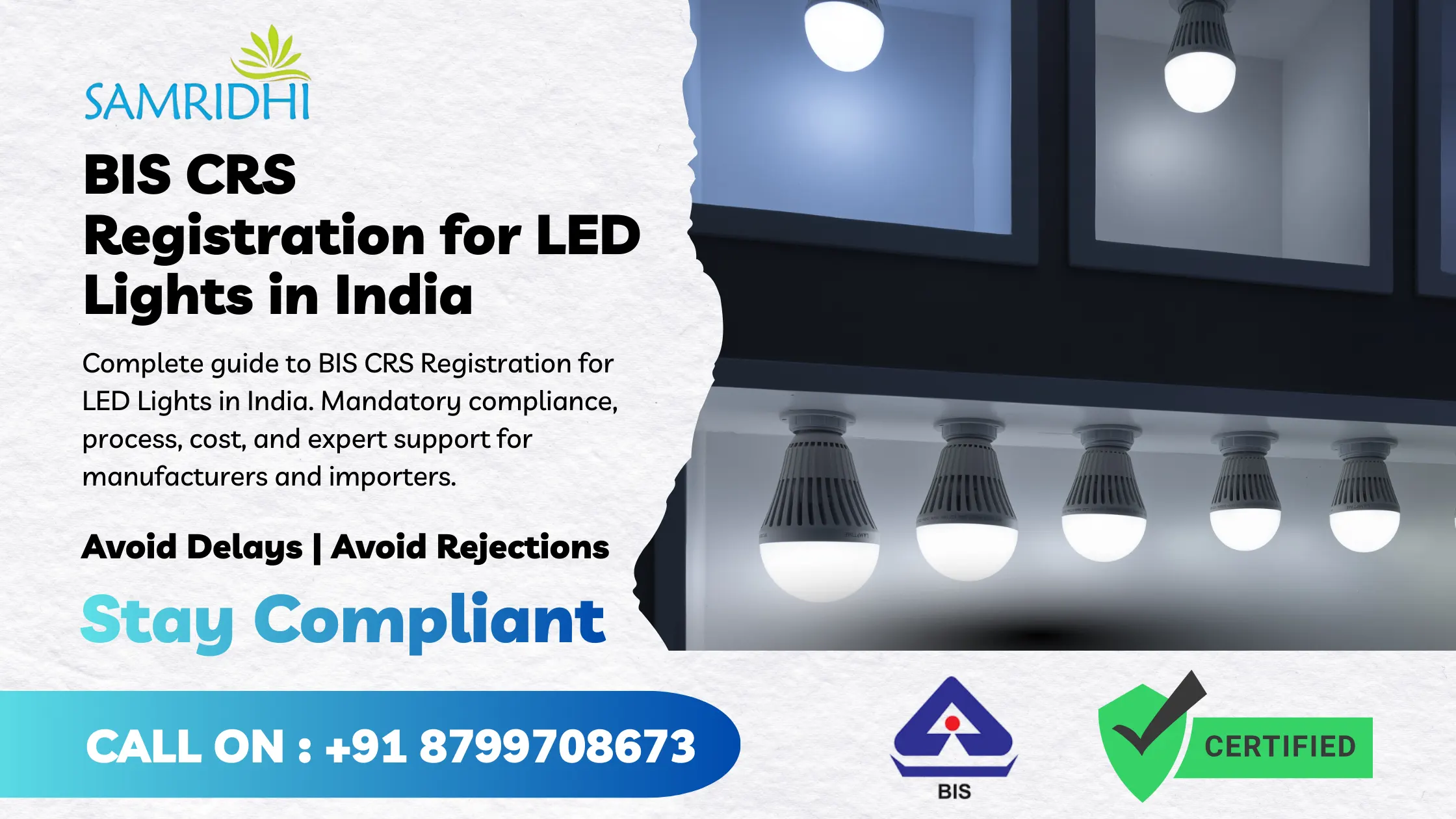
Common Product Categories Requiring ISI Mark Registration
| Product Group |
Typical Examples |
| IT & Electronic Products |
IT hardware, electronic assemblies, control units |
| LED Lighting Products |
LED lamps, luminaires, LED drivers |
| Power Adapters & Chargers |
Power supplies, adapters for electrical equipment |
| Wireless & RF Devices |
Equipment with integrated RF components |
These categories fall under mandatory certification for domestic manufacturing, but coverage is never blanket. Within each group, sub-variants may fall in or out of scope based on voltage limits, safety design, performance parameters, or component architecture.
This is where many manufacturers misjudge early decisions.
For example, two power adapters with similar ratings may differ in ISI applicability because of insulation design or internal safety layout. An electronic product may require BIS ISI certification for manufacturers, while a slightly modified version of the same product may not—purely because of standard thresholds.
Another overlooked point is overlap. Some products that require ISI marking may also trigger BEE Star Rating Certification, WPC ETA Certification, or TEC / MTCTE Certification, depending on energy usage or communication functionality. Treating ISI in isolation often leads to redesign or relabeling later.
A critical reminder that prevents expensive assumptions:
Not all variants qualify. Applicability depends on technical parameters, applicable Indian Standards, and current BIS notifications—not on what competitors are selling.
This is why experienced teams confirm scope before discussing how to get ISI mark for manufacturing unit, cost, or timelines. Because none of those decisions make sense until product eligibility is clear.
For domestic manufacturers, this relevance check isn’t optional.
It’s the first real compliance decision that protects production, credibility, and market continuity.
Benefits and Honest Risks of ISI Mark Registration for Domestic Manufacturers
This part is where expectations need to be set properly. ISI mark registration delivers real advantages for manufacturers—but only when it’s approached with realism. Overselling benefits creates false confidence. Ignoring risks creates expensive surprises. The balance sits in between.
When handled correctly, BIS ISI certification for manufacturers becomes a stability mechanism, not just a compliance requirement.
Benefits That Matter in the Real Manufacturing Cycle
-
Faster approvals
Not because authorities rush, but because fewer mistakes trigger fewer clarifications. Clean alignment between product, testing, and factory controls moves the process forward with less friction.
-
Reduced rejection cycles
Correct standard selection and aligned test reports significantly lower rework. This matters more than speed in the long run, especially for repeat manufacturing batches.
-
Compliance confidence
Once ISI mark registration India is in place, manufacturers stop operating defensively. Audits feel manageable. Distributor discussions become simpler. Expansion planning becomes calmer.
-
Market access stability
ISI marking protects against sudden stoppages, product seizures, or forced withdrawals. It doesn’t eliminate oversight—but it removes fragility from supply chains.
These benefits don’t come from approval alone. They come from predictability. And predictability is what manufacturers actually value once scale begins.
Risks and Limitations That Cannot Be Ignored
No matter how experienced the team, some variables remain outside direct control.
-
Timeline dependency on laboratories
Testing capacity, retesting needs, and report revisions influence movement. This is why timelines always depend on lab readiness and product complexity.
-
Authority clarifications
Queries during review are normal. They’re part of validation, not failure. But unclear or rushed responses can extend cycles unnecessarily.
-
Product redesign requirements
Occasionally, testing reveals gaps that require design adjustments. This is uncomfortable—but correcting early is far safer than post-market enforcement.
Earlier, many manufacturers rarely faced these pressures. Today, enforcement is tighter, and tolerance for deviation is lower.
How Professionals Quietly Reduce These Risks
Experienced teams don’t remove risk. They manage exposure.
-
Pre-testing checks
Internal technical reviews catch issues before samples reach labs, reducing re-testing probability.
-
Authority-specific documentation planning
BIS reviews documentation differently than internal QA teams. Aligning language, structure, and evidence with inspector expectations reduces clarification loops.
-
Parallel processing where allowed
While testing progresses, documentation and factory readiness steps can move in parallel—depending on product scope and preparedness.
None of this guarantees approval.
Nothing promises fixed timelines.
Outcomes always vary by product and manufacturing maturity.
But this approach shifts ISI compliance from reactive correction to controlled execution—and that’s the difference between manufacturers who scale smoothly and those forced into repeated compliance resets.
How ISI Mark Registration Solves the Real Compliance Problem for Domestic Manufacturers
Most manufacturers don’t search for ISI mark registration because they want definitions. They search because something feels exposed—an upcoming inspection, a distributor asking for proof, or a production plan that can’t move forward confidently. This is where the process, when executed correctly, answers the real question behind the query: How do I manufacture and sell without risking stoppages, penalties, or credibility loss?
The answer isn’t speed. It’s control.
A Step-by-Step Flow That Replaces Guesswork
The BIS ISI registration process works when each step is treated as a decision point, not a formality.
-
Product applicability confirmation
The first check establishes whether the product actually falls under mandatory ISI marking. This prevents wasted effort on non-notified items and avoids misclassification that leads to rejection later.
-
Standard identification and scope finalization
Selecting the correct Indian Standard defines everything that follows—testing depth, inspection focus, and factory expectations. This step anchors ISI mark registration India to reality instead of assumption.
-
Testing and lab coordination
Samples are tested against the identified standard at BIS-recognized laboratories. Outcomes here often influence minor adjustments or confirmations, which is why timelines always depend on technical readiness.
-
Documentation preparation and alignment
Quality manuals, test reports, factory details, labeling formats, and control procedures must match each other. Inconsistency here is the most common reason applications slow down.
-
Authority submission, review, and clarification
BIS review is iterative. Queries are normal. Responses need to be precise and evidence-backed—not rushed or defensive.
This flow doesn’t promise certainty. It creates visibility.
Documentation Checkpoints That Prevent Backtracking
Documentation isn’t just a requirement—it’s the lens through which inspectors interpret the factory.
Key checkpoints include:
-
Alignment between test reports and actual manufacturing practices
-
Clear linkage between raw materials, process controls, and finished products
-
Accurate labeling and marking formats consistent with the standard
-
Factory records that can withstand on-site verification
Missing alignment here doesn’t always trigger rejection—but it almost always triggers delay.
Where Authority Interaction Really Happens
Many manufacturers expect interaction only at submission. In reality, authority engagement occurs:
-
During application scrutiny
-
When clarifications are raised
-
At the time of factory inspection
Each interaction tests consistency. Clear documentation shortens cycles. Vague explanations extend them. This is why ISI certification cost and validity India are indicative and vary by product and preparedness.
Why Accuracy Beats Speed Every Time
Rushing early steps feels productive. It isn’t.
A fast but misaligned submission often leads to re-testing, repeat inspections, or corrective actions that disrupt production schedules. Slower, accurate execution reduces downstream risk, stabilizes distributor confidence, and protects long-term manufacturing continuity.
Over time, this pattern becomes obvious.
Speed creates motion.
Accuracy creates momentum.
And momentum is what most manufacturers are actually looking for when they ask how to get ISI mark for manufacturing unit—even if they don’t say it out loud.
Why ISI Mark Registration Is Especially Important for Manufacturers in Delhi and Laxmi Nagar
Location doesn’t change the law.
But it absolutely changes exposure.
For domestic manufacturers operating in Delhi, particularly commercial and industrial pockets like Laxmi Nagar, ISI mark registration carries a different weight. This region isn’t just another production zone—it’s a convergence point for manufacturing coordination, compliance decision-making, inspections, and market distribution.
That concentration increases scrutiny.
Why Demand Is Higher in This Region
Delhi functions as:
-
A manufacturing coordination hub for North India
-
A decision center for brands supplying multiple states
-
A dense startup and MSME ecosystem producing electrical and consumer products
Because of this, manufacturers here face earlier and more frequent compliance checkpoints. Distributors, government buyers, and marketplaces increasingly require proof of ISI mark registration India before onboarding suppliers. For products notified under BIS ISI certification for manufacturers, informal manufacturing no longer survives long in this ecosystem.
Earlier, gaps were overlooked. Recently, they aren’t.
Common Local Compliance Gaps That Trigger Issues
Despite high awareness, a few patterns repeat among Delhi-based units:
-
Manufacturing begins before confirming whether the product falls under mandatory ISI marking
-
Testing is initiated without aligning the exact Indian Standard
-
Documentation is prepared generically, not factory-specific
-
Parallel requirements like BEE Star Rating Certification or WPC ETA Certification are treated as future problems
These gaps don’t always surface during application filing. They show up during inspections, distributor audits, or institutional procurement checks—when correction costs more.
Why Delhi Increases the Risk Profile
Proximity matters.
Delhi’s closeness to BIS offices, testing laboratories, and enforcement teams means inspections are more frequent and less forgiving. Units operating from this region are often benchmarked as “reference manufacturers,” which raises expectations around documentation quality and process control.
This directly affects planning. ISI certification cost and validity India may look manageable initially, but outcomes depend on how well factory practices withstand inspection—not just test results.
For startups, a single compliance lapse can stall early growth. For established manufacturers, it can disrupt long-standing supply chains.
Regional Interlinking Is an Operational Reality
Manufacturers based in Delhi rarely sell only in Delhi. Products move across states, into government tenders, and through national distributors. That’s why bis registration decisions here often intersect with broader, state-level compliance planning.
What begins as a local ISI requirement frequently connects to multi-state distribution obligations. Ignoring that link creates rework later.
Location doesn’t change what BIS expects.
It changes how quickly gaps are noticed.
For manufacturers in Delhi and Laxmi Nagar, accurate execution of how to get ISI mark for manufacturing unit isn’t just compliance—it’s operational risk management.
Real Experiences Around ISI Mark Registration That Reflect Manufacturing Reality
Manufacturers rarely talk about ISI compliance when everything goes smoothly. They talk about it when something almost went wrong—and didn’t.
That’s where real experiences around ISI mark registration tend to surface. Not as success stories, but as moments where risk was contained before it became visible.
One manufacturing unit shared a familiar situation.
The product was ready. Production had started. Initial dispatch plans were aligned. Then an internal review raised a concern—was the product mapped to the correct Indian Standard? Testing had already been planned under an assumed scope. A careful reclassification corrected the path before submission. It added effort. It avoided penalties. More importantly, it prevented a failed inspection.
Another scenario involved a small manufacturer preparing for a routine audit. Documentation existed, but it wasn’t factory-specific. Aligning quality records with actual shop-floor practices clarified the process and reduced follow-up queries during inspection. Nothing dramatic happened—and that was the point.
Short reflections like these come up often:
-
“Once the standard was confirmed, the rest of the BIS ISI registration process became clearer.”
-
“We stopped rushing and focused on accuracy—that reduced back-and-forth.”
-
“Understanding the documents required for BIS ISI registration early saved us from repeat testing.”
There are also quieter trust moments.
In one case, test results flagged a minor deviation. It wasn’t hidden or reframed. The product needed a small adjustment. That pause shifted ISI certification cost and validity India slightly—costs varied by product as expected—but it avoided a post-market notice that would have been far more disruptive.
That’s the pattern experienced manufacturers recognize.
Less delay.
Clearer decisions.
Fewer penalties.
No bragging. No promises.
Just controlled outcomes under bis registration, handled early enough to matter.
Get Certified with Confidence – Your One-Stop Compliance Partner
From BIS, WPC, TEC, BEE, EPR, LMPC, CDSCO, FSSAI, ISO, MSME to PESO, NABL testing, Startup India, Make in India, and Lab Setup, we handle all your regulatory approvals, certifications, and documentation needs with precision and speed. Partner with Samridhi Compliance Certification and simplify your journey to full compliance—so you can focus on growing your business.
Frequently Asked Questions
No. ISI mark registration applies only to products notified under specific Indian Standards. Many manufacturers assume that if similar products are selling in the market, certification is required—or already covered. In reality, applicability depends on product design, safety parameters, and notified scope. Confirming eligibility early prevents unnecessary testing and incorrect bis registration filings.
There is no fixed duration. The BIS ISI registration process varies based on product complexity, testing outcomes, factory readiness, and inspection scheduling. Timelines are always indicative and depend on how well documentation, test reports, and manufacturing practices align. Delays usually come from re-testing or clarification cycles, not from the submission itself.
The documents required for BIS ISI registration typically include test reports from BIS-recognized labs, quality control records, manufacturing flow details, raw material information, and labeling formats. The exact set varies by product and standard. Incomplete or inconsistent documents often lead to inspection queries, which is why preparation must reflect real factory practices.
Yes, but expectations need to be realistic. BIS ISI certification for manufacturers does not favor scale—it favors consistency. Startups often face challenges due to limited documentation maturity or evolving processes. Certification is achievable, but timelines and costs depend on how quickly systems align with standard requirements, not on business size.
Failure does not automatically mean rejection. Test or inspection observations usually point to specific gaps. The next steps depend on whether issues can be corrected through minor adjustments or require process changes. Re-testing may increase ISI certification cost and validity India, but addressing gaps early is safer than facing penalties after production or market release.


 Grab Your Certified Now
 +91 8799708673
 WhatsApp