BIS Certification Cost in India | Fees & Charges Explained
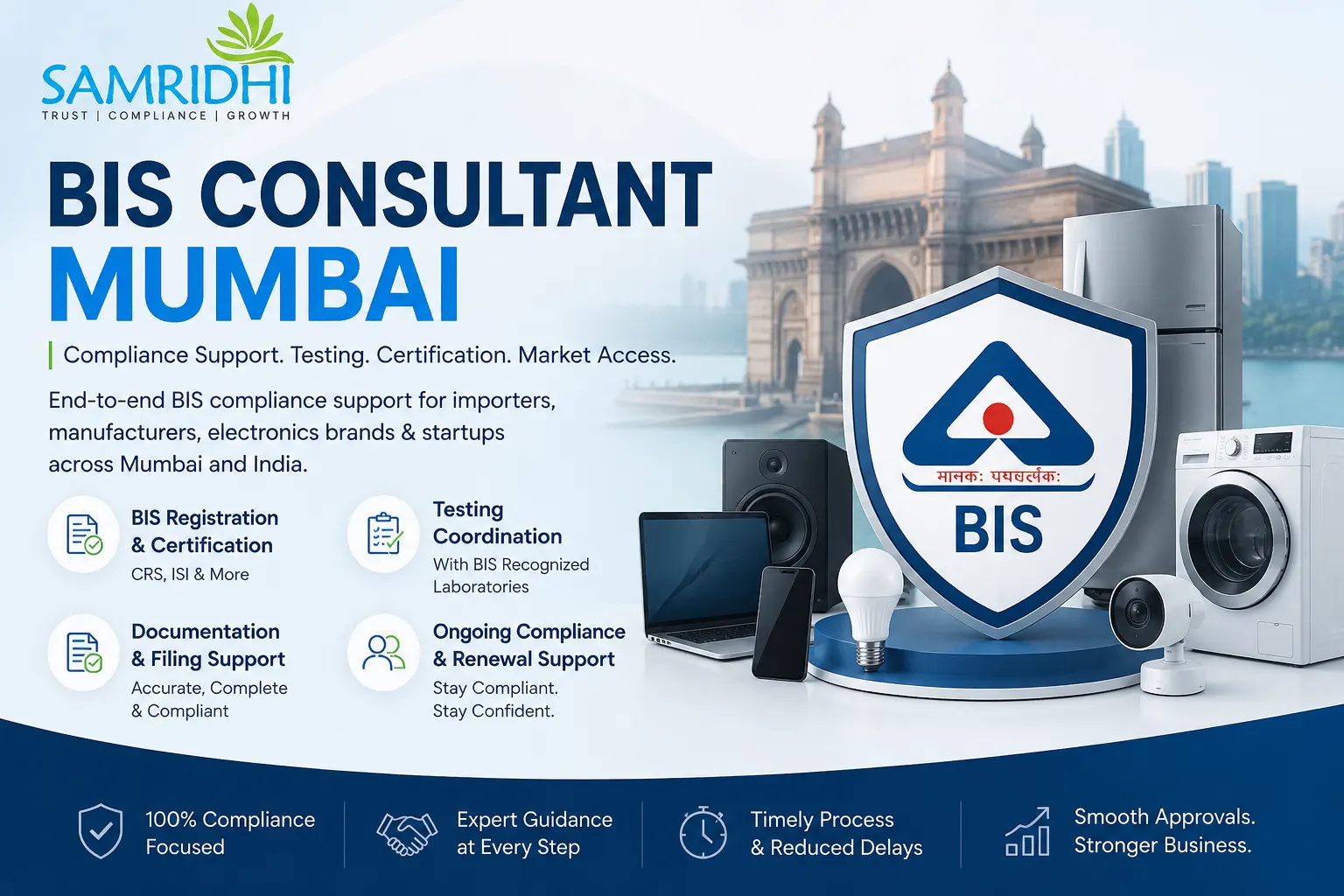
BIS Certification Cost refers to the total expense involved in obtaining mandatory BIS approval for products sold or imported in India, including testing charges, government registration fees, and compliance documentation. This service helps manufacturers, importers, startups, MSMEs, and foreign brands clearly understand applicable BIS certification charges, bis registration cost, and bis license cost based on their product category, especially for electronic products. Proper planning of BIS certification cost ensures legal market entry, smooth imports, avoidance of penalties or seizures, and long-term business credibility. Samridhi Compliance Certification (SAMCC) provides expert guidance to help businesses manage certification costs efficiently and avoid unnecessary delays or rejections. For professional support, call +91 8799708673.
 Get Certified with Confidence – Your One-Stop Compliance Partner
From BIS, WPC, TEC, BEE, EPR, LMPC, CDSCO, FSSAI, ISO, MSME to PESO, NABL testing, Startup India, Make in India, and Lab Setup, we handle all your regulatory approvals, certifications, and documentation needs with precision and speed. Partner with Samridhi Compliance Certification and simplify your journey to full compliance—so you can focus on growing your business.
BIS Certification Cost in India: Complete Guide for Businesses 📄⚖️🏭
Understanding the BIS Certification Cost is a critical step for any business planning to manufacture, import, or sell regulated products in India. BIS certification is not just a statutory requirement—it is a structured compliance framework designed to ensure product quality, safety, and standardization across industries. For manufacturers, importers, startups, and foreign brands, knowing the real cost components, timelines, and compliance factors helps in accurate budgeting and risk planning.
What Is BIS Certification Cost and Why It Matters ✅
BIS Certification Cost refers to the total expenditure involved in obtaining certification from the Bureau of Indian Standards, including testing, government fees, documentation, and professional support. This cost is important because BIS certification is mandatory for a wide range of products notified under Indian regulations.
Businesses that require BIS certification include:
-
Manufacturers producing regulated goods in India
-
Importers bringing notified products into the country
-
Foreign manufacturers supplying products to the Indian market
-
Brand owners and startups selling products under their own label
Without understanding bis certification charges and bis registration cost, businesses often face delays, rejections, or unexpected compliance expenses.
India as a Highly Regulated Business & Manufacturing Market 🇮🇳📈
India is one of the most regulated markets globally when it comes to product quality and consumer safety. Compliance is mandatory not only for manufacturing but also for imports and market access.
Why Compliance Is Critical
-
Manufacturing: Products must meet Indian standards before mass production and sale.
-
Imports: Customs clearance depends on valid BIS approval.
-
Market access: Non-compliant products are barred from organized retail and government procurement.
-
Risk avoidance: Non-compliance can lead to penalties, seizures, and shipment delays.
Multiple authorities work together to enforce regulations, including BIS, WPC, TEC, CPCB, and other sector-specific bodies. As enforcement becomes stricter, ignoring bis registration fees or underestimating bis license cost can severely impact business operations.
Industry & Product Context: Why Certification Cost Varies 📡🏭
The BIS Certification Cost is not fixed. It varies based on the industry, product category, and applicable scheme.
Electronics & IT Products (CRS)
For electronics such as adapters, LED lights, mobile phones, and IT equipment, bis certification cost for electronic products includes laboratory testing, CRS registration fees, and compliance documentation. Wireless or IoT-enabled devices may involve additional coordination with WPC.
Mobile Phones, CCTV, and Batteries
Products like smartphones, CCTV cameras, and batteries require detailed safety and performance testing. Their bis certification charges are often higher due to complex testing standards and multiple compliance layers.
Wireless & RF Products
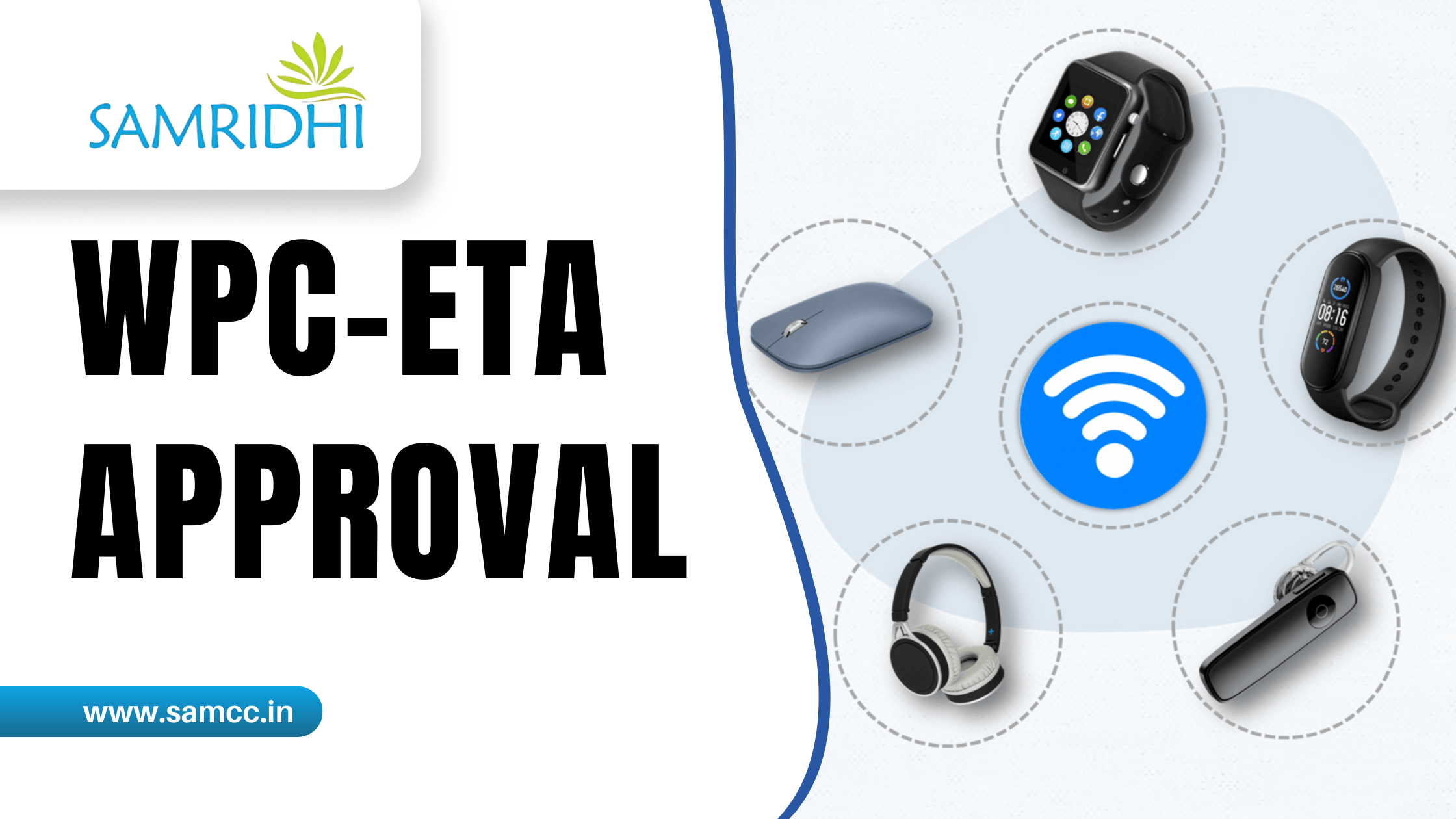
Products with Bluetooth, Wi-Fi, or RF modules require coordination between BIS and WPC. While BIS handles safety and quality, wireless approvals add to the overall compliance cost.
Sustainability & EPR-Regulated Products
For products covered under EPR, BIS certification may work alongside environmental compliance, adding to documentation and process complexity.
Each category has its own testing scope and documentation depth, directly influencing bis registration cost and timelines.
BIS Certification Process Overview (Cost-Relevant Stages) 🔍📑
Understanding the process helps businesses estimate realistic costs.
1. Product Identification & Standard Mapping
The first step is identifying whether the product falls under mandatory BIS certification and which Indian Standard applies.
2. Product Testing
Testing is conducted at BIS-recognized laboratories. This stage often accounts for a significant portion of bis certification charges, especially for electronic products.
3. Documentation & Application
Technical files, test reports, factory details, and declarations are prepared and submitted through online portals. Errors here can increase costs due to resubmissions.
4. Evaluation & Approval
BIS reviews the application, may seek clarifications, and issues approval upon satisfaction.
5. Grant of License / Registration
Once approved, the BIS license or CRS registration is issued, enabling legal manufacturing or import.
Indicative timelines vary by product type, testing complexity, and application accuracy. Poor preparation often increases both time and bis registration fees indirectly.
Cost Components, Validity & Key Compliance Factors 💰📊
Indicative Cost Components
The total BIS Certification Cost generally includes:
-
Testing charges (lab fees vary by product)
-
Government fees (application, registration, or license fees)
-
Consultancy support (optional but highly recommended)
For electronics, bis certification cost for electronic products is influenced by the number of models and variants.
Validity of Certification
Renewal, Extension & Modifications
Adding new models, factories, or variants may involve additional bis registration cost and testing.
Penalties for Non-Compliance
Failure to maintain valid certification can result in fines, product bans, and cancellation of licenses—often costing far more than the original bis certification charges.
Role of Professional Certification Consultants 🧭📄
Why Businesses Prefer Expert Support
While BIS portals are digital, they do not guide applicants on interpretation of standards or documentation quality. This is where experienced bis certification consultants add value.
Consultants vs Agents
-
Consultants: Focus on regulatory interpretation, documentation accuracy, and long-term compliance.
-
Agents: Often limited to form submission without advisory depth.
DIY vs Expert-Managed Compliance
DIY attempts may seem cost-saving but often result in rejections, retesting, and higher overall bis license cost. An experienced bis registration consultant helps businesses:
In this context, Samridhi Compliance Certification supports businesses with structured compliance planning—helping them understand real BIS certification costs, manage testing efficiently, and maintain long-term regulatory compliance.
Recent & Trending Compliance Updates Affecting Cost 📢📈
Several developments are influencing BIS Certification Cost in India:
-
Expansion of mandatory product lists, increasing the number of regulated items
-
Stricter import enforcement, especially for electronics and consumer goods
-
CRS, FMCS, and WPC updates, affecting testing and documentation scope
-
Digital filing systems, improving transparency but increasing scrutiny
As compliance becomes more data-driven, incomplete or inaccurate submissions are more likely to be flagged—leading to higher indirect costs.
Why Understanding BIS Certification Cost Is a Strategic Advantage 🎯
Businesses that plan for bis registration cost, understand bis certification charges, and align compliance early gain:
-
Predictable market entry timelines
-
Better control over product launch budgets
-
Lower regulatory and operational risk
-
Stronger credibility with customers and authorities
Rather than viewing BIS certification as an expense, forward-looking businesses treat it as an investment in quality, trust, and scalability.
BIS Certification Cost in India depends on multiple factors—product type, testing requirements, government fees, and compliance strategy. From electronics and wireless devices to consumer goods, understanding bis certification cost for electronic products, bis registration fees, and bis license cost helps businesses avoid surprises and operate smoothly in a regulated market.
With increasing enforcement and expanding product coverage, accurate cost planning and expert guidance are essential. Businesses that invest early in proper BIS compliance not only avoid penalties and delays but also position themselves for sustainable growth in the Indian market
Get Certified with Confidence – Your One-Stop Compliance Partner
From BIS, WPC, TEC, BEE, EPR, LMPC, CDSCO, FSSAI, ISO, MSME to PESO, NABL testing, Startup India, Make in India, and Lab Setup, we handle all your regulatory approvals, certifications, and documentation needs with precision and speed. Partner with Samridhi Compliance Certification and simplify your journey to full compliance—so you can focus on growing your business.
BIS Certification Cost in India: What Businesses Need to Know 📄⚖️📈
Understanding the BIS Certification Cost is a key concern for businesses planning to manufacture, import, or sell regulated products in India. As India strengthens its quality and safety framework, BIS certification has become a non-negotiable requirement across multiple industries. Knowing how certification costs are structured, what factors influence them, and how compliance supports long-term growth helps businesses plan better and avoid regulatory risks.
Business & Industry Landscape in India (Cost Perspective) 🏭🇮🇳
The BIS Certification Cost affects a wide range of businesses operating in India’s regulated ecosystem:
Manufacturing Units
Indian manufacturers producing electronics, electrical goods, construction materials, consumer products, or safety equipment must obtain BIS certification before selling in the domestic market. The bis registration cost becomes part of production planning, especially when multiple models or variants are involved.
Importers & Exporters
Importers bringing regulated products into India must factor in bis certification charges before shipment. Without valid certification, goods can be held at customs, increasing losses far beyond the original bis license cost.
Electronics & IT Companies
For electronics and IT products, the bis certification cost for electronic products includes laboratory testing, CRS registration, and documentation. As technology evolves quickly, companies often need to plan certification costs for new models and upgrades.
Startups & MSMEs
For startups and MSMEs, BIS certification may seem complex or expensive initially. However, early understanding of BIS Certification Cost helps smaller businesses avoid rework, penalties, and missed market opportunities.
Foreign Manufacturers Supplying to India
Foreign manufacturers must comply with Indian standards regardless of global certifications. Their bis registration fees often depend on product complexity, testing scope, and the number of models being registered for the Indian market.
Across all these segments, BIS certification is essential to operate legally, build credibility, and access organized markets.
Key Business & Industrial Locations Driving Compliance Demand 🏗️🚢
Certain regions in India see higher compliance demand due to concentrated industrial and trade activity:
-
Manufacturing clusters such as electronics hubs and industrial corridors generate large volumes of products requiring BIS certification.
-
Electronics hubs attract manufacturers of IT and consumer electronics, where bis certification cost for electronic products is a major planning factor.
-
Ports, SEZs, and logistics zones handle imports of regulated goods, making BIS certification critical for smooth customs clearance.
In these locations, compliance delays directly impact supply chains, making accurate estimation of bis certification charges essential for business continuity.
Future Growth Potential & Regulatory Expansion 📈🔮
India’s regulatory framework is expanding steadily, which directly influences BIS Certification Cost trends.
Increasing Enforcement
Authorities are tightening checks at ports and in domestic markets. Products without valid BIS approval face faster action, increasing the financial risk of non-compliance.
Expansion of Regulated Product Categories
More products are being added to the mandatory list, increasing the number of businesses that must plan for bis registration cost and ongoing compliance expenses.
Government Focus on Quality & Safety
India’s push for quality manufacturing, consumer protection, and global competitiveness means BIS certification will play an even larger role in the future.
Businesses that plan certification early can scale faster, enter new markets smoothly, and avoid legal setbacks that slow growth.
How Professional Compliance Services Support Business Growth 🧭📑
While BIS certification portals are digital, the process itself is technical. Professional support plays a key role in managing both cost and timelines.
Reducing Approval Delays
Incorrect applications often lead to rejections, increasing indirect bis certification charges. Consultants help submit accurate applications the first time.
Avoiding Documentation Errors
Missing or incorrect documents can raise overall BIS Certification Cost due to retesting or resubmission.
Managing Testing, Licensing & Renewals
Testing coordination and renewal planning help businesses control long-term bis license cost and avoid last-minute compliance issues.
Staying Updated with Regulatory Changes
As standards and procedures evolve, expert guidance helps businesses stay compliant without unexpected cost escalations.
In this context, Samridhi Compliance Certification supports businesses by providing structured guidance on BIS compliance—helping them understand real cost components, manage documentation efficiently, and maintain long-term regulatory alignment.
Digital & Online Compliance Ecosystem in India 💻📊
India’s compliance ecosystem has become increasingly digital, directly affecting BIS Certification Cost management.
Online Portals & Centralized Systems
Applications, tracking, and renewals are now handled online, improving transparency but also increasing scrutiny. Even small errors can trigger objections.
Importance of Expert Guidance
Digital systems do not interpret standards or advise on applicability. Businesses still need experienced bis certification consultants and a reliable bis registration consultant to navigate technical requirements.
Multi-Authority Coordination
For many products, BIS compliance works alongside approvals from WPC, CPCB, or TEC. Coordinating these approvals efficiently helps control total compliance cost and timelines.
Key Cost Components Businesses Should Plan For 💰📌
Although exact figures vary, the BIS Certification Cost generally includes:
-
Testing charges (product-specific and lab-dependent)
-
Government fees (application, registration, renewal)
-
Consultancy or professional support (optional but cost-saving in the long run)
For electronics, bis certification cost for electronic products often increases with multiple models, design changes, or additional safety requirements.
Why Understanding BIS Certification Cost Is a Strategic Advantage 🎯
Businesses that understand and plan for bis registration fees, bis certification charges, and bis license cost gain:
-
Predictable product launch timelines
-
Better budget control
-
Reduced risk of penalties and shipment delays
-
Stronger trust with regulators and customers
Rather than viewing certification as an expense, forward-looking companies treat BIS compliance as an investment in quality, credibility, and sustainable growth.
The BIS Certification Cost in India depends on business type, product category, testing requirements, and compliance strategy. From manufacturers and importers to startups and foreign brands, understanding bis registration cost and planning certification early is essential in a highly regulated market.
As enforcement increases and more products fall under mandatory certification, businesses that invest in proper BIS compliance are better positioned to scale confidently, avoid legal risks, and build long-term value in the Indian market.
BIS Certification Cost in India – Benefits, Risks & Business Impact ⚖️📄🏭
Understanding the BIS Certification Cost is essential for businesses that manufacture, import, or sell regulated products in India. Many companies focus only on the initial expense, but the real value of BIS certification lies in legal security, market access, and long-term business stability. This page explains the advantages of planning BIS certification costs correctly, the risks of avoiding compliance, and a clear comparison to help decision-makers evaluate their options.
Advantages of BIS Certification Cost for Businesses ✅
Paying the correct BIS Certification Cost is not just about meeting a legal requirement—it is about protecting and enabling business growth. When certification is handled properly, it delivers clear advantages across different business types.
Operate Legally in India
BIS certification is mandatory for many products notified by the government. Paying the required bis registration cost allows businesses to manufacture, import, and sell products legally across India without facing regulatory blocks or enforcement actions.
Avoid Penalties, Seizures, and Delays
Products sold without BIS approval are often detained at ports or seized during market inspections. Proper planning of bis certification charges helps businesses avoid unexpected losses, demurrage costs, and supply chain disruptions.
Build Trust with Customers and Authorities
Certified products signal safety, quality, and compliance. Businesses that invest in bis certification gain higher credibility with customers, distributors, institutional buyers, and regulators, especially in competitive and regulated sectors.
Enable Smooth Imports, Manufacturing, and Sales
For importers and manufacturers, a planned bis license cost ensures smooth customs clearance, uninterrupted production, and access to organized retail and government procurement channels.
Advantages by Business Type
Manufacturers
-
Legal approval to manufacture regulated products
-
Better acceptance in domestic and institutional markets
-
Lower risk of product recalls or sales bans
Importers
-
Faster customs clearance with valid BIS approval
-
Reduced risk of shipment detention
-
Predictable landed cost by planning bis registration fees
Startups & MSMEs
-
Early compliance builds credibility with partners and investors
-
Easier participation in tenders and large supply contracts
-
Controlled BIS Certification Cost through proper planning
Foreign Companies Entering India
-
Legal market entry despite having foreign certifications
-
Stronger trust with Indian distributors and regulators
-
Scalable operations with predictable compliance costs
Working with experienced bis certification consultants or a qualified bis registration consultant further helps businesses manage cost, timelines, and documentation efficiently. In this context, Samridhi Compliance Certification (SAMCC) supports businesses with structured compliance planning and end-to-end guidance.
Disadvantages of NOT Planning BIS Certification Cost ⚠️
Ignoring or underestimating the BIS Certification Cost can expose businesses to serious operational and financial risks.
Legal Penalties and Notices
Selling or importing regulated products without BIS approval can result in fines, legal notices, and cancellation of business activities.
Import Clearance Issues
Customs authorities routinely check BIS compliance. Missing certification often leads to shipment holds, added storage charges, or forced re-exports—costing far more than the original bis certification cost for electronic products.
Product Seizures or Sales Bans
Non-compliant products may be seized from warehouses or removed from the market, leading to direct revenue loss and inventory waste.
Business Reputation Damage
Regulatory action damages brand trust. Once flagged, businesses may struggle to regain credibility with buyers, distributors, and regulators.
Financial and Operational Losses
Unexpected enforcement actions disrupt operations, delay launches, and increase indirect costs far beyond planned bis registration cost or bis license cost.
Summary Comparison: Compliance vs Non-Compliance 📊
| Benefits of Compliance (Planned BIS Certification Cost) |
Drawbacks of Non-Compliance |
| Legal right to manufacture and sell products |
Fines, legal notices, and penalties |
| Smooth imports and customs clearance |
Shipment detention and port delays |
| Higher trust with customers and regulators |
Brand reputation damage |
| Predictable business and launch timelines |
Sudden operational disruptions |
| Long-term cost control and scalability |
Higher losses than certification cost |
Why BIS Certification Cost Should Be Seen as an Investment 📈
Many businesses view bis certification charges as an expense, but in reality, certification is a risk-management and growth-enabling investment. Proper planning of bis registration fees, bis license cost, and related compliance expenses allows companies to:
-
Enter the Indian market confidently
-
Scale operations without regulatory roadblocks
-
Avoid unpredictable enforcement losses
-
Strengthen brand credibility in regulated industries
This is especially important for electronics, where bis certification cost for electronic products can vary significantly based on testing and product complexity.
The BIS Certification Cost is far lower than the cost of non-compliance. Businesses that understand and plan certification expenses early gain legal security, operational stability, and long-term market trust. Whether you are a manufacturer, importer, startup, MSME, or foreign company, investing in proper BIS certification protects your business and supports sustainable growth in India’s regulated market.
Careful cost planning, supported by knowledgeable bis certification consultants, ensures that compliance becomes a strategic advantage—not a last-minute burden.
Why BIS Certification Cost Is Important for Businesses in India ⚖️📄📈
Understanding the BIS Certification Cost is a crucial part of doing business in India’s regulated market. For companies planning to manufacture, import, or sell regulated products, BIS certification is not optional—it is a legal and commercial necessity. The cost associated with BIS certification directly impacts market entry, operational continuity, and long-term brand credibility. Businesses that plan certification costs correctly are better positioned to grow, while those that ignore or underestimate compliance often face serious setbacks.
Importance of BIS Certification Cost for Businesses ✅
Operate Legally in India
The primary reason BIS Certification Cost matters is legality. Many products notified by the government cannot be manufactured, imported, or sold without valid BIS approval. Paying the required bis registration cost ensures businesses can operate legally across India without facing regulatory actions, stop-sale orders, or forced market exits.
Meet Indian Quality, Safety, and Regulatory Standards
BIS certification confirms that a product meets Indian standards for quality and safety. The bis certification charges cover product testing, evaluation, and verification against prescribed standards. This protects end users and ensures that businesses align with India’s national quality framework, which is increasingly strict and closely monitored.
Avoid Penalties, Seizures, and Operational Delays
One of the biggest risks of ignoring BIS Certification Cost is enforcement action. Products without valid certification are frequently detained at ports, seized during inspections, or removed from the market. These actions often result in losses far higher than the original bis license cost or bis registration fees. Proper planning helps businesses avoid these disruptions.
Build Long-Term Brand Trust
Certified products inspire confidence. Customers, distributors, and institutional buyers prefer working with compliant brands. By investing in bis certification, businesses signal reliability, responsibility, and commitment to quality—key factors for long-term trust with regulators and partners.
India’s Growing Regulatory & Compliance Landscape 🇮🇳🏭
India’s manufacturing and import ecosystem is expanding rapidly, especially in electronics, consumer goods, and technology-driven sectors. Alongside this growth, regulatory enforcement has intensified.
Stronger Focus on Product Quality
Authorities are prioritizing quality control to protect consumers and enhance India’s global manufacturing reputation. This directly increases the importance of understanding BIS Certification Cost and complying correctly.
Consumer Safety as a Key Priority
Products that pose safety risks face immediate regulatory action. BIS certification acts as a preventive mechanism, ensuring safety compliance before products reach the market.
Standardization and Traceability
Digital systems now track certified products, making it easier to identify non-compliant items. As a result, non-compliance risks are increasing, and businesses that avoid bis certification charges are more likely to be flagged.
With tighter enforcement, non-compliance is no longer a low-risk shortcut—it is a high-risk decision.
Business Impact Across Industries 🏭📡
Electronics & IT Manufacturers (CRS, BIS)
For electronics and IT products, bis certification cost for electronic products includes testing, CRS registration, and documentation. Manufacturers that plan these costs early can launch products smoothly, while those that delay certification face missed launch windows and inventory losses.
Mobile Phones and Wireless Devices (BIS + WPC)
Smartphones and wireless-enabled products require coordination between BIS and WPC. Understanding total bis registration cost helps businesses manage compliance without delays, ensuring seamless imports and sales.
Importers and Foreign Manufacturers (FMCS)
Foreign brands must comply with Indian standards regardless of international approvals. Paying the correct BIS Certification Cost enables predictable customs clearance and faster market acceptance, while non-compliance leads to shipment detention and financial loss.
Startups & MSMEs Entering Regulated Sectors
For startups and MSMEs, BIS certification can unlock access to organized retail, government tenders, and enterprise buyers. Early planning of bis registration fees allows smaller businesses to scale confidently and avoid regulatory surprises.
Across industries, BIS certification directly supports market access, scalability, and credibility.
Role of Professional Compliance Consultants 🧭📑
Why Expert Guidance Is Still Essential
Although BIS applications are filed online, the systems do not explain standards, scope, or documentation expectations. This is where experienced bis certification consultants add value.
How Consultants Support Businesses
-
Correct documentation: Reducing rejection risk and repeat costs
-
Testing coordination: Managing labs and timelines efficiently
-
Timely approvals: Preventing delays that increase indirect costs
-
Ongoing compliance: Handling renewals and modifications smoothly
A skilled bis registration consultant helps businesses control overall BIS Certification Cost by avoiding errors that lead to retesting, resubmission, or enforcement action.
In this context, Samridhi Compliance Certification supports businesses with structured compliance planning—helping them understand cost components, manage certification efficiently, and maintain long-term regulatory alignment.
Why BIS Certification Cost Is a Strategic Investment 📈
Many companies view bis certification charges as an expense. In reality, certification is an investment that:
-
Protects against legal and financial risk
-
Enables smooth imports, manufacturing, and sales
-
Builds trust with customers and authorities
-
Supports sustainable, long-term growth
The cost of compliance is always lower than the cost of non-compliance.
The BIS Certification Cost plays a decisive role in whether a business can legally and successfully operate in the Indian market. From manufacturers and importers to startups and foreign brands, understanding bis registration cost, bis license cost, and bis certification cost for electronic products is essential for planning growth and avoiding regulatory setbacks.
As India strengthens enforcement and expands mandatory certification coverage, compliance is no longer optional or deferrable. Businesses that invest early in proper BIS certification gain stability, credibility, and a strong foundation for long-term success in India’s regulated economy.
Get Certified with Confidence – Your One-Stop Compliance Partner
From BIS, WPC, TEC, BEE, EPR, LMPC, CDSCO, FSSAI, ISO, MSME to PESO, NABL testing, Startup India, Make in India, and Lab Setup, we handle all your regulatory approvals, certifications, and documentation needs with precision and speed. Partner with Samridhi Compliance Certification and simplify your journey to full compliance—so you can focus on growing your business.
Frequently Asked Questions
Yes, BIS Certification Cost applies wherever BIS certification is mandatory for a product category. Manufacturers, importers, MSMEs, and foreign brands must factor in bis registration cost and bis registration fees before selling regulated products in India. Without paying applicable bis certification charges, businesses cannot legally manufacture, import, or market such products, risking penalties and operational disruption.
The BIS Certification Cost depends on product type, applicable Indian Standard, testing scope, number of models, and documentation requirements. For electronics, bis certification cost for electronic products often includes lab testing and CRS fees. Government fees, bis license cost, and professional support also influence the final cost, which varies case by case.
Yes. Manufacturers usually incur bis registration cost related to factory assessment, testing, and licensing, while importers focus on product testing, documentation, and approval for imports. In both cases, bis certification charges are mandatory. A knowledgeable bis registration consultant helps determine the exact cost structure and avoids unnecessary expenses.
Businesses can control BIS Certification Cost by preparing accurate documentation, selecting the correct standard, and coordinating testing efficiently. Working with experienced bis certification consultants helps prevent re-testing, application rejection, and delays that increase indirect costs. Proper planning often reduces long-term bis license cost and recurring compliance expenses.
Avoiding BIS Certification Cost can lead to customs detention, product seizures, fines, and sales bans. Non-compliance often results in losses far higher than bis certification charges or bis registration fees. In regulated markets, skipping bis certification damages brand credibility and blocks access to organized retail and institutional buyers.



 Grab Your Certified Now
 +91 8799708673
 WhatsApp