Understanding Electronics Compliance India: Why Regulations Are Becoming More Complex
If you’ve been working in electronics manufacturing for some time, you’ve probably felt this shift already.
Compliance in India has become heavier.
Not suddenly, but gradually. And that’s what makes it harder to notice at first.
Earlier, most manufacturers focused on getting one or two approvals done and moving ahead. It wasn’t always smooth, but it felt manageable.
Now things don’t work like that.
electronics compliance India today is not about a single approval. It’s a mix of multiple requirements coming together at the same time.
What Compliance Actually Looks Like Now
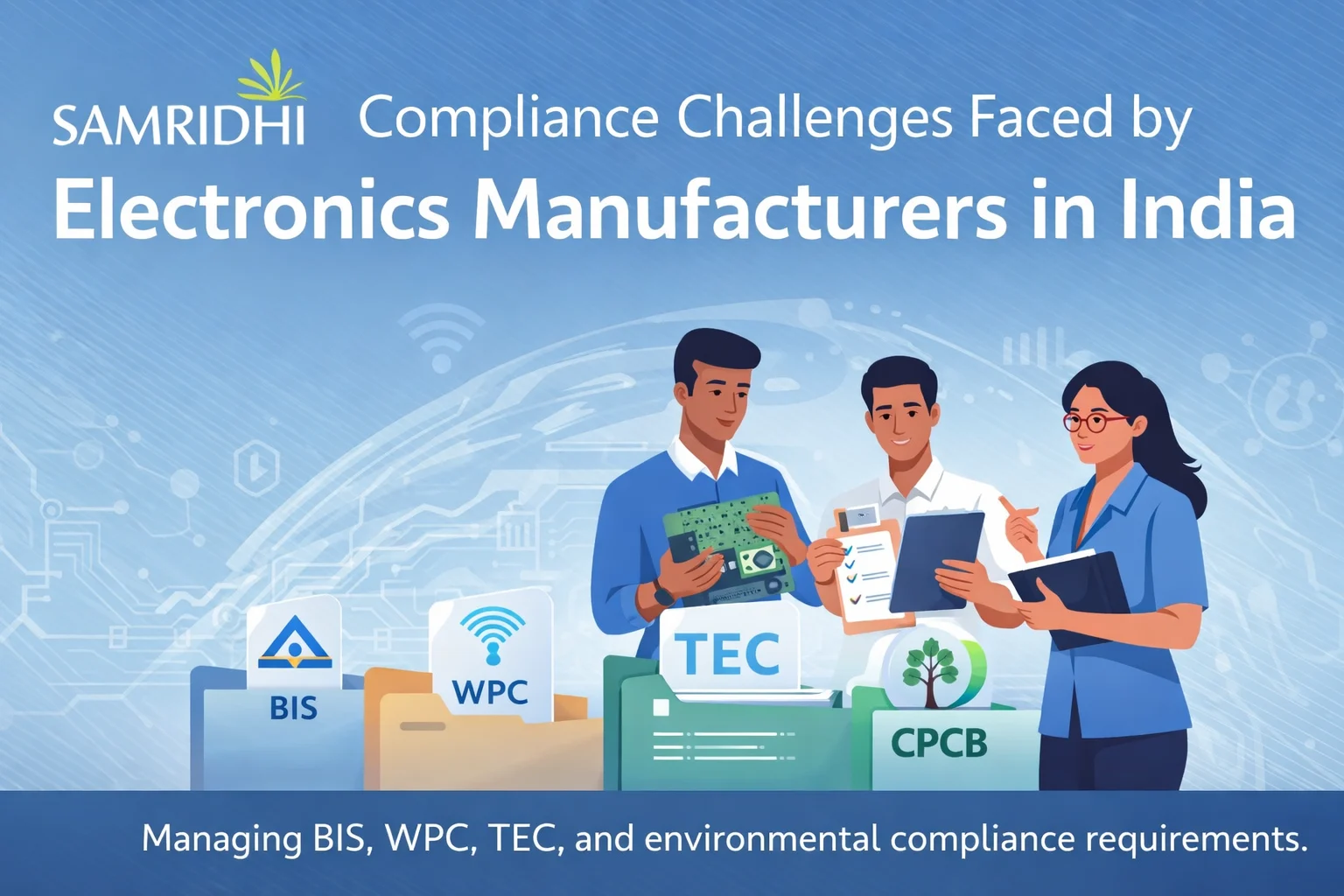
Today, electronic industry regulations India involve different authorities, and each one looks at a different part of your product.
For example:
- BIS checks safety and quality
- WPC looks at wireless and RF usage
- TEC focuses on telecom-related products
- CPCB handles environmental responsibilities like e-waste
Individually, each requirement makes sense.
The difficulty starts when one product needs to go through more than one of these.
That’s where manufacturers start feeling the pressure.
Why Regulations Are Increasing
This isn’t happening randomly.
The electronics market in India has grown fast. More imports, more local manufacturing, more smart and connected devices.
With that growth, a few concerns naturally come up:
- Quality of products entering the market
- Network and data security risks
- Environmental impact, especially e-waste
So instead of dealing with problems later, regulations are now being pushed earlier in the process.
Before products reach the market.
What Has Actually Changed for Manufacturers
The biggest shift is not just more rules.
It’s the way responsibility is handled.
Manufacturers are now expected to think about compliance from the beginning.
- Before production
- Before import
- Before launch
This is where manufacturing compliance challenges India start becoming visible.
Because compliance is no longer a one-time step. It keeps running alongside the product lifecycle.
Where Things Start Getting Complicated
Most issues don’t come from one regulation alone.
They come from how different requirements overlap.
A few common situations:
- A product clears one approval but needs changes for another
- Documents prepared for one authority don’t fully match another requirement
- Testing timelines don’t align across certifications
None of these are major problems individually.
But together, they slow things down.
Why It Feels More Difficult Than Before
It’s not just the number of regulations.
It’s the way they depend on different factors:
- Product type and functionality
- Whether wireless features are involved
- Whether it’s imported or manufactured locally
- Environmental obligations linked to the product
Because of this, requirements don’t always follow a fixed pattern.
They can change depending on the situation.
What Most Businesses Realize Later
Compliance is no longer something you handle at the end.
It has to be part of planning.
The earlier you understand what applies to your product, the smoother things tend to move.
If it’s left for later, small gaps start showing up.
And those gaps are what usually turn into delays.
Major Compliance Challenges Faced by Electronics Manufacturers in India Today
Most manufacturers don’t struggle because they don’t know the rules.
They struggle because the rules don’t work in isolation.
That’s the real issue with electronics compliance India today.
It’s not one approval. It’s multiple approvals, often overlapping, sometimes depending on each other, and rarely moving at the same speed.
The Reality of Multi-Regulatory Pressure
A single product can fall under more than one authority.
- BIS for safety and quality
- WPC for wireless features
- TEC for telecom-related functionality
- CPCB for environmental compliance
Individually, each requirement is clear.
But when they apply together, things start getting complicated.
Because:
- Each authority has its own process
- Documentation expectations differ
- Testing requirements don’t always align
And manufacturers are expected to manage all of this at once.
BIS Certification Challenges That Show Up Early
BIS is often the first major step.
And this is where many BIS certification challenges India begin.
Some common issues:
- Product classification confusion
- Testing failures or unexpected results
- Delays due to incomplete documentation
- Difficulty aligning product specs with standards
Sometimes the product is fine, but the documentation isn’t perfectly aligned.
And that alone can slow things down.
WPC and Wireless Compliance Complexity
Now add WPC into the picture.
If your product has Wi-Fi, Bluetooth, or any RF component, WPC comes into play.
This introduces a different kind of challenge:
- Frequency compliance
- RF testing reports
- Import-related approvals
The tricky part is that many products today include wireless modules by default.
Even small features can trigger WPC requirements.
And if this isn’t identified early, it creates delays later.
TEC Requirements for Telecom Products
For telecom-related equipment, TEC adds another layer.
This is where regulatory challenges in electronics manufacturing India BIS WPC TEC become more visible.
TEC focuses on:
- Network compatibility
- Technical performance
- Essential requirements specific to telecom
And sometimes, a product that passes BIS still needs adjustments for TEC.
So compliance doesn’t end at one stage.
Documentation Gaps and Mismatches
This is one of the most common problems.
Not major mistakes. Just small mismatches.
- Product specs don’t fully match test reports
- Model numbers differ across documents
- Technical details are described differently
Individually, these seem minor.
But during review, they raise questions.
And every question adds time.
Testing Delays and Coordination Issues
Testing is required across multiple certifications.
But the challenge is coordination.
- Different labs
- Different timelines
- Different test requirements
Sometimes one test depends on another.
Sometimes results from one authority don’t directly apply to another.
So even if everything is planned, timelines can still shift.
Environmental and E-Waste Compliance Pressure
Then there’s environmental compliance.
Under environmental and regulatory compliance issues electronics industry India, manufacturers need to consider:
- E-waste management
- Extended Producer Responsibility (EPR)
- Recycling obligations
This part doesn’t always affect product launch directly.
But it affects long-term compliance.
And it can’t be ignored.
Where Most Businesses Actually Struggle
It’s not about understanding individual rules.
It’s about handling everything together.
- Multiple approvals running in parallel
- Dependencies between certifications
- Limited clarity on sequence and timing
This is what defines common compliance issues for electronics manufacturers in India.
Not complexity in one area.
But coordination across all areas.
What This Means in Practice
Compliance is no longer a checklist.
It’s a process that runs alongside your product.
And the challenges don’t come from one big problem.
They come from small gaps:
- Missing a requirement early
- Misjudging timelines
- Not aligning documentation properly
Each one seems small.
But together, they affect how smoothly things move.
Most manufacturers figure this out through experience.
And once they do, the approach changes.
Compliance stops being reactive.
And becomes something you plan from the beginning.
BIS Certification Challenges India: Testing, Documentation, and Approval Delays
Most manufacturers step into BIS certification thinking it’s a clear process.
Apply, test, submit, get approval.
And technically, that is the process.
But once you start going through it, you realize something else. The steps are simple. The execution is where things start getting tricky.
That’s where most BIS certification challenges India actually show up.
Where Testing Starts Becoming Unpredictable
Testing is usually the first major hurdle.
You send your product to the lab expecting things to go as planned. Sometimes it does. Sometimes it doesn’t.
A few common situations:
- Test results slightly different from internal expectations
- Minor parameters not aligning exactly with standards
- Need for clarification or re-testing
These are not always major failures.
But they are enough to slow the process.
And once testing gets delayed, everything that depends on it also shifts.
Product Classification Confusion
This part is often underestimated.
Choosing the correct product category under BIS sounds straightforward. In reality, it isn’t always that obvious.
Some products:
- Fit into more than one category
- Have features that overlap multiple standards
- Get interpreted differently based on usage
If classification is slightly off, testing may be done against the wrong standard.
Which means going back and doing it again.
That adds both time and effort.
Documentation Is Where Most Delays Actually Come From
Testing gets most of the attention, but documentation is where many applications slow down.
Not because documents are missing, but because they don’t fully match.
For example:
- Product specifications differ slightly from test reports
- Model numbers are not consistent everywhere
- Technical details are described differently in different documents
Individually, these seem like small things.
But during review, they raise questions.
And every query means going back, correcting, and resubmitting.
Approval Stage Is Not Always Predictable
Once everything is submitted, the expectation is simple. Approval should follow.
Sometimes it does.
Sometimes additional queries come up.
These queries are not always about major issues. Often, they are about:
- Clarifying technical details
- Confirming consistency between documents
- Validating certain test parameters
Even small clarifications can take time, especially if multiple rounds are involved.
So the approval stage doesn’t always move at a fixed pace.
The Timing Problem Most Businesses Face
One of the biggest challenges is timing.
Different parts of the process don’t always move together.
- Testing may take longer than expected
- Documentation corrections may be needed
- Queries may come after submission
So even if everything looks planned, timelines can shift.
That’s why electronics manufacturing issues India related to BIS often come down to coordination, not just compliance.
Why These Challenges Keep Repeating
Most of these issues are not new.
They repeat across companies.
Not because businesses are careless, but because:
- Requirements are detailed
- Interpretation can vary slightly
- Small gaps are easy to miss early
And once the process has started, fixing those gaps takes more time.
What Changes When You Approach It Differently
Manufacturers who have gone through this a few times usually adjust their approach.
They start:
- Checking product classification early
- Aligning documentation before testing
- Preparing for possible queries instead of assuming a smooth approval
This doesn’t remove challenges completely.
But it reduces the number of surprises.
What This Means in Practice
BIS certification is not complicated in structure.
But it is sensitive to details.
Small inconsistencies, timing gaps, and assumptions are what usually create delays.
And most of the time, the difference between a smooth process and a delayed one comes down to preparation.
Not perfection.
Just making sure everything is aligned before you step into the process.
Regulatory Challenges in Electronics Manufacturing India: BIS, WPC, TEC, and Environmental Compliance
If there’s one thing that defines electronics compliance India today, it’s this:
You’re rarely dealing with just one authority.
Most products sit somewhere in between categories. And because of that, they fall under multiple regulators at the same time.
That’s where the real challenge begins.
Not in understanding one regulation, but in managing all of them together.
When One Product Needs Multiple Approvals
Take a typical electronics product today.
It might:
- Need BIS for safety and quality
- Require WPC if it has wireless features
- Fall under TEC if it connects to telecom networks
- Be subject to CPCB rules for environmental compliance
Individually, none of these are confusing.
But when they apply together, the process becomes layered.
And this is where regulatory challenges in electronics manufacturing India BIS WPC TEC start becoming visible.
The BIS, WPC, and TEC Overlap
This overlap is more common than people expect.
For example:
- A smart device may need BIS for safety
- The same device may require WPC because of Wi-Fi or Bluetooth
- If it interacts with telecom infrastructure, TEC may also apply
Now the challenge is not just getting approvals.
It’s understanding:
- Which comes first
- Which depends on the other
- Whether testing done for one helps with another
And there isn’t always a single fixed answer.
It often depends on the product.
Different Authorities, Different Expectations
Each authority works with its own framework.
- BIS focuses on product safety and standards
- WPC deals with frequency and wireless compliance
- TEC looks at telecom performance and network compatibility
Because of this:
- Documentation formats differ
- Testing requirements vary
- Approval processes don’t align perfectly
So even if you’re fully compliant with one, you still need to prepare separately for the others.
Environmental Compliance Adds Another Layer
Then comes environmental responsibility.
Under environmental and regulatory compliance issues electronics industry India, manufacturers also need to manage:
- E-waste registration
- Extended Producer Responsibility (EPR)
- Recycling and disposal obligations
This is not directly linked to product testing.
But it’s still mandatory.
And it runs parallel to other approvals.
Where Coordination Becomes the Real Challenge
Most problems don’t come from the regulations themselves.
They come from how everything connects.
- One approval depends on another
- One delay affects the entire timeline
- One small mismatch creates queries across multiple stages
And since different authorities work independently, timelines don’t always match.
That creates gaps.
A Common Situation Many Manufacturers Face
You complete BIS testing.
Then realize WPC approval is also required.
By the time you start that process, timelines have already shifted.
Or you prepare documentation for one authority, and it needs adjustment for another.
These are not major problems.
But they add friction.
Why It Feels More Complicated Than It Should Be
It’s not just the number of regulations.
It’s the lack of a single, unified path.
Requirements can:
- Depend on product features
- Change based on how the product is classified
- Vary depending on whether it’s imported or locally manufactured
So even similar products can go through slightly different processes.
What Makes a Difference in Practice
Manufacturers who handle this better usually do one thing differently.
They don’t look at compliance one approval at a time.
They look at the full picture early.
- What all approvals will be needed
- How they connect
- What order makes sense
This helps avoid backtracking later.
What This Means for Manufacturers
Multi-agency compliance is not going away.
If anything, it’s becoming more structured.
But it still requires coordination.
Because even when each requirement is clear on its own, the combined process is what creates complexity.
And most delays don’t come from one authority.
They come from the gaps between them.
Practical Strategies to Overcome Electronics Compliance Challenges in India
Most manufacturers don’t struggle because compliance is impossible.
They struggle because it’s approached too late.
By the time compliance becomes a priority, the product is already designed, timelines are tight, and flexibility is limited. That’s when small issues start turning into delays.
Managing electronics compliance India is less about doing more work and more about doing things at the right time.
Start With a Clear Compliance Map
Before anything else, it helps to understand what applies to your product.
Not after development. At the beginning.
Ask simple questions:
- Does the product fall under BIS?
- Does it include wireless features that need WPC?
- Is TEC applicable based on functionality?
- Are there environmental obligations like EPR?
This early clarity avoids confusion later.
Because most manufacturing compliance challenges India begin when requirements are identified too late.
Treat Compliance as Part of Product Planning
This is where the biggest shift happens.
Instead of treating compliance as a final step, integrate it into the product lifecycle.
- While designing the product
- While selecting components
- While preparing technical specifications
This doesn’t slow development.
It actually reduces rework later.
Align Testing and Documentation Together
A common mistake is handling testing and documentation separately.
In practice, they need to move together.
- Test reports should reflect actual product specs
- Documents should match what is being tested
- Model details should remain consistent everywhere
Small mismatches are one of the most common causes of delays.
And they are usually avoidable.
Plan for Multiple Approvals, Not Just One
Most electronics products don’t need just one certification.
They need a combination.
- BIS
- WPC
- TEC
- Environmental compliance
Instead of handling them one by one, it helps to look at them together.
- Which approval comes first
- Which can run in parallel
- Where dependencies exist
This reduces unnecessary waiting time.
Keep Realistic Expectations Around Timelines
One of the biggest sources of frustration is expecting everything to move in a fixed timeline.
In reality:
- Testing may take longer than expected
- Queries may come during review
- Different authorities may move at different speeds
So timelines can:
- Depend on product complexity
- Vary by scope of certification
- Change based on review stages
Planning with some flexibility makes the process easier to handle.
Prepare for Small Adjustments
Even well-prepared applications sometimes need minor corrections.
- A clarification in documentation
- A small change in specifications
- Additional details during review
These are normal.
Treating them as part of the process, rather than unexpected problems, helps avoid unnecessary stress.
Maintain Clear Internal Coordination
Compliance is not handled by one team alone.
It usually involves:
- Product design teams
- Documentation teams
- Testing labs
- External consultants or advisors
If communication between these is not clear, gaps appear.
And those gaps are what slow things down.
Learn From Previous Submissions
Manufacturers who go through compliance more than once usually improve their process.
They start noticing patterns:
- Where delays happen
- What documents need more attention
- Which steps require early action
This experience helps in planning better for future products.
What This Means in Practice
There is no single shortcut to solving compliance challenges faced by electronics manufacturers in India.
But there is a pattern.
When compliance is planned early, aligned with product development, and handled as a connected process, things move more smoothly.
When it is treated as a last step, small issues start appearing at every stage.
Managing compliance is not about removing complexity completely.
It’s about reducing how often that complexity turns into delays.
And that usually comes down to timing, coordination, and preparation.


 Get Certified with Confidence – Your One-Stop Compliance Partner
 Grab Your Certified Now
 +91 8799708673
 WhatsApp