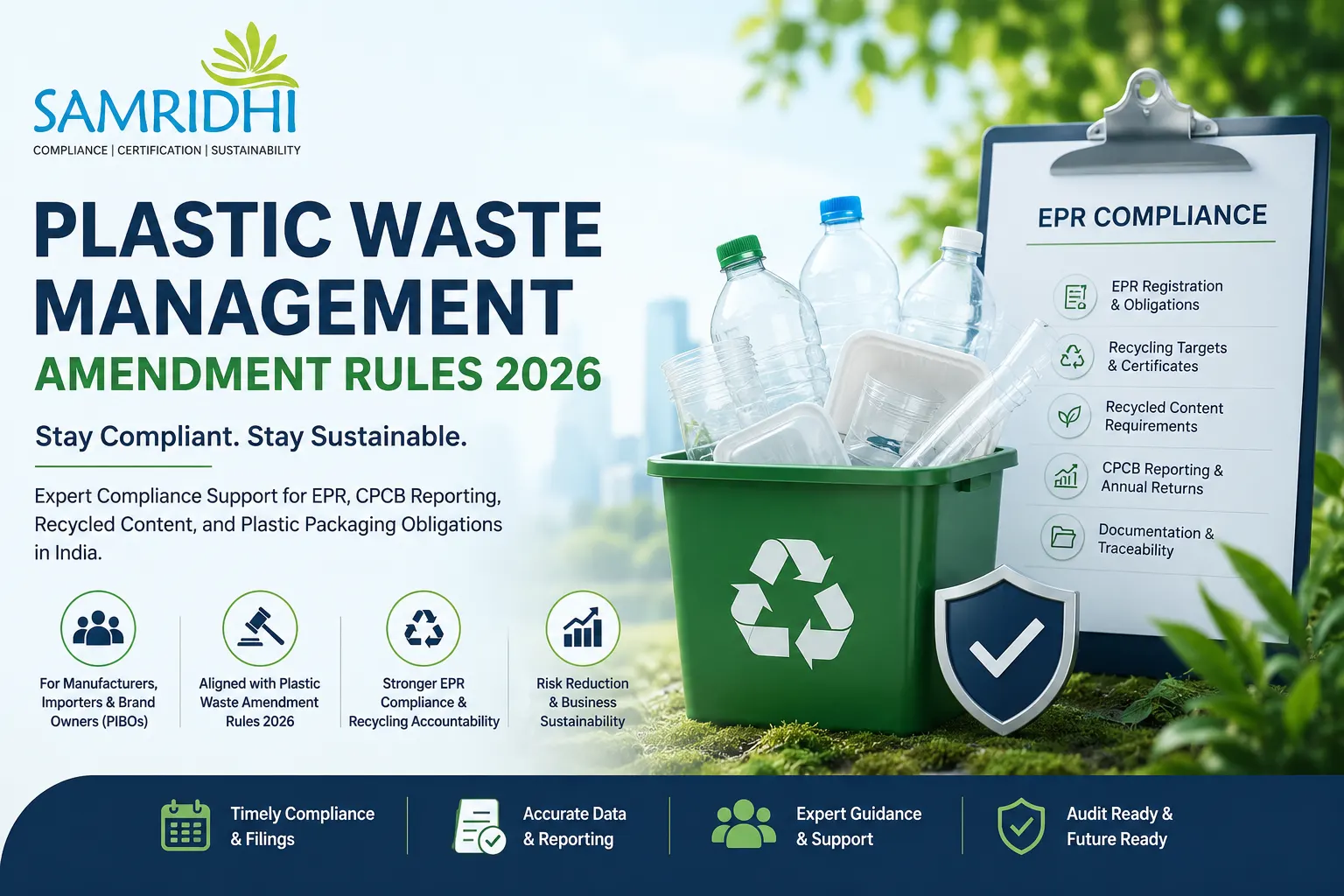
What Are the Plastic Waste Management Amendment Rules 2026 for Manufacturers in India
The compliance environment around plastic packaging in India is changing faster than many manufacturers expected.
A few years ago, plastic waste compliance was often treated as:
- a registration requirement
- an annual filing activity
- or a documentation exercise linked to EPR obligations
But the Plastic Waste Management Amendment Rules 2026 India are gradually changing that approach.
The latest amendments are pushing businesses toward:
- continuous compliance monitoring
- packaging traceability
- recycling accountability
- recycled-content management
- data-driven reporting systems
And for manufacturers, importers, and brand owners…
this shift is becoming operationally significant.
Why the 2026 Plastic Waste Amendments Matter
India’s plastic waste framework is evolving from basic registration-focused compliance toward performance-based environmental accountability.
Authorities are increasingly focusing on:
- actual recycling outcomes
- packaging traceability
- EPR target fulfillment
- recycled material integration
- digital reporting systems
This reflects broader plastic packaging EPR compliance changes India.
The overall direction appears aimed at improving:
- waste collection visibility
- recycling transparency
- sustainability monitoring
- operational accountability across the plastic packaging ecosystem
Manufacturers Are Facing Stronger EPR Responsibilities
One of the biggest changes under the updated framework is the expansion of EPR-related operational obligations.
Businesses involved in:
- manufacturing plastic packaging
- importing packaged products
- selling packaged goods
- using plastic packaging materials
are increasingly expected to monitor:
- packaging quantities
- recycling targets
- category-wise packaging data
- waste recovery mechanisms
- recycler coordination systems
This aligns directly with evolving new EPR obligations for manufacturers India.
The system is increasingly moving beyond simple registration toward measurable compliance performance.
CPCB Monitoring Expectations Are Increasing
The role of digital reporting and centralized monitoring is also becoming much stronger.
Manufacturers increasingly need better visibility into:
- packaging data accuracy
- EPR target calculations
- annual return filing
- recycler documentation
- category-wise plastic reporting
This reflects the growing importance of:
- updated CPCB reporting requirements for plastic waste
- CPCB portal-based compliance monitoring
- operational traceability systems
Businesses are gradually realizing that reporting quality now affects overall compliance credibility.
Plastic Packaging Categorization Is Becoming More Important
The updated framework is also increasing focus on correct packaging classification.
Many businesses still struggle with:
- identifying packaging categories
- calculating plastic quantities
- distinguishing multilayer packaging
- categorizing flexible vs rigid plastics
Incorrect categorization may affect:
- EPR target calculations
- reporting accuracy
- recycled-content obligations
- CPCB filing consistency
This is becoming a major operational concern under plastic waste management compliance for manufacturers India.
Recycled Plastic Obligations Are Expanding
One of the most discussed changes involves the growing focus on recycled-content integration.
Authorities increasingly expect businesses to evaluate:
- recycled material usage
- packaging sustainability planning
- recycled-content sourcing systems
- packaging redesign strategies
This directly relates to:
- recycled plastic requirements India 2026
- mandatory recycled content in plastic packaging India
For many businesses, this is creating new operational and supply-chain challenges.
Recycling Targets Are Becoming More Performance-Oriented
The updated framework is placing stronger emphasis on measurable recycling performance.
Businesses increasingly need systems for:
- target tracking
- recycler coordination
- certificate validation
- waste recovery documentation
- operational reporting management
This aligns closely with:
- plastic packaging recycling target rules India
- evolving EPR performance accountability
The compliance system now appears more focused on actual waste-processing outcomes rather than only filing activities.
Documentation Expectations Are Becoming More Detailed
Manufacturers increasingly need organized records involving:
- packaging material data
- invoices and sales information
- recycler agreements
- EPR certificates
- annual return records
- packaging category calculations
This is becoming critical under:
- CPCB plastic waste reporting rules for manufacturers
- digital compliance verification systems
- traceability-focused compliance monitoring
Documentation gaps are now one of the most common reasons businesses face reporting complications.
Importers and Brand Owners Are Also Affected
The amended rules do not affect only plastic manufacturers.
Businesses acting as:
- PIBOs (Producers, Importers, Brand Owners)
- packaged-product importers
- FMCG companies
- e-commerce brands
- private-label businesses
are also facing stronger accountability expectations.
This broader scope is significantly increasing operational compliance complexity across supply chains.
Why Businesses Are Finding Compliance More Difficult
Many companies still approach EPR compliance reactively.
Common operational problems now include:
- incorrect packaging calculations
- incomplete recycler coordination
- weak documentation systems
- inconsistent CPCB reporting
- confusion around category classifications
- lack of traceability for recycled-content usage
As regulations become more data-driven, manual systems are becoming harder to manage effectively.
Operational Planning Is Becoming More Important Than Registration Alone
One noticeable shift under the 2026 amendments is that registration itself is no longer the main compliance milestone.
Authorities increasingly appear focused on:
- continuous compliance monitoring
- recycling performance visibility
- operational documentation quality
- packaging traceability
- long-term sustainability accountability
This reflects broader EPR reporting and recycled plastic obligations India.
Businesses now require stronger internal systems for:
- packaging-data management
- recycling verification
- compliance tracking
- supplier coordination
- reporting oversight
The Practical Takeaway
The Plastic Waste Management Amendment Rules 2026 are significantly changing how manufacturers manage packaging compliance in India.
- EPR obligations are becoming more operationally demanding
- CPCB reporting expectations are increasing
- Recycled-content requirements are expanding
- Packaging traceability is becoming more important
- Recycling accountability is shifting toward measurable performance
And since:
- compliance obligations vary by packaging category and business role
- recycled-content applicability depends on packaging scope and operational structure
- final compliance evaluation remains subject to CPCB authority review
manufacturers should strengthen packaging-data systems and EPR planning early rather than treating compliance only as an annual filing activity.
Because under the updated framework…
plastic waste compliance is increasingly becoming part of everyday operational management—not just environmental reporting.
EPR Registration for Plastic Waste supports businesses with CPCB registration, packaging compliance planning, and plastic waste management obligations in India.
New EPR Obligations and Recycling Responsibilities Under the Updated Plastic Waste Rules
The biggest shift under the updated plastic waste framework is that EPR compliance is no longer being treated as a basic registration exercise.
It is becoming a performance-based responsibility system.
And for many manufacturers, importers, and brand owners…
that change is creating entirely new operational challenges.
Earlier, many businesses focused mainly on:
- obtaining EPR registration
- completing annual filings
- maintaining basic documentation
But the updated framework is increasingly focused on:
- actual recycling accountability
- measurable target fulfillment
- packaging traceability
- recycler verification
- operational sustainability performance
This is the core direction behind the evolving new EPR obligations for manufacturers India.
What Extended Producer Responsibility (EPR) Now Means Operationally
Under the updated structure, producers and brand owners are increasingly expected to take responsibility for the plastic packaging they introduce into the market.
That responsibility now extends beyond registration itself.
Businesses increasingly need systems for:
- tracking packaging quantities
- calculating category-wise obligations
- coordinating waste collection
- ensuring recycling completion
- maintaining documentation traceability
This reflects broader plastic waste management compliance for manufacturers India.
The system is moving toward continuous accountability rather than one-time compliance filing.
PIBOs Are Facing Greater Regulatory Expectations
The updated framework heavily affects:
- Producers
- Importers
- Brand Owners (PIBOs)
Businesses operating under these categories increasingly need operational visibility into:
- packaging usage
- recycling partnerships
- waste recovery performance
- EPR target management
- CPCB reporting systems
This is significantly increasing compliance complexity for:
- FMCG companies
- packaging manufacturers
- e-commerce brands
- consumer-product importers
- private-label businesses
Recycling Targets Are Becoming More Structured
One major change involves stricter focus on recycling target fulfillment.
Authorities increasingly expect businesses to calculate:
- category-wise packaging quantities
- annual plastic introduction volumes
- recycling obligations linked to packaging categories
This directly connects with:
- plastic packaging recycling target rules India
- performance-based EPR systems
- packaging accountability structures
Businesses are gradually realizing that inaccurate packaging calculations can create long-term reporting problems.
Packaging Categories Are Operationally Important
Many EPR compliance problems begin with incorrect packaging classification.
The updated framework increasingly expects businesses to correctly identify:
- rigid plastic packaging
- flexible plastic packaging
- multilayer plastic packaging
- compostable plastic categories
Incorrect categorization may affect:
- target calculations
- recycled-content obligations
- reporting accuracy
- certificate requirements
This is becoming one of the most common operational weaknesses in EPR compliance management.
Recycling Certificate Systems Are Becoming More Important
Another major operational shift is the growing reliance on recycling documentation and certificate-based accountability.
Businesses increasingly need:
- valid recycler partnerships
- traceable recycling documentation
- verified processing records
- certificate alignment with declared quantities
This forms an important part of evolving:
- EPR reporting and recycled plastic obligations India
- CPCB monitoring systems
- recycling verification expectations
The system now appears far more focused on proving recycling outcomes rather than only claiming compliance activity.
CPCB Reporting Expectations Are Increasing
The CPCB portal framework is also becoming more data-intensive and monitoring-focused.
Businesses increasingly need accurate systems for:
- packaging data management
- annual return filing
- recycler certificate mapping
- category-wise reporting
- quantity reconciliation
This directly affects:
- updated CPCB reporting requirements for plastic waste
- CPCB plastic waste reporting rules for manufacturers
Many businesses still rely on fragmented spreadsheets or manually collected supplier data, which creates reporting inconsistencies.
Recycled Plastic Integration Is Expanding Operational Responsibilities
The updated rules are also increasing pressure around sustainability and recycled-content usage.
Businesses increasingly need to evaluate:
- recycled material sourcing
- packaging redesign
- recycled-content traceability
- supplier compliance verification
This directly relates to:
- recycled plastic requirements India 2026
- mandatory recycled content in plastic packaging India
For many manufacturers, this is creating new procurement and supply-chain planning challenges.
Operational Traceability Is Becoming a Compliance Requirement
One important trend businesses are noticing is the growing importance of operational traceability.
Authorities increasingly expect businesses to maintain visibility over:
- packaging material flow
- recycling chain coordination
- supplier records
- waste recovery documentation
- recycler verification systems
This is pushing many companies toward:
- digital compliance tracking
- centralized reporting systems
- packaging-data management tools
- recycler documentation control systems
Why Businesses Are Struggling With the New EPR Structure
Most operational challenges are happening because businesses still approach EPR compliance as:
- a yearly filing requirement
instead of:
- a continuous operational management system.
Common problems now include:
- incorrect packaging data
- weak recycler coordination
- missing certificates
- inconsistent CPCB reporting
- target miscalculations
- lack of packaging traceability
As compliance expectations increase, manual systems are becoming increasingly difficult to manage reliably.
Importers Are Also Facing Greater Accountability
Importers handling packaged products are increasingly expected to monitor:
- imported packaging quantities
- packaging material categories
- EPR target obligations
- recycling documentation
This broader accountability structure is increasing operational pressure across the entire packaging supply chain.
Why EPR Compliance Is Becoming More Strategic
Businesses are beginning to realize that EPR compliance now affects:
- procurement planning
- packaging design
- vendor coordination
- sustainability reporting
- operational budgeting
- brand reputation management
The compliance framework is gradually moving closer to long-term environmental governance rather than simple regulatory paperwork.
The Practical Takeaway
The updated plastic waste rules are significantly increasing EPR and recycling responsibilities for manufacturers and PIBOs in India.
- Recycling targets are becoming more performance-driven
- CPCB reporting expectations are expanding
- Packaging categorization accuracy is operationally critical
- Recycling certificate verification is becoming more important
- Recycled-content obligations are increasing supply-chain complexity
And since:
- EPR obligations vary by packaging category and business role
- target calculations depend on packaging quantities and operational scope
- final compliance evaluation remains subject to CPCB authority review
businesses should strengthen packaging-data systems, recycler coordination processes, and reporting controls well before annual filing periods begin.
Because under the updated framework…
EPR compliance is increasingly measured through operational accountability—not only through registration status.
EPR Target Fulfillment Support helps businesses manage recycling obligations, EPR target planning, and recycler coordination systems.
Recycled Plastic Content Requirements and Packaging Compliance Changes in India
One of the most important changes under the updated plastic waste framework is the growing focus on recycled plastic usage inside packaging itself.
Earlier, most businesses viewed EPR compliance mainly as:
- waste collection responsibility
- recycling target fulfillment
- annual reporting activity
But the regulatory direction is now expanding beyond waste recovery.
Authorities increasingly expect businesses to also evaluate:
- how packaging is designed
- how much recycled material is used
- whether packaging sustainability can be demonstrated operationally
This is why recycled plastic requirements India 2026 are becoming a major discussion point for manufacturers, importers, and brand owners across multiple industries.
Why Recycled Content Requirements Are Becoming More Important
India’s plastic waste framework is gradually shifting toward circular-economy-based compliance.
That means businesses are not only expected to support recycling externally…
they are increasingly expected to integrate recycled material into packaging systems themselves.
This directly connects with:
- mandatory recycled content in plastic packaging India
- sustainability-focused packaging obligations
- long-term plastic reduction goals
The overall direction appears aimed at reducing dependence on virgin plastic materials over time.
Packaging Design Is Becoming a Compliance Consideration
Earlier, packaging decisions were mostly driven by:
- cost
- product protection
- transportation efficiency
- branding requirements
Now, packaging compliance itself is becoming part of product planning.
Businesses increasingly need to evaluate:
- recyclability of packaging
- material composition
- compatibility with recycling systems
- recycled-content integration possibilities
This reflects broader plastic packaging EPR compliance changes India.
Packaging is gradually moving from a purely operational decision toward a regulatory responsibility area.
Manufacturers Are Facing New Material Planning Challenges
The shift toward recycled-content obligations is creating operational challenges for manufacturers.
Businesses now need stronger visibility into:
- raw material sourcing
- recycled plastic availability
- material consistency
- packaging durability
- quality control compatibility
This is especially important because recycled-content feasibility often:
- depends on product type
- varies by packaging application
- differs across industries and performance requirements
For some sectors, integrating recycled material may require major packaging redesign discussions.
Traceability Expectations Are Increasing
One major operational change is the increasing importance of traceability.
Authorities increasingly expect businesses to maintain records showing:
- recycled-content sourcing
- supplier details
- packaging composition
- material flow tracking
- supporting documentation for recycled material usage
This forms an important part of evolving:
- EPR reporting and recycled plastic obligations India
- CPCB traceability expectations
- sustainability documentation systems
Businesses are gradually realizing that verbal supplier confirmation alone is no longer enough.
Supplier Coordination Is Becoming More Complex
Many manufacturers rely on third-party packaging vendors or converters.
Under the updated framework, businesses increasingly need stronger coordination with:
- packaging suppliers
- recyclers
- material processors
- procurement teams
- compliance departments
This is because packaging compliance now affects:
- operational planning
- material sourcing
- reporting obligations
- sustainability declarations
The complexity increases significantly when multiple packaging vendors are involved.
Recycled Material Quality Is a Practical Concern
One of the biggest operational realities businesses face is consistency.
Recycled plastic quality may vary depending on:
- recycling source
- processing methods
- contamination levels
- material category
- supply-chain controls
This creates practical concerns regarding:
- packaging strength
- product compatibility
- shelf-life performance
- manufacturing stability
As a result, many businesses are still trying to balance sustainability goals with operational reliability.
Packaging Categories Still Matter
The type of plastic packaging used continues to affect compliance obligations.
Businesses increasingly need to classify:
- rigid plastic packaging
- flexible plastic packaging
- multilayer packaging
- compostable plastic materials
This affects:
- recycled-content applicability
- EPR target obligations
- reporting expectations
- sustainability planning requirements
Incorrect categorization may create long-term compliance inconsistencies.
CPCB Reporting Expectations Are Expanding
The updated framework is also increasing reporting pressure around packaging materials and recycled-content declarations.
Businesses increasingly need organized systems for:
- packaging quantity records
- recycled-content tracking
- supplier documentation
- material declarations
- annual reporting management
This aligns closely with:
- updated CPCB reporting requirements for plastic waste
- CPCB plastic waste reporting rules for manufacturers
As reporting systems become more data-driven, packaging traceability becomes operationally critical.
Importers Are Also Affected by Packaging Sustainability Expectations
Importers handling packaged products are increasingly expected to understand:
- packaging material composition
- recycled-content status
- packaging category applicability
- supplier-side sustainability documentation
This is becoming especially important for:
- FMCG importers
- consumer-product brands
- e-commerce businesses
- private-label importers
Many importers still have limited visibility into packaging sourcing done overseas.
Why Businesses Are Finding Compliance More Difficult
Most operational challenges are happening because packaging compliance is now crossing into multiple business functions simultaneously.
The updated framework affects:
- procurement teams
- packaging designers
- manufacturing operations
- sustainability departments
- compliance managers
- vendor coordination systems
Common problems now include:
- lack of recycled-content records
- weak supplier documentation
- inconsistent packaging categorization
- unclear material traceability
- operational resistance to packaging redesign
Many companies are still using compliance systems designed for older EPR models.
Sustainability Compliance Is Becoming Operational
One important shift businesses are noticing is that sustainability expectations are gradually becoming measurable operational obligations.
The focus is increasingly moving toward:
- packaging transparency
- measurable recycled-content integration
- traceable material usage
- long-term sustainability accountability
This reflects broader evolution under the Plastic Waste Management Amendment Rules 2026 India framework.
The Practical Takeaway
The updated plastic waste rules are making recycled-content and packaging sustainability obligations more operationally important for businesses in India.
- Recycled-content integration is becoming a growing compliance focus
- Packaging design decisions increasingly affect regulatory obligations
- Supplier coordination and material traceability are becoming critical
- CPCB reporting expectations are expanding
- Operational packaging management is becoming more documentation-driven
And since:
- recycled-content applicability depends on packaging type and operational feasibility
- material obligations vary by product category and packaging structure
- compliance evaluation remains subject to CPCB authority review
manufacturers and brand owners should strengthen packaging-data systems and supplier traceability processes early rather than waiting until annual reporting stages.
Because under the updated framework…
plastic packaging is increasingly being evaluated not only by how it protects products—but also by how responsibly it fits into the recycling ecosystem.
ISO Certification supports operational consistency, documentation management, and compliance-focused quality systems for manufacturing businesses.
Updated CPCB Reporting Requirements and EPR Documentation Expectations for Manufacturers
For many businesses, the most difficult part of plastic waste compliance is no longer registration.
It is reporting.
And under the updated framework, CPCB reporting is becoming much more detailed, data-driven, and operationally sensitive than before.
Earlier, many companies approached EPR reporting as:
- an annual filing exercise
- spreadsheet-based data submission
- or a year-end compliance activity handled separately from operations
That approach is becoming increasingly difficult to manage.
The latest updated CPCB reporting requirements for plastic waste are pushing businesses toward:
- continuous packaging-data tracking
- recycler documentation management
- operational traceability systems
- centralized compliance monitoring
And this shift is affecting manufacturers, importers, brand owners, and packaging businesses across India.
Why CPCB Reporting Expectations Are Increasing
The overall regulatory direction appears focused on improving:
- packaging-data accuracy
- recycling transparency
- waste traceability
- measurable EPR accountability
Authorities increasingly expect businesses to maintain stronger visibility into:
- how much plastic packaging enters the market
- how much waste is processed
- how recycling obligations are fulfilled
- whether supporting records remain traceable
This aligns closely with broader Plastic Waste Management Amendment Rules 2026 India developments.
CPCB Portal Reporting Is Becoming More Data-Intensive
One major operational change is the growing importance of portal-based reporting accuracy.
Businesses increasingly need to manage:
- packaging quantity records
- category-wise plastic data
- recycler certificate details
- annual return submissions
- waste-processing documentation
This directly affects:
- CPCB plastic waste reporting rules for manufacturers
- EPR reporting systems
- packaging traceability expectations
Even small data inconsistencies can now create reporting complications.
Packaging Data Management Is Becoming Operationally Critical
Many businesses still collect packaging information manually from:
- procurement teams
- packaging vendors
- production units
- warehouse records
- distributor systems
But under the updated framework, fragmented data collection often creates:
- quantity mismatches
- incorrect packaging categorization
- reporting inconsistencies
- target-calculation errors
This is becoming one of the biggest operational challenges in plastic waste management compliance for manufacturers India.
Correct Packaging Categorization Is Extremely Important
CPCB reporting systems increasingly require accurate classification of:
- rigid plastic packaging
- flexible plastic packaging
- multilayer packaging
- compostable plastic categories
Incorrect categorization may affect:
- EPR target obligations
- recycled-content applicability
- reporting accuracy
- certificate mapping
Many businesses still struggle because packaging structures evolve over time while reporting systems remain outdated.
Annual Return Filing Expectations Are Becoming More Detailed
Annual EPR return filing is no longer limited to basic packaging declarations.
Businesses increasingly need supporting operational records such as:
- sales quantity data
- packaging consumption records
- recycler agreements
- EPR certificates
- waste-processing details
- packaging material classifications
This forms an important part of evolving:
- EPR reporting and recycled plastic obligations India
- operational compliance verification
- CPCB audit-readiness expectations
The reporting framework increasingly focuses on evidence-backed compliance rather than simple declarations.
Recycling Documentation Is Receiving Greater Scrutiny
The role of recyclers is also becoming much more important.
Businesses increasingly need documentation linked to:
- recycling quantity validation
- authorized recycler coordination
- certificate traceability
- waste-processing records
- quantity reconciliation systems
This directly impacts:
- plastic packaging recycling target rules India
- EPR performance verification
- recycling accountability structures
Authorities increasingly appear focused on whether recycling claims can be operationally verified.
Traceability Is Becoming a Core Compliance Requirement
One noticeable shift is the growing importance of end-to-end traceability.
Businesses increasingly need systems capable of tracking:
- packaging introduction quantities
- material categories
- recycling linkage
- certificate usage
- recycled-content declarations
This is pushing many companies toward:
- centralized compliance databases
- digital packaging trackers
- documentation-control systems
- audit-readiness processes
Manual compliance tracking is becoming harder to sustain as reporting obligations expand.
Recycled-Content Reporting Adds Another Layer of Complexity
The growing focus on:
- recycled plastic integration
- sustainability declarations
- packaging redesign
is also increasing reporting complexity.
Businesses increasingly need records showing:
- recycled-content sourcing
- supplier verification
- packaging composition details
- supporting sustainability documentation
This directly relates to:
- recycled plastic requirements India 2026
- mandatory recycled content in plastic packaging India
Many businesses are still building internal systems capable of handling this level of traceability.
Importers Are Also Facing Stronger Reporting Expectations
Importers and brand owners increasingly need visibility into:
- imported packaging quantities
- packaging material categories
- supplier-side packaging information
- EPR target obligations
- recycler coordination records
This is becoming especially important for:
- FMCG importers
- consumer brands
- e-commerce businesses
- private-label importers
The reporting burden is no longer limited only to domestic manufacturers.
Why Businesses Are Facing Reporting Problems
Most reporting challenges happen because operational systems were never designed for detailed EPR traceability.
Common issues now include:
- inconsistent packaging data
- missing recycler documentation
- incorrect category calculations
- quantity reconciliation errors
- duplicate reporting records
- weak internal coordination between departments
As CPCB monitoring becomes more structured, these operational gaps become more visible.
Compliance Monitoring Is Becoming Continuous
The updated framework is gradually moving businesses away from:
- reactive annual reporting
toward:
- continuous compliance monitoring.
This means companies increasingly need ongoing systems for:
- packaging-data tracking
- recycler management
- certificate monitoring
- documentation validation
- internal compliance review
The compliance environment is becoming operationally continuous rather than event-based.
Why Documentation Quality Matters More Than Before
One major shift businesses are noticing is that documentation quality itself now affects compliance credibility.
Incomplete or poorly organized records may create:
- reporting delays
- clarification requests
- target mismatches
- audit-readiness problems
- operational compliance risk exposure
This is why businesses are increasingly investing in stronger compliance-management systems.
The Practical Takeaway
The updated CPCB reporting framework is significantly increasing documentation and traceability expectations for manufacturers and PIBOs in India.
- CPCB portal reporting is becoming more data-sensitive
- Packaging categorization accuracy is operationally critical
- Recycling documentation verification is receiving greater scrutiny
- Annual return filing now requires stronger operational evidence
- Continuous compliance monitoring is becoming more important
And since:
- reporting obligations vary by packaging category and business role
- documentation expectations depend on operational scope and packaging volume
- compliance evaluation remains subject to CPCB authority review
businesses should strengthen packaging-data systems and documentation controls well before filing deadlines approach.
Because under the updated framework…
plastic waste compliance is increasingly being measured through documentation quality and traceability—not only through registration status.
EPR Compliance Reporting & Documentation supports packaging-data management, CPCB reporting, and structured compliance documentation systems.
Common Compliance Problems Manufacturers May Face Under the Plastic Waste Amendment Rules 2026
The updated plastic waste framework is increasing compliance expectations for manufacturers across India.
But most businesses are not struggling because they refuse to comply.
They are struggling because the compliance system itself is becoming:
- more data-driven
- more operationally detailed
- more documentation-sensitive
- and more interconnected across departments
Under the evolving Plastic Waste Management Amendment Rules 2026 India, even businesses with active EPR registration may still face significant compliance risks if operational systems are weak.
And for many manufacturers, the real challenge now begins after registration—not before it.
EPR Target Calculations Are Creating Confusion
One of the most common operational problems businesses face is incorrect EPR target calculation.
Many companies still struggle to properly determine:
- packaging quantities introduced into the market
- category-wise plastic classifications
- annual recycling obligations
- packaging conversion calculations
This directly affects:
- new EPR obligations for manufacturers India
- EPR target fulfillment systems
- recycling performance reporting
Even small quantity errors may create:
- reporting mismatches
- target shortfalls
- certificate inconsistencies
- CPCB clarification risks
Packaging Categorization Problems Are Extremely Common
The updated framework increasingly depends on accurate packaging classification.
But many businesses still find it difficult to correctly identify:
- rigid plastic packaging
- flexible plastic packaging
- multilayer packaging
- compostable plastics
This creates major complications under:
- plastic packaging EPR compliance changes India
- category-wise reporting systems
- recycled-content applicability requirements
Incorrect categorization often affects both:
- reporting accuracy
- recycling obligation calculations
Recycled-Content Verification Is Becoming Difficult
The growing focus on:
- sustainability obligations
- recycled material integration
- packaging traceability
is creating new operational pressure for manufacturers.
Many businesses now face challenges related to:
- supplier verification
- recycled-content documentation
- material traceability
- packaging composition tracking
This directly impacts:
- recycled plastic requirements India 2026
- mandatory recycled content in plastic packaging India
One major issue is that recycled-content supply chains are still evolving, and documentation quality varies significantly between vendors.
CPCB Reporting Gaps Are Becoming More Visible
Many businesses still rely on:
- spreadsheets
- manual data collection
- disconnected packaging records
- fragmented vendor reporting systems
That approach increasingly creates reporting gaps under:
- updated CPCB reporting requirements for plastic waste
- CPCB portal-based monitoring systems
- traceability-focused compliance expectations
Common problems now include:
- quantity mismatches
- duplicate entries
- inconsistent packaging records
- incorrect annual return data
- delayed documentation reconciliation
As reporting systems become more structured, these operational gaps are becoming easier for authorities to identify.
Documentation Mismatches Are Creating Compliance Risks
Documentation consistency is becoming one of the biggest operational challenges.
Manufacturers increasingly need alignment between:
- packaging data
- sales records
- recycler certificates
- supplier declarations
- annual returns
- packaging categories
But in practice, businesses often maintain these records separately across multiple departments.
This creates:
- reconciliation problems
- inconsistent reporting
- audit-readiness issues
- traceability gaps
The problem is rarely intentional…
it usually happens because internal compliance systems were never designed for this level of coordination.
Recycler Coordination Is Still a Major Weak Area
Many businesses underestimate how important recycler coordination has become under the updated framework.
Manufacturers increasingly need visibility into:
- recycler authorization validity
- certificate traceability
- waste-processing documentation
- recycling quantity mapping
- operational verification records
This directly affects:
- plastic packaging recycling target rules India
- EPR performance validation
- CPCB documentation scrutiny
Weak recycler coordination is now one of the most common causes of reporting inconsistencies.
Importers Face Additional Packaging Visibility Challenges
Importers handling packaged products often face even greater operational complexity.
Many importers do not fully control:
- packaging design
- material composition
- recycled-content sourcing
- packaging categorization
because these decisions may happen overseas.
This creates compliance challenges related to:
- imported packaging-data accuracy
- supplier coordination
- packaging traceability
- recycled-content verification
Especially for:
- FMCG importers
- e-commerce brands
- private-label businesses
- consumer-product distributors
Internal Department Coordination Is Often Poor
One major operational reality businesses are discovering is that EPR compliance now affects multiple departments simultaneously.
The updated framework impacts:
- procurement
- production
- packaging teams
- finance
- logistics
- compliance departments
- sustainability teams
But many businesses still manage compliance in isolation.
As a result:
- packaging data may not match sales data
- procurement records may not match reporting declarations
- recycler certificates may not align with actual obligations
This creates hidden compliance risk over time.
Packaging Traceability Expectations Are Increasing
Authorities increasingly expect businesses to demonstrate:
- where packaging originates
- how much plastic enters the market
- how waste is recovered
- how recycling claims are verified
This growing focus on traceability is changing how manufacturers manage:
- packaging records
- supplier agreements
- sustainability declarations
- operational compliance systems
The environment is becoming far more evidence-driven than before.
Manual Compliance Systems Are Becoming Harder to Manage
Many businesses still use:
- spreadsheets
- email-based approvals
- fragmented vendor records
- disconnected packaging databases
But under the updated framework, manual systems increasingly create:
- calculation errors
- reporting inconsistencies
- missed deadlines
- traceability gaps
As packaging obligations grow, compliance management itself is becoming a full operational function.
Why Businesses Are Reassessing Their Compliance Strategy
The updated plastic waste framework is changing EPR compliance from:
- a regulatory filing activity
into:
- an operational accountability system.
Businesses increasingly realize that compliance now affects:
- packaging planning
- procurement decisions
- supplier management
- sustainability reporting
- operational data systems
- long-term business risk management
This broader shift is changing how companies approach environmental compliance internally.
The Practical Takeaway
The Plastic Waste Management Amendment Rules 2026 are creating new operational compliance challenges for manufacturers and PIBOs in India.
- EPR target calculations are becoming more sensitive
- Packaging categorization accuracy is operationally critical
- Recycled-content verification is increasingly difficult
- CPCB reporting systems now require stronger traceability
- Documentation consistency is becoming central to compliance management
And since:
- compliance obligations vary by packaging category and business role
- recycled-content requirements depend on operational feasibility and packaging structure
- final compliance assessment remains subject to CPCB authority review
manufacturers should strengthen internal coordination systems, packaging-data management, and documentation controls well before reporting periods begin.
Because under the updated framework…
plastic waste compliance is increasingly judged by operational accuracy—not only by registration status.
EPR Annual Return Filing supports businesses with annual CPCB reporting, packaging-data reconciliation, and compliance documentation management.


 Get Certified with Confidence – Your One-Stop Compliance Partner
 Grab Your Certified Now
 +91 8799708673
 WhatsApp