When it comes to petroleum and gas equipment, safety is not managed internally alone.
It is regulated.
And in India, one of the key authorities responsible for this is PESO.
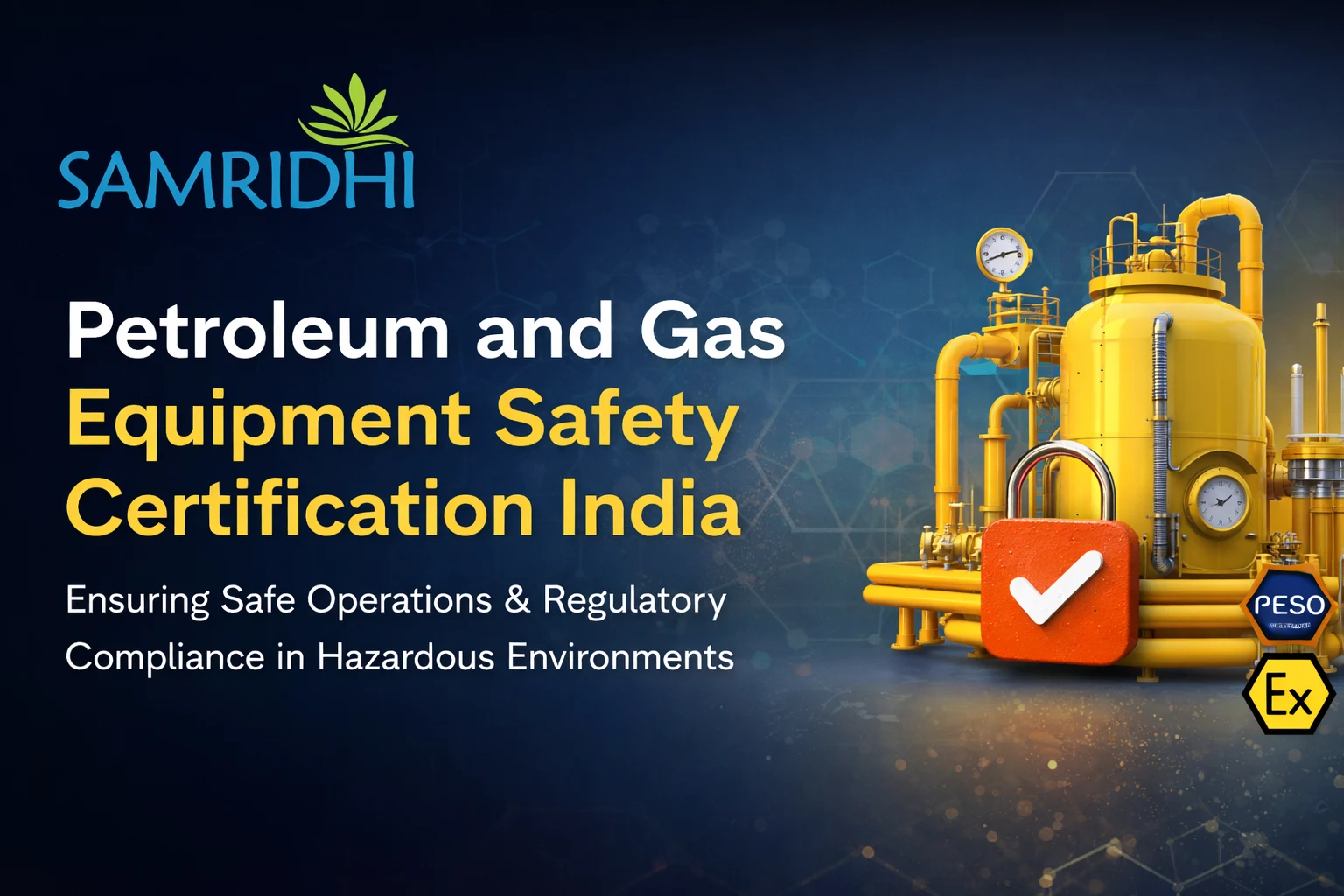
That’s why PESO certification for petroleum equipment India is not just another approval. It acts as a regulatory checkpoint before equipment can be used, stored, or even imported in certain cases.
What PESO Actually Regulates
PESO (Petroleum and Explosives Safety Organization) focuses on safety in environments where flammable substances are involved.
This includes:
- Storage of petroleum products
- Handling and transportation systems
- Equipment used in hazardous areas
- Pressure vessels and related systems
The goal is straightforward — reduce the risk of accidents in high-risk environments.
This is where petroleum equipment safety certification India connects directly with PESO’s role.
Why PESO Certification Is Critical
Unlike general compliance, PESO looks at risk from a safety-first perspective.
It evaluates whether equipment:
- Is designed to operate safely in flammable conditions
- Meets applicable technical standards
- Can be used without increasing operational risk
Without meeting PESO approval requirements India petroleum, equipment may not be permitted for use in regulated environments.
And this applies not only to manufacturers, but also to importers and operators.
How the PESO Approval Process Works in Practice
The process is structured, but it requires alignment across multiple elements.
Typically, it involves:
- Identifying applicability based on equipment type
- Preparing technical documentation and design details
- Product testing or validation where required
- Submission for review by PESO authorities
In many cases, authorities may raise queries or request clarification.
Since approvals are subject to authority review, the process is always case-specific and depends on product scope.
Applicability Depends on Equipment and Usage
Not all equipment requires PESO approval.
Applicability depends on:
- Whether the equipment is used in petroleum handling
- The level of risk associated with its operation
- Its installation environment
For example:
- Storage tanks, pressure vessels, and dispensing systems are more likely to fall under PESO
- Auxiliary equipment may require evaluation depending on usage
This is why certification requirements for petroleum equipment India are not uniform.
They vary based on context.
Where Businesses Usually Face Challenges
In real scenarios, challenges often come from:
- Misunderstanding whether PESO applies
- Incomplete or inconsistent documentation
- Delays in aligning technical specifications with requirements
These are not major issues individually, but they can slow down the process when combined.
The Regulatory Impact of PESO Compliance
PESO certification doesn’t just affect approval.
It influences:
- Whether equipment can be installed or operated
- Whether imports are allowed in certain cases
- Whether inspections are cleared without issues
This makes petroleum and gas equipment compliance India heavily dependent on proper PESO alignment.
The Practical Takeaway
PESO certification is not just about meeting a requirement.
It is about ensuring that equipment:
- Can operate safely in hazardous environments
- Meets defined regulatory standards
- Is suitable for its intended use
And because each case depends on product type and application, the process:
- Varies by scope
- Is evaluated individually
- Requires careful planning
In petroleum and gas, safety is not assumed.
It is verified.
And PESO is one of the key authorities that ensures that verification happens before the equipment is put into use.
PESO Certification is a key regulatory approval required for petroleum equipment used in hazardous environments.
Risks of Using Non-Certified Equipment in Hazardous Petroleum Environments
In petroleum and gas operations, risk is already part of the environment.
What certification does… is control that risk.
When equipment is used without proper approvals, the risk doesn’t just increase slightly. It becomes unpredictable.
That’s where petroleum equipment safety certification India starts showing its real importance — not during approval, but during actual operation.
The Safety Risk Most People Underestimate
Hazardous environments are not forgiving.
They involve:
- Flammable gases
- Vapors that can ignite with minimal sparks
- High-pressure systems
In such conditions, even a small design flaw or material weakness can lead to:
- Equipment failure
- Leakage
- Ignition or explosion
This is why hazardous area equipment certification India exists — to ensure equipment behaves safely under these conditions.
Without it, there is no structured validation of safety.
Increased Probability of Accidents
Non-certified equipment is not necessarily faulty.
But it is not verified.
That difference matters.
Without proper explosion proof equipment certification India, electrical or mechanical components may:
- Generate sparks
- Overheat
- Fail under pressure
In petroleum environments, these are not minor issues. They can escalate quickly.
This is one of the core concerns in industrial safety compliance oil and gas India.
Legal and Regulatory Exposure
Safety issues don’t stay limited to operations.
They extend into compliance.
If uncertified equipment is identified during inspection:
- Operations may be restricted
- Notices may be issued
- Further regulatory action may follow
Depending on the situation, PESO approval requirements India petroleum may apply, and non-compliance can lead to enforcement actions.
The outcome always depends on the case and regulatory scope.
Operational Disruptions and Shutdowns
Even without an accident, non-compliance can disrupt operations.
Common outcomes include:
- Temporary shutdown of equipment
- Delays in project execution
- Additional compliance checks
This is where petroleum and gas equipment compliance India becomes directly linked to business continuity.
Because operations cannot continue smoothly if compliance gaps exist.
The Hidden Cost of Non-Compliance
Beyond safety and legal exposure, there are indirect impacts:
- Loss of trust with stakeholders
- Increased scrutiny in future approvals
- Additional cost of replacing or modifying equipment
These costs are not always immediate, but they build over time.
Why Businesses Still Take the Risk
In some cases, decisions are driven by:
- Cost pressure
- Tight timelines
- Assumption that certification can be handled later
But in petroleum environments, delaying safety validation often shifts risk to operations.
The Practical Takeaway
Using non-certified equipment is not just a compliance issue.
It is a safety decision.
- Certification verifies equipment behavior under risk
- It reduces uncertainty in hazardous environments
- It supports regulatory alignment
And since certification requirements for petroleum equipment India vary based on product and application, each case needs evaluation.
Because in high-risk environments, the absence of certification doesn’t just mean missing approval.
It means operating without validated safety.
NABL Testing helps ensure equipment performs safely under hazardous conditions and reduces operational risk.
How Manufacturers and Importers Can Ensure Compliance for Petroleum Equipment
In petroleum and gas, compliance doesn’t fail because rules are unclear.
It usually fails because planning starts too late.
Equipment gets designed, sourced, or even shipped… and only then the question comes up:
“Do we need approval for this?”
At that point, even small gaps can slow everything down.
That’s why meeting certification requirements for petroleum equipment India is less about reacting to approvals… and more about planning them early.
Start with Product and Application Mapping
Before anything else, you need clarity on where and how the equipment will be used.
Because compliance depends on:
- Type of equipment
- Operational environment (hazardous or non-hazardous)
- Level of exposure to flammable substances
This is what defines petroleum and gas equipment compliance India.
The same equipment may require different certifications depending on its application.
So this step is always case-specific.
Identify Applicable Certifications Early
Once the application is clear, the next step is mapping approvals.
This may include:
- PESO certification for petroleum equipment India
- Explosion proof equipment certification India (for electrical components)
- Hazardous area equipment certification India
Each of these addresses a different safety risk.
And their applicability depends on product design and usage conditions.
Identifying them early helps avoid rework later.
Plan Testing Based on Final Product Configuration
Testing is not just a requirement. It’s a validation stage.
Common issues arise when:
- Testing is done on prototype versions
- Product specifications change after testing
- Test parameters don’t match actual usage conditions
To avoid this, testing should be aligned with:
- Final product design
- Actual operating environment
- Applicable safety standards
This ensures that safety certification for gas and oil equipment reflects real-world conditions.
Maintain Documentation Consistency
Documentation is where many compliance processes slow down.
Key points to maintain:
- Consistent product description across all documents
- Matching technical specifications
- Proper alignment between test reports and application details
Even small mismatches can trigger queries during review.
And once queries begin, the process becomes slower.
Coordinate Across Teams and Stakeholders
Compliance is not handled in isolation.
It involves:
- Manufacturers
- Importers
- Testing labs
- Regulatory authorities
If coordination is weak:
- Information gaps appear
- Documentation becomes inconsistent
- Approvals get delayed
Strong coordination helps keep everything aligned.
Prepare for Authority Review and Queries
In most cases, the process includes review by authorities.
They may:
- Ask for clarification
- Request additional documents
- Evaluate technical details
Since approvals are subject to authority review, timelines and outcomes depend on how clearly the application is presented.
The Practical Takeaway
Ensuring compliance is not about doing more steps.
It’s about doing them in the right order.
- Understand product and application
- Identify certifications early
- Align testing with final design
- Keep documentation consistent
- Coordinate across teams
Because once gaps appear, they affect everything — timelines, cost, and approvals.
And in petroleum and gas, where safety is critical, compliance is not something to adjust later.
It needs to be built into the process from the beginning.
ISO Certification helps standardize safety processes and supports consistent compliance for petroleum equipment.


 Get Certified with Confidence – Your One-Stop Compliance Partner
 Grab Your Certified Now
 +91 8799708673
 WhatsApp