 Get Certified with Confidence – Your One-Stop Compliance Partner
From BIS, WPC, TEC, BEE, EPR, LMPC, CDSCO, FSSAI, ISO, MSME to PESO, NABL testing, Startup India, Make in India, and Lab Setup, we handle all your regulatory approvals, certifications, and documentation needs with precision and speed. Partner with Samridhi Compliance Certification and simplify your journey to full compliance—so you can focus on growing your business.
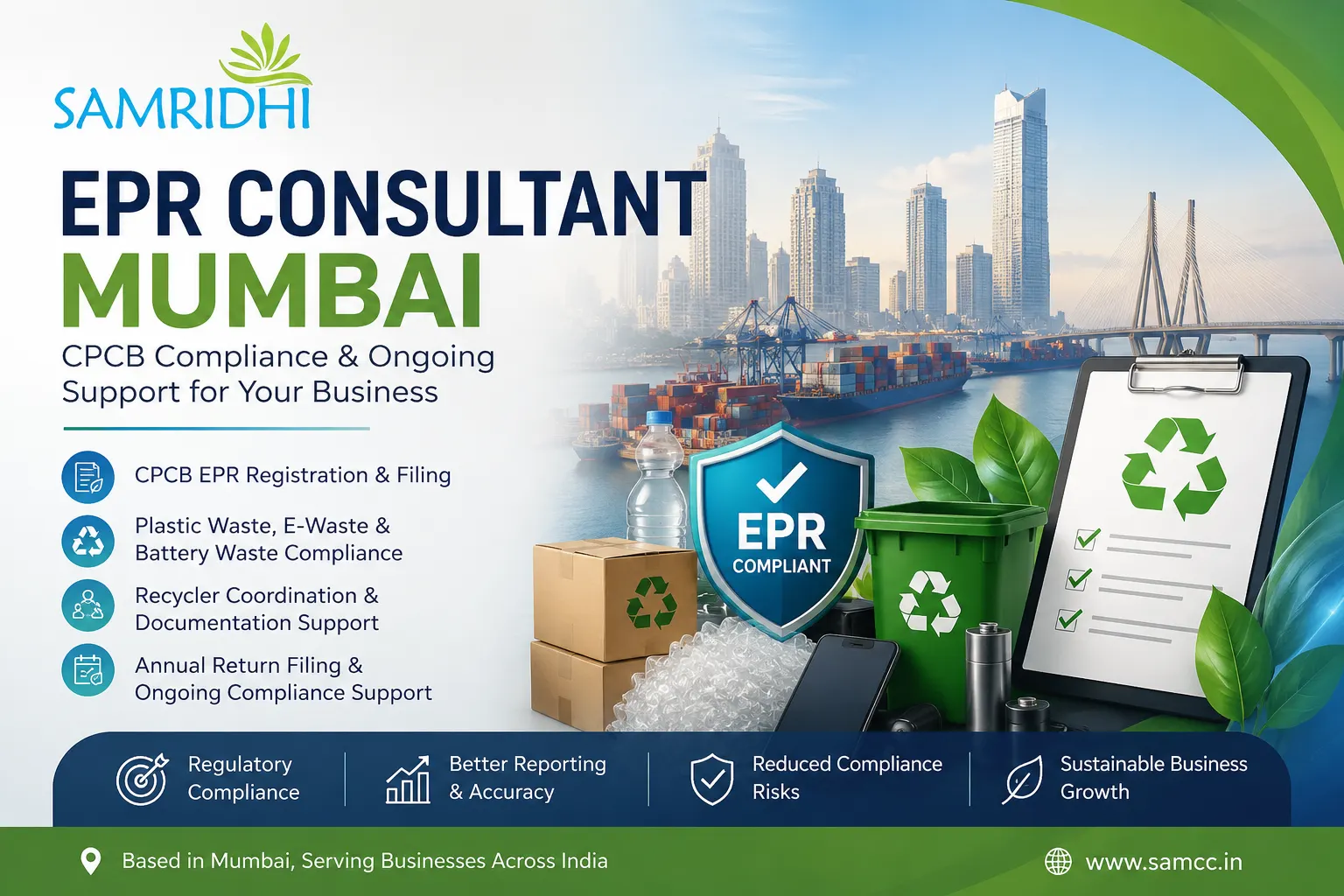
Understanding EPR Consultant Bangalore Requirements
Bangalore is widely recognized for its thriving technology ecosystem, but behind the city's startup culture and innovation-driven economy lies a growing responsibility around environmental compliance. Electronics manufacturers, IT hardware companies, battery importers, e-commerce brands, plastic packaging businesses, and consumer product companies operating in Bangalore increasingly need to understand their obligations under India's Extended Producer Responsibility (EPR) framework.
This is where businesses often begin searching for an EPR Consultant Bangalore.
Many organizations first encounter EPR requirements when expanding product sales, importing goods into India, launching branded products, or responding to compliance requests from customers, marketplaces, regulators, or business partners. While EPR is often associated with waste management, the actual compliance requirements involve registration, reporting, documentation management, target fulfillment, and coordination with authorized recyclers.
What Is EPR Compliance?
Extended Producer Responsibility (EPR) is an environmental compliance framework that places responsibility on producers, importers, and brand owners for managing certain categories of waste generated from the products they introduce into the market.
Depending on business activities, EPR obligations may apply to:
- Electronic products
- Plastic packaging
- Batteries
- Tyres
- Used oil
- Other regulated waste streams
The applicable requirements depend on:
| Compliance Factor |
Impact on EPR Requirements |
| Product category |
Determines applicable EPR framework |
| Business role |
Producer, importer, or brand owner |
| Product volume |
Influences compliance obligations |
| Waste category |
Determines reporting requirements |
| Market activity |
Affects registration scope |
Because each business operates differently, EPR compliance is rarely a one-size-fits-all process.
Why Bangalore Businesses Need to Understand EPR Early
Bangalore's economy includes thousands of businesses involved in:
- Consumer electronics
- IT hardware
- Smart devices
- E-commerce brands
- Technology startups
- Packaging-intensive products
- Battery-powered products
Many of these organizations unknowingly fall within EPR applicability criteria.
A startup selling electronic products online may initially focus on product development and customer acquisition. Only later does the business discover that environmental compliance obligations may also apply depending on the product category and business structure.
Understanding EPR requirements early often helps businesses avoid compliance surprises as operations scale.
EPR Requirements for Electronics Businesses
One of the most common areas of EPR applicability in Bangalore involves electronic products.
Manufacturers, importers, and brand owners dealing with:
- Consumer electronics
- IT equipment
- Networking products
- Smart devices
- Electrical accessories
may need to evaluate whether E-Waste EPR Consultant Bangalore support is relevant to their operations.
The exact compliance obligations depend on the products involved and the role played by the business within the supply chain.
Plastic Packaging Compliance Is Growing
Many Bangalore-based businesses operate through:
- E-commerce channels
- Retail distribution
- Consumer product sales
- Packaging-intensive supply chains
As a result, plastic packaging compliance has become increasingly important.
Businesses often discover that EPR obligations may apply not only to the products they sell but also to the packaging introduced into the market.
This has created growing demand for Plastic Waste EPR Consultant Bangalore services among consumer brands, importers, and packaging users.
Importers Face Additional Compliance Responsibilities
Importers frequently encounter unique challenges because EPR obligations may arise even when products are manufactured outside India.
Businesses importing:
- Electronics
- Batteries
- Consumer goods
- Packaged products
often need to assess whether registration and reporting requirements apply.
One importer sourcing smart devices from overseas initially assumed environmental compliance responsibilities rested entirely with the manufacturer. During compliance review, the business discovered that importer obligations also required evaluation under applicable EPR regulations.
This situation is not uncommon.
It highlights why EPR Consultant for Importers Bangalore support is increasingly important for businesses operating within global supply chains.
Registration Is Only One Part of EPR Compliance
Many organizations assume EPR compliance begins and ends with registration.
In practice, registration is often only the first step.
Businesses may also need to address:
- Compliance reporting
- Documentation management
- Target fulfillment obligations
- Recycler coordination
- Annual return filing
- Record maintenance
The exact requirements depend on the applicable waste category and compliance framework.
This is why companies frequently seek support from an EPR Registration Consultant Bangalore before beginning the process.
Documentation Plays a Major Role
Like most regulatory frameworks, EPR compliance relies heavily on documentation.
Businesses may need to maintain records related to:
- Product quantities
- Imports
- Sales data
- Waste categories
- Recycler arrangements
- Compliance activities
Many compliance challenges arise not because businesses misunderstand EPR requirements, but because documentation systems were never designed to support environmental reporting obligations.
Bangalore's Startup Ecosystem Creates Unique Challenges
Startups often move quickly.
Product launches happen rapidly.
Business models evolve.
New product lines are introduced.
As a result, environmental compliance planning may not always receive immediate attention.
A technology startup that initially sells a small number of devices may eventually expand nationally through online marketplaces. As business volumes grow, compliance obligations may become more relevant than they were during the early stages of operation.
This is one reason EPR awareness is becoming increasingly important within Bangalore's startup ecosystem.
Operational Reality Businesses Eventually Discover
Most organizations initially view EPR compliance as an environmental requirement.
Over time, they realize it is also an operational and documentation-management requirement.
Successful compliance programs often depend on:
- Understanding applicability
- Maintaining accurate records
- Coordinating reporting activities
- Managing recycler relationships
- Monitoring compliance obligations
This is why businesses increasingly engage an EPR Compliance Consultant Bangalore early in their growth journey. The objective is not simply obtaining registration, but understanding ongoing responsibilities that may apply based on the products introduced into the market, the business model, and the applicable EPR framework. Since EPR obligations vary by waste category and business activity, every compliance assessment remains case-specific and subject to the relevant regulatory requirements.
Businesses exploring EPR obligations often need a deeper understanding of EPR E-Waste Registration, EPR Registration for Plastic Waste, and EPR Battery Waste Registration. Evaluating the correct waste category early helps organizations understand registration requirements, compliance responsibilities, documentation needs, and ongoing environmental obligations before beginning the compliance process.
Why Businesses in Bangalore EPR Consultant Bangalore Need Support
Bangalore is known as India's technology and innovation capital, but alongside its thriving startup culture and manufacturing growth, businesses are facing increasing environmental compliance responsibilities. Companies involved in electronics, IT hardware, consumer products, batteries, plastic packaging, e-commerce, and imports are increasingly required to understand how Extended Producer Responsibility (EPR) regulations apply to their operations.
For many organizations, EPR compliance becomes relevant only after business expansion begins.
A startup launches a successful product.
An importer increases product volumes.
An e-commerce brand expands nationwide.
A manufacturer introduces new product categories.
At that point, businesses often realize that environmental compliance obligations extend beyond production and sales activities.
This is why many organizations seek guidance from an EPR Consultant Bangalore.
Bangalore's Electronics & Technology Ecosystem
Bangalore hosts one of India's largest concentrations of:
- Electronics manufacturers
- Consumer technology brands
- IT hardware companies
- IoT startups
- Smart-device developers
- Networking equipment suppliers
Many of these businesses introduce products into the market that may fall under EPR regulations, particularly within the e-waste framework.
As products reach end-of-life stages, regulatory responsibility does not always end with product sales.
This is where E-Waste EPR Consultant Bangalore services become increasingly relevant.
A growing electronics company may focus heavily on product innovation, manufacturing efficiency, and market expansion, only to later discover that environmental compliance obligations must also be addressed as part of responsible business operations.
Rapidly Growing Startup Ecosystem
Bangalore's startup ecosystem creates a unique compliance environment.
Thousands of businesses operate in sectors such as:
- Consumer electronics
- Smart-home products
- Wearable technology
- Hardware innovation
- Sustainable products
- E-commerce brands
Many startups begin with limited product volumes and relatively simple operational structures.
As growth accelerates, however, compliance requirements often become more complex.
One startup initially selling products through online channels may eventually expand into national distribution networks, retail partnerships, and large-scale imports. With that growth comes increased attention to documentation, environmental reporting, and regulatory responsibilities.
For startups, EPR compliance is often easier to manage when considered during business expansion rather than after compliance obligations become urgent.
Strong Importer & Distribution Network
Bangalore has developed into a major hub for importers and distributors supplying products across India.
Businesses frequently import:
- Electronics
- Accessories
- Consumer products
- Batteries
- Packaged goods
- Technology equipment
Many importers initially assume environmental responsibilities remain with overseas manufacturers.
In practice, importers often have their own compliance obligations depending on the applicable EPR framework.
An importer introducing packaged products into the Indian market may need to evaluate responsibilities relating to:
- Product categories
- Packaging materials
- Waste streams
- Reporting requirements
This is why demand for EPR Consultant for Importers Bangalore continues to grow.
Plastic Packaging Compliance Is Becoming Increasingly Important
One of the fastest-growing areas of EPR compliance involves plastic packaging.
Businesses involved in:
- E-commerce
- Retail distribution
- Consumer goods
- FMCG products
- Technology products
often introduce significant amounts of packaging into the market.
Many organizations are surprised to learn that packaging itself may create compliance obligations.
A company may not manufacture plastic products directly, yet still need to evaluate its packaging responsibilities.
This has led many businesses to seek Plastic Waste EPR Consultant Bangalore support to better understand their obligations and reporting requirements.
Manufacturing Businesses Face Expanding Compliance Expectations
Bangalore's industrial and manufacturing sectors continue to grow across:
- Electronics production
- Industrial equipment
- Electrical products
- Consumer goods
- Technology hardware
Manufacturers are increasingly expected to demonstrate not only product quality and regulatory compliance but also environmental responsibility.
As sustainability expectations grow among:
- Customers
- Investors
- Procurement teams
- Business partners
environmental compliance becomes an important operational consideration.
Businesses that proactively manage EPR requirements often find it easier to respond to future compliance inquiries and reporting obligations.
E-Commerce Brands Need Compliance Awareness
A significant number of Bangalore-based businesses operate online.
These include:
- Direct-to-consumer brands
- Marketplace sellers
- Technology retailers
- Product aggregators
E-commerce growth has increased the amount of:
- Packaging
- Product movement
- Waste generation
associated with commercial activity.
Many online sellers initially focus on logistics, customer acquisition, and inventory management.
Environmental compliance may receive attention much later.
One growing consumer brand discovered during a compliance review that expanding product distribution had increased its environmental obligations beyond what the business originally anticipated.
The challenge was not product demand.
The challenge was compliance awareness.
Battery & Energy Storage Businesses
Bangalore's focus on technology and innovation has also encouraged growth in:
- Battery importers
- Energy-storage businesses
- Electric mobility suppliers
- Renewable-energy product companies
These industries often operate within evolving regulatory frameworks where environmental responsibility plays a central role.
Businesses in these sectors increasingly seek support understanding how EPR obligations may apply to their products and supply chains.
Documentation & Reporting Requirements Continue Growing
One reason businesses seek an EPR Registration Consultant Bangalore is the growing complexity of compliance documentation.
Many organizations discover that EPR compliance is not limited to registration.
Ongoing responsibilities may involve:
- Record maintenance
- Compliance reporting
- Data tracking
- Recycler coordination
- Annual filings
The exact obligations depend on:
| Business Activity |
Potential Compliance Focus |
| Product manufacturing |
Waste responsibility assessment |
| Product imports |
Importer compliance evaluation |
| Packaging usage |
Packaging compliance requirements |
| Electronics sales |
E-waste obligations |
| Battery products |
Battery waste compliance |
Because these requirements vary by waste category and business model, professional guidance often helps businesses understand what applies and what does not.
Operational Reality Businesses Eventually Learn
Most businesses initially view EPR as an environmental regulation.
Over time, they realize it is also a business-process requirement.
Successful compliance programs depend on:
- Accurate documentation
- Waste-category assessment
- Regulatory understanding
- Reporting readiness
- Long-term compliance management
This is particularly important in Bangalore, where fast-growing startups, technology companies, importers, and manufacturers are scaling rapidly.
As businesses grow, environmental compliance obligations often grow with them. This is why many organizations engage an EPR Compliance Consultant Bangalore to better understand applicability, manage documentation, coordinate compliance activities, and prepare for ongoing reporting requirements. Since EPR obligations vary by product category, packaging type, waste stream, and business activity, every compliance assessment remains case-specific and subject to applicable regulatory requirements.
Bangalore's electronics manufacturers, importers, startups, and consumer brands frequently require support across multiple environmental compliance areas. Businesses expanding product sales often evaluate EPR E-Waste Registration, EPR Registration for Plastic Waste, and EPR Battery Waste Registration alongside broader compliance planning to understand applicable regulatory responsibilities.
Step-by-Step Process for EPR Consultant Bangalore
Many businesses first encounter EPR compliance after receiving a customer requirement, marketplace request, investor due-diligence query, or regulatory notification. Others discover their obligations while importing products, launching a new brand, or expanding product distribution across India.
At first glance, EPR compliance may appear to be a simple registration process.
In reality, it involves multiple stages including applicability assessment, documentation review, registration activities, reporting obligations, target management, and ongoing compliance monitoring.
The exact process varies depending on:
- Product category
- Waste stream
- Business role
- Annual quantities
- Regulatory framework
A manufacturer of electronic products follows a different pathway than a plastic packaging importer or battery brand owner.
However, most businesses working with an EPR Consultant Bangalore generally move through a structured compliance process.
1. Determine Whether EPR Applies to Your Business
The first step is understanding applicability.
Not every business automatically falls under EPR regulations.
Compliance obligations typically depend on whether the organization operates as:
- Producer
- Importer
- Brand Owner (PIBO)
- Manufacturer
- Waste Processor
The products and packaging introduced into the market are also important factors.
At this stage, businesses usually evaluate:
| Assessment Area |
Purpose |
| Product category |
Determine applicable EPR framework |
| Business role |
Identify compliance responsibility |
| Packaging type |
Assess packaging obligations |
| Import activities |
Evaluate importer responsibilities |
| Waste stream |
Identify reporting requirements |
Many businesses discover that only specific product categories or business activities fall within the scope of EPR requirements.
2. Identify the Applicable EPR Category
After determining applicability, the next step is identifying the correct compliance framework.
EPR requirements differ significantly depending on the waste category.
Businesses may need to evaluate:
- E-Waste EPR
- Plastic Waste EPR
- Battery Waste EPR
- Tyre Waste EPR
- Used Oil EPR
A technology company selling smart devices may require a different compliance approach than a business introducing packaged consumer goods into the market.
This is why many organizations seek guidance from an EPR Registration Consultant Bangalore before beginning the registration process.
3. Gather Business & Compliance Documentation
Documentation preparation is one of the most important stages of EPR compliance.
Businesses typically need to organize information relating to:
- Company registration
- Product categories
- Import details
- Sales information
- Packaging information
- Brand ownership
- Manufacturing activities
The specific document requirements vary depending on the applicable EPR framework.
One common challenge is that businesses often maintain commercial records but not necessarily compliance-focused records.
As a result, additional documentation alignment may be required before registration activities can proceed.
4. Assess Product Quantities & Compliance Scope
EPR compliance often depends on the volume of products or packaging introduced into the market.
Businesses generally evaluate:
- Product quantities
- Packaging quantities
- Import volumes
- Sales volumes
- Waste-category classifications
These figures help determine the scope of compliance obligations.
A startup selling a limited number of products may face different reporting requirements compared to a large-scale importer distributing products nationwide.
Because compliance obligations vary by scope, early quantity assessment becomes an important part of the process.
5. Registration Under the Applicable Framework
Once documentation and applicability reviews are completed, businesses can proceed with registration activities.
This stage typically involves:
- Preparing application information
- Organizing supporting documents
- Reviewing compliance declarations
- Submitting registration-related information
For many businesses, this is the point where they begin actively working with an EPR Certification Consultant Bangalore.
However, registration itself is often only one component of the overall compliance journey.
6. Develop a Compliance & Target Strategy
Many EPR frameworks involve ongoing responsibilities beyond registration.
Depending on the waste category, businesses may need to:
- Monitor obligations
- Track quantities
- Manage compliance records
- Coordinate target fulfillment activities
One common misconception is that registration alone satisfies all compliance requirements.
In practice, ongoing management often becomes equally important.
This is particularly true for businesses operating in:
- Electronics
- Consumer goods
- Packaging-intensive sectors
- Import-driven industries
7. Coordinate With Authorized Recyclers & Compliance Partners
For certain EPR categories, businesses may need to coordinate with:
- Authorized recyclers
- Waste processors
- Collection partners
- Compliance stakeholders
The exact requirements depend on the applicable regulatory framework.
For example, businesses dealing with electronic products often require a different recycling ecosystem than those managing plastic packaging obligations.
A growing company may discover that establishing reliable recycler coordination becomes one of the most important operational aspects of compliance management.
8. Maintain Records & Compliance Documentation
After registration, businesses generally need to maintain compliance-related records.
This may include:
- Product data
- Sales information
- Import records
- Recycling records
- Compliance reports
- Supporting documentation
Many organizations underestimate how important record management becomes over time.
One of the most common compliance issues arises when businesses attempt to prepare reports using incomplete historical data.
Good recordkeeping often prevents larger challenges later.
9. Annual Reporting & Ongoing Compliance Activities
Most EPR frameworks involve ongoing reporting requirements.
Depending on the category, businesses may need to:
- Submit compliance information
- File annual returns
- Update business records
- Review compliance obligations
- Track target fulfillment activities
The exact reporting requirements depend on:
- Waste category
- Business role
- Product volume
- Applicable regulations
This is why many organizations continue working with an EPR Compliance Consultant Bangalore even after registration has been completed.
Common Challenges During the EPR Process
Businesses in Bangalore frequently encounter challenges such as:
- Unclear applicability
- Incorrect waste categorization
- Missing quantity records
- Delayed documentation
- Recycler coordination issues
- Reporting inaccuracies
- Changing compliance obligations
These challenges do not necessarily prevent compliance, but they often create additional administrative effort if not addressed early.
Operational Reality Businesses Eventually Discover
Many organizations initially believe EPR compliance begins with registration and ends once a certificate is obtained.
Over time, they realize that successful compliance depends on:
- Understanding applicability
- Maintaining accurate records
- Monitoring obligations
- Managing documentation
- Coordinating compliance activities throughout the year
This is especially important in Bangalore's rapidly growing ecosystem of electronics companies, startups, importers, and consumer brands.
The most effective EPR programs are usually those built into normal business operations rather than treated as a one-time compliance task. Because EPR obligations vary by waste category, business model, and annual scope, every compliance journey remains case-specific and subject to applicable regulatory requirements and authority review.
Many EPR compliance journeys continue beyond registration and require structured monitoring throughout the year. Businesses frequently explore EPR Compliance Reporting & Documentation, EPR Annual Return Filing, and EPR Target Fulfillment Support services to better manage reporting obligations, documentation requirements, and long-term compliance responsibilities.
Get Certified with Confidence – Your One-Stop Compliance Partner
From BIS, WPC, TEC, BEE, EPR, LMPC, CDSCO, FSSAI, ISO, MSME to PESO, NABL testing, Startup India, Make in India, and Lab Setup, we handle all your regulatory approvals, certifications, and documentation needs with precision and speed. Partner with Samridhi Compliance Certification and simplify your journey to full compliance—so you can focus on growing your business.
EPR Consultant Bangalore for Importers in Bangalore
Importers play a significant role in Bangalore's growing economy. From consumer electronics and IT hardware to batteries, packaged products, smart devices, and industrial goods, thousands of products enter the Indian market through businesses operating across Bangalore's technology and distribution ecosystem.
What many importers do not initially realize is that environmental compliance responsibilities may extend beyond customs clearance, product sourcing, and distribution activities.
Depending on the product category and business model, importers may also have obligations under India's Extended Producer Responsibility (EPR) regulations.
This is one of the primary reasons businesses seek support from an EPR Consultant for Importers Bangalore.
Why EPR Compliance Applies to Importers
Under various EPR frameworks, importers may be considered responsible entities when introducing regulated products or packaging into the Indian market.
The exact obligations depend on:
- Product category
- Packaging materials
- Business role
- Import volumes
- Applicable waste stream
An importer may not manufacture a product directly, yet still be responsible for certain environmental compliance activities related to products introduced into the market.
This is often a surprise for businesses entering India-focused distribution for the first time.
Bangalore's Import Ecosystem Creates Unique Compliance Challenges
Bangalore supports a large network of import-driven businesses including:
- Consumer electronics distributors
- IT hardware suppliers
- IoT product companies
- Battery importers
- E-commerce brands
- Technology retailers
- Industrial equipment suppliers
Many of these businesses rely on international suppliers located in:
- China
- Taiwan
- South Korea
- Europe
- United States
- Southeast Asia
While overseas manufacturers focus on production and product specifications, Indian importers remain responsible for evaluating local compliance requirements.
This includes assessing whether CPCB EPR Registration Bangalore obligations apply to the imported products or packaging.
E-Waste EPR Requirements for Electronics Importers
One of the most common compliance areas for Bangalore importers involves electronic products.
Businesses importing:
- Laptops
- Computer accessories
- Smart devices
- Consumer electronics
- Networking equipment
- Electronic gadgets
may need to evaluate their obligations under the e-waste framework.
A technology distributor importing smart-home products may initially focus on product approvals, logistics, and sales channels. As business volumes increase, EPR obligations often become part of the broader compliance picture.
This has contributed to growing demand for E-Waste EPR Consultant Bangalore support among electronics importers.
Packaging Compliance Is Often Overlooked
Many importers focus exclusively on the product itself.
However, packaging can also create compliance responsibilities.
Businesses importing:
- Consumer goods
- Retail products
- Electronics
- Lifestyle products
- E-commerce inventory
often introduce significant quantities of packaging into the market.
In some cases, the packaging obligations become as important as the product-related obligations.
One importer discovered during a compliance review that packaging volumes represented a larger compliance consideration than the products themselves.
Situations like this are becoming increasingly common.
Documentation Challenges Faced by Importers
Unlike domestic manufacturers, importers frequently depend on overseas suppliers for information.
Common challenges include:
| Documentation Area |
Typical Challenge |
| Product details |
Incomplete specifications |
| Packaging information |
Missing material data |
| Import records |
Inconsistent reporting |
| Product categorization |
Applicability confusion |
| Compliance records |
Data collection gaps |
Many businesses discover that gathering historical information becomes significantly more difficult after compliance obligations have already arisen.
This is why early planning is often beneficial.
Product Quantity Tracking Becomes Important
Many EPR obligations depend on understanding:
- Product quantities
- Import volumes
- Packaging quantities
- Sales data
- Market placement records
Importers often maintain commercial records for inventory management and taxation purposes.
However, environmental compliance may require information to be organized differently.
One company importing consumer electronics realized that while it had strong inventory controls, additional categorization was needed to support compliance reporting requirements.
The challenge was not data availability.
The challenge was data structure.
Startups & Emerging Brands Face Similar Responsibilities
Bangalore's startup ecosystem has created a growing number of businesses importing products under their own brands.
Examples include:
- Consumer electronics brands
- D2C product companies
- Smart-device startups
- Technology-focused e-commerce businesses
Many founders assume environmental compliance applies primarily to large corporations.
In reality, applicability depends on the business activity and product category rather than company size alone.
As startups scale, compliance responsibilities often become more visible.
This is one reason many growing brands seek support from an EPR Registration Consultant Bangalore during expansion planning.
Registration Is Only One Part of Importer Compliance
A common misconception is that obtaining registration completes the compliance process.
In practice, importers may also need to address:
- Record maintenance
- Compliance reporting
- Target management
- Documentation reviews
- Annual filing requirements
- Recycler coordination
The specific obligations depend on the applicable EPR framework.
Because requirements vary by waste category and annual quantities, compliance management often becomes an ongoing activity rather than a one-time project.
Common Importer Compliance Challenges
Importers frequently encounter practical issues such as:
- Unclear applicability
- Packaging classification difficulties
- Missing supplier information
- Historical data gaps
- Product categorization issues
- Reporting preparation challenges
Most of these issues can be addressed with proper planning, but they become more difficult when compliance is considered only after significant business growth has already occurred.
Operational Reality Importers Eventually Discover
Most importers initially focus on sourcing, pricing, logistics, and distribution.
As businesses mature, environmental compliance becomes another important operational responsibility.
Successful importer compliance programs typically depend on:
- Understanding applicability
- Maintaining accurate records
- Tracking product volumes
- Managing documentation
- Monitoring ongoing obligations
This is why businesses increasingly engage an EPR Consultant Bangalore before compliance challenges emerge. The goal is not simply obtaining registration but creating a structured approach to managing environmental responsibilities associated with products and packaging introduced into the Indian market. Since obligations vary by waste category, product type, and annual scope, every importer's compliance journey remains case-specific and subject to applicable regulatory requirements.
Importers introducing electronics, batteries, packaged products, and consumer goods into India often require EPR E-Waste Registration, EPR Registration for Plastic Waste, and BIS Consultant Bangalore support. Reviewing product compliance and environmental obligations together can help importers build a more structured market-entry strategy.
Testing & Documentation Support for EPR Consultant Bangalore
Unlike certification frameworks such as BIS, TEC, or WPC, EPR compliance is generally not driven by laboratory testing requirements. However, many businesses are surprised to discover that EPR compliance relies heavily on accurate documentation, product classification, quantity reporting, packaging assessment, and regulatory record management.
In practice, documentation often becomes the foundation of successful EPR compliance.
Many registration delays, reporting issues, and compliance challenges occur not because businesses misunderstand the regulations, but because supporting records are incomplete, inconsistent, or difficult to verify.
This is one reason organizations increasingly seek support from an EPR Consultant Bangalore before beginning registration or reporting activities.
Why Documentation Is Critical for EPR Compliance
Every EPR framework depends on reliable business information.
Regulatory authorities typically expect businesses to maintain records related to:
- Products introduced into the market
- Packaging quantities
- Import activities
- Sales volumes
- Waste categories
- Compliance activities
The exact documentation requirements vary depending on:
| Compliance Area |
Documentation Importance |
| E-Waste EPR |
Product and category records |
| Plastic Waste EPR |
Packaging data and material information |
| Battery Waste EPR |
Product quantity tracking |
| Importer Compliance |
Import and sales documentation |
| Annual Reporting |
Historical compliance records |
Businesses often discover that environmental compliance requires a different level of record organization than standard commercial operations.
E-Waste Documentation Requirements
Bangalore's electronics and technology ecosystem creates significant demand for E-Waste EPR Consultant Bangalore support.
Companies dealing with:
- Consumer electronics
- IT hardware
- Smart devices
- Networking equipment
- Electrical products
typically need accurate documentation relating to products introduced into the market.
Common records may include:
- Product details
- Product categories
- Sales information
- Import records
- Brand ownership information
- Compliance declarations
One technology company discovered that while its inventory records were highly organized, additional classification was needed to support EPR reporting requirements.
The challenge was not missing data.
The challenge was structuring information correctly for compliance purposes.
Packaging Data Creates Challenges for Many Businesses
Businesses involved in:
- E-commerce
- Consumer goods
- Retail products
- Technology distribution
often struggle with packaging-related documentation.
Many organizations track:
- Product inventory
- Purchase orders
- Sales transactions
but not necessarily:
- Packaging material categories
- Packaging quantities
- Packaging classifications
As a result, businesses frequently need additional documentation review before proceeding with Plastic Waste EPR Consultant Bangalore compliance activities.
One e-commerce brand discovered that gathering historical packaging information required significantly more effort than anticipated because the data had never been maintained for environmental reporting purposes.
Importers Face Additional Documentation Responsibilities
Importers often manage some of the most complex documentation requirements.
Businesses importing products from:
- China
- Taiwan
- South Korea
- Europe
- United States
typically depend on overseas suppliers for product information.
Common challenges include:
- Incomplete product descriptions
- Missing packaging details
- Product categorization issues
- Inconsistent supplier records
- Historical data gaps
This is why many organizations seek guidance from an EPR Consultant for Importers Bangalore before beginning registration activities.
Obtaining accurate information early is usually easier than reconstructing records later.
Quantity Assessment Is a Key Compliance Activity
Most EPR frameworks require businesses to understand:
- Product quantities
- Packaging quantities
- Import volumes
- Market placement data
This information often influences:
- Registration scope
- Reporting obligations
- Compliance responsibilities
- Target-related activities
Many companies maintain quantity records for commercial reasons but discover that environmental reporting requires additional categorization and validation.
One importer had detailed sales records but lacked historical packaging classifications necessary for compliance assessment.
The information existed.
The format was not suitable for reporting purposes.
Documentation Consistency Matters
A common issue across EPR projects involves inconsistencies between different business records.
For example:
- Product descriptions may differ between departments.
- Import records may not match sales records.
- Packaging information may be incomplete.
- Product categories may be interpreted differently internally.
These discrepancies often create unnecessary compliance complications.
Before registration or reporting activities begin, businesses frequently benefit from reviewing documentation for consistency and accuracy.
Annual Reporting Requires Ongoing Record Management
Many businesses assume documentation is only required during registration.
In reality, compliance often continues through:
- Annual reporting
- Target fulfillment activities
- Regulatory updates
- Record maintenance
This means documentation systems must remain functional long after registration is completed.
A company that maintains accurate records throughout the year typically finds reporting activities much easier than a business attempting to reconstruct information shortly before filing deadlines.
Startups Often Underestimate Documentation Needs
Bangalore's startup ecosystem moves quickly.
Founders often focus on:
- Product development
- Customer growth
- Investor engagement
- Market expansion
Documentation systems are frequently developed later.
As startups grow, they may discover that environmental compliance requires:
- Historical sales records
- Product categorization
- Packaging data
- Import documentation
Businesses that organize these records early generally face fewer compliance challenges as operations scale.
Common Documentation Challenges Businesses Face
Organizations pursuing EPR Registration Bangalore activities frequently encounter:
- Missing historical records
- Packaging classification issues
- Product categorization confusion
- Inconsistent quantity reporting
- Import data gaps
- Supplier information delays
- Record management weaknesses
These issues are rarely impossible to solve.
However, they often require additional effort that could have been avoided through earlier planning.
Operational Reality Businesses Eventually Learn
Most businesses initially view EPR compliance as a registration exercise.
Over time, they realize that documentation management is often the most important part of the process.
Successful compliance programs generally depend on:
- Accurate records
- Consistent reporting data
- Product classification clarity
- Quantity tracking
- Ongoing documentation maintenance
This is why businesses increasingly engage an EPR Compliance Consultant Bangalore before compliance obligations become urgent. While EPR frameworks may not typically require product testing in the way BIS or telecom certifications do, they place significant emphasis on documentation quality, reporting accuracy, and compliance record management. Since requirements vary by waste category, business role, and annual scope, every documentation assessment remains case-specific and subject to applicable regulatory requirements.
Accurate documentation is the foundation of successful compliance management. Businesses frequently combine EPR Compliance Reporting & Documentation, NABL Testing, and NABL Testing Mumbai services to strengthen technical records, product information management, and regulatory documentation readiness across multiple compliance frameworks.
EPR Consultant Bangalore Renewal & Ongoing Compliance Support in Bangalore
One of the biggest misconceptions about Extended Producer Responsibility (EPR) compliance is that it ends once registration is obtained.
In reality, registration is often only the starting point.
Most businesses that successfully complete EPR registration eventually discover that ongoing compliance management requires far more attention than the initial application process. Reporting obligations, target fulfillment activities, documentation maintenance, recycler coordination, and annual filings all become part of the long-term compliance lifecycle.
This is why many organizations continue working with an EPR Consultant Bangalore long after registration has been completed.
EPR Compliance Is an Ongoing Responsibility
Unlike some regulatory processes that conclude after approval, EPR frameworks are designed around continuous compliance.
Depending on the applicable waste category, businesses may need to:
- Maintain compliance records
- Monitor product quantities
- Track packaging volumes
- Coordinate with recyclers
- Prepare annual reports
- Fulfill regulatory obligations
The exact responsibilities vary depending on:
| Compliance Factor |
Ongoing Impact |
| Waste category |
Determines reporting requirements |
| Product volume |
Influences compliance scope |
| Business role |
Affects responsibilities |
| Packaging quantity |
May affect target obligations |
| Market activity |
Impacts compliance monitoring |
Because requirements evolve throughout the year, many businesses treat EPR as an ongoing compliance function rather than a one-time registration exercise.
Annual Reporting Becomes a Major Compliance Activity
One of the most important aspects of ongoing EPR compliance is reporting.
Many businesses initially focus on registration but later discover that maintaining accurate records throughout the year is equally important.
Organizations often need to track:
- Sales quantities
- Import volumes
- Packaging usage
- Product categories
- Compliance-related activities
A business that maintains organized records throughout the year typically experiences fewer reporting challenges compared to one attempting to reconstruct historical information shortly before filing deadlines.
This is one reason EPR Compliance Consultant Bangalore support remains valuable after registration.
Managing EPR Targets Requires Planning
Certain EPR frameworks involve target-related obligations that require ongoing monitoring.
These obligations may depend on:
- Product categories
- Market placement quantities
- Applicable regulations
- Annual compliance scope
Many organizations assume targets can be addressed at the end of the compliance cycle.
In practice, businesses often benefit from reviewing compliance progress throughout the year.
One company waited until reporting season to evaluate target-related obligations and discovered that additional coordination activities were required. Earlier planning would have simplified the process considerably.
Recycler Coordination Continues Beyond Registration
For many businesses, recycler coordination becomes an ongoing responsibility.
Depending on the applicable EPR framework, organizations may need to work with:
- Authorized recyclers
- Waste processors
- Collection partners
- Compliance stakeholders
This is particularly relevant for:
- Electronics companies
- Packaging-intensive businesses
- Battery-related businesses
- Importers
The challenge is not simply finding a recycler.
The challenge is maintaining compliance records and ensuring supporting documentation remains aligned with regulatory expectations.
Bangalore's Technology Companies Face Continuous Growth
Bangalore's startup and technology ecosystem creates a unique compliance environment.
Businesses often:
- Introduce new products
- Launch additional brands
- Expand sales channels
- Enter new markets
- Increase import volumes
Each of these developments can affect EPR obligations.
A startup that initially sold a limited number of devices may eventually scale nationally through distributors, e-commerce platforms, and retail channels.
As business volumes grow, compliance requirements often become more significant.
This is why many technology companies seek ongoing support from an EPR Registration Consultant Bangalore rather than treating registration as a standalone project.
Product Portfolio Changes Can Affect Compliance
Many businesses evolve over time.
New products are introduced.
Packaging formats change.
Suppliers are replaced.
Import quantities increase.
These changes can influence:
- Reporting requirements
- Compliance scope
- Documentation obligations
- Waste categorization
One consumer electronics company expanded into additional product categories several years after registration. While the original compliance framework remained relevant, the broader product portfolio required additional review.
Situations like this are common among growing businesses.
Documentation Maintenance Is Often Overlooked
Many organizations create strong documentation systems during registration and then gradually stop updating them.
Over time, this can create issues such as:
- Missing records
- Incomplete quantity tracking
- Outdated compliance information
- Reporting inconsistencies
Good documentation practices are often the difference between smooth annual compliance activities and time-consuming data reconstruction exercises.
Businesses that maintain records continuously generally experience fewer compliance disruptions.
Importers Require Regular Compliance Reviews
Importers often experience changing compliance obligations because:
- Product categories evolve
- Suppliers change
- Import volumes fluctuate
- Packaging structures are modified
An importer that initially introduced one product category into the Indian market may later expand into multiple categories with different compliance considerations.
This is one reason EPR Consultant for Importers Bangalore services often extend well beyond the registration stage.
Regular reviews help businesses understand whether operational changes affect existing compliance arrangements.
Why Ongoing Compliance Support Matters
Many businesses only discover the value of ongoing compliance support after facing:
- Reporting challenges
- Documentation gaps
- Target management issues
- Recycler coordination problems
- Historical data limitations
By that point, additional effort is often required to reconstruct records and organize compliance information.
Businesses that monitor compliance throughout the year generally avoid many of these issues.
Operational Reality Businesses Eventually Learn
Most organizations initially view EPR registration as the primary objective.
Over time, they realize that successful compliance depends on what happens afterward.
Accurate recordkeeping. Reporting readiness. Target monitoring. Recycler coordination. Documentation management.
These ongoing activities are often more important than the registration itself.
This is why businesses increasingly engage an EPR Consultant Bangalore for long-term compliance management rather than only for registration assistance. As operations grow, products change, and regulatory expectations evolve, ongoing support helps organizations maintain compliance readiness throughout the business lifecycle. Since obligations vary by waste category, business role, and annual compliance scope, every renewal and ongoing compliance strategy remains case-specific and subject to applicable regulatory requirements.
Environmental compliance is rarely a one-time activity. Organizations often require EPR Authorization Renewal Services, EPR Annual Return Filing, and EPR Target Fulfillment Support to maintain compliance continuity, monitor obligations, and manage reporting activities as business operations grow.
Documents Required for EPR Consultant Bangalore
One of the most common questions businesses ask before starting the compliance process is:
"What documents are required for EPR registration and compliance?"
The answer depends on several factors, including the applicable waste category, business model, product type, and whether the organization operates as a producer, importer, or brand owner.
There is no universal document checklist that applies to every business.
A company dealing with electronic products may require a different set of records than a business managing plastic packaging or battery-related compliance obligations.
However, regardless of the category, documentation plays a central role in every EPR framework.
In fact, many compliance challenges arise not because businesses misunderstand the regulations, but because the required information is incomplete, inconsistent, or difficult to retrieve.
This is one reason businesses frequently seek guidance from an EPR Consultant Bangalore before beginning registration activities.
Why Documentation Is So Important for EPR Compliance
EPR compliance is built around accountability.
Regulatory authorities expect businesses to demonstrate:
- What products were introduced into the market
- What packaging was used
- What quantities were sold or imported
- Which waste categories apply
- How compliance obligations are being managed
Without reliable records, businesses often struggle to:
- Complete registrations
- Prepare reports
- Maintain compliance documentation
- Respond to regulatory requirements
Good documentation is not simply an administrative requirement.
It forms the foundation of long-term compliance management.
Common Documents Required for EPR Registration
Although requirements vary by waste category and business activity, most businesses generally need to prepare a combination of company, product, and operational records.
| Document Category |
Purpose |
| Business Registration Documents |
Verify business identity |
| PAN & GST Records |
Business validation |
| Import-Export Information |
Import activity verification |
| Product Details |
Product classification |
| Brand Ownership Records |
Compliance responsibility assessment |
| Packaging Information |
Packaging categorization |
| Sales & Quantity Data |
Compliance scope determination |
| Authorized Signatory Details |
Regulatory correspondence |
| Compliance Declarations |
Registration requirements |
The exact documentation requirements depend on the applicable EPR framework.
Company Registration Documents
Most EPR registration processes require businesses to establish their legal identity.
This often includes information relating to:
- Company incorporation
- Business registration
- GST registration
- PAN details
- Registered business address
These records help establish who is responsible for the compliance obligations associated with the products or packaging introduced into the market.
Whether the applicant is a startup, importer, manufacturer, or established brand owner, company verification is generally one of the first steps in the process.
Product Information & Classification Records
One of the most important aspects of EPR compliance is understanding exactly what products are being introduced into the market.
Businesses may need to provide:
- Product descriptions
- Product categories
- Technical specifications
- Product lists
- Brand information
For electronics companies seeking E-Waste EPR Consultant Bangalore support, product classification often becomes a critical step because compliance obligations depend heavily on the category of products being sold or imported.
Accurate product categorization helps determine the applicable compliance framework.
Packaging Information for Plastic Waste Compliance
Many Bangalore businesses are surprised to learn that packaging data often becomes a major compliance requirement.
Organizations involved in:
- E-commerce
- Consumer goods
- Electronics distribution
- Retail operations
may need information relating to:
- Packaging materials
- Packaging quantities
- Packaging categories
- Packaging usage patterns
A company may have excellent inventory records but limited information about the packaging associated with those products.
This is a common challenge for businesses pursuing Plastic Waste EPR Consultant Bangalore compliance activities.
Import Documentation for Importers
Importers generally face additional documentation requirements because they introduce products into the Indian market through international supply chains.
Common records may include:
- Import details
- Import quantities
- Product information
- Supplier information
- Customs-related records
Many importers discover that obtaining complete product information from overseas manufacturers takes longer than expected.
This is one reason EPR Consultant for Importers Bangalore services often focus heavily on documentation planning during the early stages of compliance preparation.
Quantity & Sales Data
Most EPR frameworks require businesses to understand the scale of their operations.
This often involves:
- Sales records
- Product quantities
- Import volumes
- Packaging quantities
- Market placement information
The exact reporting requirements depend on:
- Waste category
- Business role
- Annual volume
- Applicable regulations
Businesses that maintain accurate quantity records generally find compliance activities significantly easier than those attempting to reconstruct historical data later.
Brand Ownership & Authorization Records
Many organizations operate under:
Common Compliance Challenges Businesses Face in Bangalore
Many businesses assume that EPR compliance becomes difficult because of the regulations themselves.
In reality, most compliance challenges arise from operational issues such as incomplete records, changing business activities, packaging data gaps, importer coordination problems, reporting inaccuracies, and recycler-related complications.
This is particularly true in Bangalore, where companies often grow rapidly and operate across multiple product categories, distribution channels, and supply chains.
Startups scale quickly.
Importers expand product portfolios.
Technology companies introduce new devices.
Consumer brands launch additional packaging formats.
As operations evolve, compliance obligations often become more complex.
Over time, businesses discover that the biggest challenges are usually practical rather than regulatory.
Delayed Documentation from Suppliers & Import Partners
One of the most common issues businesses face involves obtaining accurate information from suppliers.
This is especially true for importers sourcing products from:
- China
- Taiwan
- South Korea
- Europe
- United States
Many businesses depend on suppliers for:
- Product details
- Packaging information
- Product classifications
- Quantity data
- Material specifications
Unfortunately, suppliers do not always maintain records in a format suitable for Indian EPR compliance requirements.
One importer introducing consumer electronics into India discovered that historical packaging information was unavailable because the overseas manufacturer had never tracked the data at the level required for compliance reporting.
The products were available.
The supporting compliance information was not.
Packaging Data Is Often Incomplete
A major challenge for Bangalore businesses involves packaging-related information.
Companies generally track:
- Inventory
- Procurement
- Sales
- Logistics
However, many do not maintain detailed records for:
- Packaging material categories
- Packaging quantities
- Packaging weight distribution
- Packaging composition
This becomes particularly important for businesses pursuing Plastic Waste EPR Consultant Bangalore compliance activities.
One e-commerce company had excellent sales records but lacked historical packaging data because compliance considerations had not been part of the business model during its early growth phase.
Gathering that information later required substantial effort.
E-Waste Product Classification Confusion
Technology companies frequently struggle with product categorization.
Bangalore's ecosystem includes:
- IoT startups
- Consumer electronics brands
- IT hardware companies
- Smart-device manufacturers
Many products combine multiple technologies and functions.
As a result, businesses sometimes face uncertainty regarding:
- Product categories
- Applicable waste streams
- Reporting obligations
- Registration requirements
A startup selling connected devices initially believed its compliance obligations were limited to product approvals. During review, the business discovered that environmental compliance considerations also required evaluation.
This type of confusion is increasingly common as technology products become more sophisticated.
Historical Data Gaps Create Reporting Problems
Many businesses begin thinking about EPR compliance only after operations have grown significantly.
At that point, reporting often requires historical information relating to:
- Product sales
- Import quantities
- Packaging usage
- Market placement data
The challenge is that older records may not have been maintained with compliance reporting in mind.
One growing consumer brand discovered that reconstructing two years of packaging-related information was far more difficult than maintaining it from the beginning.
The data existed across multiple systems.
It simply was not organized for compliance purposes.
Importers Face Ongoing Compliance Challenges
Importers frequently encounter additional complications because they rely on external supply chains.
Common issues include:
| Import Compliance Challenge |
Typical Impact |
| Supplier information delays |
Registration preparation issues |
| Packaging data gaps |
Reporting complications |
| Product classification uncertainty |
Compliance assessment delays |
| Quantity inconsistencies |
Reporting corrections |
| Product portfolio changes |
Compliance review requirements |
Many importers discover that gathering accurate compliance information becomes increasingly difficult as product portfolios expand.
This is why EPR Consultant for Importers Bangalore services often focus heavily on documentation and record management.
Recycler Availability & Coordination Issues
For businesses operating under EPR frameworks, recycler coordination can become a significant operational challenge.
Organizations often need to work with:
- Authorized recyclers
- Waste processors
- Compliance partners
- Collection stakeholders
The challenge is not always identifying recyclers.
Instead, businesses frequently encounter issues related to:
- Documentation alignment
- Record management
- Quantity verification
- Compliance tracking
One company assumed recycler coordination would be straightforward but later realized that maintaining compliance records and supporting documentation required ongoing management throughout the year.
Fast-Growing Startups Often Address Compliance Late
Bangalore's startup ecosystem is built around speed.
Founders focus on:
- Product development
- Funding
- Customer acquisition
- Market expansion
Environmental compliance often becomes a priority only after:
- Sales increase
- Distribution expands
- Investor due diligence begins
- Marketplace requirements emerge
One technology startup experienced rapid growth across multiple states and discovered that compliance obligations had expanded alongside business operations.
The challenge was not the regulations.
The challenge was that compliance planning had not evolved as quickly as the business itself.
Product & Packaging Changes Affect Compliance
Many businesses frequently modify:
- Product designs
- Packaging formats
- Suppliers
- Product categories
These changes may appear operationally insignificant.
However, they can influence:
- Compliance reporting
- Quantity calculations
- Waste categorization
- Registration scope
One company switched packaging suppliers to improve logistics efficiency and later discovered that packaging classifications required review for compliance purposes.
Changes that appear routine from a business perspective can sometimes create additional compliance considerations.
Annual Reporting Becomes Difficult Without Continuous Tracking
A common mistake businesses make is waiting until reporting deadlines approach before gathering compliance data.
This often leads to:
- Missing records
- Quantity discrepancies
- Data verification challenges
- Reporting delays
Organizations that track information throughout the year generally experience fewer reporting issues than those attempting to compile information retrospectively.
This is particularly important for businesses with large product portfolios or multiple packaging formats.
Operational Reality Businesses Eventually Learn
Most businesses initially view EPR compliance as a registration requirement.
Over time, they realize the larger challenge is maintaining accurate information throughout the compliance lifecycle.
Successful compliance programs usually depend on:
- Consistent recordkeeping
- Early applicability assessment
- Reliable supplier information
- Accurate quantity tracking
- Ongoing documentation management
- Recycler coordination
The organizations that experience the fewest compliance disruptions are rarely those with the simplest business models. They are typically the businesses that integrate compliance tracking into everyday operations. This is why many companies work with an EPR Compliance Consultant Bangalore not only for registration support but also for ongoing compliance management. Since obligations vary by waste category, business activity, product type, and annual quantities, every compliance challenge remains case-specific and subject to applicable regulatory requirements.
Businesses experiencing reporting difficulties, documentation gaps, or compliance coordination challenges often explore EPR Consultant Delhi, EPR Consultant Mumbai, and ISO Consultant Mumbai services to gain broader insights into compliance management strategies across different operational environments.
Industries We Support in Bangalore
Bangalore is often recognized as India's technology capital, but the city's business landscape extends far beyond software and IT services. It is home to a diverse ecosystem of electronics manufacturers, hardware startups, importers, consumer brands, packaging companies, battery suppliers, industrial businesses, and e-commerce enterprises.
As environmental regulations continue evolving, organizations across these sectors are increasingly required to understand their responsibilities under Extended Producer Responsibility (EPR) frameworks.
The exact compliance obligations depend on the products introduced into the market, the packaging used, and the role the business plays within the supply chain.
This is why companies from a wide range of industries seek support from an EPR Consultant Bangalore to assess applicability, manage registrations, maintain documentation, and support ongoing compliance activities.
Electronics Manufacturers & Consumer Electronics Brands
Bangalore has become one of India's largest hubs for electronics innovation and manufacturing.
The city hosts businesses involved in:
- Consumer electronics
- Smart devices
- Computer accessories
- Networking equipment
- Embedded systems
- Electronic components
- Home automation products
Many of these products may fall under e-waste regulations depending on their category and market activity.
As product volumes increase, manufacturers often require support understanding:
- EPR registration requirements
- Product categorization
- Reporting obligations
- Recycler coordination
- Compliance record management
This has created growing demand for E-Waste EPR Consultant Bangalore services across the electronics sector.
IoT Startups & Hardware Innovation Companies
Bangalore's startup ecosystem has produced thousands of product-focused businesses developing:
- Smart-home devices
- Connected products
- IoT solutions
- Wearable technologies
- AI-enabled hardware
- Consumer technology products
Many startups initially focus on product development, funding, and commercialization.
Environmental compliance often becomes a consideration only after products reach larger markets.
One startup selling connected monitoring devices discovered during expansion planning that compliance obligations needed to be evaluated alongside product scaling strategies.
Situations like this are becoming increasingly common as Bangalore's hardware startup ecosystem continues to grow.
Importers & Product Distributors
Importers represent one of the largest groups requiring EPR support.
Businesses in Bangalore frequently import:
- Electronics
- Batteries
- Consumer products
- Accessories
- Industrial equipment
- Packaged goods
Many importers assume compliance obligations remain solely with manufacturers.
In practice, importers often have their own responsibilities depending on:
- Product category
- Packaging type
- Business activity
- Applicable EPR framework
This is one reason EPR Consultant for Importers Bangalore services have become increasingly important.
E-Commerce & Direct-to-Consumer Brands
Bangalore is home to a rapidly growing community of:
- Online sellers
- D2C brands
- Marketplace businesses
- Subscription-based product companies
- Consumer goods startups
These businesses frequently introduce significant quantities of packaging into the market.
As sales volumes increase, compliance requirements associated with:
- Plastic packaging
- Product distribution
- Market placement
may become increasingly relevant.
Many e-commerce businesses initially focus on customer acquisition and logistics before realizing that environmental compliance also requires attention.
Plastic Packaging Manufacturers & Packaging Users
Plastic packaging remains one of the fastest-growing areas of EPR compliance.
Businesses operating in:
- FMCG
- Retail
- Consumer products
- Food packaging
- E-commerce fulfillment
often introduce packaging materials into the market at substantial scale.
Organizations in this sector frequently require support related to:
- Packaging categorization
- Material assessment
- Quantity tracking
- Reporting obligations
As a result, Plastic Waste EPR Consultant Bangalore support is sought by both packaging manufacturers and businesses using packaging in their operations.
Battery Importers & Energy Storage Companies
Bangalore's focus on technology and sustainability has encouraged growth across:
- Battery importers
- Energy storage providers
- EV ecosystem suppliers
- Renewable energy businesses
- Battery-powered product companies
Many organizations operating in these sectors face evolving environmental compliance requirements linked to battery-related waste management frameworks.
Because regulations continue developing in this area, businesses often seek guidance regarding documentation, reporting, and long-term compliance obligations.
Consumer Goods & Lifestyle Brands
Consumer product companies frequently operate across multiple compliance categories simultaneously.
These businesses may sell:
- Personal care products
- Lifestyle products
- Household goods
- Consumer accessories
- Retail products
While the products themselves may vary significantly, packaging-related obligations often create a common compliance requirement.
One growing consumer brand discovered that packaging volumes represented a larger compliance consideration than the products themselves.
This highlights why EPR compliance increasingly affects businesses beyond traditional manufacturing sectors.
Industrial Manufacturers & Engineering Companies
Bangalore's industrial ecosystem includes:
- Engineering manufacturers
- Industrial equipment suppliers
- Component manufacturers
- Machinery companies
- Industrial technology providers
Although these businesses often focus on operational efficiency and production performance, environmental compliance responsibilities may still arise depending on:
- Product categories
- Packaging activities
- Market placement
As industrial companies expand distribution networks, EPR obligations often become a larger part of compliance planning.
Technology Product Companies
Bangalore's technology sector includes businesses developing:
- Consumer gadgets
- Smart devices
- Communication equipment
- Digital hardware
- Electronic accessories
These organizations frequently operate within complex supply chains involving manufacturing, imports, packaging, and nationwide distribution.
Because compliance obligations may span multiple areas simultaneously, structured EPR management often becomes part of broader operational planning.
Operational Reality Across Industries
While each industry operates differently, many businesses encounter remarkably similar compliance challenges.
They need to understand:
- Whether EPR applies
- Which waste category is relevant
- What documentation is required
- How reporting obligations are managed
- What ongoing compliance responsibilities exist
Whether the organization is an electronics manufacturer, startup, importer, packaging company, battery supplier, e-commerce brand, or industrial business, the underlying objective remains the same: understanding and managing environmental responsibilities associated with products and packaging introduced into the market.
This is why businesses across Bangalore's diverse commercial ecosystem continue seeking support from an EPR Compliance Consultant Bangalore. The compliance pathway may vary by industry, waste category, and business activity, but the need for structured compliance planning remains common across nearly every product-driven sector operating in the city.
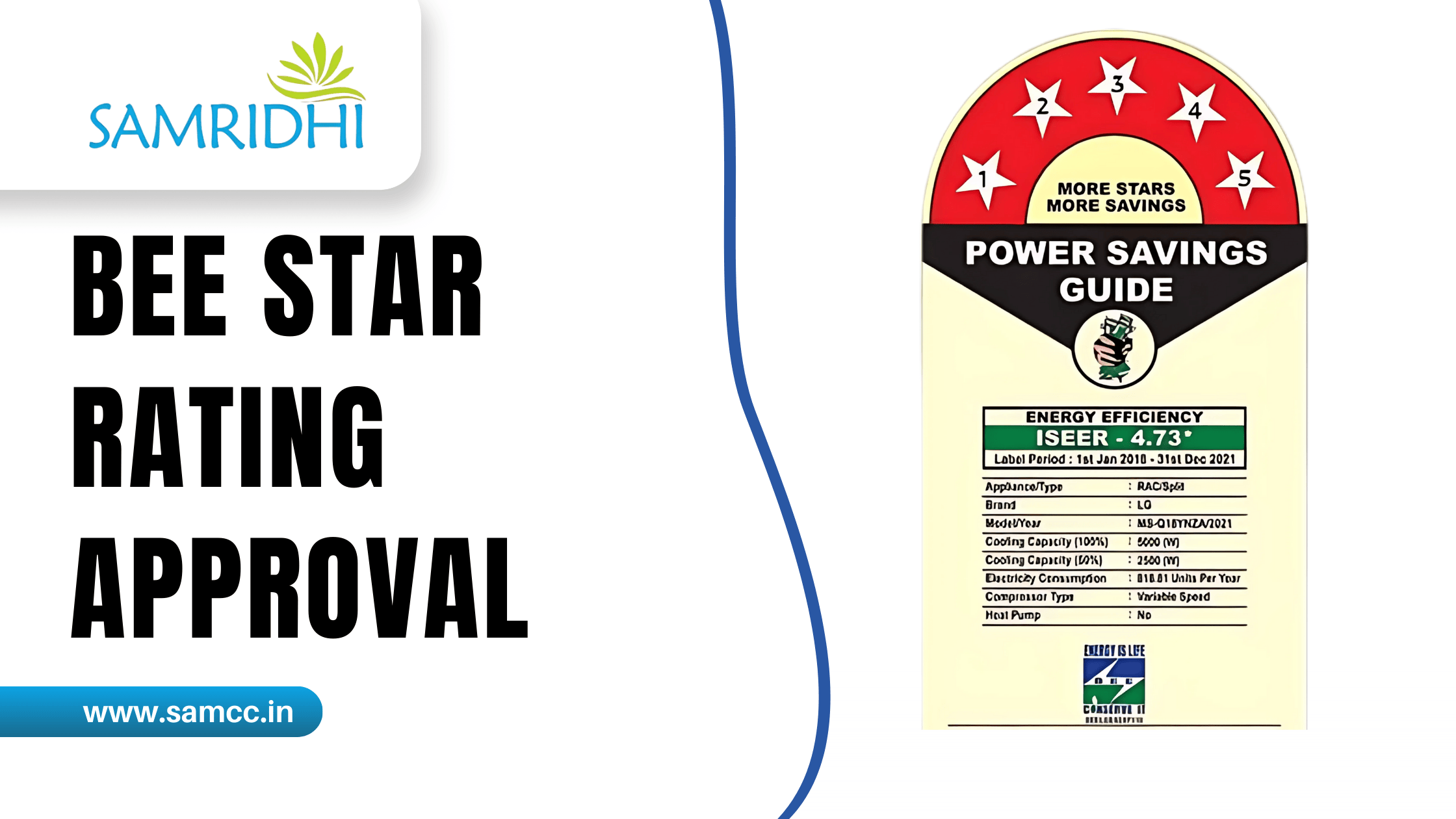
Companies operating in electronics, batteries, consumer products, and manufacturing sectors frequently require additional support through BIS CRS Registration, BEE Star Rating Approval, and Make in India Certification depending on product category, business expansion plans, and regulatory requirements.
Why Professional EPR Consultant Bangalore Support Helps Businesses in Bangalore
Many businesses initially approach EPR compliance as a registration task.
They assume that once registration is completed, the compliance process is largely finished.
In practice, however, EPR compliance often involves ongoing responsibilities that extend across documentation management, quantity tracking, reporting activities, recycler coordination, target monitoring, and regulatory recordkeeping.
For growing businesses in Bangalore's technology-driven economy, managing these activities alongside daily operations can become increasingly complex.
This is why organizations often seek support from an EPR Consultant Bangalore. The objective is not simply obtaining registration, but creating a structured approach to understanding and managing compliance obligations over time.
Understanding Applicability Before Problems Arise
One of the most common compliance challenges businesses face is uncertainty regarding applicability.
Many organizations are unsure:
- Whether EPR applies to them
- Which waste category is relevant
- Whether packaging creates obligations
- Whether importer responsibilities exist
- What reporting requirements may apply
A startup selling electronic products may assume environmental regulations apply only to large manufacturers.
An importer may believe compliance responsibilities remain entirely with overseas suppliers.
Both assumptions can create challenges later.
Professional support often begins by helping businesses understand what applies to their operations before significant compliance gaps emerge.
Better Documentation Management
Documentation is one of the most important components of EPR compliance.
Businesses may need to maintain records relating to:
- Product quantities
- Packaging information
- Sales volumes
- Import activities
- Compliance reporting
- Waste categories
Many organizations already possess this information.
The challenge is often organizing it in a format suitable for compliance management.
One consumer products company discovered that gathering packaging information across multiple suppliers required significantly more coordination than expected because the data had never been centralized.
Professional support often helps businesses establish more structured documentation practices from the beginning.
Support for Growing Startups
Bangalore's startup ecosystem moves quickly.
Founders typically focus on:
- Product development
- Market expansion
- Customer acquisition
- Investment activities
Environmental compliance may receive attention only after:
- Product sales increase
- Distribution expands
- Compliance requests arise
- Business operations become more complex
One technology startup launched nationally within a short period and later discovered that compliance obligations had grown alongside its business.
The challenge was not the regulations themselves.
The challenge was integrating compliance into a rapidly scaling operation.
Professional support can help businesses align compliance planning with growth strategies rather than treating it as a separate activity.
Helping Importers Navigate Compliance Responsibilities
Importers frequently encounter unique challenges because they rely on overseas suppliers for information.
Common issues include:
| Import Compliance Area |
Common Challenge |
| Product information |
Incomplete supplier records |
| Packaging data |
Missing historical information |
| Quantity tracking |
Inconsistent reporting formats |
| Compliance assessment |
Applicability uncertainty |
| Documentation |
Multiple supplier sources |
Many importers discover that gathering accurate information becomes increasingly difficult once products have already entered the market.
This is one reason businesses often engage an EPR Consultant for Importers Bangalore before significant compliance obligations arise.
Managing Reporting Requirements More Efficiently
Many EPR frameworks involve ongoing reporting obligations.
These activities may require businesses to:
- Track quantities
- Maintain records
- Organize documentation
- Review compliance data
- Prepare periodic reports
Businesses that wait until reporting deadlines approach often face unnecessary pressure.
Organizations that build compliance tracking into normal operations generally find reporting activities much easier to manage.
Professional support can help establish systems that reduce last-minute compliance challenges.
Supporting Long-Term Compliance Planning
Many companies initially focus only on registration.
As operations grow, however, compliance management often becomes a continuous process.
Businesses may:
- Launch new products
- Change packaging formats
- Expand imports
- Enter new markets
- Increase sales volumes
Each of these developments can affect compliance obligations.
A structured compliance approach allows businesses to evaluate these changes proactively rather than responding after issues arise.
Assisting With Recycler & Target Management Activities
Depending on the applicable EPR framework, businesses may need to coordinate:
- Recycler arrangements
- Compliance documentation
- Target-related activities
- Ongoing record management
Many organizations underestimate the operational effort required to manage these activities consistently throughout the year.
Professional support often helps businesses maintain visibility over compliance responsibilities while allowing internal teams to focus on core business functions.
Reducing Internal Administrative Burden
Most organizations already manage:
- Operations
- Procurement
- Logistics
- Sales
- Product development
- Customer service
Adding environmental compliance responsibilities can place additional pressure on internal teams.
An EPR Registration Consultant Bangalore can help businesses organize compliance processes more efficiently, reducing the need for reactive documentation gathering and last-minute reporting efforts.
The goal is not to replace internal teams.
The goal is to support them with structured compliance management practices.
Practical Experience Helps Identify Risks Early
Many compliance challenges are not immediately visible when a business begins registration.
Issues often emerge later through:
- Missing packaging data
- Incomplete quantity records
- Product categorization problems
- Supplier information gaps
- Reporting inconsistencies
Businesses frequently benefit from guidance based on practical compliance experience because potential issues can often be identified before they create larger operational challenges.
Early planning is usually easier than corrective action.
Operational Reality Businesses Eventually Discover
Most companies begin their EPR journey focused on obtaining registration.
Over time, they realize that successful compliance depends on what happens after registration is completed.
Accurate documentation. Reliable reporting systems. Quantity tracking. Compliance monitoring. Ongoing record management.
These operational activities often determine how effectively a business manages its environmental responsibilities.
This is why many organizations continue working with an EPR Compliance Consultant Bangalore long after registration has been completed. The value often lies not in a single compliance milestone, but in helping businesses build processes that support long-term regulatory readiness as products, packaging, imports, and operations continue evolving. Since every organization operates differently, the exact compliance strategy remains case-specific and subject to applicable regulatory requirements.
Businesses managing multiple regulatory responsibilities often integrate EPR compliance with ISO Certification, Trademark Registration, and Startup India Certification initiatives. A coordinated approach can help organizations improve documentation management, operational readiness, and long-term compliance planning.
Get Certified with Confidence – Your One-Stop Compliance Partner
From BIS, WPC, TEC, BEE, EPR, LMPC, CDSCO, FSSAI, ISO, MSME to PESO, NABL testing, Startup India, Make in India, and Lab Setup, we handle all your regulatory approvals, certifications, and documentation needs with precision and speed. Partner with Samridhi Compliance Certification and simplify your journey to full compliance—so you can focus on growing your business.
Frequently Asked Questions
EPR compliance may apply to producers, importers, brand owners, manufacturers, e-commerce sellers, electronics companies, battery businesses, and organizations introducing plastic packaging into the Indian market. The exact applicability depends on factors such as product category, packaging type, business role, and annual quantities. Many businesses initially assume EPR applies only to large manufacturers, but compliance obligations can also extend to startups, importers, and growing consumer brands depending on their activities. Because applicability varies by waste category and business model, a detailed assessment is often the best way to determine whether registration is required.
There is no universal timeline for EPR registration because the process depends on documentation readiness, product classification, business structure, compliance scope, and authority review. Some businesses complete documentation preparation quickly, while others require additional time to organize historical records, packaging information, product data, or importer-related documentation. Timelines may also vary depending on the applicable waste category and the complexity of the business operations. For this reason, registration timelines should always be viewed as case-specific rather than fixed.
The cost of EPR compliance generally depends on the applicable waste category, annual business volumes, product types, documentation requirements, reporting obligations, and ongoing compliance responsibilities. Businesses dealing with multiple product categories, extensive packaging usage, or large-scale imports may require broader compliance support than organizations with simpler operations. Additional activities such as annual reporting, target management, recycler coordination, and documentation maintenance may also influence overall compliance costs. Since every business operates differently, compliance expenses typically vary by scope and regulatory requirements.
Unlike certification frameworks such as BIS, TEC, or WPC, EPR compliance is generally not centered around product testing. The primary focus is usually on environmental responsibility, documentation management, quantity reporting, waste categorization, compliance monitoring, and recycler coordination. However, businesses may still need accurate product information, packaging data, and technical records to determine applicability and reporting obligations. The exact documentation requirements depend on the relevant EPR category and the products being introduced into the market.
EPR compliance is often an ongoing process rather than a one-time registration activity. Depending on the applicable framework, businesses may need to maintain records, monitor product or packaging quantities, coordinate compliance activities, prepare annual reports, and manage documentation throughout the year. Companies that expand product lines, increase imports, or introduce new packaging formats may also need periodic compliance reviews. Ongoing obligations vary by waste category, annual scope, and regulatory requirements, making continuous record management an important part of long-term compliance readiness.


 Grab Your Certified Now
 +91 8799708673
 WhatsApp